



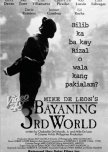
When the only interesting part of someone's life is their execution.
This docudrama is surprisingly hilarious. It's also cleverly meta – in more ways than one.Bayaning 3rd World follows a couple of filmmakers keen to cast a critical eye on José Rizal as The Phillipines' national hero. But at the same time, they struggle to figure out how to transform their take on Rizal's life into an engaging movie. So Bayaning 3rd World is a story about telling the story.
The humour comes from the filmmakers (who are not the actual filmmakers, btw, they're actors). They playfully navigate and interrogate this huge figure of Filipino nationalism. The storytelling style reflects this playfulness too – the filmmakers sit down with Rizal's family members and "interview" them. None of this is to say they are disrespectfully mocking Rizal. Quite the contrary, it's clear that the makers of Bayaning 3rd World are 100% sincere in their poking and prodding of what has made Rizal into a national hero.
One sticking point is Rizal's "retraction document". Supposedly, just before his death, Rizal converted back to Catholicism and, in doing so, retracted all his previous criticisms of the Church. But Bayaning 3rd World questions this version of events, suggesting that the document might be inauthentic. Why the fuss? Well, as one of the filmmakers points out, in Rizal's era, the Church and the State were one and the same. So for Rizal to renounce his criticism of the State would make him less worthy of national hero status.
To add another layer to this meta docudrama, it's important to note that director Mike de Leon made Bayaning 3rd World in response to the film 'José Rizal'. Directed by Marilou Diaz-Abaya, 'José Rizal' had come out two years earlier in 1998 as part of the centenary commemorations of Filipino independence.
To quote Antonio D. Sison's commentary, "In Diaz-Abaya’s film, Rizal is the prodigal son who returns to the colonial Catholic religion of his oppressors and renounces the very works that 'served to restore dignity, self respect, pride, and patriotism among the Filipinos'. De Leon makes an intellectual and entertaining effort at questioning this cut-and-dry story but without actually providing answers himself".
At the end of the day – hero or not – Rizal is still the central character to Bayaning 3rd World. Of course, it could've been otherwise. As one of the filmmakers remarks more than once after "interviewing" one of the women in Rizal's life – "Her life would be a much more interesting movie than Rizal's!"
===
Antonio D. Sison's review: https://www.sensesofcinema.com/2005/feature-articles/3rd_world_hero/
Was this review helpful to you?
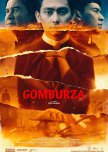
a religious production with rich anti-colonial flavour
This film caught me unawares. I was not expecting a Christian production from *checks notes* Jesuit Communications to be of this high quality. But that's because Gomburza "isn't just about church politics", to lift a line from one of the characters.The premise of the movie is relatively straightforward: Filipino-born priests fight to be seen as equals to Spanish-born friars. Eventually, the priests are caught up in broader anti-colonial struggles at great peril.
However, less straightforward is the underlying question of the whole film: what is the Filipino identity? Of course, the film does not – and cannot – answer this. And to be fair, it doesn't try. It is the posing of this question that lends the film an extra layer of sophistication and makes up for some of the poorer writing in the first half.
The narrative premise and the underlying identity question do result in a split focus. The storyline revolves around José Borgos as one of the key individuals fighting to be recognised on equal footing to the Spaniards. But the storyline also diverts, often awkwardly, to follow poorly developed side characters who are meant to form an important part of the broader anti-colonial movement and theme.
Despite the meandering, Gomburza is an intellectually engaging film – at least for me as someone completely unacquainted with the history. It is also a highly emotive film, something I didn't realise until it crept up on me in the last twenty minutes and I found myself bawling my eyes out even though I thought I hadn't developed an attachment to the characters.
All in all, as someone who grew up in Anglican and Uniting Church spaces here in Aus, seeing a religious production with a powerful anti-colonial flavour is incredibly refreshing. Colour me impressed.
Was this review helpful to you?

Mahjong? more like Nahhh-jong
This is an odd film. The story centres around the competition between two family members vying to inherit a Mahjong house.At least I think that was the plot? Honestly, it was pretty boring so I had it on in the background while I was doing work. I'd say the first and last 20 minutes were the only vaguely interesting parts of the film.
The pacing is slow, the stakes don't really seem that high, there's little intrigue, the characters feel flat, and the eccentric humour is...well....eccentric.
Personal highlight was Betty's hair, makeup, and costuming; it gave the aesthetic a touch of retro cool.
Was this review helpful to you?
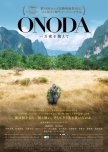
Romanticisation at a cruel cost
The credits roll and my first thought is: What is the Filipino take on all this?But we’ll get to that shortly.
The film Onoda is the fictionalised story of Hiroo Onoda, one of the last Japanese soldiers to surrender after the end of WWII. He was a ‘holdout’ on the Filipino island of Lubang until 1974. He survives in the jungle in denial of the war's end, losing his compatriots one by one. The story is fictionalised in more ways than one, but we’ll get to that shortly too.
At face value, the movie is surprisingly engaging given its long run time. There are also some pretty landscape shots. But that’s about all the positives I have for this piece of cinema. Buckle yourself in, folks!
Let’s start with a simple point. For a story so embedded in its Filipino geography, the decision to shoot in Cambodia feels off. And there’s good reason.
It’s a European production…with a French director…about a Japanese soldier…in the Philippines. Yes, that should raise an eyebrow.
“If you add up all those nationalities [who worked on the film], it makes the film from nowhere,” director Arthur Harari says in an interview with Asian Movie Pulse.
Yet, Cambodia was the destination of choice because Harari wanted a French-speaking film crew. Cambodia is a former French colony. It's certainly not “nowhere”. Neither is Lubang. The shoot location is only one of the ways in which colonial politics seeps into this cinematic production.
Many a filmmaker has simped for the romantic man-survives-jungle trope and Harari is no different, citing the likes of Joseph Conrad as original inspo for this movie. But it comes at cruel cost to the Filipino characters and their real-life counterparts.
I agree with James Lattimer’s assessment that the Filipino characters are used as “little more than cannon fodder”. Harari’s avoidance of the Filipino side – in terms of both geography and narrative – is a result of wilful ignorance. That is because he relies on Onoda the myth, not Onoda the man.
In true à la française style, Harari projects some kind of universalist reading of human experience onto Onoda’s story.
“I didn’t read historical books about Japan or the war,” he admits in an interview, “because the fact is that everything about Onoda’s story can be understood even if you don’t really know the general situation of the war, the Pacific War, or the history of Japan.”
In fact, Harari only read one book about Onoda, written by two Frenchmen: ‘Onoda: Seul en guerre dans la jungle’. As far as I can tell, the text seems sympathetic to Onoda’s side of the story, describing Onoda as a “prisoner of that island, of that oppressive jungle” (own translation). Heart of Darkness much? Either way, Harari mostly upholds the romantic hero image of Onoda in the film, an image which Onoda himself first established when he published his autobiography.
But even a little bit of reading about Japan or the war reveals how the Filipino people were cruelly caught in colonial crossfire. Their lives and land were used as military props and staging by the Japanese (and, of course, the Spanish and the Americans before that).
Onoda’s autobiography omits Onoda’s many gruesome murders of Lubang’s residents. Tsuda Shin, ghost-writer of Onoda’s autobiography, revealed this much when he wrote his own exposé on Onoda a couple of years after the autobiography came out.
Even now, it’s Harari’s cinematic project that receives the funding and the spotlight. Meanwhile, the Filipino side of the story struggles to see the light of day. Mia Stewart has set out to correct the record via documentary making. Her maternal relatives lived – and still live – in Lubang and experienced first-hand Onoda’s violent atrocities.
“They weren't just shootings, there were very violent killings that involved beheadings and mutilating bodies,” Stewart says in an interview with SBS.
Lack of funding means her documentary still hasn’t been released. But it’s a good cause. A myth like Onoda’s needs interrogation.
“We will never really know if Onoda knew the war was over or not. Regardless, he killed civilians. While I can't undo those deaths, I can change how we tell the story,” Stewart says.
----------
Stewart’s forthcoming documentary, ‘Searching for Onoda’: https://searchforonoda.com/
Stewart’s interview with SBS: https://www.sbs.com.au/news/article/mias-uncle-bled-to-death-she-wants-to-set-the-record-straight-about-why/qig3whkdb
Insights on Harari’s approach come from this excellent A. E Hart piece: https://www.documentary.org/online-feature/domitable-myth-three-depictions-japanese-holdout-soldier-hiroo-onoda
James Lattimer’s review: https://www.bfi.org.uk/sight-and-sound/reviews/onoda-10000-nights-jungle-lost-filipino-wilds
Was this review helpful to you?
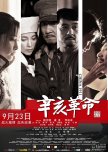
This movie could've been an email
I normally avoid watching C-dramas set during the republican era as they tend to be the most heavily lathered in government propaganda. 1911 is case in point.The film tells the story of the 1911 revolution (or the Xinhai revolution as it's otherwise known). I'm not surprised that this particular event was the subject of such hammed-up propaganda given the revolution is key to the grander political myth-making of the modern Chinese state. That said, you can still do propaganda a lot better than this??
The storyline reads like my high school essays on Bolshevik Russia. It's a boring chronology of events with political commentary slapped across the top. The music and melodrama seems to indicate that you're meant to care about the characters on screen. But you don't.
It's normally a pretty safe choice to start a story in the middle of the action – in this case the failed Second Guangzhou Uprising – but without an emotional hook to the characters, mid action scenes exhaust their oxygen pretty fast. By following a Great Men of History approach, the main characters feel flat and 2D, their entire psyche presented in the form of political speeches or the flashing of guns.
By the end of the film, you're feeling pretty uninspired. There's a lot of monologuing where you start to think the character just likes the sound of their own voice. Jackie Chan is the only one allowed to wear a leather jacket for some reason. And the two normie characters who should've been the soul of the movie are really awkwardly tacked on at the beginning and end.
tbh, it's quicker and more interesting to read the wikipedia page.
Was this review helpful to you?
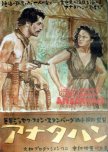
Just go watch Lost instead
Anatahan is a fictional retelling of the Japanese soldiers stranded on the Pacific island of Anatahan from 1944 to 1951. In both the real story and this one, they refused to believe the war was over.This film features a Japanese cast and has dialogue all in Japanese, but the director (who also narrates the story in English) is a white dude who lathers the story with a heap of racist exotification and sexism. All in all, it's a pretty Western production.
As such, the story ends up as a crude Lord the Flies with the one woman on the island tossed around as part of the ongoing power struggle. The narrator and the other characters spend the entire film objectifying and harassing her (also content warning for domestic violence and rape, if you plan on watching this).
It's a shame because the premise of the story is an interesting one. Holding out on a stranded island for years on end has been the premise of many of a good piece of cinema. Yet this film flops. Badly.
Was this review helpful to you?
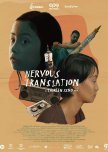
It makes sense that a pen solves anxiety
After all, what Nervous Translation depicts so well is the eclectic reasoning of childhood. Following the character of Yael, I'm reminded of the way I made sense of the world at a similar age. Snippets of TV, bits of adult conversation, the intensity of school mathematics.Yael's mum, Val, juggles exhaustion due to work, keeping her own private boundaries, and looking after family. She is real. We all know a Val or we are a Val.
Nervous Translation is a slice of life. I found the pacing to be a little too slow but, then again, the emotion did creep up on me near the end. At times, it verges on surrealism, sometimes with effect, sometimes less so.
A good film with a gentle touch on life's anxieties.
Was this review helpful to you?
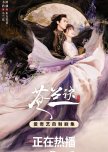
Body swap done perfectly
Normally I find body-swap to be incredibly cringe but I found myself enjoying it for the first time since watching Freaky Friday as a kid. Yu Shuxin and Dylan Wang really show off their acting skills. Because they do this very early on in the series, I was pulled in by the comedic element and kept watching from there.The romance is sweet and although the FL/ML chemistry was strong, I never fully bought it. The support characters are fun albeit predictable.
But the real downfall for me was the plotline. I felt we were just starting to get somewhere in the storyline when the drama ended – similar to how I felt Princess Agents was cut short although at least this time it was a lot less jarring.
Was this review helpful to you?
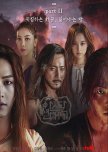
Arthdal Chronicles Part 2: The Sky Turning Inside Out, Rising Land
0 people found this review helpful
Political intrigue with a lil bit of unionism snuck in too :)
~Review of Part II only~And here the plot thickens! We have emerged from the initial shock of invasion and now must deal with the logic of Arthdal. We are introduced to new characters and the storylines are separated for most of these six episodes.
Normally, I don't enjoy multi-perspective narratives because you almost always end up hating one storyline. But this was a rare exception for me – I thought they were interesting and well paced. It's a balancing act you don't see done effectively in cinema often enough.
Also big yay for the unionism :) We love worker solidarity.
As I mentioned in my interview for Part I, one thing I like about Arthdal Chronicles is how it treats spiritual agency. By spiritual agency, I mean the role of the spiritual world (rather than necessarily 'religion' because that's often associated with a man-made institution). This is the first piece of historical fiction I've seen to treat the spiritual world as a legitimate agent and as a political tool at the same time. Too often, historical fiction sees a belief in a spiritual world and then a political cynicism of religion to be mutually exclusive.
However, as seen in the characters of Tagon, Taheala and Tanya, they all have belief (of varying degrees) in higher powers but also will use those higher powers – and their religious institutions – for their own ends. I have a sneaking suspicion I'm probably the only person who's watched this series who cares about this point, but I'm a politics nerd, ok? (But if that does catch your interest, I do recommend reading Provincializing Europe by Dipesh Chakrabarty and where he critiques secular histories.)
Don't get me wrong, Arthdal Chronicles isn't perfect. One big downside for me was I started noticing in this section of the series that the music can be a bit lacklustre at times. I can't remember if it was in Part II or Part III but there were some awkward audio cuts too.
Was this review helpful to you?
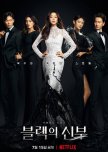
A standard revenge-romance watch with some poor taste (CW: mention of rape)
Normally, I don't care about watching rich people deal with rich people problems, but there was just enough happening to pull me through all eight episodes. The strong acting provided support where the plot failed to provide substantial meat on bone. I think the writers had a good preliminary concept here but just failed to bring it to its full potential.However, what bugged me thoughout the entire show was the 'woman lies about being raped' trope. First, it falls into the sexist myth of 'if a woman claims rape, she is most likely lying'. Of course, this is not true. I don't know international stats, but in Australia, studies find, on average, only 5% of rape allegations are found to be false (and remember, most survivor/victims don't report and so aren't in the data). In other words, when someone says they've been raped, they're very very very likely to be telling the truth.
Second, the show refuses to grapple with the fact that someone can co-exist as a survivor/victim *and* as a bad human being. As far as characterisation goes, it meant the writers could draw an easy 'good/bad' line between the main characters. Thus, not only did the 'good' character not owe the 'bad' character any pity , but the 'good' character's own refusal to believe the rape claim goes unchallenged throughout all eight episodes.
Apart from that, I did enjoy this series as an easy watch. It was actually a lot of fun once I stopped taking it too seriously.
Was this review helpful to you?
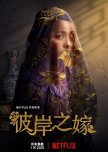
Don't take it too seriously – it's a fun mixed genre Young Adult drama
The Ghost Bride has its faults but what drew me in was the rich world-building. I've never watched anything set in historical Malaysia before nor had I ever encountered the idea of 'ghost brides' before reading the YA novel this series derives from. Those two elements plus the Underworld setting meant that I wasn't too fussed about the characters because the variety of settings became fascinating characters in their own right.I think other reviews have assessed the actual characters well. Special mention goes to Chris Wu just because of his range: I've now seen him perform beautifully in huge different roles in Ghost Bride, Autumn's Concerto, and Shards of Her. Boy, can he act!
I think it is important to remember that this is meant for a younger audience. I was more forgiving than I would normally be about the lack of depth for some of the characters because of the 'Young Adult' genre. There tends to be a certain naîve sheen that comes with that. Normally, I'd be critiquing the class politics too – notice how Amah and Lao Wong are uncritically loyal to the Pan family – but, again, it's a YA audience in mind so I can understand how it could've complicated the story too much.
Overall, this is a fun mystery/fantasy drama with a touch of romance that strays just far enough away from usual YA tropes to stand on its own two legs.
Was this review helpful to you?
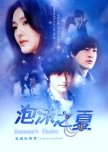
Super problematic but still rewatched it like 6 times
I'm pretty sure this was the first non-English language drama I ever watched – I was 12 yo when Summer's Desire came out and a friend at school was watching it. I've rewatched it a handful of times since. But I think just because it was the first ever Taiwanese drama I'd watched, not because it was particularly good. I can't deny this is my most re-watched drama, hence the generous star number there.Look, be warned, this drama has heaps of problematic elements to it. Ok, I'm understating that a lot. I've given this a low rating because this drama has nothing to do with love and everything to do with coercive control. so **big content warning** there. There's no rape scenes thankfully, but it's clear that consent is not a big priority.
Also, as other reviews have noted, this drama is brimming with clichés. Turns out, it was a great drama to begin with because it introduced me to almost all the tropes of Taiwanese and C-Dramas in one go. I also think it took at least three re-watches for me to fully understand the plotline. But, let's be real, you're not watching Summer's Desire for the plot.
The chemistry between the three lead actors is really well done (somewhat despite a sub-par performance from Barbie Hsu who doesn't match her Meteor Garden efforts). The actors do pretty darn well in spite of the cliché characters and dialogue. The support actors also do well to provide emotional depth to the storyline.
The OST is great and makes up for the fact the overall audio quality is a bit patchy (this seemed to be a common thing among Taiwanese dramas of this era, I've now noticed). Just weird audio levels around dialogue and general atmosphere.
Was this review helpful to you?
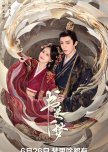
A satire that becomes the thing its parodying
EDIT: Came back to drop this from a 7.5 to 6.5 when i remembered that weirdly homophobic episode from the first half.The way I was bawling my eyes out with laughter for the first dozen or so episodes and then.... stopped. A Dream Within A Dream starts off as a fkn hilarious satire aimed at Chinese costume drama fans like myself. After having been let down a while ago by My Only Love Song – a Kdrama with a similar premise to ADWAD but terrible execution – I was ready to be hurt again.
Was I hurt? Yes. But only after thoroughly enjoying the first half of this series. And because the start was so good, I was uncharacteristically forgiving about the narrative trajectory for the rest of it (hence the weirdly high rating). A lot of times I was laughing at scenes in the middle episodes because I was viewing them through a satirical lens, even though the parody elements kinda fell off the wagon around the mid way point. There was also just enough small gags to keep me going to the end, but not without disengaging from major chunks of the storyline along the way.
The problem is that ADWAD ultimately folds in on itself. It becomes what it was parodying. And despite some attempts to salvage some of the humour and satire at the end, it never truly recovers.
Was this review helpful to you?
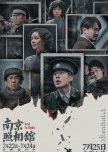
Graphic war film with a focus on photography
Dead to Rights is a traditional war film. War movies are not my usual cup of tea, but as a photographer myself, I was interested in the photographic element of the story.Honestly, there’s a lot I could say about this film but won’t, because that critique is more of war films as a genre rather than anything special about Dead to Rights. The only thing I will note here before talking about the photography element of the storyline, is that I believe accusations of propaganda against this film are a bit redundant. All war films are propaganda. It doesn’t matter whether you’re watching Dead to Rights or Gallipoli, you can’t expect the genre to have no political motive.*
The initial drawcard for me was how Dead to Rights depicted the use of photography in war and atrocities. A lot of films I’ve watched that feature photographer characters normally position them as a truth-teller. One example that comes to mind given its narrative similarities is The Photographer of Mauthausen (Spanish, 2018) which tells the story of real-life Spanish concentration camp prisoner, Francois Boix, who took photographs at the camp, the negatives of which he hid until liberation and were ultimately used to prosecute the Nazis.
Dead to Rights was a little different because, while it had a photography-as-truth protagonist, it also used the Japanese military photographer as a foil. Although not delicately handled, I at least appreciated that the film attempted to go beyond the usual narrative of photography-as-truth. Even the Chinese characters seemed less interested in journalistic style documentation**, and more so in using the photographs as an act of resistance.
But all in all, I think the film did ultimately fall back on the simplistic photography-as-truth trope. It was made clear that scenes in the film were derived from the photographic archive of the Nanjing massacre. This also meant that that the film ended up trapped, I suspect willingly, in a paradox that Susan Sontag describes of war photography:
“The photograph gives mixed signals. Stop this, it urges. But it also exclaims, What a spectacle!”
—
*Of course, propaganda films aren’t just limited to war films, although this genre is one of the more blatant forms.
**I should mention that, citing Sontag again, war photography as critical documentation – rather than as morale-boosting PR – didn’t really come into the fore until the Vietnam War.
Was this review helpful to you?
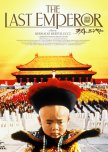
Not sure what the director was trying to achieve here
To be fair, I did only see the second half of The Last Emperor. I was flicking around for something to watch at 1am and this was playing on SBS World Movies. For those of you familiar with SBS, you would know that this is the only true way to properly experience SBS movies.Admittedly, I initially thought Joan Chen's Empress was the protagonist. Partially, because she was the feature of the scene I came in halfway through, but also because she had the strongest presence on screen. Honestly, what a diva. Recognised her immediately due to having watched Ruyi's Royal Love in the Palace so many times.
Otherwise, this film just gave weird old-school Hollywood vibes (yes, yes, I know he's Italian, whatever...). First of all, did this seriously need to be almost entirely in English?? Like I get that Western audiences are racist, but if they've chosen to watch a movie about the last emperor of China, I feel like they can handle some Mandarin, y'know? Plus, you have the lethargic orchestral score, and then the weird flattening of Evil Japanese and then Evil Maoists...well, it all left a bland taste in the mouth.
Needless to say, I'm really not inspired to go back and watch the first half. Cheers.
Was this review helpful to you?


