
 Celebrity

 2
2 9
9 3
3 1
1 2
2 7
7 1
1 1
1 5
5 1
1 1
1 1
1 2
2 1
1 1
1 1
1 3
3


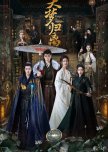
Guo Jing Ming’s ambitious tribute to Tsui Hark: How did it turn out?
Having watched it fully and then rewatched this more than six months after it finished airing, I suggest this method to balance utmost enjoyment alongside addressing any quibbles: Absorb at least twenty episodes of what unfolds with no expectations while revelling in the cinematography, intricate embellished costumes, gorgeous BGMs and lush sets accompanying an interesting group of humans and demons. Utilise patience for at least twenty episodes even when noticing any plot-holes, characterisation issues, and details clashing with each other within the first four episodes and beyond.
Tsui Hark’s movies and certain fundamental concepts (1993 Green Snake and 1983 Zu: Warriors From The Magic Mountain) have clearly impacted this drama. At 27:21 for two seconds of episode 30, a certain visual is literally inspired by the final scene of the movie Green Snake. Karma, debt, and consequences are inevitable and unavoidable, given the two movies being referenced in homage to define this world of demons and humans.
Despite the burdens and responsibilities each individual carries, there is humour and camaraderie amongst the team. As the story progresses with each new demon the team meets across twenty episodes, a sense of inevitability is accompanied by hope that goodness will prevail and the team will overcome every challenge.
Drawing on the Classic of Mountains and Seas, Guo Jing Ming (GJM)’s efforts and dedication to exploring emotional ties and repairing relationships between humans and demons are as laudable as his attention to utilising that particular source to create the world of FoF. His flaws pertaining to self-indulgences for certain characters and sub-stories result in the opposite effect equivalent to the game of Battleships blindly sinking vital boats, thereby marring what could have been a unique timeless drama of humans and demons as friends, enemies and more. His sets are beautiful, but the world-building is fuzzy and the extent of attraction relies on the viewer not realising this. Dramas involving demons and/or gods should have clear rules and limitations about the world they inhabit or the realms they can cross into.
These combined results will keep you eager to continue after 10 episodes, or dropping it before you finish episode 6. You'll survive and enjoy all of it, if you turn off your inner critic. If you don't turn it off, you'll still survive wonderfully if you intend to write a humorous dissection of what did not work. Wordplay in mandarin is hilarious. Wordplay in the bonus episode is anything but hilarious. Fight scene choreography is mostly enjoyable, some fights downright spell-binding such as in episode 8 being heartrending and gorgeous, but at times not lethal or urgent enough and hence unable to convey necessary impact such as parts of the final battle. Over-usage of music for some scenes was unnecessary. Silence would have deepened the emotional impact of certain scenes. Filters for flashbacks were inconsistent. That inconsistency is not GJM's biggest issue for this drama.
Certain scenes would enable viewers to better connect with the characters, if there were a lot less tears and different methods used to convey certain scenes and having them being shot in a different manner. The focus on visuals comes at the expense of enabling the complexity of the characters to come through, resulting in too much telling and not enough showing.
Being character-driven means the plot is as coherent as the puzzle of you trying to figure out how and why obstacles pop up as challenges to the team. Don't think too hard and let things unfold, flowing with the episodes and practising the patience of possibly developing sagehood.
You will definitely find something to like about this drama. Whether you can finish depends on your personal capacity for the constantly-shifting promise which this character-driven drama presents: Distinctly gorgeous visuals and presentation and costumes, short mini-stories wrapping up well enough, under-developed arcs, over-wrought tear ducts, and a FL whose characterisation and overall final edits for the drama is insultingly disrespectful to her efforts as an actress.
The acting is a mixed bag. That said, you'll definitely find at least one or more characters to root for, given the amount of material dedicated to the characters.
For the original story, four writers including GJM were involved. For the directors, three directors including GJM were involved. Six people were involved in the screenwriting. The final decisions can be attributed to GJM, especially the editing. After considering all this while watching, please go with the flow and make your own decisions.
As to how two Tsui Hark movies defined certain fundamentals and details for this drama pertaining to karma and debts and inevitability (or the casting choices plus script choices and issues with the storyline): I do not want to include spoilers in this review, and only in a comment -> https://kisskh.at/755301-the-story-of-mystics#comment-22919316
Tsui Hark’s movies and certain fundamental concepts (1993 Green Snake and 1983 Zu: Warriors From The Magic Mountain) have clearly impacted this drama. At 27:21 for two seconds of episode 30, a certain visual is literally inspired by the final scene of the movie Green Snake. Karma, debt, and consequences are inevitable and unavoidable, given the two movies being referenced in homage to define this world of demons and humans.
Despite the burdens and responsibilities each individual carries, there is humour and camaraderie amongst the team. As the story progresses with each new demon the team meets across twenty episodes, a sense of inevitability is accompanied by hope that goodness will prevail and the team will overcome every challenge.
Drawing on the Classic of Mountains and Seas, Guo Jing Ming (GJM)’s efforts and dedication to exploring emotional ties and repairing relationships between humans and demons are as laudable as his attention to utilising that particular source to create the world of FoF. His flaws pertaining to self-indulgences for certain characters and sub-stories result in the opposite effect equivalent to the game of Battleships blindly sinking vital boats, thereby marring what could have been a unique timeless drama of humans and demons as friends, enemies and more. His sets are beautiful, but the world-building is fuzzy and the extent of attraction relies on the viewer not realising this. Dramas involving demons and/or gods should have clear rules and limitations about the world they inhabit or the realms they can cross into.
These combined results will keep you eager to continue after 10 episodes, or dropping it before you finish episode 6. You'll survive and enjoy all of it, if you turn off your inner critic. If you don't turn it off, you'll still survive wonderfully if you intend to write a humorous dissection of what did not work. Wordplay in mandarin is hilarious. Wordplay in the bonus episode is anything but hilarious. Fight scene choreography is mostly enjoyable, some fights downright spell-binding such as in episode 8 being heartrending and gorgeous, but at times not lethal or urgent enough and hence unable to convey necessary impact such as parts of the final battle. Over-usage of music for some scenes was unnecessary. Silence would have deepened the emotional impact of certain scenes. Filters for flashbacks were inconsistent. That inconsistency is not GJM's biggest issue for this drama.
Certain scenes would enable viewers to better connect with the characters, if there were a lot less tears and different methods used to convey certain scenes and having them being shot in a different manner. The focus on visuals comes at the expense of enabling the complexity of the characters to come through, resulting in too much telling and not enough showing.
Being character-driven means the plot is as coherent as the puzzle of you trying to figure out how and why obstacles pop up as challenges to the team. Don't think too hard and let things unfold, flowing with the episodes and practising the patience of possibly developing sagehood.
You will definitely find something to like about this drama. Whether you can finish depends on your personal capacity for the constantly-shifting promise which this character-driven drama presents: Distinctly gorgeous visuals and presentation and costumes, short mini-stories wrapping up well enough, under-developed arcs, over-wrought tear ducts, and a FL whose characterisation and overall final edits for the drama is insultingly disrespectful to her efforts as an actress.
The acting is a mixed bag. That said, you'll definitely find at least one or more characters to root for, given the amount of material dedicated to the characters.
For the original story, four writers including GJM were involved. For the directors, three directors including GJM were involved. Six people were involved in the screenwriting. The final decisions can be attributed to GJM, especially the editing. After considering all this while watching, please go with the flow and make your own decisions.
As to how two Tsui Hark movies defined certain fundamentals and details for this drama pertaining to karma and debts and inevitability (or the casting choices plus script choices and issues with the storyline): I do not want to include spoilers in this review, and only in a comment -> https://kisskh.at/755301-the-story-of-mystics#comment-22919316
Was this review helpful to you?


