
 News


 2
 2
 1
 2
 1
 1
 1
 1
 1
 1
 1
 1
 1
 1
 1
 1


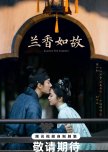
Bloodwritten Wishes and Tangled Red Threads
A mother writes a single word in blood: Live.
Years later, a husband ties a red thread around his wife's wrist, hoping to find her again in another lifetime.
Beyond those two wishes unfolds the life of Shen Jialan, who becomes Xu Lanxiang. A life shaped by loss, unexpected affection, difficult choices, and the quiet determination to make something of what remains.
Against the Current is not so much a story about reclaiming a stolen life as it is about learning to live another one. And for much of its run, it tells that story beautifully.
What I enjoyed most was the world surrounding Lanxiang. The Lin household feels wonderfully lived in, with relationships built on affection, obligation, resentment, and the countless compromises of sharing a life with others. People are rarely entirely kind or cruel. A mother may love her children fiercely while making questionable choices for them. A mistress may care for a servant without forgetting the distance between their positions. Even generosity can come with expectations.
The women, in particular, are fascinating. They do not all want the same things, nor do they agree on what constitutes a better life. Some resist their circumstances, others accommodate them, and a few become remarkably skilled at enforcing the very rules that have limited their own lives. Their choices are not always admirable, but they are recognisably human.
And the performances make all the difference.
Tan Songyun is wonderful as Lanxiang. Her resilience is quiet rather than demonstrative, her intelligence practical, and her composure often feels hard-won. I occasionally found her a little too exemplary, always resourceful, principled, and remarkably capable of navigating adversity. Yet I understand why those qualities are so appealing. Songyun gives her enough vulnerability and warmth to make her more than a collection of admirable traits.
Her scenes with her adoptive parents were among my favourites. Guo Keyu and Chen Chuang bring such unforced tenderness to those relationships that they feel accumulated over years rather than arranged for emotional effect.
Liu Xueyi is equally compelling as Jinqi, a man whose intelligence, pride, and sincere affection coexist with an occasionally infuriating certainty that he knows what is best for others. Xueyi gives him enough emotional complexity that even his less admirable decisions remain understandable, if not always defensible.
The supporting cast, particularly the older generation, deserves considerable praise. Their performances give the household its history, the sense that these people have spent entire lives learning what can be said, what must remain unspoken, and which compromises are worth making.
Visually, the drama is a pleasure too. Its subdued colours, textured interiors, and unhurried camera create a world that feels inhabited rather than merely decorated. Faces retain their natural character, expressions are allowed to breathe, and a glance across a room can communicate more than an elaborate speech. I wish more costume dramas had this confidence in their actors.
My greatest reservation is perhaps also a consequence of the drama's greatest ambition.
Against the Current wants to capture not merely one woman's struggle to survive, but the many lives that intersect with hers. Family affection, class distinctions, friendship, marriage, motherhood, resentment, and grief all find their place in this sprawling domestic chronicle.
I admired that generosity of scope. But the writing does not always know how to distribute its attention.
Some relationships are explored with extraordinary patience, while others reach their conclusions before their emotional possibilities have been fully realised. The supporting women are often fascinating in their own right, yet their journeys occasionally become too neatly tied to Lanxiang's influence. And where the earlier episodes allow their ideas to emerge naturally through everyday interactions, the later ones sometimes seem rather determined to explain them.
I rarely disagreed with what was being said. I simply preferred the moments when the drama trusted us to understand without being told.
The result is not so much a story that loses its direction as one that occasionally tries to travel in too many directions at once.
The romance, interestingly, is one of its less conventional elements.
Lanxiang is not a woman waiting for love to give her life meaning. Her concerns are practical, her loyalties numerous, and her sense of purpose exists independently of Jinqi. Their relationship grows through familiarity, disagreement, and shared experience rather than romantic spectacle.
What interested me was the difference in how they seemed to experience that relationship. Jinqi's feelings are unmistakably romantic, even when his pride and certainty about what is best for Lanxiang complicate their marriage. Lanxiang's are quieter, and perhaps less easily defined. She comes to care for him deeply, to trust him, and to value the companionship they share. I never quite saw the same romantic longing in her that I saw in him. But did there need to be?
I rather liked that their affection did not have to take the same shape. Their relationship was meaningful without requiring Lanxiang's feelings to mirror Jinqi's. Love, after all, need not be experienced or expressed identically to be valued.
I occasionally wished the writing had given certain changes between them more room to unfold, but I appreciated that their marriage remained one part of Lanxiang's life rather than the measure of its worth.
And then comes the ending.
I admire the decision to follow Lanxiang beyond the conventional romantic conclusion. Jinqi dies before fifty, while she lives for more than thirty years after him, continuing a life that neither began nor ended with their marriage.
There is something quietly beautiful about allowing a heroine to grow old.
My frustration is that a drama so attentive to the texture of everyday life suddenly hurries through decades of it. We see the milestones and losses, but comparatively little of the woman living between them. I wanted to know more about who Lanxiang became during those years, not merely what she accomplished.
Still, I found her final moments deeply moving.
Jinqi's red thread carries his wish to find her again. But when Lanxiang dies, it is the sachet containing her mother's bloodwritten word that she holds.
Live.
I don't see this as diminishing what Jinqi meant to her. He was an important and deeply cherished part of her life, but never its entirety.
Against the Current is not without its weaknesses. Its ambitions occasionally exceed its narrative discipline, and some of its finest ideas deserve more room to breathe. But the performances are excellent, the cinematography lovely, and the domestic world unusually rich. More importantly, I cared about these people, their small victories, their compromises, and the lives they built within circumstances they could not always change.
For viewers seeking a fast-moving revenge drama or a romance built around sweeping declarations, this may not be quite what they expect. But those who enjoy layered family chronicles, complicated relationships, and the patient observation of ordinary lives may find a great deal to appreciate.
Perhaps what stays with me most is that Lanxiang never recovered the life that was taken from her. She found another, filled with people she came to love, joys she could not have anticipated, and sorrows she could neither escape nor undo.
Whether those years were kind to her is another question. A long life is not necessarily a merciful one.
Jinqi hoped to find her again in another lifetime. Her mother had begged her to hold on to this one.
Live.
Such a small word to carry the weight of an entire existence.
And Lanxiang did. Through love and loss, through years that gave and took in unequal measure.
She lived.
Was this review helpful to you?


