
 Editorials

 2
2 2
2 1
1 2
2 1
1 1
1 1
1 1
1 1
1 1
1 1
1 1
1 1
1 1
1 1
1 1
1


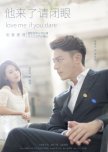
“When he comes, close your eyes.”
I first watched Love Me If You Dare long before I even created a profile here on MDL. I came back to it recently because I was chasing a particular feeling — that quiet intensity where tension and intimacy grow side by side.Rewatching it now, I’m aware that I value emotional consistency and psychological coherence more than flashy chemistry or spectacle. And this drama still delivers on that level.
The thriller and romance don’t compete; they reinforce each other. The dialogue feels intentional, the character motivations remain internally consistent, and the emotional progression unfolds through trust and proximity rather than grand declarations.
Yes, the female lead is underwritten in places, and a few performances wobble. The off-screen intimacy, or the first kiss being understated, might frustrate viewers expecting a conventional romance. No overtly passionate kiss scenes are pushed to manufacture intensity, yet the tension is palpable throughout their entire dynamic. It lives in restraint.
Language inconsistencies (Mandarin vs. English) and improbable survival in the thriller beats are quirks — but I see them as stylistic and narrative choices that maintain tension, pacing, and accessibility rather than logic-breaking flaws. The side characters add warmth without disrupting the central tension.
Adapted from Ding Mo’s novel, with the screenwriter of Nirvana in Fire and a director who later delivered The Story of Ming Lan, it’s clear the craft is deliberate. The story’s architecture, pacing, and psychological realism still hold up remarkably well.
Years later, I can say this: I’m not just nostalgic. Some dramas impress in the moment. This one sustains itself.
Was this review helpful to you?
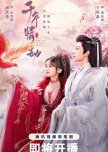
✨ A Rare Gem in Short-Length Xianxia
I rarely write reviews for short-length series, but this one well deserves it! It’s rare in xianxia to see a couple that actually stays together; no endless angst, no forced separations, no exhausting breakups. Thousands of Years of Love gives us exactly that: two leads who face the world side by side, and it feels refreshing.💞 The Romance & Chemistry
The mains’ chemistry works well, especially the FL, whose swift, lively energy keeps you hooked, while the ML balances her with his calm, steady presence. Their dynamic makes the love story feel natural and grounded.
🖋️ Style Over Depth
It focuses more on style and romance than deep character building, which can make the plot suffer, but that’s understandable given the short length. What it chooses to focus on—atmosphere, visuals, and the steady relationship—lands effectively enough to immerse you.
🪶 Similar Vibes
It even reminded me a little of The Legend of Shen Li, not because they’re directly comparable, but because both share that rare quality of keeping the leads united against the world instead of tearing them apart (there are a few misunderstandings, but they’re resolved quickly without any unnecessary drag).
📺 Overall
The ending was a bit rushed (the family scene was way too short), but at least it gave closure.. I’d love to see more xianxias like this one: romantic, energetic, light-hearted, lovely. No double-meaning endings, no transmigration plots, no unnecessary drama... just a sweet, steady romance that actually sticks.
👉 Highly recommended if…
• You want a xianxia romance where the leads actually stick together
• You like a clever, energetic FL who lights up the screen instead of grating on it
• You’re tired of endless angst & manufactured breakups
• You enjoy that fated soulmates vibe done with sincerity aka 'dual cultivation' vibe ( ͡° ͜ʖ ͡°)
• You appreciate a short, stylish drama that delivers warmth over tragedy.
Was this review helpful to you?

Chasing Jade: Beauty That Fades Too Fast
I went into Chasing Jade expecting more than just eye candy; not only because of the cast or inviting trailers, but because the director’s previous work, Blossom, proved that beautiful shots and an engaging story could coexist. That drama didn’t just look gorgeous; it had real stakes, characters that felt alive, and a story that pulled you in. I hoped for the same here: a historical drama that could balance stunning visuals with a compelling narrative.At first, it seems like it might deliver.
The drama is aesthetically stunning. The sets, flowing costumes, soft lighting… every frame feels polished, almost like a carefully bottled perfume. Early on, subtle tension hints at deeper intrigue. The premise — a young woman weighed down by responsibility crossing paths with a troubled nobleman — promises romance, political games, and layered storytelling.
But the longer it goes on, the more that promise fades.
I don’t mind long dramas. If the pacing works and the story earns your attention, I’ll happily sit through 40, 60, or even 80 episodes. Here, though, the story often feels stretched and unevenly balanced. Some scenes linger without adding insight; others rush through developments that deserve space. There’s enough material for a rich, multi-threaded narrative, but it isn’t arranged in a way that makes every episode feel earned.
More importantly, the drama struggles with its identity. At different points, it leans into military war, slice-of-life, romance, political intrigue, and revenge — but never fully commits to any. Mixing multiple plot threads can absolutely be a strength when done well; some of the best long dramas thrive precisely because they balance different tones and storylines at once. But here, the pieces rarely feel connected by strong enough writing or internal logic. Instead of creating a layered narrative, the constant shifting between tones and conflicts makes the story feel disjointed and oddly shallow, as though complexity is being simulated rather than truly built.
As a result, characters shift without enough buildup, motivations remain unclear, and many emotional beats fail to land, making sustained investment difficult. Usually, strong emotional engagement can smooth over weaker logic in this type of drama, but here the emotional pull never becomes strong enough to fully bridge those gaps. Glimpses of connection between the leads exist, yet the chemistry rarely reaches the immersive tension one hopes for in a long-format drama. Even with compelling side characters, the subplots sprawl without enough cohesion, reinforcing the sense that the story appears far more complex than it actually is.
Chasing Jade is like a perfume that smells heavenly in the bottle — it promises richness and intoxication — but when you actually breathe it in, the scent doesn’t linger as long as you want it to. You want to be enveloped by it, you expect to be transported, but the lasting impression is lighter than anticipated.
There’s a wider pattern in long-format mainstream dramas lately: so much focus on visual polish, marketing hype, and mass appeal that the story often becomes secondary. Even moments with potential are surrounded by filler, overly filtered visuals, or rushed plot points.
That all said, credit where it’s due: the cinematography is genuinely beautiful, the cast is visually striking, and the music fits the tone perfectly. There are moments where everything aligns to genuinely draw you in and remind you of the drama’s potential — but these moments aren’t consistent enough to carry the whole.
By the end, I found myself less invested than expected; I wasn’t fully rooting for any of the characters, and even the shift toward partnership between the main leads comes too late and feels lightly developed, leaving little lingering impact.
6.5/10. I’d still recommend the show for its cinematography and visuals (the main reason I kept watching), but if you want a story that flows and truly grips, you might end up never quite catching that jade.
Was this review helpful to you?
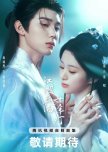
Ten years of rain in the jianghu… and a story drowned before it could rise.
The story could have been legendary, the concept more than compelling… if only the execution had cared.This drama had everything I usually love: epic stakes, layered wuxia politics, forbidden romances, and tension that almost feels tangible. The opening episodes are gripping: the younger generation caught in the unresolved conflicts of the past, secrets simmering just below the surface, and emotional stakes that immediately pull you in. You can feel the drama itching to be something great.
And then… it starts losing its footing. The script and adaptation are messy: plot threads appear and vanish, pacing jumps around, and the structure feels fragmented. Scenes are rushed or abruptly cut, leaving motivations unclear, emotional transitions clunky, and moments that could have been heart-stopping completely underdeveloped. I read a joke somewhere that “scenes start late and end early” and in this case, that’s not far from the truth.
The direction and editing are arguably the biggest problem. Moments that should feel powerful or heartbreaking often fizzle out because the show rarely lets them breathe. Characters who should feel layered come off flatter than they should, subplots feel more like interruptions than explorations, and even the fight scenes, which could have elevated the drama, end up underwhelming.
The individual performances are quite decent but the leads emotional connection and relationship dynamic doesn’t translate on screen. It feels less like a relationship unfolding and more like two performances happening side by side, never quite touching.
Despite my frustration, there are great moments. The atmosphere is gorgeous, with flowing robes, misty landscapes, and emotional tug-of-war. The story’s central premise, of past secrets shaping the present, might keep you invested. I’d still recommend the show to wuxia fans, because it still carries that old jianghu charm beneath the flaws.
In short, Generation to Generation is a drama of unrealized potential. The final episodes improve and the pacing steadies, but for most of its run, I found myself dwelling on what it could have been. For that reason, I can only give it a 6.5/10 - an intriguing premise that hints at depth and intensity, yet keeps stumbling over its own execution.
Was this review helpful to you?
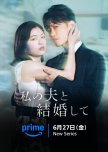
Not Your Typical Revenge Drama: A Quiet Story About Healing and Second Chances
IF YOU’RE SKEPTICAL ABOUT JAPANESE DRAMAS OR WORRIED THIS WILL BE ANOTHER OVER-THE-TOP REVENGE TALE, WATASHI NO OTTO TO KEKKON SHITE MIGHT SURPRISE YOU.This compact 10-episode series isn’t about loud confrontations or cliché payback. Instead, it’s a subtle, introspective journey centered on self-growth, forgiveness, and the courage to take new chances in life.
A WINDOW INTO JAPANESE CULTURE:
The drama reflects the quiet emotional restraint often found in Japanese storytelling. It explores deep themes like regret, guilt, and personal change, not through explosive scenes, but through quiet conversations, small gestures, and meaningful silences. If you're new to J-dramas, this is a gentle, reflective introduction that balances emotional realism with cultural nuance.
ACTING:
The cast delivers nuanced performances that pull you in, especially the leads whose chemistry feels natural and restrained rather than forced. They carry the emotional weight with believable depth, no melodrama, just real human moments.
DIRECTING & VISUALS:
Director Ahn Gil-ho (The Glory) brings his signature subtlety here, using soft lighting and careful framing to create intimate, emotionally rich scenes. The visuals never distract; they enhance the mood, guiding you gently through the characters’ inner struggles.
SCRIPT & PACING:
With only 10 episodes, some plot elements get trimmed, and the story feels tight, sometimes almost too tight for deep emotional investment. But this brevity works in the show’s favor, making every scene count. The script smartly focuses on character development rather than convoluted twists.
SHORTCOMINGS:
The limited runtime means some storylines and character arcs get less development than they deserve, leaving a few threads feeling rushed or underexplored. If you prefer intense drama or complex plot twists, the pacing might come across as too quiet. Viewers who enjoy deeper immersion may also find it challenging to fully connect in such a short span.
WHY WATCH:
If you want a drama that’s more about healing than hurting, more about quiet courage than loud revenge, and if you appreciate thoughtful storytelling wrapped in beautiful visuals and strong acting, give this a chance. It’s a breather from typical tropes and a reminder that sometimes, growth is the best kind of payoff.
QUICK TAKE: Highly recommended if you want something compact, emotionally honest, and quietly powerful without the usual drama fireworks. Actual rating: 8.5, bumped up to a 9 because this is how you wrap up a story right.
Was this review helpful to you?
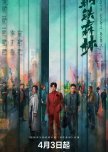
A Steel Forest of Secrets and Regrets
I went into this expecting a straightforward crime thriller.What I got instead was emotionally repressed people, unresolved feelings, regret wrapped in layered timelines… and somehow, a romance that slowly sneaked up on me.
A missing police gun resurfaces. An old case starts breathing again. Three people tied to the same past find themselves pulled back into something none of them ever fully left behind.
At first, it feels like a classic investigation drama: interconnected cases, shifting timelines, clues slowly falling into place. But the deeper it goes, the clearer it becomes that this story is less interested in solving the mystery than in what that truth does to the people carrying it.
That emotional side ended up being what carried the drama for me.
The structure constantly moves between past and present, slowly connecting cases and relationships without rushing its reveals. Early on, the tension works really well. There is a real sense that everything matters, even before you fully understand why.
That said, the thriller side definitely softens in the second half. The timeline occasionally tangles itself more than necessary, and there are moments where the story feels like it could push harder. Instead of intensifying, it becomes more reflective. Whether that works for you will probably depend on what you came for.
If you want a high-stakes, razor-sharp crime thriller, this may feel too restrained.
If you can appreciate a quieter, character-driven drama hiding inside a crime story, there is a lot more here.
Jing Boran’s Jiang Han Sheng slowly became the emotional center for me. He is emotionally restrained to the point of almost feeling unreadable at first, but never empty. Jing Boran plays him through pauses, restraint, and the constant feeling that something heavier sits underneath what is being said. Early on, his colder, more manipulative tendencies can make him difficult to warm to, but the drama eventually gives him enough emotional depth to earn that redemption.
Wenjing Cai brings warmth and quiet emotional restraint to Zhou Jin, even if the writing occasionally leaves the character feeling more functional than fully explored. It feels like one of those performances where the actress had more to give than the script allowed.
And Qin Junjie’s Jiang Cheng genuinely surprised me. What could have easily become a forgettable “ex-lover” role instead lingers underneath almost every emotional beat of the story. Even in quieter moments, his presence subtly reshapes how you understand both the past and the present.
The romance also won me over far more than I expected.
It never pushes itself aggressively to the front. Instead, it builds through shared history, restraint, small gestures, and all the things left unsaid. Jiang Han Sheng and Zhou Jin are not built on dramatic declarations. Their connection works because it feels lived-in.
And Jiang Cheng’s presence adds emotional weight without turning things into a frustrating rivalry. The drama understands that some feelings do not disappear cleanly, and sometimes timing matters just as much as love itself.
The ending stays true to the tone the drama builds from the beginning: bittersweet, emotionally consistent, and more interested in quiet closure than easy comfort.
I’d rate this an 8/10. It is not the sharpest crime thriller, and viewers looking purely for suspense may find it too soft. But as a character-driven story about regret, damaged people, lingering feelings, and emotional restraint, it worked surprisingly well for me.
Also, Jing Boran as an emotionally repressed crime profiler earned this drama an extra half point on charisma alone.
“Among all the sunsets, secrets and regrets… I’m glad I have you.”
Was this review helpful to you?
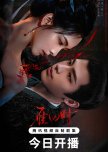
Sharp at First, Then It Blurs
I went into The Glory for the tension, and to be fair, the first half absolutely delivers.At its core, it is a story of survival within a hostile household, where every alliance feels temporary and every word carries more than it reveals. The setup is tight, the atmosphere is heavy, and the Zhuang household really does feel like a rogues’ gallery. There’s intrigue, controlled hostility, and just enough mystery to keep you leaning in.
For a while, it works.
Emotionally, the drama feels most alive through Ruan Xiwen. Wen Zhengrong brings an intensity that anchors the story, and Chen Duling holds her own well, quiet on the surface, but with enough edge underneath to make Hanyan compelling to watch. Together, they give the first half real weight.
But once that central narrative peaks, something shifts, and not in a good way.
Schemes begin to repeat and motivations start to blur, turning what once felt calculated into something increasingly convenient. The tension no longer builds; it stalls, giving the impression of complexity without real progression. You’ll need a solid suspension of disbelief, because in the second half the plot logic starts working only when it needs to.
The central pairing doesn’t quite bridge that gap either. On paper, Hanyan and Yunxi should carry a restrained, strategic tension, but in execution, it never fully translates. There’s a lot of stillness, a lot of quiet exchanges, but not enough emotional undercurrent to make it cutting. Instead of tension, it often feels like distance.
Xin Yunlai’s performance doesn’t quite help in that regard. His character should have been a strong counterbalance, but the restraint is pushed so far inward that it barely registers, flattening the dynamic instead of giving it the edge it needed.
In the end, The Glory is like a blade drawn with precision, raised high… but never quite brought down.
7/10. Strong concept, gripping first half, and solid performances (especially from the older cast), but weakened by a loss of narrative control and an ending that doesn’t fully commit to the impact it was building toward.
Was this review helpful to you?
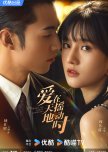
Brevity with Depth: A Rare Mini Gem
I don’t usually leave short length drama reviews, but this drama really hit the mark for its length.As someone who typically steers clear of mini dramas due to their brevity and the challenge of forming deep character connections in such a short span, Undercover Affair pleasantly surprised me. Despite its concise format, I found myself emotionally invested, a testament to its compelling storytelling and strong performances.
The acting is a standout feature. Leo Yang portrays A Sen with a captivating mix of aloofness and vulnerability, bringing depth to a character that could easily have been one-dimensional. Han Le Yao complements him very well as Ling Yi, imbuing her role with strength and nuance. Their chemistry is palpable, making their interactions both engaging and believable.
The theme song further elevates the drama. Its haunting melody and evocative lyrics resonate deeply, enhancing the emotional undertones of the series.
While mini dramas often suffer from rushed plots and underdeveloped characters, Undercover Affair manages to deliver a cohesive and engaging narrative. The pacing is tight, and the storyline, though compact, is rich with intrigue and emotional depth.
Undercover Affair stands out for its solid storytelling, believable romance, and the chemistry of the leads. However, I do feel that it could have benefited from a few more episodes to flesh out certain plot points.
It's a bit of a hidden gem for those who give it a chance, balancing mystery, romance, and strong performances in a compact format.. It's not merely a fleeting entertainment piece but a well-crafted story. Highly recommended if you like intense devotion, explosive chemistry and suspense.
Was this review helpful to you?

The Things We Keep Living With
Some dramas entertain. Others quietly settle somewhere deeper, lingering long after they finish not because they shouted loudly enough to be remembered, but because they recognized something quietly human. Will Love in Spring belongs firmly to the second category.At its core, this is a realistic romance between two adults who have learned, in very different ways, that life rarely unfolds according to the version we imagine for ourselves. Chen Maidong, a funeral makeup artist whose profession keeps him unusually close to mortality, and Zhuang Jie, a medical saleswoman living with a disability and carrying both visible and invisible scars, reconnect in a story far less interested in romantic fantasy than in the quieter realities of companionship, loneliness, grief, family expectations, and the exhausting process of learning how to continue after disappointment. Although marketed as romance, the drama often feels equally concerned with loss itself — not simply death, but the many quieter losses life accumulates along the way: abandoned versions of ourselves, unrealized expectations, strained relationships, and the difficult acceptance that healing never arrives cleanly or completely.
Perhaps what impressed me most was the drama’s restraint. It rarely turns difficult subjects into spectacle or emotional manipulation. Instead, disability, grief, caregiving, mortality, and emotional isolation are approached with unusual patience and emotional maturity. Chen Maidong’s profession especially gives the story a reflective texture, repeatedly reminding the viewer of mortality without forcing sentimentality upon them. The drama seems deeply aware of something uncomfortable but profoundly true: pain does not always disappear; often, people simply learn how to carry it differently.
Perhaps timing played a role, but having recently experienced loss in my own life, I suspect certain scenes landed with an emotional sharpness they may not have otherwise. Not because the drama attempts to overwhelm emotionally — if anything, it does the opposite — but because some moments recognized grief in a way that felt quietly familiar. The scenes that moved me most were often not the loudest, but the smallest: hesitation, silence, ordinary conversations carrying emotions too heavy to say directly.
That said, the drama was not without frustrations. Zhuang Jie occasionally tested my patience, and there were moments where her emotional contradictions and push-and-pull dynamic felt difficult to fully embrace. Yet, strangely enough, I think part of that frustration also made her feel more human. She is not endlessly patient, endlessly likable, or emotionally tidy. Instead, she feels like someone shaped by disappointment, pride, vulnerability, and unresolved hurt; sometimes admirable, sometimes frustrating, but recognizably real.
The chemistry between the leads also benefits from a maturity that feels increasingly rare. Rather than relying on dramatic soulmate declarations or heightened romantic fantasy, the relationship unfolds through awkwardness, emotional hesitation, care, misunderstandings, and the quiet recognition of two people slowly learning that vulnerability may not always lead to loss.
Like spring itself, this drama does not arrive loudly. It arrives gradually. Quietly. And before you fully notice, something about it lingers.
I would especially recommend this to viewers who appreciate quieter, character-driven stories; romances built less on dramatic spectacle and more on emotional nuance, warmth, healing, and the complicated ways people learn to live beside loss. Those expecting fast pacing or heightened melodrama may occasionally find its restraint frustrating, but for viewers willing to sit with silence, vulnerability, and emotional imperfection, there is something quietly rewarding here. I say this as someone who rarely gravitates toward modern slice-of-life dramas: there was something quietly persuasive about the emotional sincerity of this one.
8.5/10. Flawd in places, emotionally sincere in others, and unexpectedly moving in the quiet way stories about grief and learning to continue sometimes are.
Was this review helpful to you?
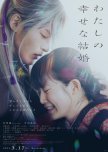
This review may contain spoilers
A Dream That Finds a Home
I rewatched As Long as We Both Shall Live today because I needed something soft. Not something intense or emotionally draining, just something calm that lets you settle into it without resistance.And this really is that kind of film.
It doesn’t feel like a story that unfolds in big moments. It feels more like a quiet shift. Like stepping out of a long stretch of cold into a space that isn’t warm yet, but no longer hurts to exist in.
Miyo lives in that kind of emotional winter at the beginning. Not loud, not dramatic, just constant. The kind that slowly shapes how you see yourself. So when she’s sent into this arranged marriage, it doesn’t feel like anything is about to change. Just another place to endure.
What I liked is that the movie doesn’t rush to prove otherwise.
Kiyoka isn’t written as a sudden contrast. He’s not warmth all at once. He’s just steady; controlled, distant, but consistent in a way that slowly starts to matter. Their relationship doesn’t build through dramatic turning points, but through small, almost quiet shifts. A sense of safety that grows without needing to be announced.
The fantasy aspect stays mostly in the background, but it adds an interesting layer, especially with Miyo’s ability, the Dreamweaver power. At first, she’s treated as if she has none, which is why she’s dismissed so easily. But her ability is actually one of the rarest. It works through dreams, memory, and the subconscious, something you don’t see on the surface, but that quietly shapes everything underneath. And that fits her character in a way that feels intentional. Miyo has always been someone whose world exists internally, suppressed, unheard, unseen. So when that ability begins to surface, it doesn’t feel like a dramatic reveal. It feels like something that was always there finally being allowed to exist. Not loud, not overwhelming, just present.
Visually, the movie leans into that same softness. Muted tones, gentle lighting, and a kind of stillness that carries through almost every scene. It captures its atmosphere really well without trying too hard to impress. It just lets the mood settle.
The performances follow that same approach. Nothing feels exaggerated. Miyo’s fragility stays grounded, and Kiyoka’s restraint never feels empty. Both actors keep everything contained in a way that actually works for the story, making their dynamic feel natural.
If there’s a weakness, it’s in how much the film holds back. You can feel there’s more beneath the surface, more to the world, the politics, even the Dreamweaver concept, but two hours isn’t enough to fully explore it. What should feel layered instead comes across as lightly sketched, with key elements introduced but never given the space to truly develop.
This is where the film loses some of its potential. The emotional core is strong, but the surrounding world feels underbuilt in comparison. It’s the kind of story that hints at complexity without fully committing to it, which makes parts of it feel smaller than they could have been. It’s easy to imagine this working far better as a 10-episode series, where both the characters and the world have room to breathe. As it stands, the film captures the feeling of the story, but not its full depth.
Despite its limitations, I’d still rate it a strong 8.5, rounded up to a generous 9, not for a groundbreaking plot or narrative complexity, but because of how much I enjoyed it. And maybe it doesn’t hurt that I have a soft spot for silver-haired generals; though this time, even that blends seamlessly into the film’s calm, restrained tone.
A gentle, atmospheric movie carried by strong performances and beautiful cinematography. While the story feels larger than its runtime allows, it delivers a calm, quietly comforting experience. Even if fantasy isn’t your genre, its atmosphere alone is enough to draw you in.
Was this review helpful to you?
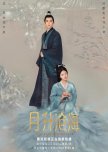
A Love That Grows With Time
This review covers both Part 1 and Part 2 of Love Like the Galaxy.Watching parts of this drama again made me realize I never wrote a proper review for it, and I can’t let that stand — this show deserves it. From the first scene to the last, I felt transported, not just watching the story unfold but living it alongside the characters.
The world feels vast and real, the politics and palace intrigue intense, yet all grounded by the heart of the story: Ling Buyi and Cheng Shaoshang. Their chemistry is extraordinary — every glance, every silent understanding, every shared burden makes you believe in them entirely. Their slow, painstaking journey toward trust and mutual respect is captivating, messy, and utterly human. Much of the yearning is Ling Buyi’s one-sided devotion for a while, which makes sense given Shaoshang’s tender age at the beginning of the drama. So if you prefer romance that blooms mutually from the start, keep that in mind. But it’s precisely this gradual recognition and growth that makes their eventual bond so rewarding.
Side characters added depth and life without stealing the spotlight. Yuan Shanjian, Lou Yao, Wan Qiqi, Yue Fei… each brought charm, humor, or a unique perspective, making the palace feel like a living, breathing place. Emperor Wen is a delight, always nudging Ling Buyi toward marriage with good-natured insistence, while the dynamic between the dignified Empress Xuan and straightforward Consort Yue was refreshingly healthy; seeing such a layered, non-toxic relationship between an Empress and a Consort was a real joy to watch.
Some side plots felt stretched, and a few filler scenes slowed the pacing; I wish the story had focused even more tightly on the main couple and their growth. Issues are sometimes resolved too easily, characters forgive too quickly, or it seems like many “rescues” happen just in time. Yet, even when the narrative meandered, I never lost the emotional pull. The dialogue is interesting, the atmosphere immersive, and the performances solid from both mains as well as side characters. While I would have absolutely loved a proper wedding scene — the kind of celebration that would have truly sealed their story — the private vows beneath a star-filled sky made up for it entirely. That quiet, intimate moment felt like the universe itself was witnessing their promise to each other.
By the end, what stays with me isn’t just the romance, or the palace intrigue, or the plot twists. It’s the way the drama made me feel: transported, invested, carried away.
Rating: 8.0/10, because despite the writing/pacing issues, if you don’t take it too seriously it’s a engaging watch; one of those dramas that makes you forgive every filler episode just because it feels that good.
Was this review helpful to you?
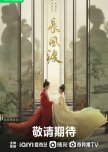
Sometimes the greatest strength is not ambition, but loyalty.
I don’t know why I never picked up Destined earlier, but I’m glad I finally came to it now. It’s one of those costume dramas that doesn’t hit you with big spectacle, but instead wins you over with a quieter, steady charm.Romance & Chemistry
This was the strongest part for me. Jiusi and Yuru’s relationship isn’t built on manufactured misunderstandings but on trust and loyalty. That makes their bond believable not just in the “falling in love” stage, but across the long haul. Their chemistry is warm and steady — you actually buy into the idea that they could survive everything together.
Character Growth
Another highlight. Gu Jiusi’s arc from a spoiled young master to someone who shoulders responsibility for family and country is written and acted very convincingly. Liu Yuru’s growth is quieter but no less meaningful — she goes from cautious and reserved to someone strong, composed, and equal to him. Watching them evolve separately and together gave the drama weight.
Politics & Plot
Here’s where it wobbles. The first half kept the political intrigue tight and engaging, but the second half lost some of that energy. The plotting became uneven, and some storylines felt dragged out. Still, it never collapsed completely — the emotional throughline of the romance carried it even when the politics weakened.
Acting & Execution
Overall strong, especially from Bai Jingting, who really embodied Jiusi’s transformation. Song Yi, it took me some to warm up to her character gradually, she gave Yuru a quiet strength that grew on me. Toward the last quarter, though, there were a few moments of overacting, and some scenes felt heavier than they needed to be.
Overall
Destined isn’t flawless — the political plot could have been sharper, and the pacing dips in the later part. But what it does get right, it really gets right: a romance that feels believable, characters who grow in satisfying ways, and a tone that manages to stay serene yet hopeful throughout.
Why Watch (or Skip)
🙘 If you appreciate character-driven stories and slower pacing, you’ll find a lot to love here. (If you’re only in for non-stop plot twists, this probably isn’t for you.)
🙘 A romance built on trust and loyalty rather than contrived angst.
🙘 Strong acting and a couple with believable, long-term chemistry.
🙘 Satisfying character growth, especially the ML’s transformation.
🙘 A hopeful, serene tone that lingers even when the politics wobble.
If you value solid character work and a couple that actually feels like a team, this one is worth your time.
Was this review helpful to you?
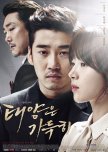
A Noir Romance with Weight and Emotion That Aged Like Fine Whiskey
If you crave a K-drama with grit, gravitas, and a slow-burning, emotionally grounded romance, Beyond the Clouds is a rare gem from 2014 that still holds its weight a decade later. With Yoon Kye-sang delivering one of his best performances as a wronged man walking a morally gray line, and Han Ji-hye matching his intensity with her quiet strength, the chemistry simmers, not flashy, but deep and believable.The noir-style cinematography and haunting soundtrack set a tone that’s cinematic and immersive, a refreshing departure from the usual high-gloss rom-com aesthetic. The romance doesn’t shout, it aches. It’s the kind of love story that carries tension, tragedy, and consequence, resonating deeply for those who appreciate stories where emotions are earned, not exaggerated. The thriller aspects are tightly constructed and grounded in strong character motivation rather than sensational twists, making the stakes feel real.
Of course, the drama isn’t without flaws. The pacing becomes uneven midway through, with a few subplots that meander more than they move. And unlike many modern dramas, Beyond the Clouds doesn’t spoon-feed its emotions. You have to lean in, pay attention, and sit with the silences. It’s not a light binge-watch; it’s more of a “sip slowly and feel everything” kind of experience.
Final word: If you’re drawn to stories of revenge, redemption, and real, raw romance, this is a must-watch. It may not be without flaws, but it dares to be different. And in a sea of safe, shiny dramas, that’s something to raise a glass to.
Was this review helpful to you?
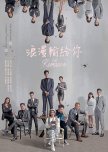
Sometimes Escapism Knows Exactly What It's Doing
There are dramas that ask to be analyzed.Lost Romance politely asks you to leave your overthinking at the door.
When editor Zheng Xiao'en falls into a coma and wakes up inside the very romance novel she's been editing, she quickly realizes she's not the heroine. She's the glamorous villain destined to lose. Naturally, she decides that destiny clearly needs a rewrite.
And... that's where the fun begins.
Trying to judge Lost Romance by the standards of realism feels a little like criticizing cotton candy for lacking nutritional value. This is a fantasy rom-com that knows exactly what kind of story it wants to tell. The rules are intentionally ridiculous, the humour is wonderfully self-aware, and the drama has no problem poking fun at every romance cliché it enthusiastically embraces five minutes later.
The greatest strength of the series is its sense of play. It constantly reminds the audience that it understands the genre just as well as we do. CEOs become exaggerated versions of themselves, romance tropes are lovingly dismantled before being rebuilt again, and the line between parody and genuine affection for idol dramas becomes increasingly blurred. Somehow, it manages to laugh at the genre while simultaneously celebrating it.
Vivian Sung is the heart of all this chaos. Xiao'en is loud, impulsive, shamelessly dramatic, and completely aware that she's trapped inside a fictional romance. Instead of waiting for the plot to happen to her, she actively negotiates with it. Her comedic timing is excellent, and beneath all the exaggerated reactions lies a surprisingly sincere emotional performance whenever the story decides to slow down.
Marcus Chang has the unenviable task of playing two versions of essentially the same man, and he does so with enough subtle differences that both relationships feel distinct. Yet, like many viewers before me, I have a confession to make.
Qing Feng happened.
Second Lead Syndrome is hardly a rare medical condition in dramaland, but this drama makes a particularly compelling case for it. Qing Feng possesses that calm warmth, emotional intelligence, and effortless charm that occasionally threatens to hijack the entire romantic equation. He isn't simply written as "the nice guy." He feels like someone whose kindness exists independently of whether the plot rewards it. I found myself quietly rooting for his own happy ending.
The rest of the supporting cast deserves credit as well. Every actor seems fully committed to the wonderfully absurd premise, which is exactly why the comedy works. Nobody behaves as though they're embarrassed by the material. The drama embraces its own ridiculousness with complete sincerity, and that confidence becomes infectious.
That doesn't mean everything works equally well. The real-world storyline is noticeably less engaging than the novel world, and whenever the drama leaves its fictional universe behind, some of its momentum goes with it. The pacing also becomes uneven in the second half, and a few emotional conflicts linger longer than necessary. Like many fantasy romances, it occasionally asks the audience not to inspect the mechanics too closely. Fortunately, it earns enough goodwill that I rarely wanted to.
Sometimes we watch dramas to admire extraordinary writing. Sometimes we watch them because they make us smile after a long day. Lost Romance belongs firmly to the second category, and I don't think there's anything lesser about that.
It isn't flawless. It isn't particularly subtle. But it is charming, self-aware, consistently funny, surprisingly romantic, and populated by a cast that seems to be having just as much fun as the audience.
Sometimes that's exactly the kind of story we need.
Was this review helpful to you?
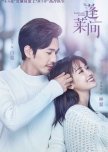
The Long Goodbye We Call Healing
Supernatural dramas often promise magical worlds. Fairyland Lovers offers something much quieter instead.At its heart is Bai Qi, a mysterious spirit doctor who helps supernatural beings free themselves from the obsessions preventing them from moving on. Joined by the warm-hearted Lin Xia, what begins as a collection of seemingly independent supernatural cases gradually unfolds into a story about grief, redemption, love, and the quiet burdens people continue carrying long after life has asked them to set them down.
There was something almost nostalgic about that simplicity. Modern dramas increasingly ask us to solve puzzles, anticipate betrayals, search every conversation for hidden clues, and prepare ourselves for the next shocking revelation. Fairyland Lovers asks something much simpler. It simply asks us to feel.
Every spirit Bai Qi encounters carries a different obsession, yet none of those obsessions feel particularly supernatural. They are recognizably human: love that refuses to fade, guilt that lingers for years, promises left unfulfilled, and people unable to forgive themselves or say goodbye. As the series progresses, it quietly reveals that Bai Qi himself is carrying the oldest obsession of them all. His journey toward healing others gradually becomes a journey toward healing himself, and I loved how naturally those two ideas became inseparable.
Bai Yu`s Bai Qi is charismatic without trying too hard, quietly confident, occasionally arrogant, yet deeply compassionate beneath the surface. What impressed me even more, however, was Hei Qi. Although the two characters share the same face, they never once feel like the same person. Through subtle changes in posture, expression, voice, and emotional energy, Bai Yu creates two entirely distinct personalities.It's the kind of performance that never loudly announces itself, yet quietly reminds you how much acting can be accomplished through the smallest details.
Zheng Qiuhong deserves just as much praise. Lin Xia could easily have become one of those endlessly curious heroines whose enthusiasm gradually turns into irritation. On paper, there are certainly moments where she risks feeling overly nosy or impulsive. Yet Zheng Qiuhong brings so much sincerity, warmth, and natural charm to the role that those very qualities become endearing rather than exhausting. Another actress might have made the character difficult to like. She somehow makes Lin Xia feel wonderfully real.
The drama understands that healing rarely happens through sadness alone. Gentle humour, quiet romance, and moments of everyday warmth are woven naturally between the heavier themes, allowing the emotional weight to breathe instead of becoming oppressive. That rhythm of laughter followed by quiet reflection felt remarkably close to life itself.
As we grow older, I sometimes think it becomes harder to be profoundly moved by sadness. Life quietly teaches us how to protect ourselves. We learn to filter certain emotions just enough that they don't overwhelm us, and we keep moving forward.
What stayed with me about Fairyland Lovers is that it occasionally slips past those defenses without relying on emotional excess. Hei Qi's helpless trembling after Lin Xia is stabbed, the quiet reconciliation beneath the tree, or Bai Qi standing with two cans of beer while pretending to be far more composed than he truly is. None of these scenes depend on dramatic speeches or manipulative music. Instead, Bai Yu allows helplessness, relief, resignation, and love to coexist in the smallest gestures. The drama trusts silence just as much as dialogue, and those restrained moments become its most memorable.
The episodic structure was another pleasant surprise. Rather than feeling like filler between the main storyline, nearly every individual case stands comfortably on its own while quietly enriching the larger narrative. The supporting cast is consistently strong, making it remarkably easy to become invested in characters who may only remain for a single episode. At the same time, the central mystery continues moving forward without ever making those individual stories feel disconnected from the whole.
My biggest reservation is that the drama occasionally becomes a little too content with its own quiet rhythm. That gentleness is part of its charm, but it also means that not every episodic story leaves an equally lasting impression. A handful could have been condensed, and there were moments when Bai Yu's nuanced performance seemed to carry scenes further than the screenplay itself. The result is a drama that is consistently sincere and emotionally rewarding, even if it never quite becomes as unforgettable as it had the potential to be.
"Waiting for a flower to bloom, waiting for someone to return."
Waiting is such a curious word. Sometimes the person returns. Sometimes they don't. Yet having someone worth waiting for already carries its own quiet beauty. There is something deeply comforting in that thought, and I think Fairyland Lovers understands it remarkably well.
If you find yourself drawn to quieter stories that value emotional sincerity over constant spectacle, I think Fairyland Lovers has something quietly beautiful to offer. It isn't really a story about spirits.It's a story about people. About the things we carry. About the people we wait for. And about the quiet hope that, one day, we might finally learn to let go.
Was this review helpful to you?


