
 News
News 

 1
1


This review may contain spoilers
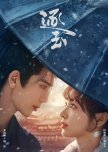
A visually exquisite drama with a heart-stealing lead couple.
Important clarification: I haven't read the novel, so my opinion is based solely on what the drama offers. And what it offers, in general, I quite enjoyed."Pursuit for Jade" is, above all, a feast for the senses. From the very first episode, the photography, cinematography, set design, and costumes transport you completely to ancient China with impeccable quality. Every scene is meticulously crafted, every garment seems lifted from a painting, and the visual direction imbues each shot with weight and beauty. It's one of those dramas that can be enjoyed even with the sound off, simply for its aesthetic appeal.
It's not the first time I've seen a work by Tian Xi Wei or Zhang Ling He, but seeing them together has been a real treat. Their chemistry is palpable and, at least from my perspective, stands out as one of the drama's strongest points. They manage to build a dynamic that balances romantic tension, humor, and emotional vulnerability with a naturalness that makes you invested in their relationship from the very beginning.
That said, there are details I would have liked to see explored in more depth: the discovery of his identity, when she discovers he is the Marquis, the conflict is resolved too quickly. I would have appreciated more time for her anger to fester, for her not to forgive him so easily. A well-managed grudge would have created more emotional tension and made the reconciliation more cathartic.
The fear of the Marquis: throughout the series, we are told that everyone fears him, but there are no scenes that truly show why. His reputation is told more than shown, and this somewhat dilutes the impact of his character at certain moments. And the political plot: there are moments, especially when political and strategic matters are discussed, where you have to pay close attention to avoid losing track. It's not that it's poorly developed, but it demands a level of concentration that contrasts with the lighter tone of other moments. It's not a flaw in itself, but it might throw off those looking for a more relaxed viewing experience.Despite these minor issues, the drama skillfully balances its different registers: there are genuine laughs, heart-melting romantic moments, poignant scenes of sadness that tug at your heartstrings, and twists of betrayal that maintain interest. This variety prevents the story from becoming monotonous and keeps the viewer hooked.
However, I felt the ending was a bit weak compared to the rest of the journey. It's not bad, but perhaps it's resolved more hastily than the story built up to that point deserved. Even so, at least we got a happy ending for the protagonists, which is no small feat in this genre.
Special mention for Li Huaian, one of my favorite characters. I was glad that he also got closure and that the drama didn't leave him forgotten. The secondary characters, in general, are well-developed, and all the actors are gorgeous and deliver top-notch performances, which contributes to the overall feeling of solidity and care (although I would have liked to see what happened to the princess and the strategist).
It's a drama that's enjoyed with both the eyes and the heart. The production is top-notch, the lead actors have captivating chemistry, and its ability to blend genres makes it highly entertaining. It suffers from some plot developments that could have been explored further and an ending that feels somewhat rushed, but overall it's a very satisfying experience. Ideal for those looking for a historical drama with romance, charismatic characters, and impeccable technical execution.
Was this review helpful to you?
This review may contain spoilers
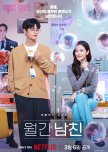
A technological dream turned into a light and charming romantic comedy.
This drama came to me without high expectations and left as one of those dramas that brings a constant smile to your face without needing grand tragedies or epic plot twists. And sometimes, that's exactly what you need.The idea of a simulation world where you can subscribe to different types of boyfriends and experience scheduled dates is simply delightful. The drama develops this concept solidly: it's not just a promotional hook, but explores the emotional implications, the possibilities, and even the limitations of such technology. And I confess that, as a viewer, I was left wanting it to exist in real life. I would definitely buy one too.
I know Jisoo isn't a trained actress, but for this type of character, her performance works wonderfully. Her character has that mix of innocence, endearing clumsiness, and comical bad luck that makes her incredibly real and relatable. Far from feeling forced, her acting brings a natural freshness that fits perfectly with the drama's lighthearted tone. And visually, needless to say: she always looks gorgeous, with outfits that are a pleasure to look at.
As an avid manhwa reader, the subplot about the publishing platform and the lives of authors was particularly appealing to me. Seeing that world reflected—with its pressures, deadlines, and stories that resonate with readers—added a layer of authenticity that I appreciated. It wasn't just a backdrop; it was seamlessly integrated into the characters' development.
I've been following Seo In Guk since "Doom at Your Service," and in this drama, he gives us a very different but equally captivating character. Here, he plays a shy, introverted, and reserved man, but with a disarming capacity for love. His evolution throughout the series—learning to open up, to let go of control, to allow himself to be loved—is very well-paced, and his chemistry with Jisoo is sweet and believable.
"It's not a profound plot, nor is it life-changing." And that's perfectly fine. This drama knows what it is and stays true to itself: a lighthearted romantic comedy with an original concept, adorable characters, and a brisk pace. It doesn't aim for philosophical reflections on technology or tearjerker dramas. Its goal is to entertain, charm, and give you a good time. And at least for me, it succeeds brilliantly.
If you're looking for a drama that will make you smile, make you sigh with its romantic moments, and present a premise so original that you'll wish it existed, this drama is the perfect choice. Jisoo shines with her natural charm, Seo In Guk once again demonstrates his versatility, and the combination of a technological world, simulated dates, and the universe of manhwa creates a delightful and addictive mix. Ideal for binge-watching when you need something lighthearted but heartfelt.
Was this review helpful to you?

This review may contain spoilers
A journey between two realities, with visual and narrative successes.
"Love Between the Lines" presents an interesting and engaging concept from the outset: a virtual reality game that transports the characters (and the viewer) to the exquisite and turbulent Republican China. Although this setting wasn't extensively featured on screen, the in-game atmosphere and costumes are visually stunning, creating an immersive experience. The contrast becomes even more powerful when the protagonists return to their modern reality, a drastic and refreshing change that allows for a deeper exploration of their personalities in two completely different situations.The protagonist, played by Lu Yuxiao, is a breath of fresh air. Her determination, cheerful, funny, and decidedly non-submissive personality make her an easy character to love and admire. Lu Yuxiao, besides being beautiful, once again demonstrates her great chemistry with her co-stars. This time, she creates a strong connection with Chen Xingxu, who takes on a more serious, complex, and reserved role, resulting in a perfect dynamic with her energy.
The romance unfolds organically; mutual interest and attraction flow naturally, without any forced elements. One aspect worth highlighting is the integration of architecture into the main plot. Far from being a technical or tedious theme, it's handled with interest and lightness, adding depth to the characters' motivations and enriching the story without slowing the pace.
The supporting cast also shines, especially through the story of the protagonist's friend. This subplot offers the other side of love: a raw and realistic portrayal of how affection can erode in a marriage, where a loss of interest and indirect infidelity act as the final trigger. It's a powerful and well-executed complementary narrative. And the construction of the protagonist's stepbrother. Far from being a one-dimensional antagonist, he's a character with whom you come to deeply empathize, as he carries the weight and expectations of his father. He's not evil, but rather another victim of family circumstances, and his interaction and chemistry with the protagonist add a layer of complexity and tension that is very well handled.
However, the drama falters slightly toward the end, at the emotional climax, when the male protagonist is blamed for his father's issues—a burden that, while not directly his responsibility, falls unfairly upon him. Even the female protagonist, Hu Xiu, unconsciously blames him through external influences (regarding her father and his friend). This conflict, while narratively understandable, created a certain unease, as the character seemed to be carrying a guilt that wasn't entirely his. And, although the resolution is satisfying, the ending itself feels somewhat bland and predictable, lacking the emotional impact that the characters' journey deserved.
Was this review helpful to you?
It was a pleasant surprise.
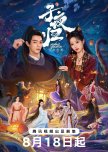
It's the kind of drama that captivates you with its aesthetic beauty and keeps you engaged with a plot that, without being overly complex, manages to connect. The effects are very well done, believable, and integrate perfectly with the narrative. But where the drama truly shines is in its art direction. The costumes are absolutely marvelous; every detail of the clothing reflects the personalities of the characters, demons, and the era. The acting is quite passable. The cast performs well, conveying the emotions needed to make the story believable and enjoyable to follow. This is one of its greatest strengths. It's a story that flows without falling into unnecessary drama, exaggerated sadness, or frustrating complications.My only "but," and it's more of a personal wish, is that I would have loved to see more of the Snake Lady's partner.
Was this review helpful to you?
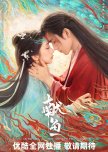
Take all the classic ingredients of the Xianxia in a fresh and highly entertaining.
From the first episode, the high quality of the production is evident. The costumes are marvelous, full of detail and color, which greatly helps immerse you in the story. The special effects are very well done, believable, and add a spectacular touch to the action and magic scenes without seeming over-the-top.Chen Feiyu, besides having an imposing presence and being very handsome, brings his character to life with the necessary depth. But the revelation for me was Wang Yinglu. It was the first time I saw her act, and I was enchanted. She is very beautiful, and her performance was excellent; she managed to make her character comprehensible, not at all heavy, and gave it just the right touch of charisma and strength. And the fact that her character came from the "outside world" and uttered modern phrases the other characters didn't understand created some very comedic moments and a unique dynamic. This clever contrast added a novel twist to the typical xianxia plot. The romance was one of the story's pillars and was very well developed. The chemistry between the protagonists was palpable, and it was appreciated that they weren't shy with their displays of affection. The kisses (and there were plenty of them) were a success, believable, and satisfying for those of us looking for a good love story.
If I had to point to something that left me with a bittersweet taste, it would be the ending. While it's emotional and brings the main arc to a close, I would have liked to see more of their reunion in "normal life." A slightly longer scene showing how they begin their new life together, after so much suffering, would have been the perfect, well-rounded conclusion. I was left longing for a more detailed epilogue.
Was this review helpful to you?
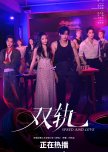
An exciting, adrenaline-filled Wattpad-style series.
“Speed and Love” is exactly what it promises: a cliché story, in the purest Wattpad style, but told with such energy and passion that it is surprisingly exciting and addictive. It is not a complex, innovative, or life-changing plot, but it perfectly fulfills its objective: to entertain, quicken the pulse, and sweeten the heart.One of its greatest successes (apart from taking place almost entirely in Thailand) is that the plot genuinely focuses on the world of car racing. It's not just a decorative backdrop; racing is an essential part of the story, and even the cars are presented as secondary characters, with their specifications and the personality of each driver, adding a layer of authenticity that will be greatly appreciated by motor racing fans.
Esther Yu shines with her unique style. For those of us who are already familiar with her work, her voice is not a problem, but a distinctive feature. In addition, her wardrobe and the evolution of her character are a strong point: she goes from being an impulsive girl to someone with greater determination and maturity without losing her essence.
He Yu pleasantly surprised me. This is the second work of his that I've seen and the first in a modern drama, and I must say that he conveys a convincing and charismatic masculinity. His portrayal as a pilot is impeccable, and yes, he looked extremely handsome on screen. His chemistry with Esther is palpable and carries much of the romance.
The pace is fast, romantic, full of tension (both emotional and on the tracks), and keeps you interested episode after episode. It's the kind of drama that doesn't require a lot of mental effort, but hooks you with its adrenaline-fueled scenes and sweet moments.
In short: If you're looking for a light, predictable but highly entertaining story, “Speed and Love” is a safe bet. It's pure Wattpad entertainment: fast cars, intense romance, charismatic protagonists, and an ending that leaves you smiling. Perfect for weekend marathons or to clear your mind after a hard day.
Was this review helpful to you?
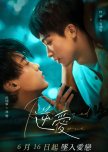
Marks a turning point for me in the Chinese BL landscape
It is the first Chinese production to bring together all the elements with outstanding quality: a well-structured and well-paced plot, an ideal number of episodes that allows for development without filler, convincing performances, and impeccable overall production.I was fascinated by the sensitivity with which they approached the emotional universe of the characters. The exploration of their feelings, conflicts, and insecurities was deep and real, earning a score of 10 from me in this regard. I also highlight the success in handling intimacy; scenes of sexual tension were present but did not fall into gratuitousness or heaviness, instead contributing to the story and the development of the relationship.
In a context where BL productions in China face challenges, 'Revenged Love' demonstrates the immense creative potential that exists. I just hope there will be greater openness for these types of stories to continue to be produced, because China has everything it takes to become a leader in the genre.
Was this review helpful to you?
This review may contain spoilers
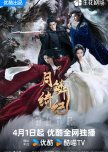
A visual feast that sacrifices depth for spectacle.
When we talk about Guo Jing Ming, we know what we're in for: dazzling sets, dreamlike cinematography, costumes that look like they've stepped off a runway, and an obsession with aesthetic beauty. And in "Veil of Shadows," of course, every shot is a postcard, every character appears sculpted by an artist, and the wardrobe and styling reach truly impressive levels of detail. Visually, the drama is "a work of art in motion".The story evolves with multiple plot twists that, contrary to what might be expected, I found a bit convoluted. However, the drama tries to weave events together with a certain clarity, at least for most of its runtime. It's entertaining, holds your interest, and, in the end, the characters could be said to have a happy ending (or at least one that tries to be).
And here comes the big "but." Unlike other works by the director, in this one I couldn't grow fond of or deeply connect with the characters. And that's a problem when the plot depends on you caring about what happens to them. The relationships and dynamics between the characters, in my opinion, lack the necessary depth for the viewer to invest emotionally. You see what they do, but you don't feel why they do it beyond the superficial.
And there came a point where I no longer knew who the main protagonists were. The focus shifts so much and is spread across so many characters that the narrative compass becomes blurred. This, combined with a final phase where the conflict is reduced to a spiral of "sacrifice + sacrifice + I'll sacrifice myself so you don't die," ends up being more tiresome than emotional. Self-sacrifice loses all its weight when it becomes the only available dramatic resource.
As for the*demon villain, there's no depth given to his background, his real motivations, or what led him to become what he is. He's evil just because, because the plot needs a big bad. And when the time comes to face him, the solution appears at the last minute, is confusing, and feels more like an excuse to give a moment of glory to all the characters who had some weight during the series. It's a functional ending, but empty.
Despite everything, I enjoyed it. I can't deny that the combination of polished aesthetics, constant twists, and a brisk pace makes the episodes interesting. The OST is also good and accompanies the key scenes well. Guo Jing Ming knows how to create atmosphere, knows how to sell short-term emotions, even if he doesn't sustain them later.
"Veil of Shadows" is a drama that dazzles on the outside but remains somewhat hollow on the inside. Its technical craftsmanship is outstanding, its entertainment value is guaranteed, and it has moments of genuine interest and drama. But the lack of emotional connection with the characters, the slight plot confusion, the overuse of the sacrifice trope, and a poor villain and final resolution hold back what could have been a memorable work. If you're looking for something visually spectacular to pass the time, it delivers. If you're looking for a story that touches your heart, you might be left wanting.
Was this review helpful to you?
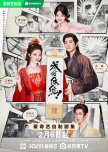
This review may contain spoilers
Transmigration turned into entertainment, drama, and romance without inhibitions.
I confess that I came to “How Dare You?” without having read the novel, the manhua, or seen the donghua and minidrama. And perhaps because of that, because I had no expectations or comparisons to make, I was treated to one of the most pleasant surprises of the year. This drama is, quite simply, a delight from start to finish.The cast is impeccable. Wang Chu Ran and Cheng Lei not only have chemistry, but they carry the credibility of a crazy premise on their shoulders and make it work. She shines in the duality of being a modern woman trapped in the body of a seductive consort; he, as the tyrant Zhang San (Xiahou Dan), manages to be terrifying, ridiculous, vulnerable, and adorable in a matter of seconds. Their evolution within the book, especially his considering he lived a long time trapped in that reality, is one of the emotional pillars of the story.
What I liked most is how the drama takes the cliché of “entering the book” and revitalizes it. The protagonists do not leave their modern humanity behind: their 21st-century essence constantly clashes with the rules of the ancient world, creating hilarious situations but also interesting dilemmas. The premise is simple but effective: they have to survive by playing the tyrant and the seductive consort while trying to change the destiny written in the book. And they do so with intelligence, humor, and a lot of romantic tension.
The drama strikes an enviable balance between comedy, romance, drama, and intrigue. There are moments of genuine laughter, scenes that quicken the pulse, and others that tug at the heartstrings. The funny moments are not mere comic relief, but an essential part of the characters' personalities and their way of coping with a world that is not their own.
The villain, Prince Duan, is another success. He is human, truly evil, and above all, consistent: he will never love anyone but himself, and the drama does not attempt to falsely redeem him. The secondary characters are also well drawn; there are several that you end up growing fond of, which enriches the journey.
If I have to find a fault (and that's why I'm not giving it a 10), it's the ending. Not because it's bad—it's happy and satisfying—but because of that device so typical of transmigration dramas: the scene where they meet in the real world and look at each other. I admit, it bothers me. I would have loved to see more exploration of their adaptation to modernity, especially in the case of Zhang San, who spent so much time inside the book. A few specials showing his life in the present, with its conflicts and culture shock, would have been the perfect finishing touch.
Conclusion:
“How Dare You?” is a drama that embraces its absurd premise and turns it into gold. With charismatic performances, a brisk pace, well-constructed characters, and an enviable balance between genres, it becomes an addictive and hugely enjoyable experience. Yes, the ending plays with a cliché that I personally don't like, but the journey is so fun, intense, and romantic that I forgive everything. I loved it, and I loved it a lot.
Was this review helpful to you?
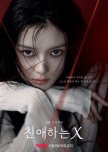
This review may contain spoilers
Dear X: A Brilliant Psychological Study of an Unpunished Villain
"Dear X" is a drama that, from its title onward, subtly deceives us. For those seeking a story of redemption or healing love, this is not the place. This drama was never about romance; it was, from the first minute to the last, a fascinating and audacious portrait of a sociopath in action.The protagonist, flawlessly portrayed by the dazzling Kim Yoo Jung, is a master manipulator. The drama clearly shows how she uses every tool at her disposal: her circumstances, her calculating personality, and, most notably, her beauty. Kim Yoo Jung is not only gorgeous, but her character wields that beauty like a precise weapon to disarm, confuse, and dominate those around her.
Watching her operate was a source of perverse satisfaction. Every time she got away with it so cynically, I couldn't help but smile in astonishment. However, the narrative is so powerful that on multiple occasions I thought, "Someone has to stop her!" That's where its brilliance lies.
I'm no psychologist, but the character is constructed with chilling precision. Beyond the "bad" label, we see a narcissistic, egocentric woman with a deep tendency toward victimhood (Yes, adding that he had a terrible childhood). Her greatest disorder, perhaps, is her absolute inability to see the damage she causes; she feels no remorse because, in her distorted reality, her actions are never wrong. Even the ending, where she ends up with a man who is her pathological reflection, demonstrates this: instead of taking responsibility, she throws a tantrum and blames life, never her own decisions.
I love psychologically complex characters. She's a pure villain, who will never love anyone but herself (perhaps the one he showed the most consideration was Kim Jae Oh, but that's because this character gave everything, even his life, without blinking and without morally questioning it, unlike the other boys) and the drama has the courage to maintain that until the very end. That's why the ending seemed perfect to me: she survives and never pays for her actions. It's the logical and coherent conclusion for someone whose only morality is self-interest.
In short: "Dear X" is a bold, unsettling, and brilliant drama for those who enjoy dark psychological analysis, an unethical yet irresistible protagonist, and a story that dares to break all the molds of the "fair ending." Highly recommended if you're looking for something out of the ordinary.
Was this review helpful to you?
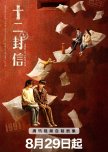
This review may contain spoilers
What a great drama!
I loved it for its rawness and for not being afraid to show a realistic and harsh plot. The performances of the entire cast were absolutely impeccable. The way they handled the cards and time throughout the story was brilliant.I found the ending so sad, but at the same time so fitting. That's why, although I don't give it full marks, it's only because the outcome is so bitter for the children... However, if you think about it, for the protagonists, who suffered their entire lives, it was definitely a happy and liberating ending. Highly recommended!
Was this review helpful to you?
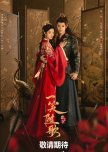
Fated Hearts: a drama that will make you feel everything. Your next obsession!
Without a doubt, it ranks as one of the best Chinese dramas of the year, a gem that leaves a deep impression on the viewer.
Impeccable Acting (10/10): The cast is simply sublime. Each actor not only embodies their character, but also gives them a depth and layers that are essential to the story. They deserve every point of that 10. The "enemies to lovers" plot is executed to perfection. The transition from visceral hatred to passionate love is believable, painful, and extremely satisfying. Every glance, every touch, and every tension-filled word is pure gold. The OST is not just an accompaniment; it is another character. The songs accentuate each scene, heightening the emotions to the limit. It adds a magical and memorable touch to the whole drama.
Complex and Human Characters: This is, perhaps, its greatest success. The characters in "Fated Hearts" are incredibly human, full of light and shade. One moment you love them for their vulnerability, the next you hate them for their selfish decisions or terrible mistakes, and then, almost without realizing it, you come to understand why they act the way they do. This moral ambiguity makes them fascinating and real.
The costumes and setting are a visual delight, adding another layer of immersion to the story.
Despite its greatness, there is one aspect that prevents it from receiving a perfect score: the ending. After such an intense and twist-filled journey, the dénouement feels a little weak and rushed. It doesn't ruin the overall experience, but it does leave you feeling that such a powerful story deserved a conclusion to match.
Was this review helpful to you?
This wasn't just a drama I watched, it was an experience I lived.
From the very first episode, it captivated me with its impeccable production, but what really hooked me was the emotional depth of its story.The reason for my obsession with this series has a name: Zhao Lusi. Her portrayal of the protagonist is simply masterful. Not only does she wear incredible outfits that reflect her character's evolution, but she also manages to convey a vulnerability and strength that touches your soul. Her character is that girl who only wanted one thing: to be loved. Throughout her life, she shaped her personality, her actions, and her dreams to fit in and please others, believing that this would help her find her place in the world.
The moment she discovers that her entire love life has been built on a lie is a heartbreaking turning point. Seeing her suffer and fall apart was so real that I couldn't help but suffer with her. But it is precisely in this low point that she finds the strength for the most important thing: to reinvent herself. Her journey is not only about healing, but about building an authentic identity from scratch, for herself and not for others.
There is no teenage love filled with unnecessary drama here. What blossoms between the two characters is a love that, despite the lies, becomes mature, conscious, and healing. In the end, he doesn't come to "save" her, but to support her, understand her, and walk beside her as an equal. It's a relationship built on wounds, second chances, human errors, selfishness, patience, and a deep emotional connection.
The cast's performance is outstanding overall, with each character contributing to and enriching the plot. The locations are like another character, beautiful and full of meaning, perfectly complementing the protagonist's emotional journey.
Was this review helpful to you?


