
 News
News 

 1
1


This review may contain spoilers
A mature and healthy romance that shines with its own light.
“Shine on Me” is, quite simply, a gem among romantic dramas. As a big fan of slow-burning romances, this drama is a masterful example of how to develop a relationship in a healthy, realistic, patient way, with a spicy chemistry that is built with intelligence. Although its plot does not attempt to reinvent the wheel or the genre, it stands out as one of the best romantic dramas I have seen due to its emotional depth and the quality of its characters.The first thing I would highlight is the profile of the protagonists: both come from wealthy families, but far from the clichés of arrogance, they are humble, hard-working, educated characters with admirable moral strength. The drama does not ignore their privilege, but uses it in an interesting way to explore envy and social dynamics (as in the case of characters such as Rong or their college classmates), adding a layer of realism.
The most fascinating contrast is embodied by Zhuang Xu, a complex and tragically human character. His story with the protagonist is a painful study of opportunities lost to fear and insecurity. As the head of a humble family with serious problems, he represents those who have no privileges. However, the drama avoids idealizing him: his passive-aggressive comments, his lack of confidence, and his indecision make him a gray character, intelligent but trapped in his own self-loathing. His arc is deeply moving in the sense that you first feel dislike and anger, but at least, for my part, in the end I felt a little sorry for him.
My favorite character, without a doubt, was the protagonist's cousin. His charisma, kindness, and the fresh and natural dynamic he has with her (supported by excellent acting chemistry) bring warmth and lightness at just the right moments.
The dynamic between the main couple is the heart of the drama. Their relationship is based on mutual security, unconditional support, and communication that, although not always immediate at first, never falls into unnecessary misunderstandings. Even a potentially major conflict such as the car accident is handled with maturity, without resorting to prolonged drama.
Impeccable technical aspects: The OST is a gem that perfectly accompanies every emotion, the costumes and sets are elegant and believable, and the kisses... are a solid 10. The narrative balances family drama and college friendships vs. corporate friendships well, and although some dialogues about business strategy and organization may feel a bit dense, they are essential to understanding the couple's shared ambition: to become pioneers in solar energy, a goal that gives meaning and significance to their union.
Conclusion: “Shine on Me” is a well-rounded, emotionally satisfying, and beautifully executed drama. It offers mature romance, layered characters, a positive message about teamwork, and a love that is built with patience and respect. Highly recommended for those looking for a story that shines with warmth, intelligence, and heart. In life, there may be many loves, but only one will be the right one.
Was this review helpful to you?
This review may contain spoilers
A drama that draws its strength from tea, female empowerment, and unforgettable characters.
It is a drama that pleasantly surprised me. Beyond a story of romance and intrigue, I found a fascinating tale anchored in the creation and importance of tea in China, an element that is not only at the heart of the plot but also becomes another character, permeating each scene with exquisite aesthetics and cinematography.One of its greatest successes is undoubtedly the Rong family, built on a pillar of strong women and leaders. In a historical context where the role of women is often minimized, seeing a matriarchy fighting, making decisions, and running a commercial empire was tremendously refreshing and powerful. In this setting, Guli Nazha, whom I discovered through this work, shines with her own light. Not only is she a woman of striking beauty, but I also liked her character, Rong Shanbao, for her strategic intelligence, her firm character, and that touch of wickedness necessary to cope with the enormous burden of being the next head of the family, which make her complex, fascinating, and tremendously human. Her priority is always the family legacy, which adds a layer of realism to her arc.
At her side, Neo Hou Minghao as Lu Jiang Lai perfectly complements this universe. His transformation from being the highest authority to becoming a servant with amnesia gives the story a unique twist. He is gorgeous, but what really makes you fall in love with him is the sweetness, simplicity, and affection his character displays, creating a perfect contrast and delicious chemistry with the pragmatic and calculating Shanbao.
Another aspect I really enjoyed was the evolution of the relationship between the Rong sisters. Seeing how they go from hatred and rivalry to slowly building genuine family ties was a very rewarding subplot.
However, the drama is not without its flaws. The final episodes felt noticeably rushed. While the ending leaves them together, I would have liked a clearer and more concrete conclusion. Do they get married? What is their life like managing family affairs together? I feel that closure was missing, that final stitch that would secure their future. This connects to a feeling I had throughout the series: even though Shan Bao did love Jiang Lai, he was never her absolute priority (nor would he ever be), which is consistent with his character, but in the outcome, that dynamic deserved deeper exploration.
Was this review helpful to you?
This review may contain spoilers
Human mysteries, revenge, and a romance that blossoms in the shadows.
It's a drama that captivates with its atmosphere, its cases, and, of course, its lead actress. Bai Lu, as always, is spectacular. Her beauty is undeniable, but what truly stands out is her acting evolution: she has noticeably improved in her fight scenes, executing them with a fluidity and conviction that elevates every action sequence.The plot is structured around revenge and solving mysteries, and therein lies one of its greatest strengths. The cases presented are interesting and varied, but what makes them special are their profoundly human motivations. These are not gratuitous murders or crimes of abstract evil; behind each one lie injustices, pain, and people cornered by a corrupt system. The drama doesn't justify murder, but it places you face to face with characters whose motivations you can't judge lightly because you understand the source of their desperation. This moral complexity enriches each case and elevates the plot above a simple whodunit.
Bai Lu's character, Li Peiyi, is consumed by revenge until the very end, and the drama wisely avoids betraying that essence. There are no forced redemptions or miraculous pardons; her thirst for justice is the driving force behind her, and the script respects this from beginning to end. I appreciated how they handled her evolution without diluting her determination, keeping her true to herself even when love comes knocking.
Speaking of love, the main couple is cute and works within the confines of the plot. There aren't many romantic moments because the focus is on mystery and revenge, but when they do occur, they are tender and well-integrated. However, I must be honest: I struggled to connect with Wang Xingye's character (Xiao Huai Jin). His passive and submissive attitude contrasted sharply with other roles the actor has played, which I'm used to, and with Li Peiyi's overwhelming personality. While I understand it was part of the character, at times it felt unbalanced. A firmer counterpoint might have generated a more electrifying dynamic.
The final chapters feature a separation that, while predictable within the genre's conventions, is successfully resolved. The overall ending is satisfying: the couple ends up together, Li Peiyi's revenge is somewhat fulfilled, and there's a sense of emotional closure. However, some loose ends remain, such as the crown prince's involvement or certain decisions by the emperor that are left unresolved. These don't completely ruin the experience, but they do leave the feeling that the story isn't entirely concluded.
It's a solid, entertaining, and visually appealing drama. Its cases, driven by human motivations, the consistency of Li Peiyi's character, and Bai Lu's improved acting in action are its strongest points. The romance, though secondary and somewhat unbalanced due to the male lead's passivity, is adequate without overshadowing the main plot. A bittersweet but satisfying ending to a story that skillfully balances mystery, revenge, and heart.
Was this review helpful to you?

This review may contain spoilers
A lightweight experience with untapped potential
Without a doubt, the first impact of this drama is the visual appeal of the couple: Dilraba is gorgeous and Chen Xingxu is also very handsome. Their chemistry on screen is undeniable and is one of the strengths of the drama. I especially liked that, without romance being the main plot, their relationship developed in a subtle, natural, and organic way, which gave the story an authentic feel.The overall tone of the drama is light and fast-paced, perfect for watching without feeling weighed down. However, this is where the “buts” begin. The promising supernatural premise—the demons of the earth, their origin, and their transformation into humans—felt like a huge missed opportunity. It lacked more exploration, mystery, and even more horror. This crucial part of the mythology remained unclear and underdeveloped, leaving the viewer with more questions than answers.
On the positive side, I highlight the humanization of Lin Xi Rou, the main antagonist. It was a good move to show her motivations and, above all, how she managed to develop a genuine, albeit maternal, feeling towards Yan Tuo. I would also have enjoyed exploring more about the life and rules of the hunters' world.
Unfortunately, the ending accentuated all the script problems. The final battle was disappointingly anticlimactic (“That's it? That's how it all ends?”), leaving a feeling of haste and plot holes. One device that I found completely unnecessary was the amnesia of the protagonist, Nie Jiu Luo, in the final chapters. Instead of tying up loose ends, it raised more questions. My favorite character, Xing Sheng, who was so multi-layered and fascinating, received an abrupt and insubstantial ending, wasting all his potential.
In short, “Love in the Turquoise Lands” is a different kind of drama to watch to pass the time, with a couple of cool, charming protagonists and a brisk pace. However, it falls short in the development of its main plot, its mythology, and the closure of its characters, leaving the frustrating feeling that it could have been so much better.
Recommended if you're looking for a light sci-fi story, but go in with low expectations regarding the depth of its supernatural plot and its resolution.
Was this review helpful to you?
This review may contain spoilers
Destiny, shared senses, and a romance that crosses borders between worlds.
"Love Beyond the Grave" was a pleasant surprise for me. I wasn't expecting a revolutionary drama, but I did find a rewarding, entertaining story with a very particular charm that kept me hooked from start to finish.Let's start with the obvious: Dilraba is gorgeous. But here, she's not just about beauty—she makes the most of every costume to build He Si Mu, the ghost Master of the Void. Her character is strong, harsh in her ways, but with a vulnerability that emerges as the plot progresses. I liked how the drama develops her evolution: going from being a soul trapped in her own coldness to someone who learns to feel again, literally and figuratively, thanks to Duan Xu.
Personally, I find Chen Fei Yu very handsome, and here he more than delivers. His character, Duan Xu, is a fascinating mix: he can be lighthearted and ridiculous one moment, and the next show himself to be masculine, romantic, strong, and a born strategist in war. Despite his traumatic past, he doesn't wallow in self-pity—on the contrary, his resilience is one of his most attractive traits. The contrast with He Si Mu's initial personality is the perfect fuel for the romance to work.
The premise that they are connected by fate to exchange senses (seeing, smelling, touching, feeling through each other) is original and very well utilized. It's not just a romantic device; it generates comedic, intimate, and also tragic situations that bring the characters and the viewer closer together. I liked how the plot clearly divides what happens in the mortal world and the Void, maintaining coherence in both spheres.
The supporting characters add freshness without stealing the spotlight. The villain fulfills his role without being one-dimensional, with nuanced depth involving rejection, love, desire on his part, and there are moments of drama, sentiment, and romance that are well-dosed throughout the series. The OST accompanies the key scenes very well, and the settings (both the mundane and the ethereal ones of the Void) are visually appealing.
I'm aware that there are two endings and that the drama ends in an open way. I confess that I'll stick with the happy ending, because after everything these characters go through, they deserve it. I understand that not everyone will like it, and perhaps a more forceful conclusion would have elevated the whole, but personally, it didn't ruin the experience for me.
"Love Beyond the Grave" isn't the most explosive drama nor one that will change your life, but it more than fulfills its goal: to entertain, move, and make you sigh. Dilraba and Chen Fei Yu have better chemistry than they are sometimes given credit for, the shared-senses premise is original and well-executed, and the balance between romance, comedy, and drama is well-achieved. If you're looking for a fantastical love story with charismatic characters and careful visual production, this drama is for you. I enjoyed it immensely.
Was this review helpful to you?

This review may contain spoilers
A brave look that falls short of its darkest potential.
"My Idol" starts with a necessary and courageous premise: to expose the harsh and dehumanizing reality behind the K-pop industry. The drama successfully portrays how these artists are treated as disposable commercial products, subjected to constant pressure, obsessive fans, depression, and the complete erosion of their mental health under the relentless public eye. This exploration is the series' greatest achievement, reminding us that behind the glamour are vulnerable human beings.The structure that combines this social critique with a murder mystery works well initially. The crime investigation serves as an effective vehicle for both protagonists, helping Maeng Se Na uncover the true face of the industry from a fan's perspective, revealing the tragic consequences of this system. However, it is precisely in the development where the drama loses some of its initial bite.
While it started strong with a raw perspective, it ended up embracing a conventional romantic cliché: the protagonist ends up with the idol. While this isn't inherently bad, and the romance is entertaining, this resolution softens the sharp impact of the critique it had so effectively established, diluting its disruptive potential in favor of a more "safe" ending.
The biggest point of frustration, however, lies in the subplots that were left unfinished and had enormous potential:
Kang Woo Seong, his relationship with the protagonist hinted at a deeper layer. It would have been revolutionary and realistic to explore the taboo of homosexuality in the K-pop industry, a practically invisible topic that would have added a layer of brutal tragedy and truth. Hong Hye Joo, reducing her complexity to a simple diagnosis of "emotional instability" was a poor choice. Her character deserved a deeper dissection of her traumas and motivations. Prosecutor Kwak Byung Gyun, his arc of paternal pressure and guilt for convicting innocent people was fascinating, but it was resolved hastily, without delving into the psychological and moral impact of his actions.
Conclusion: "My Idol" is an entertaining and romantic drama that deserves credit for exposing the darker side of the Korean entertainment industry. It works perfectly as light entertainment with a touch of mystery. However, it can't shake the feeling of missed opportunity. By opting for a more conventional path and not delving deeper into its bolder subplots, it remains a good idea that could have been exceptional. Recommended viewing for those seeking entertainment, but with the caveat that its social commentary, while present, isn't as incisive as it initially promises.
Was this review helpful to you?
A visually stunning production with some ups and downs
My experience with this series was positive, albeit with reservations. While I enjoyed it and found it to be a quality production, I must admit that it didn't completely hook me as I had hoped.The script avoids repetition, which is a great success, but for some reason, the plot development failed to get me deeply interested in the central conflict.
The strongest points are undoubtedly the art direction and casting. Hou MingHao dazzles with his presence, demonstrating striking charisma and beauty, and the chemistry with the lead actress Lu YuXiao is palpable and very believable. The costume design is exceptional, adding a layer of beauty to each scene. On the other hand, the CGI and visual effects are the weakest link. While they are acceptable and do not ruin the immersion, their quality is not on par with the rest of the production.
A highly recommended series for its aesthetic beauty and performances, despite a plot that is not entirely absorbing.
Was this review helpful to you?
This review may contain spoilers
Love and Crown: A well-acted melodrama, but with a forced and exhausting plot.
I am a fan of both Ren Jia Lun and Peng Xiao Ran's acting work, and I have seen several of their previous projects. I knew more or less what to expect in terms of emotional intensity, especially with the type of roles Ren Jia Lun usually plays. However, on this occasion, “Love and Crown” failed to fully hook me.The biggest obstacle was the constant and, at times, exhausting emotional weight. The decisions and actions of the protagonists created a sense of deliberate anguish that, far from immersing me in the story, ended up distancing me. There were secondary characters with interesting, complex, and selfish profiles, whose psychological motives promised a lot, but who were unable to shine due to the development of the plot. Many narrative twists felt unnatural and forced, as if the author were trying to pile on tragedies to justify the ending.
And speaking of the ending, that's exactly what it was: too many tragic events and forced twists led to an abrupt and sad conclusion that, rather than feeling like an organic resolution, seemed like the result of an accumulation of unnecessary misfortunes.
The protagonist, played by Peng Xiao Ran, made decisions that sometimes felt silly or illogical. However, I understand that these actions were driven by the extreme circumstances of betrayal, hatred, and love that both protagonists fell into. The drama explores well how intense feelings can cloud judgment, although that doesn't always justify the forced nature of some situations.
Conclusion: “Love and Crown” is a recommended drama if you are looking for an intense melodrama and enjoy solid performances in a highly emotional context. However, if you expect a fluid plot, well-developed secondary characters, and a happy ending that does not depend on forced twists, you may feel a little frustrated. It is a roller coaster of emotions that, although well acted, can be heavy and unnatural in its execution.
Was this review helpful to you?
This review may contain spoilers
A fresh and nostalgic family journey through time.
This series surprised me from the start with a premise that I found truly novel: not only does the protagonist travel through time, but her entire family does too. This twist gave it a fresh and original dynamic, exploring how each member deals with this absurd situation.One of the most notable and charming aspects for me was the concept of food and how the restaurant and its dynamics were adapted to the olden days. It wasn't just food, it was a vehicle for emotions, memories, and family connection. The way it was presented visually was as original as it was endearing and appetizing (I really want to try some of the dishes, ha ha ha).
Although I must point out that in the middle part, the plot lost some of its strength, with some episodes that felt stagnant and character attitudes that I found a little heavy, the last episodes come back with incredible force. The ending left me with a deep nostalgia and a lot of affection for the characters.
As for the outcome, although I admit that the fact that they got together was an emotional "band-aid," I felt sad that they were the only ones who remembered each other (at least she had her family, he had no one).
Finally, I must praise the cast's performance, each actor brought their character to life and made them authentic, making us truly care about them.
Was this review helpful to you?
This review may contain spoilers
A psychological labyrinth where identity is the perfect crime.
"The Art of Sarah" is not a drama for casual viewers. It's an immersive and unsettling experience that plays with perception, identity, and human greed like few others seen on screen. From the very first minute, the tension of uncovering the killer of "Sarah Kim's" body draws you into a spiral of deception, parallel realities, and narrative twists that defy all expectations.What's fascinating about the drama is how it constructs two parallel realities around the world of luxury fashion. On one hand, it shows the visible face: the glamour, the power, the exclusivity. On the other, the backstage: the precariousness of those who aspire to belong, the debts, the ruthless struggle for a place at the top. The evolution of Sarah Kim—or whoever is hiding behind that name—is a sociological study of how the system devours and transforms people. She just wanted to live, she just wanted to place her brand on the market, and that obsession, understandable and human, becomes both her driving force and her downfall.
The betrayals she suffers at the hands of her trusted people and her "friends" are not those of cardboard villains. They are nuanced betrayals, driven by power and money, yes, but also by deeper wounds. The case of Kim Mijeong is paradigmatic: she "turns the other side" with arguments that, twistedly, become understandable. Her designs are what command high prices, her work has built the empire, and her desire to be Sarah Kim, to have power, to be the star, stems from a place of legitimate frustration. The drama doesn't justify it, but it understands it, and that makes it all the more unsettling and brilliant.
The great strength of "Sarah's Art" lies in its ability to blur the lines of identity. The plot twists are so clever and constant that there comes a point where you don't even know who the protagonist really is. Is Sarah a name, a character, a mask anyone can wear? The series places you in a state of absolute uncertainty: you could even be Sarah Kim, and that feeling is as unsettling as it is addictive.
The ending leaves you with a lot of suspense, and it's not a gratuitous device. It's the logical consequence of a story built on shifting sands. You have to pay attention to every detail because, if you blink, you'll get lost in the complexity of the plot. Every line of dialogue, every object, every glance could be a clue... or another trap.
"Sarah's Art" is a textbook psychological thriller, a work that demands the viewer be an active participant in the investigation. Its critique of the world of luxury, its exploration of identity as a social construct, and its morally ambiguous characters make it a unique and unforgettable experience. It's not a drama to be passively consumed; it's a puzzle that grips you and doesn't let go. Highly recommended for those seeking more than just entertainment: a true dissection of obsession, lies, and the price of success.
Was this review helpful to you?
This review may contain spoilers
A visual love letter that gets lost in emotional translation.
It's a drama that dazzles with its high-level production. The decision to film on location in Italy, Canada, and Japan is not only an aesthetic triumph but also elevates the visual experience to another level. Watching the characters explore authentic tourist destinations brings a freshness and grandeur that few dramas achieve. Furthermore, the detail of including Japanese actors portraying Japanese characters (instead of Korean actors in disguise) demonstrates a respect for cultural authenticity that deserves applause.The protagonists are complex characters, built upon traumas and emotional wounds they've carried since childhood. Both are adults with deep scars, and this premise promised a mature exploration of how the past affects the capacity to love. The soundtrack perfectly complements each moment, and the cinematography is simply stunning.
So far, so good. However...
The series promised a psychological drama, but it lost its way. The treatment of the protagonist's personality disorder felt erratic and, at times, exploited more as a dramatic device than as a sensitive portrayal. There were moments when her behavior veered into the illogical, generating misunderstandings that could have been resolved with a five-minute conversation. This constant lack of communication, far from building romantic tension, ended up being emotionally exhausting. There came a point where the overload of drama and frustration psychologically drained me as a viewer.
An interesting point was the introduction of Hiro, the Japanese character. His chemistry with the protagonist was palpable, and the enemies-to-lovers dynamic hinted at between them was so potent that, honestly, if it had been developed further, it might have been more satisfying than the main couple. His charisma and the narrative tension he generated overshadowed the central romance at several points.
There were also plot decisions that I found unnecessary, such as the protagonist's final arc searching for her mother, and other romantic arcs involving secondary characters that I personally felt were added and distracting, diverting attention from the emotional core of the story.
In general, this drama isn't a lighthearted, colorful romance drama. It's a story about wounds, insecurities, and how these influence relationships. Its technical execution is impeccable; the translator-actress dynamic, the reality show setting, the locations are dreamy, and the premise held promise. However, the handling of the protagonist's trauma and the communication between the couple, which at times becomes toxic, ultimately made the experience heavier than necessary. It's best suited for those seeking a visually stunning drama with moments of freshness, but who also have the patience to endure an emotional rollercoaster.
Was this review helpful to you?
This review may contain spoilers
A promising start that fizzles out in a rushed ending.
“Dynamite Kiss” started out with all the ingredients to be a memorable drama: a sparkling premise, obvious chemistry between the protagonists, and a tone that perfectly balances comedy, romance, and moments of emotional intensity. The first few episodes are genuinely funny, romantic, and refreshing, managing to put an attractive spin on a classic trope like “poor girl meets rich CEO.” It felt fresh and promised an entertaining story.However, the plot takes a turn toward fake marriage and lies. And well, although at first it is sustained by the dynamics between the characters, the process of maintaining the lie becomes a bit tedious, humiliating, and repetitive, prolonging conflicts that could have been resolved with a little more communication.
But the real problem is not the development of this, but the disappointing and rushed ending that leaves a feeling of incompleteness. The story closes with too many unresolved emotional and narrative gaps, as if the writers had run out of time, leaving many points that could have given continuity to the drama: The protagonist and her sister, one of the most painful and personal conflicts, is completely abandoned. We never see a final encounter where Go Darim can confront her sister for the damage she caused. Everything related to this character ends abruptly and frustratingly.
Then, the protagonist Gong Jihyeok and his stepsister: A necessary emotional confrontation is missing. After so much resentment and conflict, we deserved a cathartic scene where things were cleared up, but the plot avoids it. In addition to the main loose ends, the drama completely wasted subplots with enormous emotional potential. The story of Gim Seoun-u (a single father) and the rich girl Yu Ha-yeong falling in love again could have been a narrative gem, exploring mature love, the formation of a non-traditional family, and overcoming class prejudices. Instead, it remained as if he had always been in love with Darim and there was no real development in this.
Another big mistake was not giving more prominence and weight to the team of working mothers at the company. They were the practical heart of the baby products business, and their struggle against being looked down upon as “just moms” in a professional environment was a powerful and modern theme that deserved its own arc of empowerment. Instead, they remained a recurring joke or side support, missing the opportunity to give the plot a layer of realism and female strength.
In short, “Dynamite Kiss” is a drama of two very uneven halves. It starts off strong in terms of entertainment and promise, but its weak ending, full of loose ends, leaves the final experience feeling incomplete and frustrating. It's recommended if you enjoy the genre and the initial chemistry, but be prepared for an ending that may leave you with more questions than answers and a sense of missed opportunity. It's saved by a good start and a charismatic main couple, but it fails to live up to its potential.
Was this review helpful to you?

I feel that the chemistry between the two never quite clicked.
I watched it because I'm a big fan of Ding Yuxi, and in that sense, it didn't disappoint: he has presence, charisma, and he knew how to portray the character.The story and plot served their purpose of entertaining me, although I personally would have liked them to have stayed more faithful to the original novel.
Regarding the female lead, it was the first time I'd seen her in a drama. However, I feel that the chemistry between the two never quite clicked. The age difference was quite noticeable, and, at least for me as a viewer, the relationship didn't feel entirely natural or convincing.
Even so, there were plot points and some secondary couples that I found interesting and that helped keep the drama light and a little more enjoyable.
Was this review helpful to you?
This review may contain spoilers
A visually stunning and emotionally charged karmic journey among humans and demons
It is a work that captivates viewers with its visual appeal. The special effects, costume design, and characterizations—both human and demonic—are of exceptional quality and beauty, immersing viewers in a rich and detailed world from the very first moment.The cast is also up to the task, with Neo Hou Minghao once again demonstrating his magnetism in roles of this nature, looking spectacular and bringing the necessary intensity to his character. Tan Songyun, for her part, shines with a subtle and powerful performance. Her main character is neither heavy-handed nor melodramatic; she possesses a strength and both human and demonic sides that make you empathize deeply with her journey, her pain, her love, her dilemmas, and her resilience.
The plot is the beating heart of the drama. It is a bittersweet and deeply karmic story that masterfully weaves together three lives intertwined by fate. The narrative skillfully explores the concept of time loops, where every encounter and sacrifice seems predestined. The central conflict between humans and demons transcends Manichaeism, showing complex characters who, in their struggle, betray their ideals and become what they swore to destroy, adding layers of tragedy and philosophical depth.
The secondary characters are wonderfully drawn and add emotional weight to the main plot. Special honorable mention goes to the last three demons, whose loyalty and ending are not only narratively justified, but whose deaths genuinely hurt.
The ending is a bittersweet masterpiece. While the narrative decision to have the protagonist return to the beginning is understandable, this conclusion is not triumphalist. On the contrary, it imbues everything with a deep melancholy and raises the most devastating question: Can anything really change? The series suggests that, in such an intricate karmic cycle where everything is connected, actions can be an echo of destiny, leaving the viewer wondering whether the outcome, however painful, is the only possible conclusion to a story where love and sacrifice are doomed to repeat themselves.
Conclusion: “The Unclouded Soul” is much more than a fantasy drama. It is a complete narrative and visual experience, a moving reflection on destiny, free will, the cost of war, and the cyclical nature of love and pain. With outstanding performances, a plot that hooks you from the first episode, and an ending that will haunt you long after the credits roll, it stands as a must-see for lovers of the genre and well-told stories.
Was this review helpful to you?
This review may contain spoilers
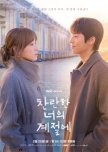
A Drama About Invisible Pain and the Courage to Try to Be Happy.
This Kdrama came to me as a whisper and ended up being a scream to the heart. The first few chapters completely captivated me, especially due to that so well-constructed emotional weight and that initial entanglement that hooks you: he knows her, but she doesn't seem to remember him. That asymmetry generates a narrative tension that is delicious and painful in equal measure.As the plot progresses and the male protagonist's backstory develops, one discovers the sadness and emotional burden he carries: the accident, the invisible scars, the loss. But what impacted me most was his conscious decision to "now I will try to live happily". That phrase, so simple on the surface, hides a titanic struggle. And the drama portrays with great sensitivity how sometimes "extremely happy and positive" people are the ones who have fought the most battles in silence. We don't know the story behind a constant smile, and this drama exposes it with a delicacy that both hurts and embraces.
It's important to highlight that both protagonists carry their own pain. She also has her emotional backpack: years of mourning for a person she loved (and who ended up deceiving her), the shock of discovering that the one writing on the other side wasn't her imagined boyfriend, the confusion of having built a love on a lie. However, I did feel that the narrative weight leans more toward him. I would have wished for a little more depth in exploring her grief and disillusionment. It doesn't ruin the experience, but the imbalance is noticeable.
I really liked the parallel stories of the sisters and, above all, the grandmother's. Each showed conflicts of different weights: from a teenage love and the problems typical of that age to issues of health and the right to be cared for, even in old age.
The grandmother's story is especially beautiful: it reminds us that it is never too late to find friendship and love again, to allow oneself to be vulnerable, and to accept that being cared for is not a weakness, even when the years weigh heavy. These secondary plots accompany and enrich the main one without stealing its spotlight.
Another narrative success is the use of the seasons as stages of life. Winter as pain, spring as rebirth, summer as plenitude, autumn as memory. This resource, far from being pretentious, wraps the story in a visual and emotional poetry that elevates the whole.
I must admit that in the final chapters the drama does decline a bit. Perhaps because the great backstory that both characters carry is not handled with the same solidity as in the first episodes. There's a certain sense that the task of closing so many open wounds becomes complex and the rhythm suffers. Additionally, the ending of some stories feels a bit diffuse; I would have appreciated a clearer closure for all the open plotlines. But the decline at the end does not take away all the good that was built before. "In Your Radiant Season" is a very beautiful drama that speaks of forgiveness, pain, guilt, and, above all, how to move on after painful and traumatic experiences. It's a story about resilience, about daring to be happy when life has taught you that happiness hurts, and about learning to let go of what wasn't meant to be in order to embrace what can be.
If you like dramas with intense emotional weight, wounded but fighting characters, and a narrative that uses the emotional landscape as part of the visual landscape, this drama is for you. It's not perfect—the ending feels somewhat blurry and the female protagonist even comes across as cruel at times—but its heart is in the right place. I'm left with its message: sometimes, the bravest act is not surviving, but deciding to try to be happy.
Was this review helpful to you?


