

 2
2 1
1



This review may contain spoilers
Pursuit of Jade: When Heroism Meets Romance and Intrigue
*Review in progress*
Pursuit of Jade is one of the most anticipated historical idol dramas of 2026, helmed by the director of last year's dark horse hit Blossoms and written by the screenwriter of Love Like the Galaxy. Adapted from the novel of the same name, the story follows the coming-of-age journey and romance of Fang Changyu (Tian Xiwei) and Xie Zheng (Zhang Linghe) as they navigate war, court politics, and the burdens of filial piety.
Fang Changyu is an incredible character—full of life, love, and optimism that shines through her big round eyes, warm smiles, and small gestures. Raised with martial arts prowess and a knack for butchering pigs to support and raise her younger sister after being orphaned, she grows into a resilient yet warm-hearted young woman. Tian Xiwei does a remarkable job bringing her to life, and throughout Fang Changyu’s journey from a teenager to a woman, she never loses the central charm that even captivates Xie Zheng, the Marquis of Wu’an.
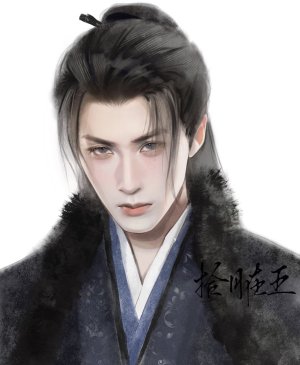
Opposite such a heroic heroine, we have an antihero love interest. Xie Zheng embodies the archetype of an intriguing grey character—domineering and cold, yet with a jade-like presence. We first meet him on the brink of death, saved by Fang Changyu, and he agrees to a fake marriage to give himself time to heal and uncover who tried to kill him. Through this low-key mystery, we come to fall in love with him much as Changyu did, drawn to his depth and complexity. While Changyu grows to understand the darkness in the world while keeping her brightness intact, the Marquis grows to understand that even in darkness there is still light—and even the faintest spark is worth fighting for and holding onto. For Zhang Linghe, this is easily his best acting role to date. His subtle facial expressions, precise bodily movements, and commanding posture fully embody the Marquis—a man forced to grow up too soon, hardened by the battlefield.
One of the most compelling scenes involves the first quarrel between our lovebirds, set by the riverbank where they first met. The beautiful lighting from the fire illuminates half of the Marquis’s face—one side warm, one side shadowed—highlighting his sarcasm, coldness, and ruthlessness, which contrasts sharply with the warm, quiet man viewers have watched for 17 episodes. Confronting our steadfast, bright-eyed heroine, he steals a kiss; she fights back, pining against the unfairness and selfishness of the Marquis’s choice. The scene perfectly captures the tension, passion, and complexity of their relationship.
The story itself is structured in an engaging way. The first third focuses on slice-of-life moments, establishing character and relationships; the second third moves into military strategy and chess-like maneuvers; and the final arc centers on palace politics, intrigue, and high-stakes tension.
Idol dramas often spend too much time emphasizing star power, but people forget that what truly makes or breaks a narrative is the director, writer, editor, and cinematographer. With the right director—one who understands their actors, their limitations, and the power of visual storytelling—even relatively unknown actors can bring a story to life. Great writing creates great characters, and it also makes the editor’s job much easier, shaping pacing, tension, and emotional resonance. Cinematography, with its use of light and composition to realize the director’s vision, is equally important. Pursuit of Jade happens to have all the right elements to make it work.
With its compelling characters, layered romance, and intricate storytelling, Pursuit of Jade doesn’t just entertain—it draws viewers into a fully realized world of courage, love, and intrigue. Fang Changyu’s growth, Xie Zheng’s complex charm, and the careful balance of slice-of-life warmth, military strategy, and palace politics create a narrative that feels both intimate and epic. For fans of historical idol dramas looking for more than surface-level romance, this series promises a journey that is as visually stunning as it is emotionally resonant.
Pursuit of Jade is one of the most anticipated historical idol dramas of 2026, helmed by the director of last year's dark horse hit Blossoms and written by the screenwriter of Love Like the Galaxy. Adapted from the novel of the same name, the story follows the coming-of-age journey and romance of Fang Changyu (Tian Xiwei) and Xie Zheng (Zhang Linghe) as they navigate war, court politics, and the burdens of filial piety.
Fang Changyu is an incredible character—full of life, love, and optimism that shines through her big round eyes, warm smiles, and small gestures. Raised with martial arts prowess and a knack for butchering pigs to support and raise her younger sister after being orphaned, she grows into a resilient yet warm-hearted young woman. Tian Xiwei does a remarkable job bringing her to life, and throughout Fang Changyu’s journey from a teenager to a woman, she never loses the central charm that even captivates Xie Zheng, the Marquis of Wu’an.
Opposite such a heroic heroine, we have an antihero love interest. Xie Zheng embodies the archetype of an intriguing grey character—domineering and cold, yet with a jade-like presence. We first meet him on the brink of death, saved by Fang Changyu, and he agrees to a fake marriage to give himself time to heal and uncover who tried to kill him. Through this low-key mystery, we come to fall in love with him much as Changyu did, drawn to his depth and complexity. While Changyu grows to understand the darkness in the world while keeping her brightness intact, the Marquis grows to understand that even in darkness there is still light—and even the faintest spark is worth fighting for and holding onto. For Zhang Linghe, this is easily his best acting role to date. His subtle facial expressions, precise bodily movements, and commanding posture fully embody the Marquis—a man forced to grow up too soon, hardened by the battlefield.
One of the most compelling scenes involves the first quarrel between our lovebirds, set by the riverbank where they first met. The beautiful lighting from the fire illuminates half of the Marquis’s face—one side warm, one side shadowed—highlighting his sarcasm, coldness, and ruthlessness, which contrasts sharply with the warm, quiet man viewers have watched for 17 episodes. Confronting our steadfast, bright-eyed heroine, he steals a kiss; she fights back, pining against the unfairness and selfishness of the Marquis’s choice. The scene perfectly captures the tension, passion, and complexity of their relationship.
The story itself is structured in an engaging way. The first third focuses on slice-of-life moments, establishing character and relationships; the second third moves into military strategy and chess-like maneuvers; and the final arc centers on palace politics, intrigue, and high-stakes tension.
Idol dramas often spend too much time emphasizing star power, but people forget that what truly makes or breaks a narrative is the director, writer, editor, and cinematographer. With the right director—one who understands their actors, their limitations, and the power of visual storytelling—even relatively unknown actors can bring a story to life. Great writing creates great characters, and it also makes the editor’s job much easier, shaping pacing, tension, and emotional resonance. Cinematography, with its use of light and composition to realize the director’s vision, is equally important. Pursuit of Jade happens to have all the right elements to make it work.
With its compelling characters, layered romance, and intricate storytelling, Pursuit of Jade doesn’t just entertain—it draws viewers into a fully realized world of courage, love, and intrigue. Fang Changyu’s growth, Xie Zheng’s complex charm, and the careful balance of slice-of-life warmth, military strategy, and palace politics create a narrative that feels both intimate and epic. For fans of historical idol dramas looking for more than surface-level romance, this series promises a journey that is as visually stunning as it is emotionally resonant.
Was this review helpful to you?


