
 News
News 

 1
1 1
1 2
2


"Slow Burn", Stockholm Syndrome and Love Triangles
The reasons why a person can be kidnapped are numerous, as evidenced by the world of films and television series.
Perhaps the most common approach is that of kidnapping with the aim of demanding a sum of money in exchange for release. Another type of drama that centers its plot on the kidnapping of people is, without a doubt, those in which hostages are taken for various reasons: military, economic, even purely romantic, etc. And the third major category of fictional productions featuring kidnapped people and kidnappers is undoubtedly the one that directly refers to criminal psychopaths with the worst possible intentions, where the plot is always a race against time to escape or hunt down the culprit. It's very common to see in these films and series the crazy person who decides to hold passengers on public transportation —planes, buses, trains—, or isolated houses, against their will.
However, what's interesting about the Taiwanese series, directed by Chiou Hau Jou, known for his extensive production of films and series in both China and Taiwan, is that it presents us with a trope, both funny and dark, in which a kidnapper and his victim fall in love.
'Exclusive Love', which tells stories of postponed, forbidden, and even unlikely loves, proposes another very peculiar motive for kidnapping a person: a brother tries to force another to take over a funeral business he detests, and to do so he uses a kidnapper.
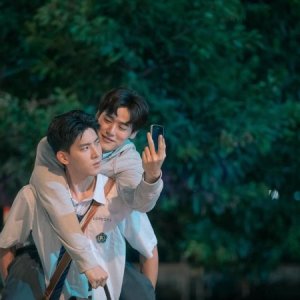
The story gradually reveals the motive that leads Wang Ying Xiu (Mozy Yu) to ask his friend Tang Du Zhi (played by Parker Mao) to kidnap his non-blood-related brother Wang Zhan (played by Chang Chia Sheng, in his first leading role), to force him to enter a funeral business that he has rejected for years because he is interested in becoming a professional singer and musician. It will also lead us to learn about the love that arises between kidnapper and kidnapped person in the midst of such a dangerous situation, where fear and the anxiety of reliving past traumas go hand in hand. Following in the footsteps of other BL series where victim and victimizer end up in each other's arms, such as 'Kidnap' and 'KinnPorche', among others, 'Exclusive Love' will captivate you with a romance story where the protagonists meet in the middle of a crime, but something unexpected makes them fall in love.
Although the name doesn't sound very romantic, as you delve into the story, you'll see how the spark of love slowly begins to grow between the successor of a funeral business and the character played by the actor known for bringing Xia Shang Zhou to life in the BL drama 'You Are Mine'), here a funeral director who commits the kidnapping.
However, what begins as a plan to force someone to accept being the business successor of a company ends up changing the lives of these two people completely. Literally: Wang Zhan not only falls in love with his kidnapper, but his love is reciprocated, and grows as he also begins to "love the dead".
For fans of the Enemies to Lovers trope, and more precisely, Stockholm Syndrome, watching the couple of Wang Zhan and Tang Du Zhi is a true joy, as there is nothing more exciting in this type of story than the moment when victim and perpetrator finally admit their feelings.
But it's the "slow-burn" trope that governs and shapes the two romantic relationships in 'Exclusive Love'. While the two main characters have long desired each other, clearly in love, it takes them a while to take the first step toward being together. In them, the romantic connection, emotional development, and real, true feelings develop gradually, through shared moments, deep conversations, and challenges they overcome together.
The writers recreate the development of feelings within the narrative to the point of exhaustion. But in my opinion, they have a reasonable excuse: the main characters have enough traumas that prevent them from acting on their feelings. Specifically, Tang Du Zhi experiences a trauma from his youth. He blames himself for indirectly causing the death of his parents and the disability of his brother in a tragic car accident, precisely on his birthday.
Being in a relationship with someone who carries past traumas isn't easy. Tang Du Zhi must first overcome them in order to accept the love that knocks at his door. Wang Zhan will have to be patient, understand, and accompany his loved one through this difficult process.
But there will be a third trope throughout the series: the love triangle. The cat-and-mouse game that runs vertically through the protagonists' relationship is exploited by Ian (played by Sun Mai Jie), a friend of both, who, attracted to Wang Zhan, tries to get him to set his sights on him.
Meanwhile, the story between Tu Jing He (Pu Ching Heng) and Zhang Yi Qing (Hsv Wei Tse), both making their acting debut, also simmers.
Tu Jing He and Zhang Yi Qing have a strong friendship that has been solidified since their student days, so their mutual longing gives rise to a slow burn. Their secret crush is threatened by the latter's arranged marriage. His parents demand that he marry, so they set him up on blind dates in search of his son's future daughter-in-law and wife. Zhou You Ning (Cindy Chi) is the third point in this love triangle, which risks turning into a love square (or rather, the definitive birth of a typical two-person relationship between the two boys) when the girl chosen to marry Tu Jing He shows interest in the female wedding choreographer.
"SLOW-BURN"
In most romantic series and films, true love is all about the spark. The protagonists often have little time to forge a solid connection. In these cases, the strength of the relationship is often measured by the speed with which two people can "connect". For this reason, audiences are accustomed to seeing love stories that develop fluidly, quickly, and at breakneck speed after only a few weeks or dates. Screenwriters champion the premise: "when they know, they know".
But not all love stories develop this way. In others, the characters take their time to go from being a "couple of friends", even enemies or strangers, to being in love. When love triumphs while simmering, it demonstrates not only that perseverance has truly led the loving couple to feel the purest love, but it also showcases the often overlooked power of the "slow burn".
The relationship between the two main characters is a slow burn because they both begin as friends after the events that led them to meet and interact with each other, and there was no initial element of passion, infatuation, or physical chemistry.
Meanwhile, the secondary couple's relationship takes a while to blossom because while Zhang Yi Qing and Tu Jing He have had a platonic connection since their high school years, various internal and external factors, such as peer pressure, doubts, misunderstandings, and family demands for one of them to get married, have caused their romance to take years to blossom. Here, heartbroken wedding planner Zhang Yi Qing helps his old friend Tu Jing He plan the wedding, but in reality, he wants to sabotage it.
Both relationships have a solid foundation in friendship, trust, and the experience of a love that deepens as the connection progresses. In both relationships, it seems more like a friendship with a small spark of attraction or passion, than a great flame of attraction and passion with a little bit of friendship.
Although the two relationships don't have the spark of love at first sight, although they basically spend a lot of time yearning for/denying each other's feelings while circumstances keep them apart, once that little spark turns into a flame, it's worth the wait.
In my opinion, slow burns are most successful when paired as a subtrope beneath an overarching story that provides obstacles for the characters to deal with.
From the script to the put on screen, the series delivers on its premise: between the funeral and the wedding, the four protagonists say goodbye to the pain and misunderstandings of their past and redefine love and life.
WHAT MAKES THEIR STORY SPECIAL?
The series has raised both pro and con voices on social media. In addition to the strong performances, a story that blends drama and romance, and also includes some thought-provoking life lessons, fans praise it for its narrative containing elements of drama, trauma, grief, and healing; for the attraction exerted by male protagonists with a strong, virile energy; for the chemistry between the actors; for the heated exchange of glances between the members of the two main couples, which apparently have raised the temperature among viewers.
However, it has found detractors among those who find the delay in consolidating the two romantic relationships as the 12 episodes draw to a close excessive; and for its violent content, such as forcing someone to overcome their fears in an unorthodox way; and for the handling of characters traumatized by everything related to blood and death. Unlike other kidnapping films, in this case, Stockholm syndrome manifests itself so quickly that the viewer doesn't have time to believe the boy is being kidnapped by a stranger. Moreover, the slow-burning romance leaves viewers in suspense, wondering if and when the love interests will actually unite.
Co-produced by LINE TV and Neptune Tianxi in collaboration with Poseidon Films and Advantage Global, 'Exclusive Love' is (ostensibly) the "first BL drama about funeral director etiquette", whose originality the creators seem strangely proud of.
With a visual aesthetic dedicated to highlighting the beauty of Taiwanese landscapes, the gloomy and somber spaces associated with death and funerals, and the shapely bodies of the protagonists, the series has been dubbed "HIStory 6 in Disguise" due to its close affiliation with the same production company and production team as the legendary BL series.
A cast that also includes Leo Cheng as employee Chi Hui Yu, among others, adds depth to the stories.
As I listen to Anson Poon's opening and ending themes "Glimmer" and "US" (想和你), respectively, "Dawn" (天亮), "Amanecer" (天亮), "Contour" (輪廓), and "Beside You" (在你身邊), I ask myself the following questions: How far can a serial love story go? How many layers of seduction and eroticism can be told? Why is it that the more unpredictable a new romance series is, the larger its audience will be? The object of desire? Why is it that the strangest, most surprising, forbidden —even improbable—loves are the ones that generate the greatest attraction?
Perhaps the most common approach is that of kidnapping with the aim of demanding a sum of money in exchange for release. Another type of drama that centers its plot on the kidnapping of people is, without a doubt, those in which hostages are taken for various reasons: military, economic, even purely romantic, etc. And the third major category of fictional productions featuring kidnapped people and kidnappers is undoubtedly the one that directly refers to criminal psychopaths with the worst possible intentions, where the plot is always a race against time to escape or hunt down the culprit. It's very common to see in these films and series the crazy person who decides to hold passengers on public transportation —planes, buses, trains—, or isolated houses, against their will.
However, what's interesting about the Taiwanese series, directed by Chiou Hau Jou, known for his extensive production of films and series in both China and Taiwan, is that it presents us with a trope, both funny and dark, in which a kidnapper and his victim fall in love.
'Exclusive Love', which tells stories of postponed, forbidden, and even unlikely loves, proposes another very peculiar motive for kidnapping a person: a brother tries to force another to take over a funeral business he detests, and to do so he uses a kidnapper.
The story gradually reveals the motive that leads Wang Ying Xiu (Mozy Yu) to ask his friend Tang Du Zhi (played by Parker Mao) to kidnap his non-blood-related brother Wang Zhan (played by Chang Chia Sheng, in his first leading role), to force him to enter a funeral business that he has rejected for years because he is interested in becoming a professional singer and musician. It will also lead us to learn about the love that arises between kidnapper and kidnapped person in the midst of such a dangerous situation, where fear and the anxiety of reliving past traumas go hand in hand. Following in the footsteps of other BL series where victim and victimizer end up in each other's arms, such as 'Kidnap' and 'KinnPorche', among others, 'Exclusive Love' will captivate you with a romance story where the protagonists meet in the middle of a crime, but something unexpected makes them fall in love.
Although the name doesn't sound very romantic, as you delve into the story, you'll see how the spark of love slowly begins to grow between the successor of a funeral business and the character played by the actor known for bringing Xia Shang Zhou to life in the BL drama 'You Are Mine'), here a funeral director who commits the kidnapping.
However, what begins as a plan to force someone to accept being the business successor of a company ends up changing the lives of these two people completely. Literally: Wang Zhan not only falls in love with his kidnapper, but his love is reciprocated, and grows as he also begins to "love the dead".
For fans of the Enemies to Lovers trope, and more precisely, Stockholm Syndrome, watching the couple of Wang Zhan and Tang Du Zhi is a true joy, as there is nothing more exciting in this type of story than the moment when victim and perpetrator finally admit their feelings.
But it's the "slow-burn" trope that governs and shapes the two romantic relationships in 'Exclusive Love'. While the two main characters have long desired each other, clearly in love, it takes them a while to take the first step toward being together. In them, the romantic connection, emotional development, and real, true feelings develop gradually, through shared moments, deep conversations, and challenges they overcome together.
The writers recreate the development of feelings within the narrative to the point of exhaustion. But in my opinion, they have a reasonable excuse: the main characters have enough traumas that prevent them from acting on their feelings. Specifically, Tang Du Zhi experiences a trauma from his youth. He blames himself for indirectly causing the death of his parents and the disability of his brother in a tragic car accident, precisely on his birthday.
Being in a relationship with someone who carries past traumas isn't easy. Tang Du Zhi must first overcome them in order to accept the love that knocks at his door. Wang Zhan will have to be patient, understand, and accompany his loved one through this difficult process.
But there will be a third trope throughout the series: the love triangle. The cat-and-mouse game that runs vertically through the protagonists' relationship is exploited by Ian (played by Sun Mai Jie), a friend of both, who, attracted to Wang Zhan, tries to get him to set his sights on him.
Meanwhile, the story between Tu Jing He (Pu Ching Heng) and Zhang Yi Qing (Hsv Wei Tse), both making their acting debut, also simmers.
Tu Jing He and Zhang Yi Qing have a strong friendship that has been solidified since their student days, so their mutual longing gives rise to a slow burn. Their secret crush is threatened by the latter's arranged marriage. His parents demand that he marry, so they set him up on blind dates in search of his son's future daughter-in-law and wife. Zhou You Ning (Cindy Chi) is the third point in this love triangle, which risks turning into a love square (or rather, the definitive birth of a typical two-person relationship between the two boys) when the girl chosen to marry Tu Jing He shows interest in the female wedding choreographer.
"SLOW-BURN"
In most romantic series and films, true love is all about the spark. The protagonists often have little time to forge a solid connection. In these cases, the strength of the relationship is often measured by the speed with which two people can "connect". For this reason, audiences are accustomed to seeing love stories that develop fluidly, quickly, and at breakneck speed after only a few weeks or dates. Screenwriters champion the premise: "when they know, they know".
But not all love stories develop this way. In others, the characters take their time to go from being a "couple of friends", even enemies or strangers, to being in love. When love triumphs while simmering, it demonstrates not only that perseverance has truly led the loving couple to feel the purest love, but it also showcases the often overlooked power of the "slow burn".
The relationship between the two main characters is a slow burn because they both begin as friends after the events that led them to meet and interact with each other, and there was no initial element of passion, infatuation, or physical chemistry.
Meanwhile, the secondary couple's relationship takes a while to blossom because while Zhang Yi Qing and Tu Jing He have had a platonic connection since their high school years, various internal and external factors, such as peer pressure, doubts, misunderstandings, and family demands for one of them to get married, have caused their romance to take years to blossom. Here, heartbroken wedding planner Zhang Yi Qing helps his old friend Tu Jing He plan the wedding, but in reality, he wants to sabotage it.
Both relationships have a solid foundation in friendship, trust, and the experience of a love that deepens as the connection progresses. In both relationships, it seems more like a friendship with a small spark of attraction or passion, than a great flame of attraction and passion with a little bit of friendship.
Although the two relationships don't have the spark of love at first sight, although they basically spend a lot of time yearning for/denying each other's feelings while circumstances keep them apart, once that little spark turns into a flame, it's worth the wait.
In my opinion, slow burns are most successful when paired as a subtrope beneath an overarching story that provides obstacles for the characters to deal with.
From the script to the put on screen, the series delivers on its premise: between the funeral and the wedding, the four protagonists say goodbye to the pain and misunderstandings of their past and redefine love and life.
WHAT MAKES THEIR STORY SPECIAL?
The series has raised both pro and con voices on social media. In addition to the strong performances, a story that blends drama and romance, and also includes some thought-provoking life lessons, fans praise it for its narrative containing elements of drama, trauma, grief, and healing; for the attraction exerted by male protagonists with a strong, virile energy; for the chemistry between the actors; for the heated exchange of glances between the members of the two main couples, which apparently have raised the temperature among viewers.
However, it has found detractors among those who find the delay in consolidating the two romantic relationships as the 12 episodes draw to a close excessive; and for its violent content, such as forcing someone to overcome their fears in an unorthodox way; and for the handling of characters traumatized by everything related to blood and death. Unlike other kidnapping films, in this case, Stockholm syndrome manifests itself so quickly that the viewer doesn't have time to believe the boy is being kidnapped by a stranger. Moreover, the slow-burning romance leaves viewers in suspense, wondering if and when the love interests will actually unite.
Co-produced by LINE TV and Neptune Tianxi in collaboration with Poseidon Films and Advantage Global, 'Exclusive Love' is (ostensibly) the "first BL drama about funeral director etiquette", whose originality the creators seem strangely proud of.
With a visual aesthetic dedicated to highlighting the beauty of Taiwanese landscapes, the gloomy and somber spaces associated with death and funerals, and the shapely bodies of the protagonists, the series has been dubbed "HIStory 6 in Disguise" due to its close affiliation with the same production company and production team as the legendary BL series.
A cast that also includes Leo Cheng as employee Chi Hui Yu, among others, adds depth to the stories.
As I listen to Anson Poon's opening and ending themes "Glimmer" and "US" (想和你), respectively, "Dawn" (天亮), "Amanecer" (天亮), "Contour" (輪廓), and "Beside You" (在你身邊), I ask myself the following questions: How far can a serial love story go? How many layers of seduction and eroticism can be told? Why is it that the more unpredictable a new romance series is, the larger its audience will be? The object of desire? Why is it that the strangest, most surprising, forbidden —even improbable—loves are the ones that generate the greatest attraction?
Was this review helpful to you?


