

 1
1 1
1 2
2


Love, wedding, tragedy and curse
At just 8 minutes, 'From Now On To The Past' constitutes one of the great milestones in audience and critical reception on the screen of the People's Republic of China in the last decade.
In this exponent of cinema that shows pure love with a gay theme, a magician predicts that there will be blood at the wedding. But it will still be celebrated, because fear and imprecation will not prevent Sang (Hu Ling Meng) from speeding up the marriage plans with Tian (Pei Zi Tian), although carrying out the betrothal is something that should not have even been thought of. Apparently, a kind of ancestral curse haunts true lovers.
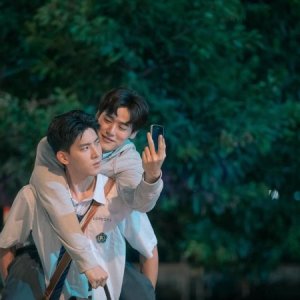
In addition to the young couple, Da (Wang Keda), their good mutual friend who will serve as best man, will join the terrifying wedding. Full of complex and real emotional entanglements, which eventually lead to tragedy, the three prepare to wait for the dark day. Everything ready now for the unimaginable…
Directed by Chinese filmmaker Yang Yongchun, and released on November 11, 2015, the film shows an impressive and deep scene of intimacy between two men. Filmed in Thailand, 'From Now On To The Past' explores that love means giving unconditionally for the person you love, even the most precious thing one can have: one's own life.
Produced by Beijing Pansy Pictures Co., Ltd., the viewer can see how the relationship between Tian and Da has undergone subtle changes over time. Da suffers in silence, as his feelings for Tian have turned into same-sex love, and the two can only hide this love in silence. They both break the friendship of the brothers who grew up together, and even break the shackles of love on the rainy night before the wedding.
The film works, mostly, by appreciating the way in which the technical resources contribute to the scenario of growing sexual tension between the two men, the restlessness and fear generated by the curse; as well as the articulation of climates that range from celebration to the dark, very well conceived and managed.
With natural and attractive performances, the audience comes to understand that the three characters are full of entanglement and pain.
Note that while the magician's prophecy was coming true, Sang comes to remember the second half of the prediction, hidden from the public until that moment: "the person he loves the most will die".
The craft of the Chinese school is manifested here, in this sense, through photography and the work of the team of artistic directors. The music also contributes to the above, and in this section the weight falls on the interpretation of the actress and singer Hu Ling Meng to the closing song, which is titled "From Now On To The Past." The conjunction of the three fronts determines the impressive visual and sound display of the film.
Two other indicators of value of 'From Now On To The Past' are linked to the management of its cast, populated by famous local figures from cinema and series, and to the way of interweaving the story – wrapped in the cloaks of drama, fantasy, romance and melodrama – with the indigenous weight of superstitions and wedding celebrations.
As the film confirms, such procedures are still decisive in the culture of a country whose technological, scientific and industrial rise does not prevent the permanence of atavistic practices based on the convergence of beliefs from diverse origins.
If you ask me why this film has such a tragic ending, I would answer that the writer and director want to tell us that homosexual relationships can end in tragedy; that is to say, it is easy to get together and break up, without the support of family, friends...
The sad ending also better sublimates the theme of the entire film, such as telling people that members of the LGBT+ community should receive more support in our societies.
In this exponent of cinema that shows pure love with a gay theme, a magician predicts that there will be blood at the wedding. But it will still be celebrated, because fear and imprecation will not prevent Sang (Hu Ling Meng) from speeding up the marriage plans with Tian (Pei Zi Tian), although carrying out the betrothal is something that should not have even been thought of. Apparently, a kind of ancestral curse haunts true lovers.
In addition to the young couple, Da (Wang Keda), their good mutual friend who will serve as best man, will join the terrifying wedding. Full of complex and real emotional entanglements, which eventually lead to tragedy, the three prepare to wait for the dark day. Everything ready now for the unimaginable…
Directed by Chinese filmmaker Yang Yongchun, and released on November 11, 2015, the film shows an impressive and deep scene of intimacy between two men. Filmed in Thailand, 'From Now On To The Past' explores that love means giving unconditionally for the person you love, even the most precious thing one can have: one's own life.
Produced by Beijing Pansy Pictures Co., Ltd., the viewer can see how the relationship between Tian and Da has undergone subtle changes over time. Da suffers in silence, as his feelings for Tian have turned into same-sex love, and the two can only hide this love in silence. They both break the friendship of the brothers who grew up together, and even break the shackles of love on the rainy night before the wedding.
The film works, mostly, by appreciating the way in which the technical resources contribute to the scenario of growing sexual tension between the two men, the restlessness and fear generated by the curse; as well as the articulation of climates that range from celebration to the dark, very well conceived and managed.
With natural and attractive performances, the audience comes to understand that the three characters are full of entanglement and pain.
Note that while the magician's prophecy was coming true, Sang comes to remember the second half of the prediction, hidden from the public until that moment: "the person he loves the most will die".
The craft of the Chinese school is manifested here, in this sense, through photography and the work of the team of artistic directors. The music also contributes to the above, and in this section the weight falls on the interpretation of the actress and singer Hu Ling Meng to the closing song, which is titled "From Now On To The Past." The conjunction of the three fronts determines the impressive visual and sound display of the film.
Two other indicators of value of 'From Now On To The Past' are linked to the management of its cast, populated by famous local figures from cinema and series, and to the way of interweaving the story – wrapped in the cloaks of drama, fantasy, romance and melodrama – with the indigenous weight of superstitions and wedding celebrations.
As the film confirms, such procedures are still decisive in the culture of a country whose technological, scientific and industrial rise does not prevent the permanence of atavistic practices based on the convergence of beliefs from diverse origins.
If you ask me why this film has such a tragic ending, I would answer that the writer and director want to tell us that homosexual relationships can end in tragedy; that is to say, it is easy to get together and break up, without the support of family, friends...
The sad ending also better sublimates the theme of the entire film, such as telling people that members of the LGBT+ community should receive more support in our societies.
Was this review helpful to you?


