
 News


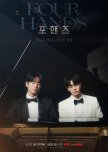
Original Rivalry
Two powerhouse male leads—how can you go wrong?
The story is deeply emotional, tracing the characters from childhood into adulthood. I went in with no expectations and genuinely had no idea what I was in for. What unfolded was far more than I anticipated. I became completely immersed in the friendship, the subtle shifts in facial expression, the unspoken vibrations between the characters, and the intricate choreography of deception, trust, and emotion.
The entire drama felt like a beautifully composed piece of music: Intro → Verse → Chorus → Verse → Chorus → Bridge → Chorus → Outro. Each movement introduced a new emotional phase, building upon what came before it. There was harmony and dissonance, moments of restraint followed by surges of intensity, and pauses that spoke as loudly as the dialogue. The emotional tempo continually shifted, carrying me through anticipation, uncertainty, tenderness, tension, and heartbreak.
And then came the crescendo.
Lee Jun-young is commanding. He portrays a child who possesses an extraordinary gift without yet understanding its magnitude, gradually developing into an intense leader and teacher. His performance has a remarkable musicality to it—quiet and understated in one moment, then gathering force until the character reaches the inevitable, almost explosive crescendo I had been waiting for.
Song Kang is exceptional as the insecure and tortured young man whose struggles become the counterpoint to his emerging brilliance. His performance captures the dissonance between vulnerability and genius, pain and potential. Watching that transformation unfold felt almost like listening to a composition gradually discovering its own melody.
Together, the two leads create an extraordinary dynamic. Their friendship, rivalry, silences, expressions, and emotional undercurrents become part of the score. So much is communicated without words that the smallest gesture can feel like an entire musical phrase.
I rarely write reviews, but this drama was supposed to be a filler for me—something to watch between other shows. Instead, it became the main event. I was completely drawn into its rhythm and watched the entire series in two days.
I began with no expectations. I ended in tears.
Sometimes, the most unexpected compositions are the ones that stay with you long after the final note has faded.
Was this review helpful to you?


