
 News
News 



This review may contain spoilers
Generation to Generation: An Emotional, Imperfect Gem That Rekindles Wuxia’s Golden Age
I have finished the drama and will try to provide a thorough review because I LOVED this drama. It takes patience and strong media comprehension, because it is nothing like the saccharine love stories of present years. They are not going narrate every thought or plan for you, and viewers will need to pay attention, but if you do, you will be hooked!
Final Verdict: MUST WATCH! If you loved Wuxia dramas of the past, especially those from TVB, this will harken back to yesteryears, bringing back memories and a nostalgic kick that I’ve craved from dramaland for a long time. I truly enjoyed the good, the bad, and the ugly here, but mostly good. Great even, imperfections and all. I loved all of the characters, can even empathize with the bad guys, and loved character development for all of the essential main and supporting cast. You will not regret seeing this through to the end.
Plot & Pacing: 7/10 -- I will start with the obvious imperfections. If viewers have patience, the drama is absolutely worth the payoff. The first five episodes move very quickly; it is not for those who only watch for romance, who like clear black and white characters, and definitely not for the impatient. Admittedly, the editing in the first 5 eps feels choppy, transitions are almost nonexistent, and anyone unfamiliar with the Wuxia genre or its rapid character introductions may feel overwhelmed. The Generation to Generation team had to condense a long novel into 37 episodes, and it is rumored that the original cut was closer to 40. Those extra episodes would have helped ease viewers into the world, build out the character introductions, and guide the audience through the backstory. Unfortunately, we work with what we have, and nothing is ever perfect.
If viewers can make it through those early episodes, the plot and pacing improve dramatically. From that point on, the story becomes engaging and emotionally rewarding. What stood out to me most was how the drama centers on the younger generation as they try to unravel and correct the mistakes of those who came before them. The older generation leaves behind calamities, chaos, bloodshed, heartbreak, and also nostalgia, love, regret, and a deep wish for the next generation to avoid repeating their fate.
At its heart, GTG is about breaking free from family trauma and learning to live authentically without compromising your conscience. Live with the intensity of fire, but move through the world with the curiosity and freedom of the wind. This idea is perfectly embodied by Cai Pingshu, the main protagonist’s aunt, who is admired across both the Six Sects and the Demonic Sect. Cai Zhao, our female lead, has also continued to preserve her aunt’s legacy and build her own path in the world, which is to be a business owner and live peacefully in Luoying Valley with her loved ones, Mu Qingyan included.
Overall, the plot is very strong. It does deviate from the novel, but it brings its own charm and perspective. As a Wuxia drama, it feels reminiscent of the classic TVB golden era with familiar themes, memorable characters, and clear hero and villain archetypes. The show balances the main love story, the Jianghu conflicts, the side characters, and the flashbacks in a satisfying way. Its weakest point is the main villain, whose arc drags on longer than necessary, and I wish Uncle Li had received more backstory. Even so, the flaws do not outweigh the many strengths.
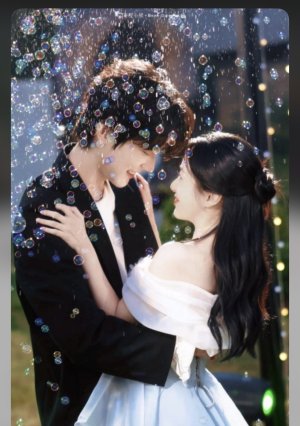
Characters/Chemistry: 9/10 -- Zhou Yiran’s performance as Mu Qingyan is the standout of the entire drama. He carries the role with incredible nuance, and his portrayal of a young man shaped by trauma, loss, and moral ambiguity is unforgettable. Bao Shang’en also deserves a great deal of praise. As Cai Zhao, she holds her own in a major role and actually has more screentime than Zhou Yiran. She brings a grounded, sincere energy to the character that makes her easy to root for.
Mu Qingyan is neither good nor evil. He is a broken young man who grew up with a painful childhood and then lost the only person who ever made him feel safe, his father. After that, he suffered under the Demonic Sect, which rightfully belonged to his Mu clan. His father was his one source of light, and after his death, that role shifted to Uncle Chang. When Uncle Chang died, Cai Zhao became the only constant brightness in his life. She is direct, honest, free-spirited, and has no hidden motives. She becomes his guiding North Star.
I love that neither character fully trusts the other at first. They are destined to be enemies in this world, and Mu Qingyan often treats Cai Zhao like a chess piece in his larger plan. Yet she is sharp enough to see through him. Their romance is a slow burn that can feel uneven at times, but both characters remain fully themselves. They learn to understand each other’s perspectives and refuse to give up on one another.
Cai Zhao needs Mu Qingyan to push her beyond her safe, predictable life. Loving him forces her to feel deeply and take risks she would never take otherwise. Without him, she could easily end up with Song Yuzhi and live a peaceful, comfortable life, but she knows she would be bored and unfulfilled. There would be no real passion there.
Mu Qingyan, on the other hand, learns to let go of his abandonment issues and becomes more open about his intentions. He is willing to give up revenge, his past identity, and even his life for the girl he loves. He chooses her over everything he once believed defined him. If any couple deserves a happy ending, it is these two.
Their adventures together were a joy to watch. The romance and chemistry are clear without ever becoming overly sweet. By the end, they truly feel like equal partners. Their ending felt earned, and I am going to miss these two bickering, stubborn, lovesick fools.
The side characters were incredible. I cried countless times because of them, and twice because of the leads. The nostalgic tone of the show was beautifully executed, and several scenes will stay with me for a long time.
Four unforgettable moments stand out:
1. Luo Yuanrong and Wu Yuanying’s final moment as they jump off the bridge together, leaving behind their tragic past.
2. Qian Xueshen remembering his family in the snowy village and realizing why he must continue living.
3. Madam Yin’s heartbreaking grief over losing her young love.
4. Guo Zigui’s final memory of enjoying Gentle Breeze and laughing by the fire.
I cried the hardest during the first and last scenes, but the other two also hit me deeply. When this drama decides to deliver emotional punches, it does so with full force.
As for the leads, the “death bed” scene in the final episode completely fooled me. If the show had committed to that ending, I would have been emotionally wrecked for a long time.
Acting: Zhou Yiran continues to be an absolute gem. He can express entire emotions with the smallest shift of his lips or a glint in his eyes. He poured everything into this role and captured the depth, cunning, and loneliness of a misunderstood character who almost enjoys being misread by the world. The only person he allows to see the truth is Zhao Zhao. Watching his pain, longing, humor, scheming, quiet joys, and especially his jealousy was incredibly fun. He brought Mu Qingyan to life in a way that feels definitive, and I cannot imagine anyone else reaching the same level of complexity and impact.
There has been criticism of Bao Shang’en for being stiff or lacking the same nuance as Zhou Yiran. It is true that she is less experienced and he is the stronger actor. However, Cai Zhao is not an easy role. She can easily become one-dimensional because she has many traits associated with a Mary Sue. What saves her from that is her internal struggle. She is drawn to someone like Mu Qingyan but cannot fully accept her feelings, so she lives in a constant state of denial while still caring deeply. Bao Shang’en captured her free-spirited nature beautifully. She gives Cai Zhao the right balance of righteousness, curiosity, and discernment, which allows her to deviate from the rules when her conscience demands it.
She is not rigid like Yuzhi. She tries to live with integrity, even when that means going against what the Six Sects believe is right. Bao Shang’en walks a fine line between portraying a tomboyish girl, a rising hero, a model disciple living under the shadow of her legendary aunt, and a young woman discovering what real love feels like. Cai Zhao grew up adored by everyone, cherished and protected, which is the complete opposite of Mu Qingyan’s upbringing. For these two worlds to collide, both actors needed to create a believable push and pull, a yin and yang that balances duty, love, and revenge. It is not an easy dynamic to portray, and although Bao Shang’en still has room to grow, I cannot picture anyone else playing Cai Zhao either.
I love both of these actors and want nothing more than to see their careers continue to rise. Their chemistry was undeniable, and I would be thrilled to see them reunite in another drama.
Both the young and older cast did a fantastic job. Everyone acted their roles perfectly, and I honestly craved more scenes and expanded background stories for everyone. 37 eps was not enough to fully showcase everyone’s backstories, but a commendable job to the casting team.
OST & Cinematography: 8/10 – You can tell the production team put real effort into the cinematography. They filmed in many live locations, and those settings captured the vastness of the world the characters inhabit. Several scenes were genuinely breathtaking and created a strong sense of wonder. However, the visual quality is inconsistent. It is easy to see which scenes were shot on location and which were filmed on sets. Since this was not an S‑tier production, the show did not reach its full visual potential. Even so, the beauty that was achieved still outweighed the weaker moments, and it never took away from the story or the characters. My only complaint is the makeup in certain scenes, where the characters looked overly pale and the makeup was very noticeable.
The OST, on the other hand, was absolutely beautiful. The music elevated every scene, especially the emotional ones. Without such a strong score, many moments would have felt less impactful, which shows how essential the right soundtrack is. The songs were used thoughtfully, supported by lovely instrumentals, and were incredibly effective. My tears usually started the moment the music began, which says everything about how powerful it was.
Final Verdict: MUST WATCH! If you loved Wuxia dramas of the past, especially those from TVB, this will harken back to yesteryears, bringing back memories and a nostalgic kick that I’ve craved from dramaland for a long time. I truly enjoyed the good, the bad, and the ugly here, but mostly good. Great even, imperfections and all. I loved all of the characters, can even empathize with the bad guys, and loved character development for all of the essential main and supporting cast. You will not regret seeing this through to the end.
Plot & Pacing: 7/10 -- I will start with the obvious imperfections. If viewers have patience, the drama is absolutely worth the payoff. The first five episodes move very quickly; it is not for those who only watch for romance, who like clear black and white characters, and definitely not for the impatient. Admittedly, the editing in the first 5 eps feels choppy, transitions are almost nonexistent, and anyone unfamiliar with the Wuxia genre or its rapid character introductions may feel overwhelmed. The Generation to Generation team had to condense a long novel into 37 episodes, and it is rumored that the original cut was closer to 40. Those extra episodes would have helped ease viewers into the world, build out the character introductions, and guide the audience through the backstory. Unfortunately, we work with what we have, and nothing is ever perfect.
If viewers can make it through those early episodes, the plot and pacing improve dramatically. From that point on, the story becomes engaging and emotionally rewarding. What stood out to me most was how the drama centers on the younger generation as they try to unravel and correct the mistakes of those who came before them. The older generation leaves behind calamities, chaos, bloodshed, heartbreak, and also nostalgia, love, regret, and a deep wish for the next generation to avoid repeating their fate.
At its heart, GTG is about breaking free from family trauma and learning to live authentically without compromising your conscience. Live with the intensity of fire, but move through the world with the curiosity and freedom of the wind. This idea is perfectly embodied by Cai Pingshu, the main protagonist’s aunt, who is admired across both the Six Sects and the Demonic Sect. Cai Zhao, our female lead, has also continued to preserve her aunt’s legacy and build her own path in the world, which is to be a business owner and live peacefully in Luoying Valley with her loved ones, Mu Qingyan included.
Overall, the plot is very strong. It does deviate from the novel, but it brings its own charm and perspective. As a Wuxia drama, it feels reminiscent of the classic TVB golden era with familiar themes, memorable characters, and clear hero and villain archetypes. The show balances the main love story, the Jianghu conflicts, the side characters, and the flashbacks in a satisfying way. Its weakest point is the main villain, whose arc drags on longer than necessary, and I wish Uncle Li had received more backstory. Even so, the flaws do not outweigh the many strengths.
Characters/Chemistry: 9/10 -- Zhou Yiran’s performance as Mu Qingyan is the standout of the entire drama. He carries the role with incredible nuance, and his portrayal of a young man shaped by trauma, loss, and moral ambiguity is unforgettable. Bao Shang’en also deserves a great deal of praise. As Cai Zhao, she holds her own in a major role and actually has more screentime than Zhou Yiran. She brings a grounded, sincere energy to the character that makes her easy to root for.
Mu Qingyan is neither good nor evil. He is a broken young man who grew up with a painful childhood and then lost the only person who ever made him feel safe, his father. After that, he suffered under the Demonic Sect, which rightfully belonged to his Mu clan. His father was his one source of light, and after his death, that role shifted to Uncle Chang. When Uncle Chang died, Cai Zhao became the only constant brightness in his life. She is direct, honest, free-spirited, and has no hidden motives. She becomes his guiding North Star.
I love that neither character fully trusts the other at first. They are destined to be enemies in this world, and Mu Qingyan often treats Cai Zhao like a chess piece in his larger plan. Yet she is sharp enough to see through him. Their romance is a slow burn that can feel uneven at times, but both characters remain fully themselves. They learn to understand each other’s perspectives and refuse to give up on one another.
Cai Zhao needs Mu Qingyan to push her beyond her safe, predictable life. Loving him forces her to feel deeply and take risks she would never take otherwise. Without him, she could easily end up with Song Yuzhi and live a peaceful, comfortable life, but she knows she would be bored and unfulfilled. There would be no real passion there.
Mu Qingyan, on the other hand, learns to let go of his abandonment issues and becomes more open about his intentions. He is willing to give up revenge, his past identity, and even his life for the girl he loves. He chooses her over everything he once believed defined him. If any couple deserves a happy ending, it is these two.
Their adventures together were a joy to watch. The romance and chemistry are clear without ever becoming overly sweet. By the end, they truly feel like equal partners. Their ending felt earned, and I am going to miss these two bickering, stubborn, lovesick fools.
The side characters were incredible. I cried countless times because of them, and twice because of the leads. The nostalgic tone of the show was beautifully executed, and several scenes will stay with me for a long time.
Four unforgettable moments stand out:
1. Luo Yuanrong and Wu Yuanying’s final moment as they jump off the bridge together, leaving behind their tragic past.
2. Qian Xueshen remembering his family in the snowy village and realizing why he must continue living.
3. Madam Yin’s heartbreaking grief over losing her young love.
4. Guo Zigui’s final memory of enjoying Gentle Breeze and laughing by the fire.
I cried the hardest during the first and last scenes, but the other two also hit me deeply. When this drama decides to deliver emotional punches, it does so with full force.
As for the leads, the “death bed” scene in the final episode completely fooled me. If the show had committed to that ending, I would have been emotionally wrecked for a long time.
Acting: Zhou Yiran continues to be an absolute gem. He can express entire emotions with the smallest shift of his lips or a glint in his eyes. He poured everything into this role and captured the depth, cunning, and loneliness of a misunderstood character who almost enjoys being misread by the world. The only person he allows to see the truth is Zhao Zhao. Watching his pain, longing, humor, scheming, quiet joys, and especially his jealousy was incredibly fun. He brought Mu Qingyan to life in a way that feels definitive, and I cannot imagine anyone else reaching the same level of complexity and impact.
There has been criticism of Bao Shang’en for being stiff or lacking the same nuance as Zhou Yiran. It is true that she is less experienced and he is the stronger actor. However, Cai Zhao is not an easy role. She can easily become one-dimensional because she has many traits associated with a Mary Sue. What saves her from that is her internal struggle. She is drawn to someone like Mu Qingyan but cannot fully accept her feelings, so she lives in a constant state of denial while still caring deeply. Bao Shang’en captured her free-spirited nature beautifully. She gives Cai Zhao the right balance of righteousness, curiosity, and discernment, which allows her to deviate from the rules when her conscience demands it.
She is not rigid like Yuzhi. She tries to live with integrity, even when that means going against what the Six Sects believe is right. Bao Shang’en walks a fine line between portraying a tomboyish girl, a rising hero, a model disciple living under the shadow of her legendary aunt, and a young woman discovering what real love feels like. Cai Zhao grew up adored by everyone, cherished and protected, which is the complete opposite of Mu Qingyan’s upbringing. For these two worlds to collide, both actors needed to create a believable push and pull, a yin and yang that balances duty, love, and revenge. It is not an easy dynamic to portray, and although Bao Shang’en still has room to grow, I cannot picture anyone else playing Cai Zhao either.
I love both of these actors and want nothing more than to see their careers continue to rise. Their chemistry was undeniable, and I would be thrilled to see them reunite in another drama.
Both the young and older cast did a fantastic job. Everyone acted their roles perfectly, and I honestly craved more scenes and expanded background stories for everyone. 37 eps was not enough to fully showcase everyone’s backstories, but a commendable job to the casting team.
OST & Cinematography: 8/10 – You can tell the production team put real effort into the cinematography. They filmed in many live locations, and those settings captured the vastness of the world the characters inhabit. Several scenes were genuinely breathtaking and created a strong sense of wonder. However, the visual quality is inconsistent. It is easy to see which scenes were shot on location and which were filmed on sets. Since this was not an S‑tier production, the show did not reach its full visual potential. Even so, the beauty that was achieved still outweighed the weaker moments, and it never took away from the story or the characters. My only complaint is the makeup in certain scenes, where the characters looked overly pale and the makeup was very noticeable.
The OST, on the other hand, was absolutely beautiful. The music elevated every scene, especially the emotional ones. Without such a strong score, many moments would have felt less impactful, which shows how essential the right soundtrack is. The songs were used thoughtfully, supported by lovely instrumentals, and were incredibly effective. My tears usually started the moment the music began, which says everything about how powerful it was.
Was this review helpful to you?


