


This review may contain spoilers
A Howling Success for RabGel
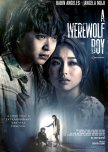
I’ve just stepped out of the block screening of A Werewolf Boy, and I walked away genuinely impressed. This 2026 Philippine fantasy romance, produced by Viva Films, Studio Viva, and CJ ENM, is an official remake of the beloved 2012 South Korean film starring Song Joong-ki and Park Bo-young. While it’s not an original story, this local adaptation confidently stands on its own, offering a polished, emotionally grounded adaptation that stands confidently on its own.
The film follows Sara, a teenage girl who moves to the countryside with her family and discovers a mysterious, feral boy hiding on their land. He’s unable to speak, driven by instinct, and clearly not like anyone she’s ever met. Instead of fear, Sara responds with patience and kindness, slowly teaching him how to eat, behave, and connect with others. What begins as curiosity grows into a tender, unconventional romance shaped by trust, care, and quiet understanding. As their bond deepens, outside forces—including an entitled and dangerous suitor—threaten their fragile world, pushing both characters toward difficult choices rooted in love and sacrifice.
What could have felt uncomfortable is handled with surprising care. Boy’s dog-like devotion is framed as emotional intimacy, not ownership. Their shared moments are soft, ordinary, and disarmingly gentle, and that’s where the film truly shines. This isn’t a werewolf movie driven by horror tropes or jump scares. There are no mystery deaths or fear-fuelled twists. Instead, A Werewolf Boy chooses connection over spectacle, tenderness over terror. It’s emotional without being manipulative — yes, it made me cry — but it’s also warm, comforting, and quietly uplifting.
Directed by Crisanto B. Aquino, known for My Future You and Instant Daddy, the film marks a confident genre shift for him. His direction feels steady and intentional, balancing fantasy elements with intimate emotional beats. Rabin Angeles headlines the film as the wolf boy in his first leading role, opposite Angela Muji as Sara. Candy Pangilinan is a delight as Sara’s warm and humorous mother, Aling Rosa, while Albie Casiño is impressively effective as Jojo, the arrogant and abusive antagonist. Lorna Tolentino’s special participation as the older Sara adds emotional weight and gravitas, reminding us why she remains one of the country’s most respected actresses.
Even without having seen the original Korean film (which I now fully intend to watch), this adaptation works beautifully on its own. In terms of acting and overall execution, it really delivers. Candy Pangilinan is effortlessly funny, Albie Casiño is so convincing as the villain that he genuinely gets under your skin, and Lorna Tolentino brings depth and restraint that elevate every scene she’s in. Beyond performance, the film excels in how carefully and thoughtfully the Korean story is translated into a Filipino context. The adaptation feels meticulous rather than mechanical.
Angela Muji and Rabin Angeles truly step up here. Having seen them in lighter or more commercial projects before, this feels like their strongest work yet, both individually and as a pair. Their chemistry is natural and unforced, and even the simplest scenes carry emotional weight. Rabin takes on a particularly challenging role with no spoken dialogue, relying on physicality, expressive eyes, and silence to convey longing and vulnerability. Angela brings warmth and sincerity to Sara, making her easy to root for from the very beginning. If this film is meant to introduce them as a love team, it’s a smart and promising launch.
From start to finish, the film’s pacing is smooth and engaging. Nothing feels rushed or out of place, and the storytelling allows emotional moments to breathe. The visual effects are used sparingly and effectively, enhancing the supernatural elements without overwhelming the narrative. The supporting cast adds texture and balance, making the world feel lived-in and emotionally complete.
There are minor stumbles, particularly with period consistency. While the story suggests a setting somewhere between the 1960s and 1970s, some language and technology choices don’t always line up perfectly. These details are noticeable but ultimately forgivable, functioning more as small distractions than real flaws.
Overall, A Werewolf Boy is a well-crafted Filipino adaptation that honours its Korean predecessor while carving out its own identity. It’s tender without being cloying, emotional without being manipulative, and polished without losing its heart. If you’re a fan of fantasy romance or simply enjoy stories about love, belonging, and quiet connection, this one is well worth watching.
The film follows Sara, a teenage girl who moves to the countryside with her family and discovers a mysterious, feral boy hiding on their land. He’s unable to speak, driven by instinct, and clearly not like anyone she’s ever met. Instead of fear, Sara responds with patience and kindness, slowly teaching him how to eat, behave, and connect with others. What begins as curiosity grows into a tender, unconventional romance shaped by trust, care, and quiet understanding. As their bond deepens, outside forces—including an entitled and dangerous suitor—threaten their fragile world, pushing both characters toward difficult choices rooted in love and sacrifice.
What could have felt uncomfortable is handled with surprising care. Boy’s dog-like devotion is framed as emotional intimacy, not ownership. Their shared moments are soft, ordinary, and disarmingly gentle, and that’s where the film truly shines. This isn’t a werewolf movie driven by horror tropes or jump scares. There are no mystery deaths or fear-fuelled twists. Instead, A Werewolf Boy chooses connection over spectacle, tenderness over terror. It’s emotional without being manipulative — yes, it made me cry — but it’s also warm, comforting, and quietly uplifting.
Directed by Crisanto B. Aquino, known for My Future You and Instant Daddy, the film marks a confident genre shift for him. His direction feels steady and intentional, balancing fantasy elements with intimate emotional beats. Rabin Angeles headlines the film as the wolf boy in his first leading role, opposite Angela Muji as Sara. Candy Pangilinan is a delight as Sara’s warm and humorous mother, Aling Rosa, while Albie Casiño is impressively effective as Jojo, the arrogant and abusive antagonist. Lorna Tolentino’s special participation as the older Sara adds emotional weight and gravitas, reminding us why she remains one of the country’s most respected actresses.
Even without having seen the original Korean film (which I now fully intend to watch), this adaptation works beautifully on its own. In terms of acting and overall execution, it really delivers. Candy Pangilinan is effortlessly funny, Albie Casiño is so convincing as the villain that he genuinely gets under your skin, and Lorna Tolentino brings depth and restraint that elevate every scene she’s in. Beyond performance, the film excels in how carefully and thoughtfully the Korean story is translated into a Filipino context. The adaptation feels meticulous rather than mechanical.
Angela Muji and Rabin Angeles truly step up here. Having seen them in lighter or more commercial projects before, this feels like their strongest work yet, both individually and as a pair. Their chemistry is natural and unforced, and even the simplest scenes carry emotional weight. Rabin takes on a particularly challenging role with no spoken dialogue, relying on physicality, expressive eyes, and silence to convey longing and vulnerability. Angela brings warmth and sincerity to Sara, making her easy to root for from the very beginning. If this film is meant to introduce them as a love team, it’s a smart and promising launch.
From start to finish, the film’s pacing is smooth and engaging. Nothing feels rushed or out of place, and the storytelling allows emotional moments to breathe. The visual effects are used sparingly and effectively, enhancing the supernatural elements without overwhelming the narrative. The supporting cast adds texture and balance, making the world feel lived-in and emotionally complete.
There are minor stumbles, particularly with period consistency. While the story suggests a setting somewhere between the 1960s and 1970s, some language and technology choices don’t always line up perfectly. These details are noticeable but ultimately forgivable, functioning more as small distractions than real flaws.
Overall, A Werewolf Boy is a well-crafted Filipino adaptation that honours its Korean predecessor while carving out its own identity. It’s tender without being cloying, emotional without being manipulative, and polished without losing its heart. If you’re a fan of fantasy romance or simply enjoy stories about love, belonging, and quiet connection, this one is well worth watching.
Was this review helpful to you?


