


This review may contain spoilers
A Thriller That Forgot to Thrill
By the time JoongDunk reached their fourth series together — Star & Sky, Hidden Agenda, The Heart Killers, and now Dare You to Death — it was clear they’re one of GMMTV’s safest bets. Loyal fandom? Locked in. Built-in hype? Guaranteed. But star power and fan devotion can’t replace tight writing, tonal discipline, and convincing performances — especially in a genre that demands it.
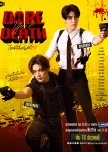
On paper, Dare You To Death sounds promising. A university student, Puifai, dies under suspicious circumstances after a party. A seemingly close-knit friend group begins receiving ominous truth-or-dare notes. Enter rival detectives Kamin (Dunk Natachai), the sharp but restrained newcomer, and Jade (Joong Archen), the instinct-driven senior officer. Forced to work together, they navigate secrets, revenge, and escalating deaths — with a slow-burn romance simmering beneath the surface.
It should have worked.
The core concept — a fractured friend group hiding horrific secrets — is genuinely compelling. Puifai’s psychological unraveling and the moral corruption within the group had real dramatic weight. For moments, especially in the latter half of the finale, the series hints at something darker and smarter. Those glimpses are frustrating because they show potential.
The problem is consistency.
Tonally, the series never commits. It swings between grisly psychological manipulation and soft-focus romantic comedy. Just as tension begins to build, we’re pulled into flirtation, beach dates, or extended lovey-dovey exchanges that stall the momentum. The romance isn’t inherently the issue — it’s the placement. In a thriller, pacing is everything. Here, urgency evaporates mid-crisis.
The investigative thread is also weak. For a crime drama, deductions are minimal, forensic work feels surface-level, and logic often bends for convenience. Characters make baffling decisions purely to move the plot forward. Suspense relies less on clever unraveling and more on characters behaving unrealistically. When viewers start questioning basic actions instead of the mystery, immersion breaks.
Performance-wise, the supporting cast carries significant weight. Pahn as Puifai delivers the most textured portrayal, grounding the revenge arc in emotional trauma. Ohm, Chimon, and Sing add credibility and tension where the script allows. They elevate scenes that might otherwise fall flat.
As for JoongDunk, their chemistry remains intact — that’s never been the issue. But chemistry alone doesn’t sustain a thriller. Emotional peaks require range and intensity. Too often, dramatic confrontations lack depth, and quieter moments feel one-note. It’s not that they can’t grow into stronger performers — it’s that this material demands more than what’s currently delivered.
Technically, the production is uneven. Editing choices blunt tension. Music cues overpower dialogue. Injuries appear and disappear as the scene requires. The police portrayal lacks procedural grounding, which undercuts credibility in a genre built on realism.
What makes this frustrating is that the skeleton of a strong series is here. Strip back the tonal confusion. Let the darkness breathe. Focus on psychological horror first, romance second. With sharper writing and firmer directorial control, this could have been a standout.
Instead, it lands as a thriller diluted by fan-service priorities.
If you’re watching primarily for JoongDunk moments, you’ll likely find enjoyment. Treat it as light entertainment, and it plays easier. But if you came expecting a gripping, cohesive crime drama, temper expectations.
I didn’t hate it. I just expected more — from the writing, from the execution, and from a production company capable of much better.
On paper, Dare You To Death sounds promising. A university student, Puifai, dies under suspicious circumstances after a party. A seemingly close-knit friend group begins receiving ominous truth-or-dare notes. Enter rival detectives Kamin (Dunk Natachai), the sharp but restrained newcomer, and Jade (Joong Archen), the instinct-driven senior officer. Forced to work together, they navigate secrets, revenge, and escalating deaths — with a slow-burn romance simmering beneath the surface.
It should have worked.
The core concept — a fractured friend group hiding horrific secrets — is genuinely compelling. Puifai’s psychological unraveling and the moral corruption within the group had real dramatic weight. For moments, especially in the latter half of the finale, the series hints at something darker and smarter. Those glimpses are frustrating because they show potential.
The problem is consistency.
Tonally, the series never commits. It swings between grisly psychological manipulation and soft-focus romantic comedy. Just as tension begins to build, we’re pulled into flirtation, beach dates, or extended lovey-dovey exchanges that stall the momentum. The romance isn’t inherently the issue — it’s the placement. In a thriller, pacing is everything. Here, urgency evaporates mid-crisis.
The investigative thread is also weak. For a crime drama, deductions are minimal, forensic work feels surface-level, and logic often bends for convenience. Characters make baffling decisions purely to move the plot forward. Suspense relies less on clever unraveling and more on characters behaving unrealistically. When viewers start questioning basic actions instead of the mystery, immersion breaks.
Performance-wise, the supporting cast carries significant weight. Pahn as Puifai delivers the most textured portrayal, grounding the revenge arc in emotional trauma. Ohm, Chimon, and Sing add credibility and tension where the script allows. They elevate scenes that might otherwise fall flat.
As for JoongDunk, their chemistry remains intact — that’s never been the issue. But chemistry alone doesn’t sustain a thriller. Emotional peaks require range and intensity. Too often, dramatic confrontations lack depth, and quieter moments feel one-note. It’s not that they can’t grow into stronger performers — it’s that this material demands more than what’s currently delivered.
Technically, the production is uneven. Editing choices blunt tension. Music cues overpower dialogue. Injuries appear and disappear as the scene requires. The police portrayal lacks procedural grounding, which undercuts credibility in a genre built on realism.
What makes this frustrating is that the skeleton of a strong series is here. Strip back the tonal confusion. Let the darkness breathe. Focus on psychological horror first, romance second. With sharper writing and firmer directorial control, this could have been a standout.
Instead, it lands as a thriller diluted by fan-service priorities.
If you’re watching primarily for JoongDunk moments, you’ll likely find enjoyment. Treat it as light entertainment, and it plays easier. But if you came expecting a gripping, cohesive crime drama, temper expectations.
I didn’t hate it. I just expected more — from the writing, from the execution, and from a production company capable of much better.
Was this review helpful to you?


