
 K-Drama


This review may contain spoilers
When Faith and Love Refuse to Be Opposites
When Ticket to Heaven was first announced during the GMMTV Showcase, it instantly became one of the company's most talked-about projects. The premise alone generated enormous curiosity. A Thai BL set inside a Catholic seminary was a bold concept, especially in a country where Christianity is a minority religion. My biggest question wasn't whether the idea sounded interesting, but whether director P'Aof Noppharnach Chaiwimol could successfully bring such a sensitive and ambitious story to life.
Unlike many viewers, I wasn't immediately swept away by the announcement. I wasn't particularly enthusiastic after Gemini and Fourth's previous project, but I felt this series had the potential to redefine what they could do as actors. Looking back now, I'm glad I gave it that chance.
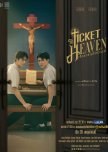
Ticket to Heaven isn't simply another BL romance. It's a deeply reflective coming-of-age drama that explores faith, grief, identity, guilt, sexuality, acceptance and the difficult process of reconciling who you are with what you've been taught to believe. Set in a Catholic seminary in 1996, the story follows Tanrak, a devout seminarian who believes becoming a priest is his path towards seeing his late parents again in heaven. His world is turned upside down when he meets Barth, a rebellious but emotionally vulnerable transfer student carrying wounds of his own. As their friendship gradually grows into love, both young men are forced to confront the painful reality that the institution shaping their lives also condemns the feelings growing between them.
One of the series' greatest achievements is its willingness to tackle themes rarely explored in Thai BL. Religion is never treated as a simple backdrop or convenient obstacle. Instead, faith becomes the emotional heart of the narrative. Rather than presenting easy answers, the series thoughtfully examines religious legalism, institutional expectations, sexuality, forgiveness and whether genuine faith can coexist with romantic love. It trusts its audience to wrestle with these questions instead of simplifying them.
The opening scene immediately caught my attention. Beginning with marriage equality before transporting viewers back to 1996 cleverly frames the entire story as something bigger than romance. It becomes a story about hope, justice and the long road towards acceptance. That opening also creates an underlying mystery that lingers throughout the series. The thirty-year jump had me constantly wondering whether Tanrak would eventually become a priest, lose Barth forever or meet a tragic fate. I was emotionally preparing myself for heartbreak from the very beginning.
P'Aof once again proves why he's one of GMMTV's strongest storytellers. Personally, I think his work is at its best when he has fewer episodes to work with, much like Moonlight Chicken. With only six episodes, Ticket to Heaven remains tightly focused without sacrificing emotional depth. Every frame feels intentional. Symbolism is woven naturally into the cinematography, visual composition and production design, rewarding viewers who pay close attention instead of spelling everything out through dialogue.
The symbolism extends far beyond the visuals. I especially appreciated the hidden meanings behind the protagonists' names. Tanrak can be interpreted as "the representative of love," while Barth references Saint Bartholomew, one of Jesus' apostles. These choices reinforce the central themes of devotion, sacrifice and forbidden love. Even the painting "Ticket to Heaven" carries multiple layers of meaning. It isn't merely an image of someone ascending towards heaven; it becomes a visual metaphor for suffering, longing, sacrifice and the emotional journey both characters must endure.
The writing is remarkably polished throughout. The emotional progression between Barth and Tanrak unfolds naturally, allowing every conversation, glance and quiet moment to deepen their connection. Both characters carry immense emotional pain. Tanrak clings desperately to his faith because it represents the hope of reuniting with his parents, while Barth has lost much of his trust in God after enduring years of trauma and rejection. Watching them slowly become each other's refuge forms the emotional backbone of the entire series.
The line, "I realised that God never helped me at all," hit especially hard. It perfectly captures how grief and trauma can completely shatter a person's faith. Later, when Tanrak questions whether every kind of love brings us closer to God, the series reaches one of its most emotionally powerful moments. These conversations elevate Ticket to Heaven beyond a conventional romance and transform it into an honest exploration of spirituality and identity.
Gemini and Fourth deliver career-best performances. Fourth is extraordinary as Tanrak. This is an incredibly demanding role because Tanrak isn't only wrestling with his sexuality. He's trapped between his faith, his future, his identity and the terrifying belief that loving another man could cost him heaven itself. Fourth conveys all of that with remarkable restraint. His eyes, facial expressions and subtle body language communicate emotions that words never could. He doesn't simply portray Tanrak—he becomes him.
Gemini is equally impressive. Barth could easily have been reduced to the confident, teasing love interest, but Gemini gives him warmth, vulnerability and emotional complexity. Despite everything life has taken from Barth, he remains the character with the greatest capacity to love. His performance feels sincere, grounded and completely believable. He also undergoes an impressive physical transformation for the role, bringing an effortless confidence and charisma that perfectly suits Barth.
Their chemistry is exceptional. Every stolen glance, every playful tease and every lingering silence makes it easy to believe these are two young men slowly falling in love despite desperately trying not to. Even scenes with very little dialogue are filled with emotional tension. The famous bathing sequence is a perfect example. What makes it unforgettable isn't simply the physical intimacy but everything that leads up to it. The silent eye contact, the nervous hesitation and the emotional vulnerability make the eventual kiss feel earned rather than sensational. For me, it's one of the finest and most emotionally satisfying kiss scenes I've seen on television because it represents the release of everything both characters had been suppressing.
Tanrak's internal conflict is beautifully portrayed throughout the series. His growing attraction to Barth isn't presented as simple desire but as something that completely unravels the foundation of his identity. The way he looks at Barth, fixates on him and struggles to suppress his emotions says everything before a single word is spoken. The devastation on his face when he finally accepts that he loves Barth is heartbreaking because he genuinely believes his love is incompatible with salvation. His jealousy, guilt, fear and longing all exist simultaneously, and Fourth conveys every layer with extraordinary nuance.
I also appreciated how honestly the series portrays Barth's unwavering affection. Whether teasing Tanrak, quietly watching him from afar or encouraging him to embrace his true self, Barth remains the emotional anchor of their relationship. His confession becomes the catalyst that finally allows Tanrak to stop running from himself. Rather than leading Tanrak away from faith, Barth ultimately helps him rediscover it in a healthier and more compassionate way.
Technically, the production is excellent. The cinematography is stunning, the Catholic seminary setting feels authentic and refreshingly different, and the soundtrack deserves special praise. Gemini and Fourth are talented musicians in their own right, and the music adds another emotional layer to nearly every major scene. Combined with P'Aof's confident direction, every episode leaves a lasting emotional impression.
I do have a few criticisms. As someone familiar with Catholic liturgy, I noticed a few inconsistencies in the Mass responses, particularly the use of the modern Roman Missal despite the story being set in 1996. That said, these may simply stem from subtitle localisation and are relatively minor.
The English subtitles present a more noticeable issue. Several translations miss important nuances from the original Thai dialogue. During the bathing scene, for example, Barth's teasing about Tanrak's obvious physical reaction is replaced with a random Scooby-Doo joke, which completely changes the intention of the exchange. Likewise, "I am not God's favourite son" would have been more accurately translated as "I am not one of God's beloved sons," a subtle but meaningful difference given the themes of the series. These moments don't ruin the experience, but they do lessen some of the emotional and theological depth for international audiences.
One of the aspects I appreciated most was the ending. Too often, queer stories centred around religion conclude with punishment, separation or tragedy. Ticket to Heaven chooses something far more hopeful. It reminds us that faith and queerness do not have to exist in opposition. Tanrak spends much of the series believing he must choose between God and the person he loves, only to discover that genuine faith was never about denying himself. Barth becomes the bridge that helps him reconcile his spirituality with his identity rather than forcing him to abandon either.
The final reunion with Tanrak's childhood friend beautifully reinforces that message. I appreciated that the series openly shows queer people continuing to pray, believe in God and live lives of faith. That kind of representation matters because it offers hope to viewers who may have been taught that they don't belong in religious spaces.
I also found myself thinking about how much Tanrak changed over the course of the story. At the beginning, he was living almost exclusively for the promise of death and heaven, believing sacrifice was the only path towards God. By the end, he finally understands that love itself can also be sacred. Barth never asked him to abandon his beliefs; he simply showed him that there was never any need to choose between faith and love.
Is Ticket to Heaven a masterpiece? Personally, I wouldn't go that far. The occasional subtitle issues and a few minor historical inconsistencies keep it from being flawless. It also took me a couple of episodes before I was completely invested. However, once the emotional foundation was established, the series became increasingly rewarding with every episode.
Ticket to Heaven is beautifully directed, intelligently written and exceptionally performed. It trusts its audience, embraces complexity and delivers one of the most mature explorations of religion, identity and queer love that Thai BL has offered to date. More importantly, it reminds us that stories about queer people don't always have to end in suffering. They can also end with hope, healing and the quiet reassurance that love and faith are capable of existing side by side.
I sincerely thank P'Aof, Gemini, Fourth and the entire creative team for crafting something so thoughtful, emotionally resonant and genuinely courageous. They didn't simply make another BL series. They created a story that will comfort many people, challenge others and stay with viewers long after the credits roll.
Unlike many viewers, I wasn't immediately swept away by the announcement. I wasn't particularly enthusiastic after Gemini and Fourth's previous project, but I felt this series had the potential to redefine what they could do as actors. Looking back now, I'm glad I gave it that chance.
Ticket to Heaven isn't simply another BL romance. It's a deeply reflective coming-of-age drama that explores faith, grief, identity, guilt, sexuality, acceptance and the difficult process of reconciling who you are with what you've been taught to believe. Set in a Catholic seminary in 1996, the story follows Tanrak, a devout seminarian who believes becoming a priest is his path towards seeing his late parents again in heaven. His world is turned upside down when he meets Barth, a rebellious but emotionally vulnerable transfer student carrying wounds of his own. As their friendship gradually grows into love, both young men are forced to confront the painful reality that the institution shaping their lives also condemns the feelings growing between them.
One of the series' greatest achievements is its willingness to tackle themes rarely explored in Thai BL. Religion is never treated as a simple backdrop or convenient obstacle. Instead, faith becomes the emotional heart of the narrative. Rather than presenting easy answers, the series thoughtfully examines religious legalism, institutional expectations, sexuality, forgiveness and whether genuine faith can coexist with romantic love. It trusts its audience to wrestle with these questions instead of simplifying them.
The opening scene immediately caught my attention. Beginning with marriage equality before transporting viewers back to 1996 cleverly frames the entire story as something bigger than romance. It becomes a story about hope, justice and the long road towards acceptance. That opening also creates an underlying mystery that lingers throughout the series. The thirty-year jump had me constantly wondering whether Tanrak would eventually become a priest, lose Barth forever or meet a tragic fate. I was emotionally preparing myself for heartbreak from the very beginning.
P'Aof once again proves why he's one of GMMTV's strongest storytellers. Personally, I think his work is at its best when he has fewer episodes to work with, much like Moonlight Chicken. With only six episodes, Ticket to Heaven remains tightly focused without sacrificing emotional depth. Every frame feels intentional. Symbolism is woven naturally into the cinematography, visual composition and production design, rewarding viewers who pay close attention instead of spelling everything out through dialogue.
The symbolism extends far beyond the visuals. I especially appreciated the hidden meanings behind the protagonists' names. Tanrak can be interpreted as "the representative of love," while Barth references Saint Bartholomew, one of Jesus' apostles. These choices reinforce the central themes of devotion, sacrifice and forbidden love. Even the painting "Ticket to Heaven" carries multiple layers of meaning. It isn't merely an image of someone ascending towards heaven; it becomes a visual metaphor for suffering, longing, sacrifice and the emotional journey both characters must endure.
The writing is remarkably polished throughout. The emotional progression between Barth and Tanrak unfolds naturally, allowing every conversation, glance and quiet moment to deepen their connection. Both characters carry immense emotional pain. Tanrak clings desperately to his faith because it represents the hope of reuniting with his parents, while Barth has lost much of his trust in God after enduring years of trauma and rejection. Watching them slowly become each other's refuge forms the emotional backbone of the entire series.
The line, "I realised that God never helped me at all," hit especially hard. It perfectly captures how grief and trauma can completely shatter a person's faith. Later, when Tanrak questions whether every kind of love brings us closer to God, the series reaches one of its most emotionally powerful moments. These conversations elevate Ticket to Heaven beyond a conventional romance and transform it into an honest exploration of spirituality and identity.
Gemini and Fourth deliver career-best performances. Fourth is extraordinary as Tanrak. This is an incredibly demanding role because Tanrak isn't only wrestling with his sexuality. He's trapped between his faith, his future, his identity and the terrifying belief that loving another man could cost him heaven itself. Fourth conveys all of that with remarkable restraint. His eyes, facial expressions and subtle body language communicate emotions that words never could. He doesn't simply portray Tanrak—he becomes him.
Gemini is equally impressive. Barth could easily have been reduced to the confident, teasing love interest, but Gemini gives him warmth, vulnerability and emotional complexity. Despite everything life has taken from Barth, he remains the character with the greatest capacity to love. His performance feels sincere, grounded and completely believable. He also undergoes an impressive physical transformation for the role, bringing an effortless confidence and charisma that perfectly suits Barth.
Their chemistry is exceptional. Every stolen glance, every playful tease and every lingering silence makes it easy to believe these are two young men slowly falling in love despite desperately trying not to. Even scenes with very little dialogue are filled with emotional tension. The famous bathing sequence is a perfect example. What makes it unforgettable isn't simply the physical intimacy but everything that leads up to it. The silent eye contact, the nervous hesitation and the emotional vulnerability make the eventual kiss feel earned rather than sensational. For me, it's one of the finest and most emotionally satisfying kiss scenes I've seen on television because it represents the release of everything both characters had been suppressing.
Tanrak's internal conflict is beautifully portrayed throughout the series. His growing attraction to Barth isn't presented as simple desire but as something that completely unravels the foundation of his identity. The way he looks at Barth, fixates on him and struggles to suppress his emotions says everything before a single word is spoken. The devastation on his face when he finally accepts that he loves Barth is heartbreaking because he genuinely believes his love is incompatible with salvation. His jealousy, guilt, fear and longing all exist simultaneously, and Fourth conveys every layer with extraordinary nuance.
I also appreciated how honestly the series portrays Barth's unwavering affection. Whether teasing Tanrak, quietly watching him from afar or encouraging him to embrace his true self, Barth remains the emotional anchor of their relationship. His confession becomes the catalyst that finally allows Tanrak to stop running from himself. Rather than leading Tanrak away from faith, Barth ultimately helps him rediscover it in a healthier and more compassionate way.
Technically, the production is excellent. The cinematography is stunning, the Catholic seminary setting feels authentic and refreshingly different, and the soundtrack deserves special praise. Gemini and Fourth are talented musicians in their own right, and the music adds another emotional layer to nearly every major scene. Combined with P'Aof's confident direction, every episode leaves a lasting emotional impression.
I do have a few criticisms. As someone familiar with Catholic liturgy, I noticed a few inconsistencies in the Mass responses, particularly the use of the modern Roman Missal despite the story being set in 1996. That said, these may simply stem from subtitle localisation and are relatively minor.
The English subtitles present a more noticeable issue. Several translations miss important nuances from the original Thai dialogue. During the bathing scene, for example, Barth's teasing about Tanrak's obvious physical reaction is replaced with a random Scooby-Doo joke, which completely changes the intention of the exchange. Likewise, "I am not God's favourite son" would have been more accurately translated as "I am not one of God's beloved sons," a subtle but meaningful difference given the themes of the series. These moments don't ruin the experience, but they do lessen some of the emotional and theological depth for international audiences.
One of the aspects I appreciated most was the ending. Too often, queer stories centred around religion conclude with punishment, separation or tragedy. Ticket to Heaven chooses something far more hopeful. It reminds us that faith and queerness do not have to exist in opposition. Tanrak spends much of the series believing he must choose between God and the person he loves, only to discover that genuine faith was never about denying himself. Barth becomes the bridge that helps him reconcile his spirituality with his identity rather than forcing him to abandon either.
The final reunion with Tanrak's childhood friend beautifully reinforces that message. I appreciated that the series openly shows queer people continuing to pray, believe in God and live lives of faith. That kind of representation matters because it offers hope to viewers who may have been taught that they don't belong in religious spaces.
I also found myself thinking about how much Tanrak changed over the course of the story. At the beginning, he was living almost exclusively for the promise of death and heaven, believing sacrifice was the only path towards God. By the end, he finally understands that love itself can also be sacred. Barth never asked him to abandon his beliefs; he simply showed him that there was never any need to choose between faith and love.
Is Ticket to Heaven a masterpiece? Personally, I wouldn't go that far. The occasional subtitle issues and a few minor historical inconsistencies keep it from being flawless. It also took me a couple of episodes before I was completely invested. However, once the emotional foundation was established, the series became increasingly rewarding with every episode.
Ticket to Heaven is beautifully directed, intelligently written and exceptionally performed. It trusts its audience, embraces complexity and delivers one of the most mature explorations of religion, identity and queer love that Thai BL has offered to date. More importantly, it reminds us that stories about queer people don't always have to end in suffering. They can also end with hope, healing and the quiet reassurance that love and faith are capable of existing side by side.
I sincerely thank P'Aof, Gemini, Fourth and the entire creative team for crafting something so thoughtful, emotionally resonant and genuinely courageous. They didn't simply make another BL series. They created a story that will comfort many people, challenge others and stay with viewers long after the credits roll.
Was this review helpful to you?


