


This review may contain spoilers
Comfort Food, Comfort People, Comfort Drama
This wasn't even on my watchlist.
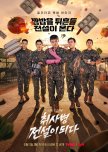
A rainy weekend ruined all my outdoor plans, so I found myself browsing HBO Max looking for something short to binge. I clicked on The Legend of the Kitchen Soldier because I genuinely thought the thumbnail featured a cute female lead. It wasn't until a few minutes into the first episode that I suddenly realised, "Wait... that's Park Ji-hoon from Weak Hero!" I honestly didn't recognise him at first, and now I can't imagine anyone else playing Kang Seong-jae.
If someone had told me I'd become emotionally invested in a military fantasy where the protagonist levels up his cooking through a mysterious RPG-style "System," I would've laughed. Yet here I am, completely attached to this wonderfully bizarre little drama.
What initially feels like a silly cooking comedy slowly reveals itself to be a story about grief, trauma, healing and learning how to live again after losing everything. The "System" isn't simply a fun fantasy gimmick. It's almost symbolic of Seong-jae's desperate attempt to keep moving forward after his father's death. Watching him rely less and less on it as he gains confidence in himself becomes one of the most satisfying parts of the series.
I was rooting for Seong-jae from the very beginning. Every cooking challenge felt like a personal victory, and every new dish became another step towards healing. The biggest payoff comes in the finale when he no longer needs the System to tell him what to do. Instead of depending on magical quests, he cooks because he genuinely wants to make people happy. That moment perfectly completes his character arc. The System may have guided him, but it never truly made him the cook he became.
As someone who loves cooking and trying different dishes, this drama was incredibly satisfying to watch. Every meal looked amazing, but it wasn't just food for the sake of making viewers hungry. Each dish carried emotional weight. The final episodes especially drove that home. The explanation of what a home-cooked meal represents genuinely got to me. Food isn't just nourishment. It's family. It's comfort. It's the people waiting for you at home.
The friendships completely stole the show.
Watching Seong-jae slowly earn the trust of Dong-hyeon, Ha-kyung and the rest of the soldiers was far more rewarding than solving the mystery itself. I loved how the drama gradually peeled back everyone's layers. The soldiers who initially came across as rude, cold or difficult all had understandable reasons for behaving the way they did. Their backstories completely changed my first impressions, making the enemies-to-friends progression feel earned instead of forced. By the end, I felt like I was stationed at Gangrim Post alongside them.
I also couldn't get enough of Seong-jae and Jung Min-a. They barely get any romantic development compared to other K-dramas, but every single scene between them radiated warmth and comfort. Sometimes less really is more. Their chemistry quietly worked without needing dramatic love confessions or unnecessary relationship angst.
One thing I didn't expect was just how hilarious this series would be. The soldiers reacting to Seong-jae's cooking as though they'd ascended into another dimension never stopped being funny. Every tasting scene became more ridiculous than the last, and I found myself constantly asking, "What am I even watching?" The drama fully commits to its absurd humour, and that's exactly why it works.
I also have to applaud the production team for going above and beyond. Creating an original K-pop idol group, producing an actual song and having it performed on Mnet wasn't something they needed to do, but it made the world feel even richer.
The final mystery surrounding Seong-jae's father isn't particularly groundbreaking, and the last two episodes are mostly about connecting the remaining pieces together. Honestly, though, I didn't mind. By that point I wasn't watching for the conspiracy anymore. I was watching for these characters. I wanted to see Seong-jae succeed, I wanted to see everyone share another meal together, and I wanted this little military family to get their happy ending.
Every single character became lovable. Every goodbye felt bittersweet. By the time the credits rolled, I realised I'd become just as attached to Gangrim Post as Seong-jae had.
This isn't a drama that demands intense analysis or endless theory crafting. It's simple, heartfelt and incredibly sincere. It knows exactly what kind of story it wants to tell, and it tells it with warmth, humour and honesty.
I started this series because I was bored.
I finished it feeling comforted, unexpectedly emotional, and craving a home-cooked meal.
Sometimes the simplest stories leave the biggest impression.
One of my favourite comfort dramas of the year.
A rainy weekend ruined all my outdoor plans, so I found myself browsing HBO Max looking for something short to binge. I clicked on The Legend of the Kitchen Soldier because I genuinely thought the thumbnail featured a cute female lead. It wasn't until a few minutes into the first episode that I suddenly realised, "Wait... that's Park Ji-hoon from Weak Hero!" I honestly didn't recognise him at first, and now I can't imagine anyone else playing Kang Seong-jae.
If someone had told me I'd become emotionally invested in a military fantasy where the protagonist levels up his cooking through a mysterious RPG-style "System," I would've laughed. Yet here I am, completely attached to this wonderfully bizarre little drama.
What initially feels like a silly cooking comedy slowly reveals itself to be a story about grief, trauma, healing and learning how to live again after losing everything. The "System" isn't simply a fun fantasy gimmick. It's almost symbolic of Seong-jae's desperate attempt to keep moving forward after his father's death. Watching him rely less and less on it as he gains confidence in himself becomes one of the most satisfying parts of the series.
I was rooting for Seong-jae from the very beginning. Every cooking challenge felt like a personal victory, and every new dish became another step towards healing. The biggest payoff comes in the finale when he no longer needs the System to tell him what to do. Instead of depending on magical quests, he cooks because he genuinely wants to make people happy. That moment perfectly completes his character arc. The System may have guided him, but it never truly made him the cook he became.
As someone who loves cooking and trying different dishes, this drama was incredibly satisfying to watch. Every meal looked amazing, but it wasn't just food for the sake of making viewers hungry. Each dish carried emotional weight. The final episodes especially drove that home. The explanation of what a home-cooked meal represents genuinely got to me. Food isn't just nourishment. It's family. It's comfort. It's the people waiting for you at home.
The friendships completely stole the show.
Watching Seong-jae slowly earn the trust of Dong-hyeon, Ha-kyung and the rest of the soldiers was far more rewarding than solving the mystery itself. I loved how the drama gradually peeled back everyone's layers. The soldiers who initially came across as rude, cold or difficult all had understandable reasons for behaving the way they did. Their backstories completely changed my first impressions, making the enemies-to-friends progression feel earned instead of forced. By the end, I felt like I was stationed at Gangrim Post alongside them.
I also couldn't get enough of Seong-jae and Jung Min-a. They barely get any romantic development compared to other K-dramas, but every single scene between them radiated warmth and comfort. Sometimes less really is more. Their chemistry quietly worked without needing dramatic love confessions or unnecessary relationship angst.
One thing I didn't expect was just how hilarious this series would be. The soldiers reacting to Seong-jae's cooking as though they'd ascended into another dimension never stopped being funny. Every tasting scene became more ridiculous than the last, and I found myself constantly asking, "What am I even watching?" The drama fully commits to its absurd humour, and that's exactly why it works.
I also have to applaud the production team for going above and beyond. Creating an original K-pop idol group, producing an actual song and having it performed on Mnet wasn't something they needed to do, but it made the world feel even richer.
The final mystery surrounding Seong-jae's father isn't particularly groundbreaking, and the last two episodes are mostly about connecting the remaining pieces together. Honestly, though, I didn't mind. By that point I wasn't watching for the conspiracy anymore. I was watching for these characters. I wanted to see Seong-jae succeed, I wanted to see everyone share another meal together, and I wanted this little military family to get their happy ending.
Every single character became lovable. Every goodbye felt bittersweet. By the time the credits rolled, I realised I'd become just as attached to Gangrim Post as Seong-jae had.
This isn't a drama that demands intense analysis or endless theory crafting. It's simple, heartfelt and incredibly sincere. It knows exactly what kind of story it wants to tell, and it tells it with warmth, humour and honesty.
I started this series because I was bored.
I finished it feeling comforted, unexpectedly emotional, and craving a home-cooked meal.
Sometimes the simplest stories leave the biggest impression.
One of my favourite comfort dramas of the year.
Was this review helpful to you?


