




This review may contain spoilers
This is your sign to watch it
This drama is unquestionably the best thing I’ve watched in recent times. The extensive discussions circulating across online platforms bear testament to its widespread acclaim and immense popularity among audiences.
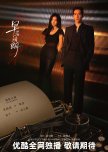
What could have been a conventional trope a story of a boss and a new employee has been masterfully elevated into a high-quality, captivating, and intriguing narrative. The romantic dimension is particularly compelling, owing to the intense onscreen chemistry between Jing Bo Ran and Sun Qian. Their portrayal of romantic devotion is executed with immense passion and authenticity, creating an undeniable mutual attraction. Visually, they form a striking couple. Sustaining such palpable chemistry consistently throughout an entire series is a rare achievement. The scenes are utterly mesmerizing; the moment the lyrics “you’ve got amber eyes, you should know” begin to play, the viewer is instantly overcome with emotion. Furthermore, the intimacy scenes are crafted with extraordinary skill and precision, paying profound attention to detail as the characters' turbulent emotions radiate effortlessly through the screen.
The character performances are impeccable in every respect, seamlessly navigating the arc from enmity to affection. Despite extensive debate among viewers, I did not perceive red flags in either Luan Nian or Zhi Tao. Rather, their relationship suffered primarily from a fundamental breakdown in communication. Flora frequently resorted to silence, whereas Luke, driven by heightened emotion, expressed himself abrasively while concealing his true feelings. Although the constant misunderstandings and unwarranted jealousy could be frustrating, their dynamic was inherently complex from the outset. While some critics argued that Luke unilaterally established a secretive relationship, it was evident that Flora consented to these terms to preserve her professional autonomy. Consequently, operating under these parameters proved arduous for both parties; despite desiring genuine love, they chose silence, allowing unspoken feelings to accumulate and leading to a cycle of conflict and separation. Ultimately, this dynamic offers extensive ground for analytical discussion.
A major strength of this production lies in the director’s ability to maintain engagement throughout every sequence. Whereas subplots involving corporate operations and workplace conflicts are often subject to fast-forwarding, here they remain consistently captivating.
Every episode was watched with profound interest; nevertheless, the journey to Tibet in Episode 19 remains the absolute highlight of the drama. The aesthetic choices, atmospheric depth, and the raw, authentic expression of the characters' emotions are truly unmatched. The actors delivered a masterful performance, conveying extraordinary emotional depth throughout these sequences.
I was equally enchanted by the scene in which Flora unexpectedly returns from her business trip to Luke and Luan Nian, throwing herself eagerly into his embrace, as well as the tender interactions shared between them. Indeed, every scene they share is thoroughly delightful.
I could extol the virtues of this drama indefinitely, and I unequivocally recommend it to all viewers. While the narrative presents an intense emotional rollercoaster, the experience is profoundly rewarding.
The finale is exceptionally well-executed, offering complete gratification for the audience. The narrative arc reaches an elegant and comprehensive conclusion, with the majority of the screen time appropriately dedicated to the primary leads. Rarely have I experienced such immense satisfaction watching the final episodes of a drama. Luan Nian’s confrontation with Zhi Tao’s father was exquisitely humorous, and his marriage proposal to Zhi Tao was nothing short of magnificent.
It is my sincere hope that this series resonates deeply with every viewer who experiences it.
What could have been a conventional trope a story of a boss and a new employee has been masterfully elevated into a high-quality, captivating, and intriguing narrative. The romantic dimension is particularly compelling, owing to the intense onscreen chemistry between Jing Bo Ran and Sun Qian. Their portrayal of romantic devotion is executed with immense passion and authenticity, creating an undeniable mutual attraction. Visually, they form a striking couple. Sustaining such palpable chemistry consistently throughout an entire series is a rare achievement. The scenes are utterly mesmerizing; the moment the lyrics “you’ve got amber eyes, you should know” begin to play, the viewer is instantly overcome with emotion. Furthermore, the intimacy scenes are crafted with extraordinary skill and precision, paying profound attention to detail as the characters' turbulent emotions radiate effortlessly through the screen.
The character performances are impeccable in every respect, seamlessly navigating the arc from enmity to affection. Despite extensive debate among viewers, I did not perceive red flags in either Luan Nian or Zhi Tao. Rather, their relationship suffered primarily from a fundamental breakdown in communication. Flora frequently resorted to silence, whereas Luke, driven by heightened emotion, expressed himself abrasively while concealing his true feelings. Although the constant misunderstandings and unwarranted jealousy could be frustrating, their dynamic was inherently complex from the outset. While some critics argued that Luke unilaterally established a secretive relationship, it was evident that Flora consented to these terms to preserve her professional autonomy. Consequently, operating under these parameters proved arduous for both parties; despite desiring genuine love, they chose silence, allowing unspoken feelings to accumulate and leading to a cycle of conflict and separation. Ultimately, this dynamic offers extensive ground for analytical discussion.
A major strength of this production lies in the director’s ability to maintain engagement throughout every sequence. Whereas subplots involving corporate operations and workplace conflicts are often subject to fast-forwarding, here they remain consistently captivating.
Every episode was watched with profound interest; nevertheless, the journey to Tibet in Episode 19 remains the absolute highlight of the drama. The aesthetic choices, atmospheric depth, and the raw, authentic expression of the characters' emotions are truly unmatched. The actors delivered a masterful performance, conveying extraordinary emotional depth throughout these sequences.
I was equally enchanted by the scene in which Flora unexpectedly returns from her business trip to Luke and Luan Nian, throwing herself eagerly into his embrace, as well as the tender interactions shared between them. Indeed, every scene they share is thoroughly delightful.
I could extol the virtues of this drama indefinitely, and I unequivocally recommend it to all viewers. While the narrative presents an intense emotional rollercoaster, the experience is profoundly rewarding.
The finale is exceptionally well-executed, offering complete gratification for the audience. The narrative arc reaches an elegant and comprehensive conclusion, with the majority of the screen time appropriately dedicated to the primary leads. Rarely have I experienced such immense satisfaction watching the final episodes of a drama. Luan Nian’s confrontation with Zhi Tao’s father was exquisitely humorous, and his marriage proposal to Zhi Tao was nothing short of magnificent.
It is my sincere hope that this series resonates deeply with every viewer who experiences it.
Was this review helpful to you?


