




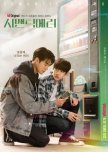
The BL That Literally Changed the Game in Korea
I still remember watching Semantic Error while it was airing, episode by episode, and even back then you could feel it — this wasn’t just another Korean BL.
If we’re talking about Korean BLs that shifted the entire industry, Semantic Error isn’t just on the list — it's the list. This drama basically kickstarted the modern BL wave in Korea, and the level of popularity it reached? Absolutely insane. From mainstream media coverage to TikTok edits everywhere, it proved that a well-made gay romance can stand toe to toe with any K-drama.
What made it revolutionary? The production actually treated a BL like a real drama.
Before Semantic Error, a lot of Korean BLs felt like “test projects” — short, low-budget, experimental. But this series? The moment it dropped, you could feel the intention. The cinematography was clean, the directing had purpose, and the script genuinely respected the source material. It didn’t shy away from the tension, the awkwardness, the charm, or the slow-burn build. It proved that BL doesn’t have to be niche or watered down in order to be good.
The acting was the biggest pleasant surprise.
Park Jae-chan as Chu Sang-woo was a literal casting miracle. He didn’t just act Sang-woo — he became him. The rigid posture, deadpan tone, micro-expressions, the way his voice softened slowly across episodes… it was all on point. Meanwhile, Park Seo-ham as Jang Jae-young delivered that perfect chaotic-sunshine energy without making it cartoonish. He balanced playfulness with emotional vulnerability, especially in the rejection scene, honestly one of the best emotional beats in any BL I’ve seen.
And the chemistry?
Unhinged.
Explosive.
Like, they carried the entire campus on their backs.
It wasn’t the typical BL “fluffy chemistry”; it was layered. You could feel the tension sliding between annoyance, curiosity, attraction, and genuine emotional connection. Their eye contact alone had more storytelling than some entire K-dramas’ scripts.
Plot-wise, what made it stand out was the narrative clarity.
The show didn’t try to be everything at once. It knew its strengths: opposites attract, enemies-to-lovers, character growth. Sang-woo’s world cracking open bit by bit, Jae-young’s persistence slowly turning into sincerity, it was simple but emotionally rich. There was no unnecessary homophobia subplot, no melodrama-for-drama’s-sake. Just two people colliding and recalibrating each other’s systems.
As someone who has read the manhwa, I still believe their story deserves to be explored more.
There’s so much in the original material, especially the emotional development and deeper conflict — that season 1 didn’t fully touch. I still hope for a season 2, even though realistically it feels unlikely because of casting issues. But honestly? Even if we only ever get season 1, it remains one of the best Korean BLs for me. It’s tight, well-acted, and confidently executed. Nothing feels rushed or cheap. It’s one of those dramas that ends and leaves you thinking, “Yeah… this is exactly what this genre needed.”
Semantic Error didn’t just entertain — it shifted perception, raised expectations, and opened doors for the BL industry in Korea. A true game-changer.
If we’re talking about Korean BLs that shifted the entire industry, Semantic Error isn’t just on the list — it's the list. This drama basically kickstarted the modern BL wave in Korea, and the level of popularity it reached? Absolutely insane. From mainstream media coverage to TikTok edits everywhere, it proved that a well-made gay romance can stand toe to toe with any K-drama.
What made it revolutionary? The production actually treated a BL like a real drama.
Before Semantic Error, a lot of Korean BLs felt like “test projects” — short, low-budget, experimental. But this series? The moment it dropped, you could feel the intention. The cinematography was clean, the directing had purpose, and the script genuinely respected the source material. It didn’t shy away from the tension, the awkwardness, the charm, or the slow-burn build. It proved that BL doesn’t have to be niche or watered down in order to be good.
The acting was the biggest pleasant surprise.
Park Jae-chan as Chu Sang-woo was a literal casting miracle. He didn’t just act Sang-woo — he became him. The rigid posture, deadpan tone, micro-expressions, the way his voice softened slowly across episodes… it was all on point. Meanwhile, Park Seo-ham as Jang Jae-young delivered that perfect chaotic-sunshine energy without making it cartoonish. He balanced playfulness with emotional vulnerability, especially in the rejection scene, honestly one of the best emotional beats in any BL I’ve seen.
And the chemistry?
Unhinged.
Explosive.
Like, they carried the entire campus on their backs.
It wasn’t the typical BL “fluffy chemistry”; it was layered. You could feel the tension sliding between annoyance, curiosity, attraction, and genuine emotional connection. Their eye contact alone had more storytelling than some entire K-dramas’ scripts.
Plot-wise, what made it stand out was the narrative clarity.
The show didn’t try to be everything at once. It knew its strengths: opposites attract, enemies-to-lovers, character growth. Sang-woo’s world cracking open bit by bit, Jae-young’s persistence slowly turning into sincerity, it was simple but emotionally rich. There was no unnecessary homophobia subplot, no melodrama-for-drama’s-sake. Just two people colliding and recalibrating each other’s systems.
As someone who has read the manhwa, I still believe their story deserves to be explored more.
There’s so much in the original material, especially the emotional development and deeper conflict — that season 1 didn’t fully touch. I still hope for a season 2, even though realistically it feels unlikely because of casting issues. But honestly? Even if we only ever get season 1, it remains one of the best Korean BLs for me. It’s tight, well-acted, and confidently executed. Nothing feels rushed or cheap. It’s one of those dramas that ends and leaves you thinking, “Yeah… this is exactly what this genre needed.”
Semantic Error didn’t just entertain — it shifted perception, raised expectations, and opened doors for the BL industry in Korea. A true game-changer.
Was this review helpful to you?


