

 131
131 247
247 23
23 2
2 5
5 6
6 10
10 5
5 7
7 6
6 4
4 10
10 5
5 2
2 7
7 39
39 3
3 4
4 4
4 2
2 1
1 3
3 4
4 5
5 2
2 6
6 30
30 38
38 13
13 23
23


This review may contain spoilers
A Superhero Story for Absolute Losers
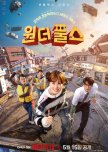
*The WONDERfools* feels like somebody threw a superhero drama, a conspiracy thriller, a religious cult nightmare, and three emotionally unstable idiots into a blender and just decided to see what survived, and honestly, that chaos is exactly why the series works. Set in 1999 during all the Y2K panic, when everybody thought computers were about to explode and society might collapse because a clock changed numbers, the show follows a group of social rejects who accidentally gain supernatural powers after toxic waste dumping and shady experiments turn their already terrible lives into absolute madness.
At the center of the disaster is Chae-ni, played by Park Eun-bin, who absolutely storms through this series like a woman who looked death in the face and decided to become even more annoying out of spite. She has a heart condition and genuinely believes she could die at any moment, so instead of becoming cautious and inspirational like a normal TV protagonist, she goes completely off the rails and drags two equally pathetic men into a fake kidnapping scheme that immediately spirals into cults, conspiracies, superpowers, and the kind of chaos where every bad decision somehow creates five worse decisions. Honestly, watching this group try to solve problems is like watching raccoons break into a pharmacy.
What makes the show so entertaining is that it never tries to make these people cool. Thank God. Superhero stories have become so obsessed with making everybody look tortured and cinematic all the time, like they’re posing for a cologne ad while the city burns behind them. *The WONDERfools* understands that if regular people suddenly got powers, most of them would immediately use those abilities for stupid nonsense or accidentally ruin their own lives even harder. Chae-ni especially treats teleportation less like a sacred responsibility and more like an unpaid internship in causing problems. Every time the group gains a tiny bit of control, somebody panics, lies, screams, or presses the emotional self-destruct button, and the series becomes funnier because of it.
But underneath all the insanity, there’s actually a surprisingly emotional story about loneliness and people desperately trying to matter to somebody. Chae-ni becomes the emotional center because her recklessness is clearly rooted in terror. She’s terrified of dying before she’s really lived, which makes her simultaneously hilarious and heartbreaking. Park Eun-bin carries the entire show on pure charisma at times, effortlessly flipping between loud physical comedy and moments of genuine vulnerability without making either feel forced. Even when the pacing drags or the plot starts eating itself alive, she somehow keeps everything watchable through sheer force of personality.
Choi Dae-hoon and Im Seong-jae also end up being much better than they initially appear because the show introduces them like they’re going to be irritating comic relief losers, only to slowly reveal all the insecurity and sadness underneath their stupidity. Their chemistry with Chae-ni becomes one of the strongest parts of the drama because they genuinely feel like damaged people clinging to each other for survival rather than some perfectly manufactured found-family fantasy.
Meanwhile, Cha Eun-woo does something surprisingly smart by not trying to compete with the chaos. His character, Lee Un-jeong, is calmer, quieter, and more emotionally grounded, which gives the series something stable to hold onto whenever the conspiracy storyline starts spiraling into complete nonsense. And honestly, the restraint works in his favor because everybody else in this show behaves like they’re one inconvenience away from driving into the ocean.
The villains are also genuinely effective in ways that feel uncomfortable rather than cartoonish. Bae Na-ra’s Kim Pal-ho has this constant unsettling energy where every scene feels like it could suddenly become violent, while Son Hyun-joo plays Ha Won-do with the kind of controlled manipulation that feels way more disturbing than exaggerated evil speeches. He weaponizes fear and blind faith like a man who understands that the easiest way to control people is convincing them they’re already doomed.
The late-90s setting adds so much texture to the series because everything feels grimy, anxious, and slightly unstable in exactly the right way. The outdated technology, cheap fashion, and collective millennium panic create this atmosphere where supernatural chaos somehow feels believable because the whole world already seems on the verge of falling apart anyway. Modern superhero stories are usually so polished they feel emotionally airbrushed, but *The WONDERfools* benefits from looking messy and worn-down.
Now, the pacing absolutely tests your patience sometimes. This show has the classic problem of loving its own chaos a little too much. Certain subplots drag forever, emotional conflicts repeat themselves, and there are moments where it feels like the writers kept throwing new ideas at the wall because they were terrified of simplifying anything. Some episodes feel overstuffed while others somehow still feel slow, which is honestly impressive in its own way.
But even with all those flaws, *The WONDERfools* ends up weirdly lovable because it commits so hard to its own bizarre identity. It’s funny, emotional, chaotic, occasionally ridiculous, and unexpectedly sincere underneath all the madness. More importantly, it remembers something a lot of darker superhero dramas forget: people do not become profound just because they suffer. Sometimes they become messy, loud, selfish, needy, reckless little disasters desperately trying to be loved before the world ends.
At the center of the disaster is Chae-ni, played by Park Eun-bin, who absolutely storms through this series like a woman who looked death in the face and decided to become even more annoying out of spite. She has a heart condition and genuinely believes she could die at any moment, so instead of becoming cautious and inspirational like a normal TV protagonist, she goes completely off the rails and drags two equally pathetic men into a fake kidnapping scheme that immediately spirals into cults, conspiracies, superpowers, and the kind of chaos where every bad decision somehow creates five worse decisions. Honestly, watching this group try to solve problems is like watching raccoons break into a pharmacy.
What makes the show so entertaining is that it never tries to make these people cool. Thank God. Superhero stories have become so obsessed with making everybody look tortured and cinematic all the time, like they’re posing for a cologne ad while the city burns behind them. *The WONDERfools* understands that if regular people suddenly got powers, most of them would immediately use those abilities for stupid nonsense or accidentally ruin their own lives even harder. Chae-ni especially treats teleportation less like a sacred responsibility and more like an unpaid internship in causing problems. Every time the group gains a tiny bit of control, somebody panics, lies, screams, or presses the emotional self-destruct button, and the series becomes funnier because of it.
But underneath all the insanity, there’s actually a surprisingly emotional story about loneliness and people desperately trying to matter to somebody. Chae-ni becomes the emotional center because her recklessness is clearly rooted in terror. She’s terrified of dying before she’s really lived, which makes her simultaneously hilarious and heartbreaking. Park Eun-bin carries the entire show on pure charisma at times, effortlessly flipping between loud physical comedy and moments of genuine vulnerability without making either feel forced. Even when the pacing drags or the plot starts eating itself alive, she somehow keeps everything watchable through sheer force of personality.
Choi Dae-hoon and Im Seong-jae also end up being much better than they initially appear because the show introduces them like they’re going to be irritating comic relief losers, only to slowly reveal all the insecurity and sadness underneath their stupidity. Their chemistry with Chae-ni becomes one of the strongest parts of the drama because they genuinely feel like damaged people clinging to each other for survival rather than some perfectly manufactured found-family fantasy.
Meanwhile, Cha Eun-woo does something surprisingly smart by not trying to compete with the chaos. His character, Lee Un-jeong, is calmer, quieter, and more emotionally grounded, which gives the series something stable to hold onto whenever the conspiracy storyline starts spiraling into complete nonsense. And honestly, the restraint works in his favor because everybody else in this show behaves like they’re one inconvenience away from driving into the ocean.
The villains are also genuinely effective in ways that feel uncomfortable rather than cartoonish. Bae Na-ra’s Kim Pal-ho has this constant unsettling energy where every scene feels like it could suddenly become violent, while Son Hyun-joo plays Ha Won-do with the kind of controlled manipulation that feels way more disturbing than exaggerated evil speeches. He weaponizes fear and blind faith like a man who understands that the easiest way to control people is convincing them they’re already doomed.
The late-90s setting adds so much texture to the series because everything feels grimy, anxious, and slightly unstable in exactly the right way. The outdated technology, cheap fashion, and collective millennium panic create this atmosphere where supernatural chaos somehow feels believable because the whole world already seems on the verge of falling apart anyway. Modern superhero stories are usually so polished they feel emotionally airbrushed, but *The WONDERfools* benefits from looking messy and worn-down.
Now, the pacing absolutely tests your patience sometimes. This show has the classic problem of loving its own chaos a little too much. Certain subplots drag forever, emotional conflicts repeat themselves, and there are moments where it feels like the writers kept throwing new ideas at the wall because they were terrified of simplifying anything. Some episodes feel overstuffed while others somehow still feel slow, which is honestly impressive in its own way.
But even with all those flaws, *The WONDERfools* ends up weirdly lovable because it commits so hard to its own bizarre identity. It’s funny, emotional, chaotic, occasionally ridiculous, and unexpectedly sincere underneath all the madness. More importantly, it remembers something a lot of darker superhero dramas forget: people do not become profound just because they suffer. Sometimes they become messy, loud, selfish, needy, reckless little disasters desperately trying to be loved before the world ends.
Was this review helpful to you?


