
 K-Drama


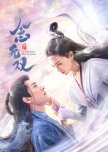
Don’t judge a show by its trailers
When the trailer for this show was first released, I wasn't particularly intrigued. My reasons were threefold: (1) Xianxia isn't my preferred genre unless it's heavy on comedy; (2) there weren't any favorite actors of mine in the cast; and (3) the general early perception of the show wasn't very positive.
However, my interest was piqued when critic AvenueX gave it a "3-star gold mine" review on her personal scale, noting that the show was deeper and funnier than it appeared.
So, here I am.
I've found myself genuinely appreciating the show's thematic depth. What I like most is its exploration of how the perception of truth and righteousness depends entirely on one's perspective. The narrative convincingly shows that two seemingly opposing viewpoints can be true simultaneously. I deeply respect how the female lead, Ji Tanyin (Goddess Wu Shuang), holds firmly to her own stance while still respecting others' viewpoints. She is kind but not an annoying Mary Sue. Her thought process is linear, naive, and simple, yet it is also logical, well-intentioned, and refreshingly…simple.
On the other side of the coin is Yuan Zhong, the High Priest. He is guarded, deep, and complex—a man with many layers who doesn't let people get close, shaped by his difficult past. By all rights, he should be revered as a hero for saving his clan, but he is equally feared for the immense power he wields.
If Tanyin’s simplicity has its dual interpretation, Yuan Zhong is the story's embodiment of duality itself.
Of course, compelling main characters are only one part of a good story. I was delighted to find that the supporting characters have their own solid, self-contained arcs; they don't exist merely to push the main plot forward.
Mei Shan is a favorite of mine—who doesn't love a happy-go-lucky character with a wise core? Having him around is a delight, noisy as he is. I admire his philosophy of life: enjoying himself as lightly as possible, while being serious enough to gain the mastery and enlightenment needed to survive thousands of tribulation trials over decades. But it's not only Mei Shan's story that intrigues me. There's Tanyin’s master, Xie You, and his thousand-year obsessive search for answers, driven by his love for his craft. There's the star-crossed lovers' tale of Pei Jiu (Lu Chen) and Yunniang, which is both heartwarming and pitiable. And there's Qian Lin’s poignant story about his search for family.
I also love stories that incorporate flickers of humor and clever double entendres. As AvenueX noted, this is probably one of the most logically sound xianxia stories we can get, with its infusion of scientific theories into spiritual crafts, making the fantasy feel strangely familiar.
That said, a story that is overly philosophical can become taxing, especially when the ending falls into a pattern typical of the genre. Some meaningful discussions ran a tad too long, the humor seemed to miss the mark a little, and the star-crossed lover tropes that felt overused.
Furthermore, a story is only as strong as its villain, and this one was visible from a mile away. While the antagonist served as a good thematic foil with a decent origin story, I found the final confrontation and resolution a little lackluster. The show also has some general production issues that might deter audiences, such as questionable costume choices, a drab color grading, and passable—but not exceptional—cinematography.
All in all, if philosophy and xianxia are your thing, this show is worth checking out. Philosophically, it raises questions worth thinking about. As a xianxia, it introduces fresh elements that make it a fun watch. It is, truly, deeper than it looks.
.
.
.
“ It depends on how you define it. What you feel pity about, may not be what the person defines as pity.”
“Don’t try to figure out others using your own morality.”
“From different perspectives, the perception of good varies.”
However, my interest was piqued when critic AvenueX gave it a "3-star gold mine" review on her personal scale, noting that the show was deeper and funnier than it appeared.
So, here I am.
I've found myself genuinely appreciating the show's thematic depth. What I like most is its exploration of how the perception of truth and righteousness depends entirely on one's perspective. The narrative convincingly shows that two seemingly opposing viewpoints can be true simultaneously. I deeply respect how the female lead, Ji Tanyin (Goddess Wu Shuang), holds firmly to her own stance while still respecting others' viewpoints. She is kind but not an annoying Mary Sue. Her thought process is linear, naive, and simple, yet it is also logical, well-intentioned, and refreshingly…simple.
On the other side of the coin is Yuan Zhong, the High Priest. He is guarded, deep, and complex—a man with many layers who doesn't let people get close, shaped by his difficult past. By all rights, he should be revered as a hero for saving his clan, but he is equally feared for the immense power he wields.
If Tanyin’s simplicity has its dual interpretation, Yuan Zhong is the story's embodiment of duality itself.
Of course, compelling main characters are only one part of a good story. I was delighted to find that the supporting characters have their own solid, self-contained arcs; they don't exist merely to push the main plot forward.
Mei Shan is a favorite of mine—who doesn't love a happy-go-lucky character with a wise core? Having him around is a delight, noisy as he is. I admire his philosophy of life: enjoying himself as lightly as possible, while being serious enough to gain the mastery and enlightenment needed to survive thousands of tribulation trials over decades. But it's not only Mei Shan's story that intrigues me. There's Tanyin’s master, Xie You, and his thousand-year obsessive search for answers, driven by his love for his craft. There's the star-crossed lovers' tale of Pei Jiu (Lu Chen) and Yunniang, which is both heartwarming and pitiable. And there's Qian Lin’s poignant story about his search for family.
I also love stories that incorporate flickers of humor and clever double entendres. As AvenueX noted, this is probably one of the most logically sound xianxia stories we can get, with its infusion of scientific theories into spiritual crafts, making the fantasy feel strangely familiar.
That said, a story that is overly philosophical can become taxing, especially when the ending falls into a pattern typical of the genre. Some meaningful discussions ran a tad too long, the humor seemed to miss the mark a little, and the star-crossed lover tropes that felt overused.
Furthermore, a story is only as strong as its villain, and this one was visible from a mile away. While the antagonist served as a good thematic foil with a decent origin story, I found the final confrontation and resolution a little lackluster. The show also has some general production issues that might deter audiences, such as questionable costume choices, a drab color grading, and passable—but not exceptional—cinematography.
All in all, if philosophy and xianxia are your thing, this show is worth checking out. Philosophically, it raises questions worth thinking about. As a xianxia, it introduces fresh elements that make it a fun watch. It is, truly, deeper than it looks.
.
.
.
“ It depends on how you define it. What you feel pity about, may not be what the person defines as pity.”
“Don’t try to figure out others using your own morality.”
“From different perspectives, the perception of good varies.”
Was this review helpful to you?


