

 1
1


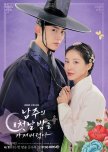
WHAT EVEN WAS THIS?
Fun first act, trainwreck second act, saved only by the pretty people.You know what’s worse than a bad drama? A drama that could have been fun but decided to trip over its own feet halfway through. The First Night with the Duke started off like a cheeky, isekai-flavored romcom with a modern girl stirring up Joseon life (cocktail bombs! bold flirting! brains and sass!). And then… it forgot all that and wandered off into fifteen other genres.
By the end, I honestly didn’t know what I was watching. Romcom? Political sageuk? Magical fantasy? Tragedy with evil kings and sad childhood backstories? Whatever it was, it definitely wasn’t cohesive.
Taecyeon did what Taecyeon does best: looked great in hanbok, swung a sword like he meant it, and oozed just enough charm to make you forget the script was falling apart. The female lead? She started strong as modern, clever, unbothered by all the prim-and-proper nonsense. But the second half turned her into a crying, rescue-me prop. Where did my bold heroine go? Did she swap souls with some other boring court lady when I wasn’t looking?
Let’s talk about that plot. The three brothers? Wasted. The second male lead? Might as well have been written out, only to reappear in the last five minutes like, “Surprise! I exist!” Eun-ae’s arc? Nonsensical, she did terrible things and got a happy ending anyway, no redemption needed, apparently. And don’t even get me started on the “OG” heroine slipping into modern life like she’s been shopping at Zara her whole existence. Computers, short skirts, and WiFi? No problem, she’s basically Gen Z now!
And then, twelve kids. TWELVE. KIDS. Look, I know it was meant to be “haha, cute, happy ending,” but all I could think was, “Girl, blink twice if you need help.”
If this show had leaned into being a silly, self-aware fusion sageuk, I would have rolled with it. If it had gone full romcom? Fun. But it wanted to do everything and ended up doing nothing. No theme, no proper character growth, no payoff for the chaos it created. It was like watching someone throw darts at three different boards and hitting none.
Watch it for the leads if you’re curious, or for Taecyeon looking devastatingly good with a sword. But don’t expect sense, consistency, or a satisfying ending. By episode 11, I was hate-watching just to see how much wilder it could get.
Was this review helpful to you?
This review may contain spoilers
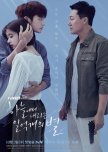
A Heart-Wrenching Masterpiece of Love and Tragedy
I stumbled across The Smile Has Left Your Eyes on a whim, and let me tell you, I was not prepared for the emotional whirlwind that followed. From the very first scene, the air is heavy with doom. You know someone won’t make it to the end. Maybe one, maybe more. But like a Greek tragedy, it was never about ‘if,’ only ‘when.’ Bad cards from the start. That’s the hand Moo Young and Jin Kang were dealt, the hand they couldn’t escape. And yet, watching their story unfold, I couldn’t help but be drawn into the beauty of their doomed connection.Seo In Guk’s performance as Kim Moo Young is nothing short of mesmerizing. Every time he smiled, his eyes told a different story: haunted, distant, yet somehow yearning. It’s like he was playing a man who’s both a puzzle and a poem, and I couldn’t look away. I’d catch myself rewinding scenes just to watch his micro-expressions, especially in moments where he’s silently grappling with his feelings for Jin Kang.
The cruel irony is this: if they had never crossed paths again as adults, maybe they would’ve survived. They could’ve lived out “normal” lives. But what is normal, if it means emptiness? Moo Young would have kept free-falling, destroying himself piece by piece. Jin Kang would’ve stayed adrift, unmoored, with nothing to anchor her except a scar that haunted her. That scar, first a wound she wished erased, later the only proof she was someone. The mark that held her together even as it reminded her she was broken.
Jung So Min as Jin Kang was equally captivating. I loved how she made Jin Kang feel so real. Naive, yes, but never weak. Her warmth and vulnerability were like a beacon in the drama’s darker moments, and I found myself rooting for her even when I knew her love for Moo Young was a risky path. Their chemistry is absolute perfection. There’s this scene in episode 10 by the lake where they’re playful and intimate, and it felt so raw and unscripted. I was grinning like an idiot, my heart racing as they teased each other, only for it to flip into this gut-punch of tenderness.
At their core, both of them were searching for the same thing: truth. Identity. A reason to exist. Meeting again wasn’t chance; it was fate. Like a million stars crashing down, bright and violent and inevitable. The second they found each other, the ending was already sealed. There was never going to be a future for them, only this. Only love, and its inevitable cost.
Park Sung Woong as Jin Gook added such depth. I felt for Jin Gook’s protective instincts. His scenes with Jin Kang were so heartfelt, like when he’s trying to shield her from Moo Young while wrestling with his own suspicions. The dynamic between the three of them felt like a tightrope walk, balancing love, distrust, and loyalty. I also adored the way the drama wove in secondary characters, like Moo Young’s friend Seung Ah, who added layers to his enigmatic persona without stealing the spotlight.
What sets this drama apart is its storytelling. It’s not your typical K-drama with neat resolutions or predictable arcs. It’s messy in the best way, like life. The mystery of Moo Young’s past and his connection to a murder case kept me guessing, but it was the emotional stakes that hit hardest. The show dives into heavy themes, like trauma, identity, the blurred lines of morality, without preaching. I remember pausing an episode to just sit with my thoughts because it made me question what I’d do in Jin Kang’s shoes. Would I love someone like Moo Young, knowing he’s a storm waiting to break? That kind of introspection is rare in dramas.
The cinematography deserves its own love letter. Every frame felt like a painting, whether it was Moo Young standing alone in the rain or Jin Kang’s quiet moments in her cluttered apartment. The lighting, the color palettes, the way the camera lingered on their faces... it was movie-quality. And don’t get me started on the soundtrack. The duet “Star” by Seo In Guk and Jung So Min... I still listen to it on repeat. It’s haunting and beautiful, capturing the bittersweet essence of their love story. I’d find myself humming it days after finishing the drama, feeling that ache all over again.
I know some people found the pacing slow at the start, but for me, it was like sinking into a good book. You need those early chapters to build the world. By episode 3, I was all in, staying up way too late because I needed to know what happened next. The way the drama balanced thriller elements with romance was masterful. One minute, I’m on edge wondering about Moo Young’s secrets; the next, I’m swooning over a quiet moment where he and Jin Kang just look at each other. It’s the kind of show that makes you feel everything: joy, dread, hope, heartbreak, all at once.
Conclusion:
The Smile Has Left Your Eyes is a gem that deserves more love than it gets. It’s not a light watch, but if you’re drawn to stories that challenge your emotions and linger long after the credits roll, this is for you. Seo In Guk and Jung So Min deliver performances that are nothing short of extraordinary, their chemistry anchoring a narrative that’s as thrilling as it is heartbreaking.
The cinematography and soundtrack elevate it to an almost cinematic level, making every episode a visual and emotional feast. It’s a drama that dares to be different, tackling complex themes with nuance, and there’s a strange mercy in its ending. They don’t die happy, but they die at peace, knowing who they are, whispering “I love you” in a fragile, fleeting moment of truth and recognition. For a story written in tragedy from the beginning, it could’ve been so much crueler. Instead, it ends in love, a love that, despite its inevitable end, gives meaning to two broken souls.
For me, it’s one of the best melodramas I’ve seen. A perfect blend of mystery, romance, and tragedy that feels like a punch to the soul. I’d recommend it to anyone who loves character-driven stories and doesn’t mind a few tears along the way. Just be ready to lose yourself in Moo Young and Jin Kang’s world... you won’t come out the same.
Was this review helpful to you?

This review may contain spoilers
SO MANY HOLES
Lovely Runner had me at “time-traveling fangirl saves her idol,” but by the end, I was laughing through my tears, not always for the reasons it intended. Starring Kim Hye-yoon as Im Sol, a paralyzed superfan, and Byeon Woo-seok as Ryu Sun-jae, the doomed frontman of the fictional boy band Eclipse, this drama promised a swoony mix of romance, thriller, and time-loop shenanigans. It starts with Sol, whose life was upended by a childhood accident, clinging to Sun-jae’s music for solace, only to learn he’s spiraling into depression, a career-killing shoulder injury, and a gut-wrenching suicide in 2023. Then, poof, a magical watch drops into her lap, letting her zip back to 2008 to rewrite his fate. She dives into her high school days, armed with future knowledge, dodging a creepy serial killer, and trying to save Sun-jae from shady managers, overwork, and his own dark path. The setup is a nostalgic love letter to the early 2000s with flip phones, skinny jeans, and all, blending romance, comedy, and a dash of menace. The first half is pure magic: Sol’s fangirl fervor is adorable, Sun-jae’s brooding charm is catnip, and their chemistry crackles like a K-pop banger. Kim Hye-yoon plays Sol with a mix of pluck and pathos, while Byeon Woo-seok makes Sun-jae’s quiet pain achingly real. The supporting cast like Sol’s quirky family, Sun-jae’s bandmates, and Taesung, a sweet cop’s son, adds warmth, and the glossy visuals, paired with Eclipse’s catchy tunes, hit all the right emotional notes. But oh, how the mighty fall. By the end, *Lovely Runner* is a mess, tripping over its own time loops, drowning in plot holes, and leaving me chuckling at its absurdity while mourning what could’ve been. With weak worldbuilding, characters who forget who they are, and a narrative that feels like it was written by a committee of confused time travelers, I’m giving it a 6 out of 10: a bittersweet watch that’s equal parts charming and infuriating, like falling in love with someone who keeps forgetting your name.The tragedy starts with the worldbuilding, or lack thereof, which is less a foundation and more a crumbling sandcastle. The magical watch that powers Sol’s time-hopping is a mystery wrapped in a shrug. Who owned it before her auction win? Why does her grandma act like she’s in on the timeline secrets, only to vanish into narrative limbo? The watch’s rules are a cosmic joke: it triggers at midnight one day, at Sun-jae’s death the next, or maybe when Sol’s feeling extra regretful, with a supposed three-attempt limit that’s more suggestion than law. It’s like the writers tossed a coin to decide how it works each episode, leaving me giggling at the sheer audacity. Sol’s time-freezing trick is even more maddening. She uses it to sneak into Sun-jae’s house or dodge his dad, but when she’s stuck in a kidnapper’s car, does she freeze time? Nope, she runs in front of it like a sitcom character. Or when Sun-jae’s stabbed and tumbling off a cliff, she’s got 10 seconds to act but just stands there, as if her superpower took a coffee break. These moments are so contrived I couldn’t help but laugh, but it’s a hollow laugh when you realize the stakes are supposed to matter.
The characters, bless their hearts, are a parade of missed potential. Sol’s arc is a tearjerker that never quite lands. Her growth, especially around her disability, happens mostly off-screen, leaning on sappy manipulation instead of depth. Kim Hye-yoon tries, but the script gives her little to work with, leaving Sol feeling like a plot pawn rather than a person. Sun-jae’s bandmates and family are reduced to background noise, their arcs so incomplete I half-expected them to wave at the camera and say, “We tried!” Taesung, the second lead, is a walking plot hole: suddenly Sol’s bestie in altered timelines, despite no prior connection in the original, and the show doesn’t even try to explain it, which had me snorting at its laziness. The serial killer, a taxi driver with a vendetta, is the biggest joke of all. His obsession with Sol, his random possession of her phone at a reservoir (maybe tied to a dead homeless guy, who knows?), and his motives are so vague that when he leaps off a bridge to end his arc, I cackled at the anticlimax. It’s like the writers said, “Eh, close enough.” Younger Sol’s behavior in resets, going from wallflower to cigarette-snatching brawler, feels like a comedy sketch gone wrong, with no bridge to her original shy self, making me laugh and wince at once.
The pacing and tone are where the show’s soul truly shines, or rather, stumbles. The first half zips along, balancing romance, humor, and mystery like a well-choreographed dance. But the second half? It’s like the show got stuck in a time loop of its own, repeating the same beats until I was begging for mercy. The endless cycles feel like a writer’s room prank, dragging the story into a slog that’s both exhausting and absurdly funny in its refusal to move forward. The tone is a disaster: slapstick comedy crashes into gut-punch drama, like a clown stumbling into a funeral. One minute, Sol’s chasing a goat in a goofy gag; the next, she’s sobbing over Sun-jae’s fate, and I’m left with tonal whiplash, laughing at the absurdity while craving coherence. The thriller subplot is a forced mess, like someone tossed a serial killer into a rom-com and hoped for the best. And don’t get me started on Sol’s baffling choices: she sees future visions (like tripping during that goat chase) but lies about them to Sun-jae, who already knows she’s from 2023, stretching misunderstandings into a sitcom-level farce that’s equal parts infuriating and unintentionally hilarious. The romance, initially so tender, gets buried under these repetitive loops, with too few intimate moments to keep the heart fluttering, leaving me chuckling at the irony of a love story forgetting its own spark.
The plot holes are the cherry on top, a laundry list of absurdities that make you laugh, cry, and question your life choices. Sol’s ability to walk in 2023 after erasing her connection to Sun-jae is pure nonsense. In the original timeline, he saved her from drowning post-accident, so without him, she should be paralyzed or worse, but the show just shrugs, tossing in vague butterfly effects like a bad punchline. The lottery ticket Sol gives her brother with 2024 numbers somehow wins across resets, even when those events are erased, which is so illogical I snorted. Her family’s move to dodge dangers like a fire or redevelopment is a head-scratcher. Some timelines show no burn marks on her mom, suggesting the threats aren’t consistent, and how Sol pulls it off repeatedly is anyone’s guess. Sol’s consciousness during time slips is a comedic riddle, is her past self on auto-pilot? She keeps skills like driving but needs triggers for memories, blurring whether it’s parallel universes or a single timeline, and I couldn’t help but laugh at the confusion. The timeline count, maybe five, from handicapped Sol to erasing links, is a chaotic mess, with returns flipping between morning and midnight like a drunk time traveler. The police arresting the killer is a farce: handcuffing him in front, not securing him in the car, and letting him escape for no reason other than drama, which had me giggling at the sheer incompetence. Sol writing a script about their romance after swearing to avoid Sun-jae is a contradiction: it jogs his memories, undoing her plan, and she’s somehow surprised, which is both sad and absurd. The watch’s random reappearance in timelines where they don’t meet, with no explanation of how Sun-jae gets it, is another laughable gap. These holes pile up, turning the story into a circus, equal parts exasperating and unintentionally funny.
In the end, *Lovely Runner* is a K-drama that woos you with its big heart and bigger dreams, only to trip face-first into a pile of its own plot holes, leaving you laughing through the pain. Kim Hye-yoon and Byeon Woo-seok are the saving grace, their chemistry a beacon in the storm, making those high school scenes and early romantic beats feel like a warm hug. The visuals, dripping with 2000s nostalgia, and the Eclipse soundtrack are pure joy, tugging at your heart even when the story doesn’t. Themes of regret, fate, and idol pressures could’ve been profound, but they’re lost in the shuffle, like a poignant line in a bad comedy sketch. It promises a masterpiece but delivers a messy love story that’s as frustrating as it is charming. I wanted to adore it, but I ended up laughing at its stumbles while sighing for what might’ve been.
Was this review helpful to you?
This review may contain spoilers
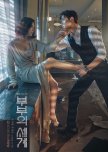
A Masterpiece of Emotional Turmoil and Moral Ambiguity
From the outset, The World of the Married establishes itself as a psychological thriller masquerading as a domestic melodrama. The series centers on Ji Sun-woo, a highly accomplished family medicine doctor whose ostensibly idyllic life as a wife and mother begins to unravel upon uncovering her husband's infidelity. What ensues is not merely a tale of marital discord but a labyrinthine dissection of trust, revenge, and redemption. The plot unfolds with meticulous pacing, layering revelations like an onion, each peel exposing deeper wounds and motivations.At the core of the show's triumph is its exceptional ensemble cast, led by Kim Hee-ae's tour-de-force performance as Ji Sun-woo. Hee-ae, a veteran actress with a storied career, embodies her character with a raw authenticity that borders on the visceral. Sun-woo's evolution from a poised, intellectually sharp professional to a figure grappling with primal instincts of survival and vengeance is rendered with subtlety and ferocity. Hee-ae's ability to convey internal turmoil through micro-expressions and body language elevates the role beyond archetype, making Sun-woo a symbol of the empowered yet burdened modern woman. Opposite her, Park Hae-joon as the philandering husband, Lee Tae-oh, delivers a nuanced depiction of a man ensnared by his own desires and delusions. Tae-oh is no one-dimensional villain; Hae-joon infuses him with vulnerability, prompting viewers to oscillate between contempt and reluctant empathy, a testament to the script's refusal to paint characters in black and white.
Han So-hee, in a breakout role as the mistress Yeo Da-kyung, adds another layer of complexity. So-hee's portrayal captures the allure and fragility of youth entangled in moral ambiguity, her chemistry with the leads sparking scenes that crackle with tension. The supporting cast shines equally: Kim Young-min as the steadfast colleague Son Je-hyuk, who provides a moral counterpoint; Lee Kyung-young as the patriarchal figurehead Yeo Byung-gyu, embodying societal conservatism; and the young Shim Eun-woo as the couple's son, whose innocent perspective amplifies the familial stakes. Collectively, these performances create a tapestry of interpersonal dynamics that feel palpably real, drawing from psychological realism akin to Ingmar Bergman's explorations in Scenes from a Marriage.
Thematically, The World of the Married is a rich vein of intellectual inquiry. It interrogates the institution of marriage not as a romantic ideal but as a fragile construct susceptible to societal pressures, gender imbalances, and individual egos. In a Korean context, where Confucian values emphasize family harmony and filial piety, the show provocatively challenges these norms, exposing how they can exacerbate personal suffering. Themes of infidelity are dissected through a lens of power dynamics—economic, emotional, and social—revealing how betrayal erodes self-identity and fosters cycles of retaliation. The narrative also touches on mental health, portraying the psychological toll of deception with unflinching honesty, from anxiety and depression to obsessive behaviors.
For those weary of formulaic K-dramas filled with chaebol heirs and candy-coated romances, this is a breath of fresh, albeit bracing, air, a sophisticated narrative that rewards intellectual engagement.
Was this review helpful to you?


