
 Editorials

Not Just a Romance
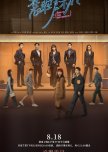
Fake It Till You Make It turned out to be one of those rare workplace rom-coms that actually feels grown-up and real. Instead of the usual cheesy tropes, it follows two overworked professionals - Xu Ziquan, an investment banker running on caffeine and stress, and Tang Ying, a junior lawyer barely staying afloat. They meet on a plane, hit it off, become friends, and slowly evolve into something more. Their chemistry is great, but what really stands out is how they communicate like actual adults. They flirt, they banter, they argue, and then they talk it out.The show is basically 50% romance, 50% workplace chaos. The corporate setting isn’t just background noise - there’s a real sense of the pressure, burnout, and office politics that shape who these characters are. It’s surprisingly relatable and sometimes uncomfortably accurate about the whole “rat race” mentality. The side stories, especially Tang Ying’s sister Xinzi’s dating adventures, also feel grounded and add a nice contrast in how different people approach love and relationships.
What makes the drama work is the writing. The conversations are sharp, thoughtful, and honestly just fun to watch. The characters all have layers, flaws, and motivations beyond “be cute for the plot.” Add to that the stylish directing, natural visuals, charismatic acting (Elvis Han’s screen presence is no joke), and a jazzy, memorable OST, and the whole thing ends up feeling really polished.
It starts a bit slow and the business talk can be dense, but if you stick with it, you get a mature, slow-burn romance that actually earns its emotional beats. It’s not a fairy tale - it’s two adults trying to build something real while juggling messy careers and personal baggage. And it’s done so well that you might find yourself thinking about it long after it’s over.
A genuinely refreshing and intelligent workplace romance. Recommended if you want something thoughtful, well written, and full of great chemistry.
Was this review helpful to you?
May not replace the classics, but it doesn’t need to
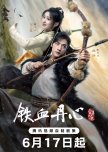
As a longtime Jin Yong reader and someone who’s seen more versions of Legend of the Condor Heroes than I can remember, I went into Iron-Blooded Loyalty cautiously. Retelling Guo Jing and Huang Rong is never easy - these characters are basically the blueprint of wuxia. But instead of trying to outdo past classics through sheer scale or nostalgia, this adaptation takes a smarter route: it streamlines the story, reframes familiar arcs through a modern lens, and - most importantly - nails the character work.The pacing is fast, almost aggressively so. Major events that used to take dozens of episodes now unfold through flashbacks and tight narrative framing. If you already know the story, it’s easy to follow and surprisingly refreshing. The show keeps its focus squarely on Jing–Rong traveling the jianghu together, which makes it especially satisfying for fans who prefer seeing them grow side by side rather than drowning in prolonged tragedy.
Visually, the series still captures the grand sweep of Jin Yong’s world: deserts, grasslands, Peach Blossom Island, Mount Hua, the western regions - heroes come and go like turning lantern slides. You really feel the vastness of the martial world, its shifting alliances, and the constant tension between personal loyalty and national duty.
Bao Shangen’s Huang Rong deserves special mention - she is excellent.
Huang Rong is one of the hardest Jin Yong heroines to portray: too clever and she feels smug, too cute and she loses her edge. Bao Shangen finds a great balance. Her Huang Rong is lively, sharp-eyed, mischievous, and emotionally grounded. She sells both the playful “little beggar” disguise and the dazzling genius behind it, with expressive micro-reactions and a natural sense of rhythm in dialogue. She never feels modern or out of place, and her chemistry with Guo Jing is warm and believable. More importantly, she embodies Huang Rong’s core strength: intelligence paired with empathy. She’s clever, but never cruel; confident, but never arrogant.
Guo Jing, meanwhile, is portrayed not as “dumb,” but as pure and inexperienced rather than slow-witted - a crucial distinction many adaptations miss. This version shows his growth clearly: he observes, learns quickly, and makes firm moral choices when it matters. His sincerity is what makes Huang Rong fall for him, and the show understands that. Their relationship feels earned, rooted in mutual trust rather than melodrama.
Where this adaptation really stands out, though, is Yang Kang and Mu Nianci. Instead of flattening Yang Kang into a greedy villain, the show gives him real psychological weight. His identity crisis - caught between biological origin and upbringing - is treated as genuinely tragic. His hesitation, resentment, and eventual moral collapse feel like the result of accumulated pressure, not a switch flipped overnight. Because of that, Mu Nianci also becomes more understandable: her loyalty comes from compassion and shared suffering, not blind devotion or shallow promises of wealth.
Supporting roles are generally well cast too. Huang Yaoshi and Ouyang Feng are both memorable, with Ouyang Feng arguably being one of the most striking versions yet. The ensemble helps reinforce the sense that this is a living jianghu, not just a backdrop for two leads.
Most importantly, despite the streamlined storytelling and modernized structure, the show never loses sight of the core wuxia spirit: “For the country and the people - this is the greater chivalry.” That ideal still runs through the narrative, especially in how Guo Jing and Huang Rong ultimately define their paths.
This adaptation may not replace the classics, but it doesn’t need to. What it does offer is a thoughtful reinterpretation that respects the original spirit while speaking more clearly to contemporary audiences.
Was this review helpful to you?


