



This review may contain spoilers
A Hypnotic Subversion of State-Enforced Conformity
ABO Desire is a fascinating, bizarre, and ultimately hypnotic mystery-horror-stalker mashup. While it utilizes the "Omegaverse" (Alpha/Beta/Omega) framework, it serves as a scathing satire of elite obsession, labor exploitation, and the rigid social engineering associated with contemporary Chinese power structures.The series is anchored by an outstanding, intense performance by Huang Xing. He is a master of microexpressions, allowing a myriad of thoughts and feelings to flicker across his face to communicate volumes without a word. His hypnotic presence makes the "Enigma" reveal feel like a profound philosophical shift rather than a mere plot twist.
His Enigma represents a radical "Third Way" outside the traditional Alpha/Omega binary. By portraying the Enigma as someone who holds the most power yet has zero interest in titles or status, the show mocks the elite’s social obsession with rank. It suggests that true agency is only possible by subverting the patriarchal, hypermasculine power dynamics promoted by both the genre and contemporary Chinese state-aligned “gender policies.”
A particularly poignant metaphor exists in the secondary romance. The lower-rank character’s desperate attempts to "pass" as a higher rank serve as a universal reference for marginalized people—whether they are LGBTQ+ individuals in repressive societies or people of color in racist systems. It highlights the psychological and physical toll of a system that demands conformity for social survival.
This struggle is literalized through the brief, yet telling, inclusion of "ABO toilets." For an American viewer, they are a surreal and disturbing reminder of our own country’s current obsession with public restrooms. The policing of these spaces in the show mirrors the real-world attacks on transgender citizens, who, like the characters in the series, embody a direct threat to and an undermining of traditional hegemonic masculinity.
Written and directed by a female-led team, the series acts as a visceral condemnation of labor exploitation and the rigid social engineering that defines the fragility of "Alpha" status. The "domestic stability" found at the end is only achieved by completely dismantling traditional power dynamics. The two dominant male characters are forced to "grow up" and broaden their acceptance of others, proving that true dominance comes from intelligence and strategy, not CCP-mandated artificial masculinity.
ABO Desire is far from perfect—it is dense, messy, and requires a rewatch to truly grasp—but it is brave and essential. It proves that even a "fantasy" genre can be used as a razor-sharp tool to attack the foundations of patriarchy and social hierarchy.
Was this review helpful to you?
This review may contain spoilers
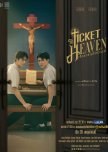
Ticket to Heaven: Unconditional Grace
For decades the United States Conference of Catholic Bishops lobbied for regressive legislation, endorsed far-right politicians, promoted bigotry in public life, and generally strove to make the United States less open, less tolerant, less kind. That is the background with which I approached the news that the Catholic Bishops' Conference of Thailand (CBCT) objected to the original Ticket to Heaven trailer.The trailer was released on November 26, 2024. Based on the series’ original screenplay, the trailer took an adversarial position, evoking a dark, melancholic atmosphere and depicting the Church as standing in the way of happiness. Three days later, the CBCT formally expressed written concerns about the upcoming series to Mr. Chaipol Suk-iam, Director-General of the Department of Religious Affairs at the Ministry of Culture. [1]
The CBCT struck a diplomatic tone, stating that they respected individual dignity and artistic expression. They therefore claimed they were limiting their comments to mostly theological accuracy and the protection of a minority community's sacred spaces (Catholics comprise roughly 0.5% of the Thai population).
And then they asked the Department of Religious Affairs to mediate.
Section 206 of the Thai Penal Code explicitly criminalizes actions that defame or insult objects or places of religious worship. Any review by the Department of Religious Affairs therefore not only carries weight, it is an implicit threat.
On May 30, 2026, 550 days after the trailer was released, Ticket to Heaven premiered. The year and a half from trailer to telecast gave Director Aof Noppharnach space for genuine creative reflection that produced an inspired artistic shift. Gone was the dark, brooding, accusatory tone, replaced with internal struggle, compassion, and self-discovery. By jettisoning a simple adversarial indictment of the Church, Aof created a work that was more subtle, nuanced, and subversive.
St. Magdalene College is an elite, prestigious institution for the wealthy. Catholic schools are the ultimate symbol of upper-class education in Thailand. Even the Thai Royal Family attends them.
Tanrak and Barth, however, were "scholarship students" whose expenses were covered by the Church because they came from impoverished backgrounds. Perhaps because they both were from outside the school's typical upper-class constituency, Father Arnon assigned Tanrak the task of mentoring Barth in order to ease him into the life of Magdalene College.
Soon after Barth's arrival, a student bullies him, sneering that he is “a scholarship student who doesn’t belong here," meaning he isn’t of their social class. That evening he locks Barth and Tanrak (Barth intentionally, Tanrak accidentally) in an abandoned natatorium. Traditionally a place of pure, pristine waters, vitality, and shared joy, the concrete structure stands in ruin and neglect. It further becomes a space of judgment and doom when, the next morning, Father Arnon and a group of students discover Barth and Tanrak, looking down on them from ten feet above with undisguised suspicion.
From the beginning of their friendship, therefore, Barth and Tanrak are united by the judgment of others. While we don't witness active bullying of Tanrak, he too was a scholarship student separated by the class divide. Thus, in their world, they are alone in the eyes of God, alone in the eyes of the Church, and alone in the eyes of their fellow students. With neither Tanrak nor Barth having family support, Magdalene was not merely their school but their entire world—there was nowhere else to run.
One night, Barth asks Tanrak to break the rules and go with him off-campus to buy roti. Tanrak declines, and Barth asks "have you never skipped school?"—leaving unspoken "Have you never disobeyed, have you never experienced life beyond these walls?"
Although staying behind, Tanrak agrees to help boost Barth over the wall. In what was almost certainly Tanrak's first body-on-body contact with another man, he grasps Barth's thighs, presses his body into him, shoves upward, and recognizes an undeniable sexual pull. On his return, Barth hands Tanrak a roti—tubular, floppy, cream dripping from the end. Tanrak hesitates, then takes it, puts it in his mouth, and recognition becomes acceptance.
One meaning of “Communion" (community) within the Church is something shared in common, and by accepting the roti (derived from the Sanskrit word for "bread"), Tanrak accepts something shared in common with Barth, in a sacrament of mutual understanding and desire.
Communion is then followed by confession. Magdalene students are usually in a strict uniform and under the watchful eyes of the priest and teachers. The communal washroom is the only place where they can strip away their outer layer of conformity and be free from authority figures.
In this space, both essentially naked, through the wire mesh, almost as if speaking through a barrier to a prisoner (echoed in their visit to Barth’s mother), Barth confesses to Tanrak that he’s Gay and attracted to him: Barth as penitent, Tanrak as priest, hearing Barth’s confession of raw sexuality without shame. Barth knows who he is but Tanrak, both priest and prisoner on the other side of the mesh, is entrapped by more than a decade of church teaching leading to confused self-loathing.
Leaving his prison behind, Tanrak opens his door and crosses to Barth’s side, where, looking directly up at Barth, he confesses mutual feelings. Most importantly, for the first time, Tanrak clearly states out loud that he is Gay. The roles have reversed; now Barth is the priest, and Tanrak the penitent, no longer imprisoned by his fears, seeking absolution and acceptance in Barth’s eyes.
The dualism of each being equally penitent and priest shatters the Catholic top-down hierarchical order. Instead, Tanrak and Barth give each other unconditional grace. Authority, hierarchy, and judgment are not the only path to salvation; equality, empathy, and honesty are as well.
Barth leads Tanrak to communion, he leads him to confession, and he leads him to baptism. Like everything in Ticket to Heaven, the waterfall scene serves more than one purpose. By taking Tanrak to a favorite place of his mother’s, Barth initiates Tanrak into his family and its struggles.
The waterfall is also an area where, for the first time, they are completely free of the oppressive surveillance of the Church. Baptism washes away guilt while at the same time initiating a person into the Church. Guiltless, they make love, initiating Barth into the world of sexual identity and personal freedom.
There’s so much more in the series, including other scenes that could be interpreted as reflecting church sacraments, but these three scenes in particular demonstrate different stages in Tanrak’s growth: understanding who he is, acknowledging who he is, freeing himself from shame over who he is. Despite Barth’s own journey, the series is largely Tanrak’s story.
Barth, played by Gemini, knows who he is and has long accepted it. Whatever troubles he carries—and there are plenty, given his father's abuse, his father's death, and his mother's imprisonment—his sexuality is not among them. There, at least, he is certain, and that certainty suits Gemini’s acting style.
The character of Tanrak, however, experiences a full emotional arc, from a denial of self-awareness to admitting it to embracing it, from repression to acceptance to joy. That requires an actor with not only great range but great depth, which is another way of saying “Fourth.”
To say Fourth is one of GMMTV’s finest actors understates his talent. He is one of our finest actors, period. In Moonlight Chicken (his acting debut, another Aof project, and where Aof discovered him and made him a star) he portrayed a young man on society’s margins trying to find himself while showing empathy and understanding toward a friend who needed help. In My School President he ostensibly played the traditional “bouncy Golden Retriever” BL trope while imbuing it with subtlety and depth. When meeting his boyfriend’s parents, for example, Fourth’s character Tinn was shy, polite, deferential, uncertain, but straightforward and glad to be there, all at once. And in Ticket to Heaven, Tanrak begins as shy, quiet, but slightly disinterested in the new boy, moves toward vague confusion and suspicion regarding Barth’s interest in him, struggles to accept feelings he had previously kept in check, and, through various stages of growth, ends by finding happiness in who he really is.
Several viewers on Reddit and elsewhere have called Ticket to Heaven Aof’s greatest masterpiece. While it is certainly a masterpiece, it is neither his most subtle nor complex series. The roti scene, for example, is outrageously phallic, and in contrast to Ticket to Heaven’s two-person story arc, Moonlight Chicken braids multiple interlocking stories across an ensemble.
Moonlight Chicken also explored fundamental truths, whereas core elements of Ticket to Heaven are more wishful thinking than fact. 1996 was a terrible time for the Gay community in Thailand, with the government actively promoting Gay tourism while its own Gay citizens faced vicious discrimination. The Church was still reeling from the Magdalene Laundry scandals, and investigative journalist Jason Berry published his groundbreaking book about pedophile priests and the bishops who protected them in 1992. Meanwhile, at the Vatican, Cardinal Ratzinger was strictly enforcing orthodoxy as the head of the Church's doctrinal office, where he was leading the Church’s crackdown on LGBTQ-affirming priests and their ministries to the Gay community. A mentoring priest would likely have been disciplined and reassigned.
But Aof created something greater than fact. He created a fairytale, because Gay people deserve fairytales too. As much as anyone, we deserve stories that show how hope can exist after hardship. We deserve stories that show what society could become if it evolved into a more fair and just world.
Reimagining past traumas with a vision of a better world does not erase history, it makes history healing. Trauma therapy relies on this very principle to help people reimagine their worst memories. By taking the dark realities of the 1990s and reframing them with decency and warmth, Aof offers the gift of collective healing—and that’s what fairytales are for.
And in giving us that fairytale, Aof offers the Church a vision of what it could become were it to prioritize people over prejudice. By showing that equality, empathy, and honesty can not only lead to a form of grace, but are, in fact, necessary for grace, Aof has shown the Church a way forward. May we all hope that someday, it chooses to take it.
[1] Chainarong Monthienvichienchai, "Thai Bishops Raise Concerns Over Upcoming TV Series," LiCAS News, November 29, 2024; see also "Thai Bishops Raise Concerns Over Upcoming TV Series," Herald Malaysia, November 29, 2024. Chainarong is the past world president of SIGNIS (The World Catholic Association for Communication) and former Chancellor of St. John's University in Bangkok.
Was this review helpful to you?

This review may contain spoilers
Fascinating characters betrayed by easy clichés
“Duang With You” arrived with tremendous promise, charm, and a breakthrough couple in TeeTeePor. TeeTee displayed a genius for playing “goofy.” Most “golden retriever” actors play goofy to the camera, and it eventually becomes trite, but TeeTee played “goofy” in character and to his scene partner without it ever feeling forced. That is hard, and I was impressed.Playing a diametrically opposite character, Por portrays a withdrawn, emotionally-suppressed musician. In other hands that could quickly have become a stereotype, but Por imbued his role with an odd, almost hypnotic intensity that gave his silence weight. That is also hard, and I was also impressed.
That set up the opportunity for two interesting, unusual characters to discover each other and grow together, but the series ultimately falters due to the writers' and director's profound lack of trust in their own characters. Instead of allowing the relationship to flourish through the agency of its leads, the production retreats into the easy cliché of introducing “drama” with a capital “D” in episode 10. Not only was it the cliché of using conflict as a substitute for character development, the conflict was such an extreme and horrific tonal whiplash as to completely jar the viewer out of the story.
The true tragedy wasn’t the backstory; it was that the production team abandoned its unique voice for a checklist of clichés. “Duang With You” is a frustrating reminder that many creators still haven't learned that a well-written character is more compelling than a sudden, unearned tragedy.
Was this review helpful to you?

This review may contain spoilers
The Enduring Legacy of “A Tale of a Thousand Stars”
Today, the set of “A Tale of a Thousand Stars” is a pilgrimage site. Fans take selfies in front of the teacher’s house, local businesses give ATOTS tours, and a luxury resort outside of Chiang Rai has a gourmet restaurant and, for rooms, glass geodesic domes where you can lie in bed, look up through the transparent ceiling at the night sky, and count your own thousand stars.It’s understandable that “A Tale of a Thousand Stars” continues to resonate with fans around the world. A series of firsts, it was one of GMMTV’s first “prestige” dramas, one of the first to showcase Aof’s ability to treat BL as an art form, and the first pairing of EarthMix.
It was also the first acting project of Mix Sahaphap, in a staggering debut. It’s hard to believe Aof trusted a novice to anchor a series about a complex story of guilt and redemption, and Mix beautifully captured Tian’s fragility and growth through subtle internal acting.
Aof almost lovingly lingered the camera on Mix, who was at his most beautiful. In closeups, especially when Mix was backgrounded by the stunning mountain scenery, Aof lit him with a soft-focus hazy glow, reminiscent of how Hitchcock lit Grace Kelly. This was more than just a television scene; the lighting captured the “prestige” feel of the show. Perhaps more importantly, the romantic, “Old Hollywood” glow was a deliberate attempt to mythologize a new star in the GMMTV firmament.
The narrative is propelled forward by contrasts: city boy versus country boy; Earth’s almost preternaturally sculpted physicality honed by a life in nature versus Mix’s softer form resulting from a life of luxury and privilege; Earth’s groundedness versus Mix’s evolving growth; Mix’s “script” - the diary - contrasted with the reality of messy village life, teaching Tian that life cannot be scripted; Aof’s signature cinematic use of light and color, with the almost sterile whites and silvers of the city contrasted with the lush ambers and greens of the country.
But it’s not just a story of contrasts; parallels are almost more important. Both Phupha and Tian are in the village because of people from their past, Phupha following in the footsteps of his deceased father, who loved the forest; Tian, out of guilt, following in the footsteps of the deceased Torfun. Both bear emotional scars, Tian from guilt, Phupha from the loss of his friend, Torfun. Both suffered pain, Tian from heart surgery, Phupha from a bullet wound. Both carry the physical scars of their pain near their hearts. Both Phupha and Tian’s stories center on helping each other, with Phupha watching over Tian until the roles reverse and Tian helps Phupha recover from his injuries.
The series also drops in what I think of as “nuggets of joy.” Khaotung is excellent in a type of role I hadn't seen him play before, proving his versatility as one of GMMTV’s best actors. Ever since “2gether,” I enjoy seeing Drake, and his release from his contract by GMMTV last year was a true loss for the BL community. And, Aof is not afraid to drop in occasional self-referential meta-humor, as when Tian tells his mother “I’m not smart enough to be a doctor,” while the audience knows Mix was currently in veterinary school. That acknowledgment of the actor’s real-world intelligence made Tian’s insecurity even more poignant.
The middle chapters are frustratingly uneven. At one point Tian says ‘I’m a jinx,” and at least in a narrative sense, he was correct. In reality, the villagers would have asked him to leave after the second or third catastrophe he inflicted on them; instead, the villager’s repeated forgiveness acts as a narrative safety net. By not holding Tian accountable for the tangible pain he caused, the show trades realism for sentimentality. It makes the villagers feel less like a community and more like a backdrop for Tian’s redemption.
Another possible flaw was the forced delay of intimacy. Instead of a story of two adults discovering and learning to find solace and joy in one another, intimacy was delayed until the very last scene of the very last episode. Was this “drama for drama’s sake,” or, before it was possible for Tian to be open to true intimacy, was it necessary for him to move beyond living Torfun’s life and begin living his own? Adults who find joy in each other are living in the present; Tian was stuck in the past. The physical intimacy could only happen once the diary was "closed" and the new journal began; but, still, putting it off until the very, very end seemed … strained.
Such structural issues prevent it from rising to the height of Aof’s masterpiece, “Moonlight Chicken,” but it’s important to place it within Aof’s larger career. If ATOTS was Aof’s exploration of myth and legend, it provided the foundation for him to later explore the gritty, kitchen-sink realism of “Moonlight Chicken.”
Gratefully, all is redeemed by the emotional payoff of the final two episodes. Despite the "jinx" logic and the forced delay of intimacy, the ending is beautifully moving—perhaps shamelessly cheesy—but so well-executed that you don't care. It leaves you with something beautiful that clears the record of earlier problems.
The series concludes with Tian burying Torfun’s diary and starting his own journal. Through trial after trial, Tian’s journey leads him to finally accept that while the past may always be present, he cannot honor the dead by becoming them. “A Tale of a Thousand Stars” helps us all understand that life only truly begins when you stop living through others and begin writing your own story.
Was this review helpful to you?
What BL Should Be
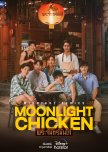
“Moonlight Chicken” is a profound, grounded exploration of the human condition that transcends typical BL tropes. It is a story built on a foundation of serious people dealing with the heavy weight of external reality—money, family struggles, love, and the fragility of life.Earth and Mix anchor the series with a mature, weary chemistry that feels lived-in rather than idealized. Earth brings a quiet, burdened dignity to Uncle Jim, a man whose walls are built from years of financial struggle and past trauma. Mix provides the perfect counterpoint as Wen—persistent, world-wise, and deeply sympathetic. Their connection is authentic because it’s forged in the messy, unglamorous reality of their everyday lives.
The supporting cast is just as exceptional. Khaotung delivers unrequited love and family duty with heartbreaking subtlety, while Mark Pakin is an absolute standout as a young man thrown too soon into adult responsibilities, but who faces them with warmth and integrity.
Gemini and Fourth’s storyline is a wonder of sensitive storytelling. By refusing to treat Heart’s (Gemini) disability as a tragedy to be pitied, the show creates a beautiful arc of communication and equality. Seeing Li Ming (Fourth) meet Heart where he is—without pity—reminds us that the most powerful love is a conscious effort to understand another’s world.
By focusing on relatable, flawed characters in a working-class environment, “Moonlight Chicken” proves that the most meaningful romance isn't found in a vacuum, but in how we support each other through the challenges of real life. It is raw, beautiful, and deeply human.
Was this review helpful to you?

My School President: "It's a trap!"
I sat down to watch "My School President" as a light, entertaining palate cleanser between more serious BLs, and as surprisingly high-quality fluff, it worked beautifully. The high school setting, the band, the great music, the broad comedy, the sound effects, the adorbs versus the dorks all worked together to create a surprisingly well-thought out, well-written, well-acted, cohesive series that was light entertainment at its best.I was fully, happily, unguardedly charmed, but then, it introduced … issues. Sincere, genuine, mature issues that work within the world the series creates: the difficulty of some parents coming to grips with having a Gay child, the ever present threat of homophobic violence, a couple trying to decide how to come out to their friends, how a Gay couple establishes a relationship with each others’ parents, the clash of people coming together from two vastly different socio-economic backgrounds, the importance of friendship, and more, and I am left with a new understanding: fluff can be important.
Conflict is often introduced in BL as an excuse for writers running out of ideas. Instead of furthering character or plot, conflict therefore often serves as filler. This “conflict for conflict’s sake” is so common that BL fans even have a term for it, the “Episode 11 Curse.”
That is almost never the case in "My School President." Tinn's mother (Pim Pympan) hesitates because of genuine concern for a Gay child in a homophobic world (not a cartoonish knee-jerk rejection) and she gradually grows in her understanding and acceptance. And yet, the introduction of a homophobic character proved her concerns were not only valid but unfortunately relevant to the real world - the world beyond the protective, sheltering BL bubble.
The Episode 11 Curse still occurs, however, in, yes, Episode 11. The conflict is relatively minor, but that’s not the problem. Rather, almost all of Episode 11 is filler. It could have been cut by 3/4 and still made its points. Once again, writers seem to approach a series’ end, run out of ideas, and tread water until Episode 12. To their credit, however, the writers did not introduce shock value and kept the padding within the tone already established by the series. It may have been boring and unnecessary, but it wasn’t a tonal whiplash.
The fact that I remained invested even during a slow section is due largely to an outstanding performance by Fourth, who anchors - no, carries, almost singlehandedly - the entire series. Acting since he was a child and with GMMTV since he was 15, Fourth brought a grounded naturalness, a mature professionalism, energy, and a sense of being fully present in every scene despite the fact that he was only 17 when filming started. His group of close friends (the adorbs) complement the high-energy joy Fourth brings to the series.
In contrast are the student council members (the dorks), led by Gemini, who are more tightly-wound. The dorks include some well-known GMMTV stars, such as Mark Pakin (outstanding in both "Moonlight Chicken" and "Only Friends") and Aun ("Only Boo!," "Perfect 10 Liners"). The high-personality supporting actors are needed to balance Gemini’s woodenness.
I first saw Gemini in "Moonlight Chicken," where he played a withdrawn hearing-impaired teenager being gently introduced to the larger world by his sensitive and caring new friend, played by Fourth. Being hearing-impaired can impose its own special kind of isolation, leading sometimes to a noticeable decrease in the outward expression of emotion (low affect). When Gemini displayed a limited emotional range, I therefore thought he was in character. After seeing him now in three series playing three different characters, each of whom had contained emotions, I’m no longer so sure.
Whatever the source of Gemini’s controlled performance - character choice or natural register - Fourth more than just compensates for it; he transforms it into something that works. Gemini and Fourth together are truly more than the sum of their parts.
The overwhelming reaction to "My School President" was that it was an exceptional example of BL fluff at its best, and it certainly is, but that, I think missed the point. My School President proved that sheer fun and social meaning do not have to be mutually exclusive. As entertaining as it is, it carries an important, mature message exemplified by Mark’s question to Fourth, "Why can’t people be as kind as the series we watch?” That question lingers with me.
Was this review helpful to you?

Cherry Magic! Thirty Years of Virginity Can Make You a Wizard?!
1 people found this review helpful
Sincerity Stuck in "Practice" Mode
“Cherry Magic” is a series with a profound heart that unfortunately gets bogged down by its own hesitation. While the lead actors bring a beautiful sincerity to their roles, the production often undermines that maturity with a frustratingly slow pace and severe tonal whiplash.Nowhere is the show's inconsistency more glaring than in the secondary couple subplot. While Adachi and Kurosawa operate with quiet, "serious person" sincerity, the friend’s secondary romance descends into over-the-top, slapstick caricature. This frantic, "Jerry Lewis" style of comedy feels like it belongs in a completely different genre, creating a jarring experience that disrupts the delicate emotional atmosphere the main couple works so hard to build.
This lack of maturity extends to the narrative structure itself. The show’s reliance on "practice dates" rather than genuine progression artificially lowers the stakes. By keeping the characters in a state of romantic "rehearsal" for the majority of the series, it often feels like "drama for drama’s sake"—a way to stretch the premise without allowing the relationship to evolve naturally.
For a story centered on the intimacy of literally hearing another person's thoughts, the show is remarkably hesitant to explore actual physical or romantic union. By delaying their official commitment and physical intimacy until the final episodes, much of the middle section begins to feel like filler. The profound mental connection the characters share is often at odds with the "hands-off," almost sterile approach to their actual partnership.
When “Cherry Magic” leans into its quiet moments of character growth, it is a lovely exploration of vulnerability. However, the combination of exhausting slapstick and a narrative that refuses to "get on with it" makes for a fragmented viewing experience. It is a show with a beautiful soul that is too often afraid to grow up.
Was this review helpful to you?

Light entertainment that is ultimately unmemorable.
Cat for Cash unfortunately struggles to find its footing. While the premise of a cat café should offer the ultimate "cozy" atmosphere, the primary setting lacks organic charm, feeling more like a staged set than a lived-in neighborhood restaurant.The narrative relies heavily on tired tropes—from a sudden, unknown brother to a debt collector subplot—that feel disconnected from the central heart of the story. To its credit, however, the show attempts to give the cats genuine agency. With their distinct backstories and Tiger’s magical ability to understand them, they are intended to be active participants in the narrative rather than simple background.
Despite these efforts, the show failed to generate enough interest to make their world feel real. Even the professional depth of FirstKhaotung cannot go far without a believable environment to inhabit; without a grounded reality to anchor the characters, the performances feel restricted by the artifice of the production.
Ultimately, Cat for Cash is passable as light entertainment, but it remains unmemorable for those looking for a story with a soul.
Was this review helpful to you?

Plot contrivences with no emotional payoff
Love Like a Bike ultimately stalls out as a narrative failure, offering a "Trauma Festival" that lacks the structural integrity to justify its own weight. The central conceit is immediately undermined by a total lack of familial chemistry; the three adopted brothers are so physically and temperamentally dissimilar that they feel like a script convenience rather than a lived-in reality. This lack of believability extends to the show's core romances, which operate almost exclusively within a minefield of serious ethical violations—blurring the lines between doctor/patient, employer/employee, and sex worker/client. These problematic power dynamics are never handled with the necessary nuance to make them compelling; instead, they contribute to a wearying atmosphere that offers no emotional payoff.Was this review helpful to you?

This review may contain spoilers
Bad Buddy: Collateral Damage
Bad Buddy is beloved by BL fans, and rightly so. Its charismatic, natural performances fit the characters as if they were written for the obvious onscreen chemistry of the two leads, Ohm and Nanon. When you add Aof’s trademark cinematic vision and emotional depth, you have a BL series that continues to resonate around the world.It took me one or two episodes to begin to really appreciate it. As someone who works in academia, “a dangerous gang of architecture students” is … a bit of a stretch. Besides, if you’re going to do the Sharks versus the Jets, at least dance to music.
After the rival armies were nudged to the side, however, I was able to focus more on the story and characters. One thing that makes “Bad Buddy” more interesting - and more poignant - than most enemies-to-lovers stories is that, in a way, there’s nothing personal between them. Instead, they are both fighting a battle their parents started; Pat (played by Ohm) and Pran (played by Nanon) are merely collateral damage.
What makes the heavy weight of parental expectations believable is the performances of the two leads. Nanon is achingly subtle. You can feel the tension and pain Pran experiences as he tries to internally rationalize loyalty to his parents with his growing, if confused, pull toward Pat.
And Ohm … Ohm is a revelation. As an actor, he is grounded and warm, and the camera loves him. That’s a good thing because he is forced to do much of the heavy lifting. Pat becomes aware of his feelings first and throughout the series, Pat emotionally puts himself on the line and does the work of trying to build a relationship against the weight of their families' feud.
In contrast, Pran responds with passivity and hesitation. Pat takes bold steps forward, Pran refuses to reciprocate, and the dynamic stalls because the emotional labor isn’t shared. That’s not a reflection on Nanon’s acting; you see his internal struggle. It does, however, place an almost unfair burden on Ohm’s character—and on Ohm as an actor—to constantly generate the momentum needed to keep the romance from collapsing. It’s a testament to Ohm’s ability that he could carry much of the show without breaking a sweat.
One small moment stays with me. Pran rejects him once again, saying “I don’t want to be friends with you,” and Pat says, softly, almost to himself “Why not? I have many good qualities….” Haven’t we all thought that? Haven’t we all wondered why someone doesn’t like us? Haven’t we all thought “I’m a nice guy, I’m kind to dogs, I recycle…why doesn’t that person like me?” That one, very small moment was deeply, deeply human.
That works because Aof is not afraid of small, quiet, unpretentious moments. Instead of introducing big “D” Drama, Aof reduces a generation-long conflict to its core: two souls trying to find each other.
This reveals Aof’s genius for visual storytelling. He lets the camera do the work. His lingering closeups, beautiful color and shadow, and use of space make scenes feel intimate instead of staged. When Pat and Pran speak, Aof lets them speak, but when they are quiet, Aof lets you know what they’re feeling without a word being spoken.
And that, I think, is an important clue as to its lasting appeal. By giving us unsaid truths, Aof trusts his actors, he trusts his audience, and he treats them with respect. That respect transforms a simple BL youth story into something that continues to resonate.
Was this review helpful to you?

Ethnographic Depth in a Sugar-Rush Rom-Com
While many Thai BLs offer a "High-So" fantasy of luxury condos, Cooking Crush is a breath of fresh air. It expertly tucks a grounded study of Bangkok life inside a bright, adorable romantic comedy.The series excels in its commitment to the rhythms of everyday Thailand. The canal-side neighborhood—with its porous boundaries between home and commerce—offers a rare look at traditional urban life. From the pharmacy’s "living-behind-the-store" dynamic to the restaurant’s open-air porch kitchen, the setting provides a genuine lesson in community-centered business.
The core romance between Gun (Culinary) and Ten (Medical) explores intellectual respect across disciplines. By treating the Culinary Faculty with the same academic weight as Medicine, the show reflects a Thai tradition of affording high status to all fields of study. This creates a beautiful tension between Gun’s grandmother—representing Grasae (traditional knowledge) and cooking "by heart"—and the university’s globalized, professional model.
The cast is instrumental in grounding these themes. Off Jumpol showcases impressive range, shedding his "cool" persona for a vulnerable voyage of self-discovery. Neo Trai remains the gold standard for supporting actors as the high-energy "Fire," but the breakout is undoubtedly Aungpao. As "Dynamite," he provides the propulsive sincerity that keeps the series moving.
GMMTV deserves credit for a brief but meaningful scene advocating for the human rights of sex workers, proving that even a series defined by its 'adorability' can acknowledge modern social realities. This infectious energy—an 'adorability overload' fueled by bright production design and Fluke Nattanon’s theme song, 'Baby Crush'—is what defines the show’s heart.
Final Verdict: If you watch BL to learn about Thai culture and the rhythms of 'normal' life, “Cooking Crush” is a massive win. It is a rare series that manages to be sweet without being shallow, leaving a warmth that lasts much longer than a simple sugar rush.
Was this review helpful to you?
A Lukewarm Echo of a Groundbreaking Original
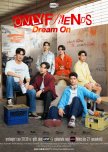
The original "Only Friends" was a massive step forward for the BL genre, delivering a rich, complicated, interwoven story about unique, flawed characters in conflict. In contrast, "Dream On" simply exploits that brand value while delivering a thin story with low-energy couples you mostly don’t care about.Where the original offered three masterfully interlocking stories, "Dream On’s" three narratives barely relate to each other, creating a frustrating lack of cohesion. I primarily tuned in to see if JossGawin could replicate the magnetic sexual energy they displayed in "My Golden Blood." They didn’t—but frankly, their weak story arc didn’t give them the narrative room to show what they could do. The same was true for EarthMix’s storyline; though underserved by the script, Mix’s outstanding, nuanced acting at least provided the show with some badly needed heart.
Ultimately, only AouBoom brought genuine energy, charm, and sexiness to the screen. Repeatedly cast as second bananas, they have become absolute experts at making the most out of smaller parts, and they easily carry the show here.
Overall, "Dream On" replaces the grit and complexity of the original with weak characters and a shallow plot. A major disappointment.
Was this review helpful to you?
Thundercloud Rainstorm: Against My Better Judgment
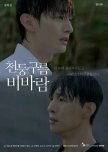
Korean BLs have such a reputation for favoring darker storylines that the fandom has given them a name, “Korean Noir.” “Thundercloud Rainstorm” continues that aesthetic, but it comes with a visceral, hypnotic force that mesmerized me despite periods of discomfort and even, at times, a sense of horror at what the series forced me to witness.Seo Jeong Han (played by Jeong Ri U) is a wealthy, withdrawn, socially isolated loner who has suppressed any emotional connection with others. Into his life comes Lee Il Jo (played by the luminous Yoon Ji Sung), a poor relation being brutally bullied by his half-brother who demands the land their father left to Il Jo. For reasons he doesn’t understand, Jeong Han helps Il Jo and Il Jo comes to live with and rely on him. As the show progresses, Jeong Han becomes more drawn to, even infatuated with, Il Jo.
The gradual melting of Jeong Han into someone who can love is the defining story arc of the series, and while it might at times seem abrupt, it works because you as the viewer are falling in love along with him. The character of Il Jo is engineered to make you love him, constructed for maximum audience protectiveness — beautiful, innocent, suffering, self-sacrificing, pure of heart. If I were writing this for a freshman lit class, I might even use the term “Christ figure.”
What keeps them apart? South Korea is one of the most class-conscious societies in the world — a fact Koreans discuss openly and with complete self-awareness. The series implies that Jeong Han is the son of the leader of one of the giant family-run conglomerates - the chaebol - that dominate entire sectors of the Korean economy and have an outsized influence on Korean society and culture generally. That places Jeong Han at an almost unreachable height, while Il Jo is just a poor boy from the sticks. Not only does Jeong Han have to struggle with opening his heart to someone he might not otherwise have considered, his father strongly, violently, opposes his son falling in love with anyone from such a different background, much less a man.
To protect Jeong Han, Il Jo therefore pulls away. Jeong Han brings him back. Il Jo pulls away. Jeong Han brings him back. Il Jo pulls away. Jeong Han brings him back. The pattern is repeated with the stepbrother’s bullying, who brutally beats Il Jo more than once. Is this drama for drama’s sake? Is it padding to fill out a script? Certainly, Il Jo’s desire to protect Jeong Han is fully consistent with his self-sacrificing character, but what begins as selflessness begins to look like a contrived dramatic device and the violence, especially against someone who refuses to fight back (turns the other cheek?) is egregiously overdone.
And yet, none of it mattered. Despite the repetition, despite the padding, despite the cruelty, I couldn’t stop watching. I was completely captivated. It is a testament to the show’s visceral, hypnotic power that even as my brain registered contrived plot devices and structural flaws, my defenses completely collapsed, because just as Jeong Han fell in love with Il Jo, so did I, slowly, helplessly, and against my better judgment, and when you’re in love, you accept the flaws.
Was this review helpful to you?

The Quiet Power of Found Family
“Our Dining Table” is a masterclass in the “healing” genre, proving that the most profound stories often happen in the smallest spaces—around a kitchen table. It is a beautiful, understated exploration of how found family can mend the fractures left by biological ones.The world of “Our Dining Table” feels authentic and lived-in. The cramped kitchen, the simple act of grocery shopping, and the steam rising from a clay pot of rice all contribute to an atmosphere of genuine domesticity. These aren't merely actors on a set; these are three serious characters navigating the quiet complexities of grief, loneliness, and the fear of being seen.
Yutaka (Inukai Atsuhiro) is a deeply sympathetic lead. His struggle with "food trauma"—the inability to eat in front of others—is handled with incredible sensitivity. It isn't used as a fleeting trope but as a core part of his character that requires patience and trust to overcome.
Minoru (Iijima Hiroki) is the perfect anchor—a young man weighed down by his own responsibilities but who finds room in his heart for a stranger. His chemistry with Yutaka isn't based on "back-and-forth" games, but on a slow, steady building of mutual respect.
Tane (Maeyama Kuuga). Often, child actors can feel like "cute scenery," but Tane is a delightful exception. He is the catalyst of the story, bringing a chaotic, joyful energy that forces Yutaka out of his shell. He is a fully realized character whose presence feels essential, not decorative.
“Our Dining Table” avoids loud drama and instead focuses on the transformative power of a shared meal. It is a slow, sincere, and deeply moving reminder that we all deserve a place at the table.
Was this review helpful to you?


