
 Celebrity


This review may contain spoilers
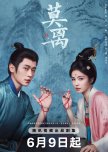
The First Jasmine Review: Two Broken Souls Who Quietly Became Each Other's Home
As a Bai Lu fan, The First Jasmine was an absolute must-watch, especially with Cheng Lei as her co-star. I had only recently become familiar with Cheng Lei through two of his dramas, and this series convinced me that he is one of the finest actors of his generation.At first glance, It looks like another historical romance built around revenge and court politics. What makes it exceptional, however, is that both protagonists are deeply flawed. Ye Li is the brilliant granddaughter of the Headmaster of Lishan Academy, gifted in medicine, strategy, martial arts, mathematics, chess, and astrology, yet she quietly carries the survivor's guilt and trauma left by the devastating epidemic that claimed the people she loved most. Prince Ding, Mo Xiuyao, is a legendary general admired throughout the empire, but beneath his calm exterior is a disabled prince burdened by the destruction of his family and years of emotional restraint.
Because both characters spend most of the drama hiding rather than expressing their pain, Bai Lu and Cheng Lei rely on subtle expressions, silence, and body language instead of dramatic outbursts. That restraint is exactly what makes their performances so powerful.
One irony I particularly appreciated is Ye Li's family. Her father is weak, foolish, and easily manipulated, while her mother—the beautiful and intelligent daughter of the Headmaster of Lishan Academy—made the tragic mistake of falling in love with the wrong man. Ye Li inherited her mother's brilliance but possessed the strength, wisdom, and resilience that neither of her parents fully demonstrated.
What I loved most was that Ye Li was never written as someone who simply needed saving. Her intelligence became her greatest weapon. More importantly, she became Prince Yao's greatest ally—initially an unknown one—quietly dismantling enemies through strategy while he fought on the battlefield. Their partnership felt equal, built on mutual respect rather than dependence.
PERFORMANCES
Bai Lu once again proves why she is one of my favourite actresses. Her portrayal reminded me of One & Only—restrained, understated, and emotionally layered. There are no traces of Bai Lu herself, only Ye Li. Sometimes a slight pause, lowered eyes, or a trembling smile conveyed more than pages of dialogue ever could.
The Lishan storyline became the emotional backbone of the drama and the strongest showcase of her acting. The epidemic was not simply a tragedy from Ye Li's past; it continued to haunt her throughout the story. Every return to Lishan, every vision of her grandfather and fellow disciples, and every reminder of what she had lost carried enormous emotional weight. Yet Ye Li never allowed her grief to define her. She continued protecting others, especially Prince Yao, while quietly carrying the pain herself.
Cheng Lei was equally impressive. Playing a disabled, short-tempered prince required remarkable restraint. Unlike his role in How Dare You?!, where he displayed an incredible range of comedy, fierceness, vulnerability, timidity, and even an adorably clingy side, Prince Yao demanded quiet control. His finest scenes weren't loud or dramatic but deeply internal. The sequence on Lishan Mountain, where Ye Li's condition worsened while he forced himself to remain composed despite being consumed by guilt, was heartbreaking. His expressive eyes alone communicated fear, helplessness, and unconditional love.
A ROMANCE BUILT ON TRUST
What truly made Bai Lu and Cheng Lei exceptional wasn't the romance itself but how they acted opposite one another. Great chemistry isn't measured by passionate kisses or intimate scenes; it's revealed in how actors listen, react, and elevate each other's performances.
Even during ordinary conversations or emotionally heavy scenes, they remained completely present with one another. The Lishan sequences, in particular, showed how responsive their acting was. They didn't simply deliver dialogue—they responded naturally to each other's emotions.
I also loved that Ye Li fell in love first. She admired Prince Yao's since her teens, his integrity and kindness long before he recognised his own feelings. Even after they married, it felt as though she fell in love with him all over again, travelling a great distance simply because she missed him. Prince Yao, meanwhile, fell even deeper. Whenever he couldn't find her, he became visibly restless. Every time he returned home, one of the first things he asked was where Ye Li was. Watching the once-feared Ding Prince become quietly devoted to his wife—gently touching her face, hurrying home to see her, or simply wanting her beside him—was sweeter than any grand romantic gesture.
The kissing scenes were relatively restrained, but I never felt the romance lacked intimacy. Their love was expressed through lingering glances, gentle gestures, and unwavering trust. Like One and Only, this drama proves that genuine chemistry isn't built on physical intimacy but on two actors who know how to communicate love through their eyes and silence.
SYMBOLISM
One of the drama's greatest strengths is its use of symbolism.
My favourite is the wind chimes. They first represent Ye Li's true home at Lishan and become one of the few memories she carries after the epidemic. They later appear in her mother's shop, symbolising her enduring connection to her family. When she finally hangs them at Prince Ding's residence, it quietly marks the moment she accepts it as her new home. By the end, the wind chimes no longer represent a place—they represent belonging. Ye Li doesn't abandon her past; she carries it with her until she finally finds someone who makes her feel safe enough to call another place home.
The straw dolls she prepares before leaving Lishan beautifully symbolise the burden of revenge she carries, promising to release them to the wind once her mission is complete. The recurring libation before drinking adds cultural authenticity, while the wild monkeys become a powerful metaphor for Ye Li's trauma. When Prince Yao leads her back to the mountain and shows her there are no monkeys waiting for her, he is really helping her confront the fears she has carried since Lishan.
The final return to Lishan remains my favourite scene. Seeing her grandfather and fellow disciples one last time before hearing Prince Yao call her back to reality felt like receiving permission to let go of the past without forgetting it.
SUPPORTING CAST, PRODUCTION & FINAL THOUGHTS
While a few key supporting performances, particularly the Emperor, Prince Li, and Zuide, lacked the emotional depth their roles required, others were excellent. Lin Muran (Han Ming Xi), Feng Xue Ya (Qing Shuang), Shawn Zhang (Li Fei Bai), and Liu Xing Chen (A Jin) all brought warmth, sincerity, humour, and emotional balance to the story.
The cinematography, costumes, dual-POV storytelling, musical score, and OST beautifully enhanced the emotional atmosphere. Bai Lu also looked stunning throughout the series, even in scenes where Ye Li appeared gravely ill with little or no makeup.
The drama isn't perfect. Some scenes could have been executed better, and stronger performances in a few supporting roles could have elevated it even further. Yet whenever Bai Lu and Cheng Lei shared the screen, I was completely captivated. They never competed for attention—they elevated each other's performances.
In the end, I realised TFJ was never really about revenge. It was about finding home again. The wind chimes that followed Ye Li from Lishan, to her mother's shop, and finally to Prince Ding's residence beautifully capture that journey. Prince Yao didn't erase her grief; he simply became the reason she could finally live with it.
I sincerely hope Bai Lu and Cheng Lei reunite in another historical drama. With another powerful script and a stronger supporting cast, I have no doubt they could create another masterpiece.
Was this review helpful to you?
This review may contain spoilers
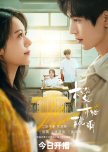
A Surprisingly Deep and Emotional Journey
You Don’t Need to Be Perfect to Be LovedYou don’t need to be perfect to be with the person you love. When you meet the one, their presence alone can make your flaws feel seen, accepted—and ultimately, healed.
I started this series with low expectations, assuming it would be another light, predictable youth romance drama. What caught my interest was the male lead, whom I’ve only seen in period dramas. I was curious to see how his performance would translate in a modern setting. This was also my first time seeing the female lead and most of the supporting cast—and I must say, the FL truly shines here. She commands the screen with strength and subtlety.
What sets this drama apart is its fresh take on the “prince and commoner” trope. For once, it’s the heroine who rescues the prince—not the other way around. On the surface, the male lead has it all: wealth, looks, intelligence. But behind the charm is a man running from the shadows of his past—burdens, secrets, and emotional scars he can’t escape.
The story unfolds slowly, and at times the pacing may test your patience. But the payoff is worth it. The pivotal scene for me was their reunion in Hong Kong. Everything came together there—the setting, cinematography, musical scoring, and screenplay were perfectly aligned. It was raw, moving, and unforgettable. That moment encapsulated the glaring contrast between the character’s public image and his private struggles. We witness the painful descent of someone once on a pedestal, now completely shattered. And yet, that fall carries deep emotional weight and meaning.
Some say beauty is a curse—but for him, it’s his brilliant mind that’s both a gift and a burden. His intelligence, once a shield, becomes a source of pain. He thought he had all the answers—but life proved otherwise. It takes his “princess” to help him face reality, and in doing so, find redemption.
The final episodes are the true highlight. The acting, especially during the emotional climax, is powerful and deeply affecting. If you stick with it, the journey is rewarding—messy, emotional, at times frustrating, but honest and real.
Was this review helpful to you?
This review may contain spoilers
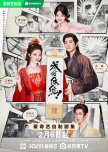
A Beautiful Pairing in a Flawed but Interesting Series
I was genuinely excited to watch this series because of this particular pairing. I’m not usually a big fan of transmigration plots, but the strong chemistry between the leads and the powerhouse cast convinced me to give it a try.Overall, the story has a unique concept and could have been incredibly engaging — but unfortunately, the execution fell short. The editing felt uneven, and the pacing of how the story unfolded made it hard to stay fully invested. I struggled through several parts and often felt tempted to skip scenes. The prologue of Zang Shan, which I know is meant to be important, was difficult to follow and connect with since it appeared only in scattered episodes. There were also many conflicts, villains, and side characters introduced throughout the story, to the point that I forgot some of them by the time the ending came.
There were moments when I found myself browsing on my phone while watching, which to me is a sign that some scenes could definitely have been trimmed or tightened.
But despite its weaknesses, the casting is truly the saving grace of this series. Every actor — even the supporting ones — delivered credible and compelling performances.
* The actor who played Prince Duan was outstanding: charming on the surface yet convincingly villainous.
* The actress for Xie Yong Er also did a wonderful job.
* And both actors who portrayed the male and female versions of Bei Shu were an absolute delight to watch.
The Main Leads
The biggest joy of this drama is undeniably the main couple. Their chemistry feels natural, warm, and deeply comfortable — like they fully understand their characters and each other. Some of the early comedic scenes felt a bit awkward, but as many great actors say, comedy is one of the hardest genres to master, so that’s understandable.
I’ve always been a fan of Wang Chu Ran — beyond her stunning beauty, she consistently chooses roles that showcase her strengths. I genuinely don’t understand why she receives so much hate simply for being beautiful; if anything, she continues to prove her talent and versatility with every role.
Cheng Lei, however, was the biggest surprise for me. I had only seen him before in The Legend of Female General, where he didn’t stand out as much. But in this series, he delivered a real breakthrough performance. His role required him to portray a wide range of personas — tyrant, cheeky, apathetic, flirty, authoritative, vulnerable, furious — and he transitioned between them effortlessly.
One moment he’s a playful, lovestruck CEO Dan; the next, he becomes a terrifying emperor capable of commanding fear. His emotional control in the scene where Wan Yin goes missing — shifting from a desperate man begging Mr. Bei to save the woman he loves, to an intimidating ruler — was particularly memorable.
And his chemistry with Wang Chu Ran? Off the charts.
WCR has played flirty, vixen-type roles before, but here she truly embodied the character of You Wan Yin — both demonic and angelic, regal yet deeply human. Together, they felt like a genuine married couple, not just romantic leads.
Final Thoughts
Despite the messy execution of the plot, the performances of the main leads: Cheng Lei and Wang Chu Ran — alongside the strong supporting cast — made the series worth watching. I would love to see these two reunited in another project, preferably one with stronger writing and direction that can fully showcase their incredible acting range.
Was this review helpful to you?
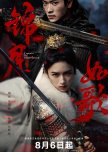
A Drama That Redefines Strength and Subtlety
I’m not usually a fan of action dramas, but Legend of the Female General is an exception—and honestly, it deserves to be called a classic.The story flows beautifully, with unexpected twists that keep you hooked and conflicts that resolve in clever, satisfying ways. Beyond the gripping plot, everything from the OST, production, costumes, and musical scoring to the acting and action scenes is superb. I never felt bored—in fact, the deeper I got into the series, the harder it was to stop watching.
This was my first time seeing the male lead, and I couldn’t help but notice his resemblance to Xu Kai. He impressed me with his control over his performance and the subtlety of his emotions. The female lead, on the other hand, is already familiar to me from her past works. I can see her steadily evolving as an actress—the way she carries herself, both in strength and in grace, makes her convincing as a powerful warrior. Her growth in choosing strong roles and delivering them with nuance makes me excited to see more of her future projects.
Legend of the Female General is the kind of drama that lingers even after you finish it—an unforgettable blend of story, performance, and artistry.
Was this review helpful to you?
This review may contain spoilers
A Slow Burn That Glows Brighter With Every Episode
I’ve seen reviews calling the story “slow,” or saying it takes too long before the leads come together—but that deliberate pace is exactly what makes Shine On Me extraordinary.It’s a romance that simmers, layering small gestures, missed moments, and quiet emotional turns until the relationship feels not only earned, but inevitable.
Even more impressive is how faithfully—and intelligently—the drama adapts the novel. The added side plots deepen the world, expand the emotional stakes, and give every character a sense of purpose and history. While the final episode felt rushed (and certain scenes like Yusen’s cousin’s airport cameo or the slightly stiff moments with their daughter could have used more refinement), these are small cracks in an otherwise incredibly polished work.
This drama rewards viewers who pay attention—the ones who notice the details, the subtext, the cultural symbolism.
In Shine On Me, small things become everything.
A Triangle Where Both Men Are Deeply Lovable—and Deeply Flawed
Song Weilong (Lin Yusen) and Zhang Xincheng (Zhuang Xu) create one of the rare love triangles where both men are written with depth, nuance, and emotional credibility.
Lin Yusen — A Forest Full of Light, Longing, and Demons
Portrayed by Song Weilong, Lin Yusen immediately stands out as a male lead whose flaws are rooted not in arrogance, but in vulnerability.
He comes from privilege yet walks a self-chosen path of service and humility. His love for Nie Xiguang is intense, devoted, and—at times—painfully insecure. He loves too deeply, too quickly, with a heart too full of fear.
But what makes him unforgettable is how the show balances his emotional wounds with scenes of pure comedic brilliance—his shameless, impatient, determined attempts to get close to Xiguang.
Lin Yusen’s “Shameless Pursuit” — My Favorite Part of the Entire Drama
These scenes are iconic:
- From Episode 8: Turning Xiguang’s hospital room into the doctors’ meeting room, bringing her daily breakfast, using his friend who is the attending physician to Xiguann insisting she join their meals, hovering with transparent eagerness.
- Bringing work to her hospital bedside, pretending it’s “for her recovery,” but clearly just wanting to stay near her.
- Unofficially adding her to a wedding invitation, and casually dropping hints about future weddings and future bosses (the audacity!).
- Inviting himself to hotel breakfast just so she won’t have to eat alone.
- Organizing a dinner with colleagues and ‘accidentally’ forgetting his wallet, forcing a not-so-subtle moment of connection.
- Becoming a temporary ski instructor at her family holiday—just to be near her and know her family
- Volunteering to play her sick grandfather in a call (one of the funniest, most absurdly adorable scenes in modern C-drama).
These moments are comedy gold, executed with such charm that you can’t help but adore him.
He is clingy, transparent, impatient—and completely endearing.
His shamelessness is not predatory; it’s a wounded man’s earnest attempt to grasp at warmth after years of self-inflicted coldness.
Zhuang Xu — The Brilliant Ideal Who Waited Too Long
Zhuang Xu rises from poverty, building himself into a high-achieving, intelligent, admirable man. He is: capable, steady, quietly charismatic, the classic “ideal guy”
But emotionally? He is closed-off, hesitant, and too slow to confront his feelings. He also got too much pride and doesn't want to accept any "debt" or help. His timing is tragic, not malicious.
Why Their Parallelism Works
Both men are: smart, tall and handsome, successful, capable of deep love But they are flawed in opposite ways: Yusen loves too fiercely, too fast. Zhuang Xu loves too late, too guarded. Their contrast doesn’t divide the story—it enriches it.
Nie Xiguang — The Gentle Dawn Who Warms Everyone
Zhao Jinmai shines as Nie Xiguang: simple, frugal, grounded, and quietly dazzling. Despite being a wealthy heiress, she lives humbly, cherishing sincerity over status. Her warmth with her cousin and grandparents, the contrast between her parents, and her calm resilience all shape her into the perfect emotional counterpart to Lin Yusen.
Her character name says it all:
曦 (xī) = morning sunlight
光 (guāng) = light
She is literally the light that melts his forest of shadows.
Symbolism That Elevates the Entire Story
The show cleverly weaves Chinese culture, language, and visual metaphors into modern life.
1. Mandarin Peel Scene — “Just” (仅 / 只是) and the Hidden Wordplay with ‘Lin’ (林)
In the hospital scene, Xiguang writes “just” using a mandarin peel. The word “just” in Chinese can be:
仅 (jǐn)
只是 (zhǐshì)
or the radical/structure connected to 林 (lín), Yusen’s surname
Why this is brilliant:
- A “Just” Encounter
She pretends he is “just” a doctor at that moment, masking her deeper feelings.
- A Pun on His Name
The strokes formed by the peel resemble the structure in 林 (Lin)—
a playful, silent way of calling him by name without speaking it.
- Untying His Knot
She unknowingly soothes his trauma as a former neurosurgeon who lost everything. Her presence becomes the “just right” catalyst for healing. It is the quietest yet most intimate shift in their relationship.
2. The Blue Ribbon — Mourning His Past Self
Traditionally a symbol of family mourning, the blue ribbon becomes Yusen’s self-imposed shroud: mourning the death of his identity as a surgeon, carrying the unresolved grief of the accident, living with a constant sense of guilt.
When he texts Xiguang from the ambulance while still wearing the ribbon, it represents: emotional rebirth, letting go of trauma, choosing connection over fear, trusting her with his vulnerabilities. This is the moment he stops running from his past.
3. The Fireworks — “You Are Worth It”
In freezing weather dark night, she lights the night for him: healing his painful childhood, becoming his source of joy and light, giving him warmth where he had only cold memories, marking a new beginning. He keeps the last firework as a precious “souvenir”—his way of cherishing her love.
4. The Egg Scene — Two Families Becoming One
Buying different eggs symbolizes: blending two families, valuing the simplicity of shared daily life, taking the first step into a future filled with small, ordinary happiness. It’s domestic, gentle, and quietly meaningful.
5. Red Beans (红豆 / 相思豆) — The Soul-Deep Confession
In Episode 22, Xiguang replaces Yusen’s rehabilitation soybeans with red beans, known in Chinese culture as 相思豆 (love seeds). They symbolize: yearning, devotion, unspoken longing, mutual love, the promise of returning affection. So when Xiguang chooses red beans—not white, not neutral, but love seeds—her gesture becomes a confession deeper than words could ever express.
But the true emotional climax comes when she asks him to hold out his palm so she can place the final red bean into his hand.
That single moment signifies:
“I’m giving you all of my heart.”
“There is no part of my feelings hidden from you.”
“Nothing is held back, nothing is left out.”
“Your once-unreturned love is now fully, completely answered.”
It is intimate, deliberate, and soul-baring.
By placing the last red bean in his palm, she is not just giving him a seed— she is giving him certainty. The certainty he has craved, feared, and longed for since the day he fell for her. It is the moment Lin Yusen’s deepest insecurity finally dissolves, replaced by the quiet, profound understanding that: She chooses him—wholly, willingly, and without reservation. This is one of the most emotionally charged confessions in the entire drama. She answers his fears, his clinginess, his inner demons—without speaking a single word. It is tender, powerful, and deeply rooted in Chinese culture.
Their Names & Solar PV Business—Hidden Symbolism
Their names are intentionally crafted:
Nie Xiguang (聂曦光) = sunlight at dawn
Lin Yusen (林屿森) = forest, shelter, quiet depth
Sunlight + Forest = the relationship they build.
Even their solar photovoltaic business mirrors this: Xiguang is the sunlight. Yusen is the structure that supports it. She gives warmth. He gives grounding. Together, they generate something powerful.
This level of symbolism is rare in modern C-dramas.
Musical Scoring — Magical, Modern, and Surprisingly International
The OST elevates everything. The use of English songs is particularly striking—they make fluffy moments sweeter, emotional moments deeper, and romantic scenes achingly atmospheric. The music makes everything feel cinematic, like you’re watching memories instead of scenes.
Acting Performances
Zhao Jinmai (Nie Xiguang) is outstanding—expressive, natural, comedic, and mature, bringing warmth and depth to every scene.
Song Weilong (Lin Yusen) shines as a young actor portraying a wounded, mature man, though a few highly dramatic scenes still felt underplayed.
Zhang Xincheng (Zhuang Xu) perfectly embodies the emotionally restrained, late-blooming contender, balancing charm and subtlety.
Finn Hann (Jiang Rui) is a true gem in the series, with powerful chemistry with Xiguang; his presence is a joy to watch, adding both humor and heart.
Final Thoughts — A Warm, Thoughtful, Healing Romance
Shine On Me doesn’t rush. It doesn’t spoon-feed. It takes its time, trusts its symbolism, and lets its characters breathe naturally.
It is:
- beautifully shot
- quietly emotional
- culturally rich
- full of meaningful small moments
- deeply rewatchable
A gem for anyone who loves slow-burn romance with thoughtful storytelling, emotional depth and exquisite symbolism.
Highly, highly recommended.
Was this review helpful to you?
A Standout Masterpiece: The Breakthrough Power of Pursuit of Jade
I have watched Chinese dramas for many years, and Pursuit of Jade stands out as one of the most refined and emotionally resonant productions in recent memory. The narrative is tightly constructed—every episode serves the story, deepening the mystery behind each character while maintaining strong pacing. The series balances humour, romance, family, political intrigue, action, and personal growth with remarkable precision.At the heart of the story is the extraordinary journey of the female lead. Her rise from hardship to influence resembles the strength and emotional depth found in the heroines of Judith McNaught classic novels. She is not carried by beauty or privilege; she survives through intelligence, loyalty, strategy, and an unwavering sense of responsibility. Alongside her closest companion—two orphaned girls fighting for dignity and stability—their evolution from poverty to power forms the emotional core of the show.
Breakthrough Performance of the Female Lead
The female lead is the undeniable gem of this series. Her performance is a breakthrough—powerful, expressive, and deeply affecting. Her large, emotive eyes make every scene hit with precision, especially when she cries or confronts danger. She transitions effortlessly between cute, fierce, tender, and commanding. That duality is her greatest strength, and she embodies it with authenticity.
Her portrayal feels grounded and human. She is a protector, a strategist, a friend, a warrior, and a woman capable of deep pain and equally deep courage. It is surprising that only the male lead is widely trending because her performance is equally deserving—if not more so—of attention. She anchors the emotional weight of the entire narrative.
Acting and Cast Chemistry
The series benefits from a strong ensemble. Many cast members were unfamiliar to me, which made the viewing experience refreshing and unfiltered by prior expectations. Their acting is compelling, and their chemistry—particularly within Lian’an—is exceptional. The bonds, conflicts, and loyalty within this community feel authentic, making it easy for viewers to fall in love with the characters.
Assessment of the Male Lead
Having seen the male lead’s earlier works, I can see clear growth; however, some of his acting patterns from previous roles remain noticeable. His character—a formidable god of war and marquis who does not bend even to the emperor’s decree, yet later adapts to rural life—is still lacking and requires both authority and emotional nuance.
While he delivers strong moments, the portrayal occasionally lacks the consistency expected of a high-ranking military figure. The commanding presence and gravitas typical of such a role sometimes feel muted. His most convincing emotional performance appears in the scene where the female lead is injured during the ambush by business rivals. In that moment, the shift from controlled strength to raw fear and anguish is impactful and demonstrates what he is capable of.
When compared to his similar role in Story of Running Palace, certain scenes feel familiar rather than fully transformed. Though his performance remains solid and generally effective, it does not reach the breakthrough level achieved by the female lead.
Cinematography, Setting, and Musical Score
Filming in an actual rural village gives the series a level of authenticity that enhances the story’s tone. The setting, though modest and remote, is captured beautifully. The cinematography strikes a balance between realism and aesthetic appeal.
The musical scoring also deserves acknowledgment. The soundtrack heightens emotional peaks and accentuates tension, romance, and key turning points without overwhelming the viewer. Certain scenes achieve their full impact because of the thoughtful pairing of visuals and music.
The action sequences are sharply choreographed—immersive, tight, and genuinely breath-holding at times. They contribute significantly to the pace and emotional intensity of the narrative.
Final Assessment
Pursuit of Jade is a standout series that excels in narrative structure, acting, character chemistry, atmosphere, and technical execution. The cast and production team deliver a work that resonates deeply with viewers. It is no surprise that friends who initially dismissed the idea of watching a Chinese drama were drawn in after hearing about this series—and are now slowly exploring more titles.
This is a production the entire team can be proud of. A series that not only entertains but leaves a lasting impression—emotionally rich, visually compelling, and led by a female protagonist whose breakthrough performance elevates the entire story.
Was this review helpful to you?


