
 News






This review may contain spoilers
The verdict? Worth every minute.
I'll be honest: I started The Prosecutor's Proposal expecting a fairly typical legal BL. Instead, what I got was a surprisingly engaging blend of crime thriller, mystery, slow-burn romance, and emotional healing.The legal aspect is certainly there, but this drama is much more interested in the people behind the investigations than in the courtroom itself. At the heart of the story are two men whose lives have been connected by a tragedy that happened fifteen years earlier. One has spent his entire life carrying the stigma of being "the murderer's son," while the other grew up as "the victim's son." Watching these two slowly uncover the truth together while confronting their own past is what makes the story so compelling.
One thing I really appreciated is that the mystery actually feels like... a mystery.
Every new piece of evidence raises more questions than answers, and the drama does a good job of keeping the audience guessing without becoming unnecessarily convoluted. The investigation surrounding the old casino murder, the corruption within the prosecution, and the hidden connections between the characters all come together in a way that kept me genuinely invested until the very end.
The romance is another pleasant surprise.
The relationship between Joo Tae Seon and Lee Chae Ha is built on trust that develops little by little. Their chemistry isn't loud or overly dramatic; it's found in stolen glances, quiet conversations, and the gradual realization that the one person they should probably trust the least is becoming the one they rely on the most. Neither of them is emotionally available at the beginning of the story. They carry years of trauma, resentment, and guilt, and the drama never asks us to forget that. Instead, it allows them to slowly break down the walls they've built around themselves. Their romance never feels like an interruption to the thriller—it becomes another layer of the story.
Park Si Woo and Yoon Do Gun have fantastic chemistry, but beyond that, they both understand when to hold back. Some of the strongest scenes don't rely on dialogue at all. A simple look or a moment of silence often says far more than an emotional speech ever could. Their performances have been one of the most consistently praised aspects of the series, and it's easy to understand why.
Considering that each episode runs for only around twenty-five minutes, I was also impressed by how much story the drama manages to tell. It rarely wastes time, every episode pushes both the mystery and the characters forward, and the pacing makes it incredibly easy to binge. If anything, my biggest complaint is that I simply wanted more.
Was this review helpful to you?

This review may contain spoilers
Well, THAT was an unexpected treat!
I have to be honest, I started it because its premise caught my attention, without having particularly high expectations. A young woman offered as a sacrifice to a dragon lord, a powerful mythical being who has been sealed away, and an unexpected alliance that slowly turns into something more? It sounded like an entertaining setup, so I decided to give it a try. I wasn't expecting anything particularly extraordinary, but I have to say that I was pleasantly surprised!The story follows Yue Wangshu, a young woman from a military family whose circumstances lead her to become a sacrifice to the Dragon Abyss. Things take an unexpected turn when she accidentally releases Li Zhi, the Dragon Lord who has been sealed away for a long time. Their first encounter is hardly a friendly one, but circumstances soon bring them together. They strike a bargain: Wangshu needs his power to fight back against the schemes and injustices surrounding her family, while Li Zhi needs her help to suppress the mysterious Li Fire. What begins as a relationship built on necessity and mutual benefit gradually develops into a much deeper connection.
I really enjoyed this premise and, more importantly, the way the story unfolds. There are family intrigues, political schemes, supernatural elements, revenge and, of course, romance. It has all the ingredients of an entertaining historical fantasy, but it never becomes unnecessarily complicated. The plot moves at a wonderfully brisk pace, introducing conflicts and developments without spending too much time on things that don't really need it. There's always something happening, and I found it incredibly easy to keep watching.
One of the most enjoyable aspects is the dynamic between the two leads. Li Zhi is initially presented as a powerful and rather intimidating Dragon Lord, someone unfamiliar with human emotions and the ordinary world around him. Watching him gradually discover what it means to care for another person is genuinely entertaining. His interactions with Wangshu bring some of the funniest and sweetest moments in the drama, especially as he begins to understand human relationships and affection. Wangshu, meanwhile, is not simply a helpless heroine waiting to be rescued. She has her own struggles, motivations and determination, and I appreciated that she can stand her ground and hold her own.
Of course, this isn't a drama I'd describe as particularly complex or groundbreaking, and I don't think it needs to be. Its strength lies in knowing exactly what it wants to offer: an engaging fantasy romance, an entertaining storyline and two protagonists whose chemistry makes the whole experience even better. Sometimes, that's more than enough!
Was this review helpful to you?

This review may contain spoilers
At the center of the story is Li Si, also known as Young Master Qingyang, who deliberately infiltrates the Divine Constable Bureau to uncover the truth behind the mysterious death of the Fourth Prince. His investigation brings him into contact with Bai Zhenzhu, an exceptionally talented forensic examiner, and Meng Rui, a skilled martial artist known as the Ghost Constable. Together, they investigate a series of bizarre cases that gradually reveal a much larger conspiracy involving the remnants of the fallen kingdom of Liluo and its mysterious arts.What I particularly appreciate about this premise is that the story offers much more than a simple question of who committed a crime. Every investigation opens the door to another mystery, and the truth is often far more complicated than it initially appears. And honestly, that is exactly the kind of historical drama I enjoy.
Li Si is intelligent, observant and strategic. His decision to infiltrate the Divine Constable Bureau is not accidental, and his involvement in the investigations is connected to a much more personal search for the truth. He has his own reasons for being there, and that gives his actions an additional layer of meaning. He isn't simply a detective who follows clues until the mystery is solved. His personal history is intertwined with the larger conspiracy, which means that every new discovery could bring him closer to the truth about the past. That also creates an interesting tension between his public identity and his private motivations. He must navigate the world around him carefully, deciding what to reveal, whom to trust and when to keep his thoughts to himself.
Bai Zhenzhu is another important reason why the central team works so well. As an accomplished forensic examiner, she brings a different kind of intelligence to the investigations. While martial arts and strategic thinking can help the characters survive dangerous situations, forensic expertise allows them to examine the evidence and understand what actually happened. Bai Zhenzhu has a clear professional identity, and her expertise gives her an important place within the investigative team. She is not simply there to accompany the male characters or react to their decisions. Her knowledge and observations are part of what makes the investigations possible. A clue that seems insignificant to one person might become essential when someone else knows how to interpret it. An apparent contradiction may reveal something important when the evidence is examined from another angle.
Then we have Meng Rui, the Ghost Constable. He brings a different energy to the group. While Li Si relies heavily on his intelligence and strategic thinking, Meng Rui is a formidable martial artist whose skills are invaluable when an investigation becomes physically dangerous. But what makes him more interesting than a simple action-oriented character is the personal motivation behind his involvement. His history is connected to a deep desire for revenge, which adds another emotional dimension to his role. Meng Rui also provides a useful contrast to Li Si. They have different strengths and different ways of approaching problems, which makes their partnership more interesting than simply having two characters who perform the same function.
And this is one of the things I appreciate about the central trio: each member has something different to contribute.
Li Si brings intelligence and a personal connection to the central mystery. Bai Zhenzhu provides forensic expertise. Meng Rui contributes martial arts skills and his own complicated motivations. Together, they form a team whose strengths complement one another.
One of the strongest aspects of the story is the connection between the investigations and the political conflict surrounding Liluo. At first, the cases might seem like separate incidents involving different victims, locations and circumstances. However, as the characters continue investigating, the possibility of a larger plan becomes increasingly important. The remnants of a fallen kingdom are attempting to restore their former power, and the strange methods used in the cases are connected to that broader ambition. This means that the protagonists are not merely solving crimes; they are gradually uncovering a threat with consequences for the entire dynasty.
A mystery can be entertaining on its own, but discovering that it is part of a much larger scheme gives the story a different level of tension. Suddenly, the question is no longer just who is responsible for a particular incident. It becomes a question of who is manipulating events, what they hope to achieve and how many people may be involved.
For me, The Shadow Punisher is the kind of drama that reminds me why I enjoy historical mysteries in the first place. I love trying to figure out what is really happening, watching intelligent characters connect the clues and discovering how seemingly unrelated events can lead to a much bigger revelation.
And when a drama gives me an interesting mystery, a compelling protagonist and a team worth rooting for, it already has plenty going for it.
Sometimes the strangest cases hide the darkest secrets, and the truth is always more dangerous than it first appears.
Was this review helpful to you?
This review may contain spoilers
THIS is how you write a female lead
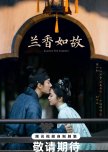
This is is exactly the kind of historical drama I have been waiting for.And I think the biggest compliment I can give it is this: finally, a drama where the romance is not the entire story.
Don't get me wrong, I enjoyed the relationship between Xu Lanxiang and Lin Jinqi. But what made me love this drama so much is that their romance never completely takes over the narrative. There is an entire world happening around them: family, social status, injustice, politics, survival, loyalty, ambition, revenge, and, most importantly, Lanxiang's own journey toward becoming the person she wants to be.
The story begins with Shen Jialan, the granddaughter of a powerful family, whose entire life collapses when her family is falsely accused of treason. To survive, she takes on the identity of Xu Lanxiang, the deceased daughter of servants who once owed a debt of gratitude to her mother, and enters the Lin household as a low-ranking maid. The cruel irony is that the Lin family is also the family of her former fiancé, Lin Jinqi.
It is a classic "from riches to rags" setup, but what I really appreciated is that the drama doesn't reduce Lanxiang to a poor woman waiting for a man to rescue her.
Lanxiang saves herself.
She is intelligent, observant, resilient and, above all, incredibly determined. She understands the limitations imposed on her by her new identity, but she refuses to let those limitations define her. She learns how to survive inside a completely different social world, how to deal with people who have more power than her, and how to recognize opportunities without losing herself in the process.
And watching her gradually regain control over her own life is far more satisfying to me than simply watching her fall in love.Lanxiang is constantly moving against circumstances that should have completely destroyed her. Every time the story seems to tell her that she has no choice, she finds another way forward.
Lanxiang experiences the world from the bottom of the social hierarchy, and that changes the way she sees people. She encounters kindness, cruelty, hypocrisy and genuine loyalty. More importantly, she learns that status does not necessarily determine someone's worth.
The Lin household itself becomes an important part of the story, with its own relationships, conflicts, expectations and power dynamics. Lanxiang has to navigate all of this while keeping her true identity hidden, and that creates plenty of tension without needing the romance to carry every episode.
The romance is important, but it is only one piece of the puzzle.
And honestly, thank you.
The relationship between Lanxiang and Lin Jinqi works better because the drama allows both characters to have lives outside of each other. Their relationship develops alongside everything else that is happening, rather than replacing it.
I also really liked that their relationship is not simply about instant attraction.
There is history between them, but their circumstances completely change the way they see one another. Jinqi has to confront the reality of Lanxiang's situation, while Lanxiang has to decide how much she can trust him and what she actually wants from her relationship with him.
And then we have the female characters, which deserve a special mention.
One of the things I appreciated most about this drama is that the women don't simply exist to compete for the male lead.
Their relationships, choices and personal struggles have weight of their own. Characters such as Zhao Xingtang add another layer to the story and help make the world feel much bigger than the central couple. The drama is interested in how women survive within a society that constantly tells them what their place should be.
Overall, Against the Current was a wonderful surprise for me. It has romance, but it also has family drama, social commentary, political intrigue, personal growth, revenge, survival and some genuinely interesting characters.
Finally, a historical drama where the romance is part of the journey rather than the destination.
And that is probably why I enjoyed it so much.
I came for the costume drama and the romance.
I stayed for Lanxiang.
And by the end, I cared much more about watching this woman take back control of her own life than I did about simply seeing her get the man.
Was this review helpful to you?
This review may contain spoilers
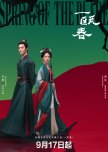
The story follows Xie Qing Yuan, a woman who returns to the Xie household carrying both her own secrets and a desire to uncover the truth surrounding her mother's death. Along the way, she becomes entangled with Shen Run, a man with his own hidden identity, motives and complicated relationship with the Xie family. What starts as a story about revenge gradually expands into family conflicts, political schemes, old grudges and secrets that have been buried for years. And I have to say, the first part of the drama handled all of this really well, the story immediately gives you a reason to keep watching, and most importantly, Xu Kai and Zhou Ye are absolutely fantastic together. Their chemistry is easily one of the biggest strengths of the drama, and honestly, I could have watched these two interact for much longer.
There is something very satisfying about the way the story initially builds its characters and relationships. Instead of throwing every secret at us immediately, takes its time establishing the complicated dynamics inside the Xie family.
I especially liked Xie Qing Yuan as a protagonist. She is intelligent, determined and capable of standing up for herself, but she is not written as someone who always has the perfect answer. She makes mistakes, gets herself into complicated situations and sometimes has to rely on other people. That made her feel much more human to me.
And then there is Shen Run.
Xu Kai is really good here. He can be intimidating when necessary, but he also has softer moments that make his relationship with Qing Yuan much more interesting. Xu Kai and Zhou Ye have the kind of chemistry where even relatively simple scenes become interesting because of the way they look at each other or react to one another. Their relationship doesn't need constant dramatic declarations to work. There is a natural tension between them that makes you want to see more.
Unfortunately, this is where I have to talk about my biggest problem with the drama.
The last five episodes.
Why do we always do this?
After spending so much time building the story, the characters and all these complicated relationships, the final stretch suddenly feels like someone looked at the episode count and said, “Okay, guys, we have five episodes left. FIX EVERYTHING.
And that is exactly what it feels like.
Things start happening very quickly. Plot points that could have been given more time are resolved almost immediately, characters make important decisions and suddenly we are jumping from one major event to another. Instead of allowing the story to breathe and giving the emotional moments the weight they deserve, the drama seems to be in a hurry to finish everything. This was particularly frustrating because the beginning had been so carefully paced.
I can see the drama it could have been.
The ingredients were there. A good revenge story, complicated family relationships, political intrigue, strong leads, gorgeous visuals and, most importantly, a fantastic central couple.
Would I have preferred a few more episodes? Absolutely.
Would I still watch these two together again? Without hesitation.
Was this review helpful to you?

This review may contain spoilers
This was insane and I LOVED it
ABO Desire is one of those dramas that is difficult to explain without making it sound completely insane. We have a near-future world shaped by a virus that created Alphas, Betas and Omegas, plus the rare and particularly dangerous Enigma. Add secret identities, obsession, manipulation, family drama, mpreg and two men who really should probably make better life choices… and somehow it all works.Hua Yong ... what a character!
He is probably one of the most entertaining red flag I've watched in a BL; he is exactly the kind of character who makes you question whether you should be fascinated, concerned, or both. Elegant, beautiful and seemingly fragile, Hua Yong initially presents himself as an Omega who needs protection. Except… that is very much not the whole story. Watching his carefully constructed image slowly fall apart is one of the most entertaining parts of the drama. Hua Yong can switch from vulnerable and almost innocent to terrifyingly calculating with just a look. He is manipulative, obsessive and definitely not what anyone would call a healthy romantic partner, but he is also incredibly charismatic. I kept waiting to see what he would do next, which made his scenes some of the most addictive moments of the drama. His relationship with Sheng Shao You is equally complicated. Their dynamic constantly plays with the question of who is actually in control. At first, it seems obvious who has the power, but the more we learn about Hua Yong, the more that balance changes. Their relationship is definitely not a model of healthy communication, but that is also what makes it so interesting to watch. There is obsession, attraction, manipulation and genuine emotion all mixed together, creating a romance that is much darker and messier than it initially appears.
There are plenty of dramatic moments, but there is also a surprisingly good amount of comedy. Hua Yong's contrast between his innocent facade and the person he really is creates some genuinely funny situations. Sometimes I wasn't even sure whether I was supposed to be shocked or laughing, and honestly, I enjoyed both reactions.
The second couple, Gao Tu and Shen Wen Lang, deserves a special mention because their story is probably the part that frustrated me the most. Their relationship has plenty of emotional potential: hidden feelings, years of misunderstanding, trauma and the huge problem of Shen Wen Lang's attitude toward Omegas. Gao Tu's story in particular made me want much more from them.
Now, let's talk about the elephant in the room: the ending. Or, more accurately: the lack of time the ending was given.
I don't think the series needed a different conclusion, but it needed more episodes to get there. The biggest victim is obviously Gao Tu and Shen Wen Lang, but even the broader emotional resolution feels compressed compared with everything the drama spends time building earlier.
It's especially frustrating because the story had already invested so much time in establishing the characters' emotional baggage.
Then suddenly we're expected to accept that certain conflicts have been resolved because… well, we're running out of episodes.
Overall, ABO Desire is messy, dramatic, occasionally ridiculous and absolutely addictive. It definitely has flaws, especially when it comes to pacing and the amount of time given to some of its characters, but I was entertained throughout.
It is not a drama I would recommend to someone looking for a realistic or particularly healthy romance. But if you like morally gray characters, obsessive romance, complicated power dynamics, Omegaverse, beautiful men making terrible decisions and dramas that occasionally make you stare at the screen thinking “WHAT AM I WATCHING?”, then this is definitely worth trying.
Was this review helpful to you?

After Moving Seats, the Boy Behind Me Has a Crush on Me
0 people found this review helpful
This review may contain spoilers
Cute, Simple, and Just What I Needed
I honestly didn't know what to expect from this drama.Not only because of the title — which already tells you pretty much everything that is going to happen 😂 — but because this was actually my first Japanese BL. So I went into it with absolutely no idea what kind of experience I was going to have.
And in the end, I think this was probably the perfect kind of drama for me to start with.
It's not complicated, it's not overly dramatic, it's simply a cute, light and very easy-to-watch school romance, and sometimes that's exactly what you need.
The story begins after a classroom seat change puts quiet, rather introverted Mayama Har in front of Asamiya Kosei, one of the most popular and handsome boys in the class.
Then Mayama finds a confession written on a worksheet:
“I like you.”
Naturally, he assumes there has been some kind of mistake. Because why on earth would someone like Asamiya be interested in him? Except… there is no mistake.
Asamiya really does like him.
And apparently, he has liked him for quite some time. From there, the drama basically becomes a very cute exercise in watching one boy trying to understand why someone could possibly like him, while the other has absolutely no problem making his feelings known.
And honestly? I had fun watching them figure it out.
Asamiya, let's talk about him.
Once he decides that he likes Mayama, he basically goes all in.
He waits for him.
He finds excuses to be around him.
He tells him what he likes about him.
He makes his feelings very, VERY clear.
What makes Asamiya's personality work, though, is Mayama. He isn't cold. He's just inexperienced and genuinely doesn't know what to do with this sudden amount of attention.
I actually liked that he doesn't immediately fall head over heels.
He needs time.
He needs to understand his own feelings.
One of the things I appreciated most is that the romance doesn't feel unnecessarily heavy. There aren't endless misunderstandings created simply to stretch the story. There is some hesitation and some emotional uncertainty, obviously, but the overall feeling remains warm. It's about first love.It's about the excitement of realizing that someone likes you.
It's about discovering what it means to like someone back. It's about jealousy, awkwardness, little gestures and those tiny moments that suddenly feel much more important because you're falling for someone.
Maybe this is completely subjective, but I can't imagine having watched this at a better time.
There is something about After Moving Seats that feels very summer.
The school setting.
The young characters.
The uncomplicated romance.
The light comedy.
The feeling that everything is happening for the first time.
It was exactly the kind of drama I needed: light, sweet, funny and uncomplicated. There were moments that genuinely made me laugh, and plenty of others that simply made me smile because the two leads were so cute together.
Was this review helpful to you?

This review may contain spoilers
Funny, messy, and surprisingly deep
I honestly didn't know exactly what to expect from Xiao Fang, but this drama turned out to be such a pleasant surprise.At first glance, it looks like a light rural family drama with a rather chaotic premise: Yang Xiaofang becomes pregnant before marriage, the relationship with Qi Xiaowei falls apart, both families get involved, and suddenly an entire village seems to have an opinion about what she should do with her life.
And yes, there is a LOT of chaos.
Let's start with the comedy, because some scenes genuinely made me laugh.
The whole situation surrounding the two families can become absolutely ridiculous. Everyone has an opinion, everyone thinks they know what is best, everyone is trying to protect their own interests, and somehow every attempt to “solve” the problem only creates another problem.
The village basically becomes its own character.
There is gossip, matchmaking, family arguments, misunderstandings and people getting involved in situations that really aren't their business.
And somehow it works.
I especially enjoyed how the drama doesn't treat this chaos as something completely separate from the more serious themes. Xiaofang is pregnant, unmarried, and suddenly everyone thinks they are entitled to decide what she should do. The result is a lot of funny situations, but also a very interesting look at how much pressure can be placed on a woman simply because society has already decided what her life is supposed to look like.
Xiao Fang is the heart of the story and Wang Yinglu is one of the biggest reasons the drama works.
She has flaws, she makes mistakes, she gets confused and she obviously doesn't have all the answers, but she has a very strong sense of self.
What I appreciated most is that the story doesn't reduce her entire identity to “the pregnant girl.” She is still Xiaofang.
She has dreams, opinions, pride, doubts and, most importantly, the right to decide what she wants her own life to look like.
Instead of simply asking “Who is going to marry Xiaofang?”, the drama gradually turns the question into something much more interesting: “Why does Xiaofang have to define her future through marriage in the first place?”
One of the ideas that really stood out to me is the importance of taking your life back and making your own choices, even when everyone around you thinks they know better.
And I think that's exactly why the story works.
It isn't saying that marriage is bad.
It isn't saying that being alone is automatically better.
It is saying that marriage should be a choice, not a sentence.
And that your value shouldn't depend on whether you have a husband, whether your family approves of you, or whether your life follows the traditional script everyone expected. I really loved that.
Another thing I enjoyed was the family aspect.
There are a lot of characters, and at first it can feel like everyone is connected to everyone else in some complicated way. But that's also part of the charm.
These aren't perfect families.
They argue.
They judge each other.
They carry old grudges.
They worry about appearances.
They make mistakes.
And sometimes they behave absolutely ridiculously.
But underneath all of that, there is affection.
The drama understands that families can be both the people who frustrate you the most and the people who will eventually show up when you need them.
One thing I didn't expect was how much the drama would explore the lives of the people around her.
As Yang Fanyan starts digging deeper into the situation, she discovers that almost everyone around them is carrying some kind of secret, regret or unresolved problem. That gives the story a broader perspective. Xiaofang's pregnancy is the event that starts everything, but it isn't really the whole story.
I also appreciated that the drama doesn't make the romance the ultimate solution to every problem. The drama is more interested in asking what happens to Xiaofang as a person.
I really enjoyed Xiao Fang. It was one of those dramas that I started expecting something fairly simple and ended up getting much more from. It's funny without being empty. It's emotional without constantly trying to manipulate you. It's a family drama, but it doesn't forget the individual people inside the family.
And most importantly, I really liked what it had to say about women, marriage and the right to choose your own life.
Xiao Fang may look like a chaotic little rural marriage comedy at first, but underneath all the gossip, matchmaking and family madness, it has a surprisingly warm and thoughtful heart.
Was this review helpful to you?

This review may contain spoilers
Cute, Chaotic, and Completely Addictive
This is a sweet, funny and incredibly easy-to-watch university BL that doesn't try to reinvent the genre. Instead, it takes a familiar setup and fills it with enough charm, chaos and genuinely lovable characters to make it work.The story follows Duang, an energetic and hopelessly enthusiastic university student who immediately falls for Qin, a popular but incredibly reserved music student. While Duang has absolutely no intention of hiding his feelings, Qin is basically the human equivalent of a locked door. So naturally, Duang decides that the only reasonable thing to do is to keep knocking until Qin lets him in. And honestly? Watching him try is half the fun.
Duang could have been an extremely annoying character. He is loud, dramatic, impulsive, ridiculously optimistic and completely incapable of hiding how he feels about Qin. But somehow, it works. His exaggerated reactions, silly plans and endless determination to win Qin over gave the drama most of its comedic energy. Yes, sometimes Duang is a lot. But that's exactly what makes him Duang. And what I appreciated even more is that beneath all the comedy, he's actually a genuinely good person. He's sincere. He's supportive. He's affectionate without being ashamed of it. And most importantly, he doesn't give up on Qin simply because Qin isn't immediately capable of giving him what he wants.
If Duang is sunshine at maximum brightness, Qin is basically a rainy day. He's quiet, guarded and emotionally difficult to read.
At first, it can be tempting to think that he's simply cold or uninterested, but the drama slowly reveals that there is much more going on underneath. Qin has learned to keep people at a distance, and watching those walls gradually come down was one of my favorite parts of the story.
I particularly liked that the drama doesn't suddenly transform him into a completely different person once he falls for Duang.
He's still reserved. He's still cautious. He still struggles with expressing what he feels. But little by little, he starts allowing Duang into his world.
Duang is constantly moving toward Qin, while Qin spends half the drama wondering what on earth to do with this human ray of sunshine who has decided to make him the center of his universe. The contrast between them creates most of the comedy, but it also gives the romance its emotional foundation. Their chemistry isn't based solely on physical attraction.It's in the little things. The looks. The awkward pauses. The moments when Qin starts smiling without realizing it. And, most importantly, the way their relationship gradually becomes less about Duang chasing Qin and more about Qin choosing to let Duang stay.
I genuinely laughed a lot while watching this. The comedy is intentionally exaggerated, with physical humor, dramatic reactions, playful sound effects and Duang's increasingly ridiculous attempts to get closer to Qin.
Some of it is completely absurd. And that's exactly why it works.
Duang's friends are also a huge part of this. Jamie and Pae are basically the supportive friends everyone needs when you're making terrible romantic decisions. They know Duang is probably being ridiculous. They encourage him anyway.
One of the things I appreciated most is how gradually the relationship changes both characters. Duang starts out believing that persistence is enough. Qin starts out believing that keeping people away is safer. Neither of them is completely right.
As they grow closer, Duang learns that loving someone also means understanding their boundaries and their emotional needs.
Qin learns that accepting affection isn't a weakness. Their relationship therefore becomes more than just "sunshine character falls for cold character." They actually make each other better.
Duang With You is sweet, funny, warm and surprisingly comforting.
Sometimes you need to watch a ridiculously enthusiastic guy fall hopelessly in love with a beautiful, emotionally unavailable musician and spend twelve episodes making everyone around him deal with it.
It's cute without being completely empty, funny without taking away from the emotional moments, and romantic without needing to constantly manufacture unnecessary drama.
Was this review helpful to you?

This review may contain spoilers
The story follows Joo Yi-jae and Woo Soo-bin, two first loves who shared the same dream of becoming filmmakers when they were young. Fifteen years later, their lives have taken very different directions. Soo-bin managed to pursue their shared dream and became a successful film director, while Yi-jae gave hers up and settled into a completely different life as a reporter. When they meet again, all the feelings, memories and unresolved issues they left behind start coming back to the surface.Yi-jae was easily the character I connected with the most.
As a teenager, she was passionate and ambitious. She had a very clear idea of what she wanted to do with her life and genuinely believed she would become a filmmaker.
Then life happened.
Fifteen years later, she's still capable, funny and energetic, but there is a sense that something inside her has gone quiet. She has adapted to the life she ended up with rather than actively choosing it.
And I thought that was painfully relatable. Not everyone gets to follow the dream they had when they were seventeen. Sometimes circumstances force you to choose stability over passion, and eventually you become so accustomed to that choice that you stop wondering whether you actually wanted it.
Soo-bin's return forces Yi-jae to confront exactly that. He represents not only her first love, but also the version of herself she left behind.
Woo Soo-bin could easily have been written as the perfect successful first love who comes back to rescue the heroine.
Thankfully, he's not quite that simple. Yes, he achieved the dream.
Yes, he's successful.
And yes, he still loves Yi-jae. But he also carries his own regrets and unresolved feelings about the past.
I liked the fact that his return isn't simply about getting Yi-jae back. He has to learn that loving her doesn't mean deciding what her future should look like. Soo-bin can remind Yi-jae of who she used to be.
He can encourage her. He can support her. But he can't choose her dream for her.
That distinction is important.
As much as I enjoyed Dream to You, I don't think the writing is consistently strong enough for me to rate it higher.
The premise is actually very good, and the emotional foundation is there, but the drama occasionally introduces complications that feel unnecessary. There are moments when the story becomes more dramatic simply because it needs something to happen, rather than because the characters naturally arrived at that point.The middle portion in particular felt less focused to me. When the drama concentrates on Yi-jae, Soo-bin, their shared past and their dreams, it's at its best.
When it starts piling on additional conflicts and twists, some of that emotional focus gets lost.
But even with those flaws, I never regretted watching it.
I liked Yi-jae.
I liked Soo-bin.
I liked their complicated history.
And most importantly, I liked the idea that sometimes what you need isn't someone to save you, but someone who reminds you that you were allowed to want something for yourself in the first place.
Was this review helpful to you?

This review may contain spoilers
All the right ingredients, somehow the wrong recipe
The premise immediately gives you the feeling that there is something bigger going on beneath the surface, and I really liked the atmosphere the drama creates in its early episodes. There is a certain mysterious quality to the story that makes you want to keep watching because you feel like you're slowly getting closer to an answer.And for a while, it works.
Unfortunately, somewhere along the way, the drama started losing me a little.
Not all at once. That's probably what makes it more frustrating.
It wasn't one particular episode where everything suddenly fell apart. Instead, the story gradually became less focused. Things that initially felt intriguing started feeling less meaningful, while new developments were introduced before some of the previous ones had been properly explored.
The biggest problem for me is that the premise had more potential than the actual execution managed to deliver.
I really liked the idea behind the story. I liked the darker atmosphere and the feeling that there were secrets waiting to be uncovered. The drama knows how to create curiosity, particularly in the beginning, and there are moments where the mystery genuinely works. There were several moments where I found myself thinking that the writers were setting up something much bigger than what we eventually got.
And that became increasingly frustrating.
The pacing also didn't help.
Some parts move surprisingly quickly, while others feel like they are taking their time without giving us enough new information to justify it. The result is a drama that can feel both busy and slow at the same time, which is a difficult combination to pull off. There is always something happening, but that doesn't necessarily mean the story is moving forward in a meaningful way.
That said, I don't want to make it sound like I hated the drama, because I didn't.
The atmosphere is probably one of the things that kept me watching. Night Tales has a certain mood that fits its mysterious storyline nicely, and there are scenes where the visual presentation really helps create the feeling that something isn't quite right.
The characters had potential. I wanted to understand them better. I wanted some of their relationships and motivations to have more room to develop. At times, it felt as though the plot was so focused on getting to the next revelation that the characters had to take a back seat.
If the beginning hadn't been so promising, I probably wouldn't have minded the inconsistencies as much. I don't think it was a bad idea. I think it was a good idea that slowly got a little lost.
Was this review helpful to you?

This review may contain spoilers
Please insert chemistry here
On paper, the story had potential.The pacing is deliberately slow, the atmosphere is calm, and the cinematography clearly tries to create something intimate and reflective. But somewhere along the way, the drama forgets that a slow romance still needs one essential ingredient: believable emotional connection.
The chemistry between the two leads was almost nonexistent. Instead of making me root for them, many of their interactions felt awkward, stiff, and surprisingly uncomfortable to watch. Romantic scenes that were clearly meant to be intimate often had the opposite effect—they felt forced, almost as if the actors themselves weren't fully convinced by what they were portraying. Rather than butterflies, I found myself feeling second-hand embarrassment more than once.
I also struggled with the pacing. I have absolutely no problem with slow-burn dramas—in fact, some of my all-time favorites take their time developing the relationship. But there's a difference between slow and static.
Here, entire episodes passed with very little emotional or narrative progression. Characters exchanged long looks, sat together in silence, or had conversations that felt deliberately vague, yet I rarely felt those moments carried enough emotional weight to justify how much screen time they received.
Both protagonists remain emotionally distant for so long that it's difficult to truly understand them or become invested in their journey. Their motivations and inner conflicts never feel fully explored, making it hard to connect with either of them on a deeper level.
Perhaps my disappointment comes from the fact that I could constantly see the potential. The premise wasn't bad. The atmosphere was there. The visual direction was strong. But none of those elements mattered once the emotional core failed to land.
Was this review helpful to you?

This review may contain spoilers
Don't let the flowers fool you.
Historical revenge dramas are nothing new, so I wasn't expecting Blossoms of Power to surprise me as much.At first glance, it follows a familiar formula: betrayal, a second chance at life, palace politics, and a heroine determined to take control of her own destiny. But what makes this drama stand out isn't its premise—it's the way it executes it.
Shen Xihe is easily one of the strongest female leads I've watched this year. She's calm, calculating, and always seems to be three steps ahead of everyone else. What I appreciated most is that her intelligence never feels forced. The drama doesn't constantly tell us she's brilliant—it lets her actions prove it. Whether she's navigating court politics, manipulating her enemies, or protecting the people she cares about, she always remains composed, making every victory feel earned rather than convenient.
Then there's Xiao Huayong. I absolutely loved his character.
Underneath his frail appearance hides someone every bit as intelligent as Shen Xihe, and that's exactly why their relationship works so well. Neither of them exists simply to admire the other. Instead, they challenge each other, trust each other, and slowly build a partnership based on mutual respect. heir conversations often felt more like a game of chess than a romance, and honestly, that's what made their chemistry so enjoyable.
The palace intrigue remains engaging from beginning to end because the balance of power is constantly changing. Alliances shift, loyalties are questioned, and every victory comes with new consequences. Just when I thought I understood where the story was going, another piece of the puzzle would fall into place and completely change the situation. It's the kind of political drama that actually rewards paying attention.
And then there's Bu Shulin and Cui Jinbai.
I genuinely adored them. It's been a while since a second couple managed to steal so much of my attention, but these two completely won me over. Bu Shulin is fearless, straightforward, and refreshingly unconventional. She never tries to fit into the role society expects of her, and that confidence makes her one of the most entertaining characters in the drama. Cui Jinbai, on the other hand, is calm, dependable, and endlessly patient. Together, they create the perfect balance. heir romance doesn't rely on unnecessary misunderstandings or dramatic twists. Instead, it grows through mutual respect, unwavering trust, and countless small moments that gradually bring them closer together. Their playful banter adds a welcome sense of warmth to an otherwise politically heavy story, and every scene they share is simply a joy to watch.
Was this review helpful to you?

This review may contain spoilers
Complex but worth it
I have to admit that Veil of Shadows was not an easy drama to get into. During the first episodes, I often found myself struggling to keep track of all the characters, storylines and hidden motivations. The world is incredibly rich and detailed, but the drama does very little hand-holding. At times, it felt as if I was missing important information, and I wondered whether I would ever be able to connect all the dots.Thankfully, I stuck with it.
What initially felt overwhelming slowly started to make sense, and once the various storylines began connecting with one another, the entire experience became much more enjoyable. Looking back, I actually appreciate how ambitious the writing is. This isn't a drama that relies on simple storytelling. Instead, it asks viewers to pay attention and trust that all the pieces will eventually fall into place. And for the most part, they do.
If there is one thing that immediately stands out about Veil of Shadows, it is how absolutely stunning it looks. The costumes are gorgeous, the sets are beautifully designed, and the cinematography constantly creates images that feel almost dreamlike; every location feels unique and carefully crafted.
The visual effects deserve special praise as well. The supernatural creatures, transformations, and battle sequences are impressive to watch and add a real sense of scale to the story.
The music complements the drama perfectly and helps create its emotional atmosphere. Some scenes would not have had the same impact without the beautiful score playing in the background.
Once I became familiar with the characters and their relationships, I found myself much more invested in their journeys. Beneath all the fantasy elements, the drama explores themes of destiny, sacrifice, loyalty, identity, and love. The emotional core of the story becomes stronger as the series progresses, and many characters reveal layers that are not immediately obvious during the opening episodes. I also appreciated how the drama never takes the easy route. Alliances shift, secrets are revealed, and characters are often forced to make difficult choices. There were several moments where information revealed later completely changed the way I viewed earlier scenes.
It may not be the easiest fantasy series to follow at first, but its intricate storytelling, breathtaking visuals, fantastic soundtrack, and immersive world make the effort worthwhile.
Was this review helpful to you?

What impressed me the most was not necessarily the story itself, because if we are being honest, the relationship at the center of the drama is undeniably toxic in many ways. There are moments filled with manipulation, emotional tension, jealousy, possessiveness, and misunderstandings that would probably be unbearable in real life. However, despite being fully aware of all these problematic aspects, I still found myself completely invested in the relationship. And I think the main reason for that is the chemistry between the two actors. Their interactions carry the entire drama. Even during scenes where the characters are arguing, hurting each other, or making terrible decisions, there is still an intensity between them that feels magnetic. They know how to create tension with very small gestures: a look, a pause during a conversation, the way they stand close to each other without speaking. It never feels flat or forced.
One thing I appreciated a lot is that the drama does not try to present the relationship as perfect or healthy. The characters are flawed, emotionally damaged, and often selfish. Sometimes they hurt each other intentionally, and other times they simply do not know how to communicate properly.
The actors manage to give emotional weight even to scenes that, on paper, might have seemed ordinary. Their chemistry feels natural, and because of that, even the quieter scenes become memorable.
I also think the drama succeeds because it understands exactly what kind of atmosphere it wants to create. There is always this feeling of emotional instability around the characters, as if everything could collapse at any moment. The romance is not soft or comforting most of the time; instead, it is obsessive, emotional, and sometimes painful to watch. But strangely, that is exactly what makes it entertaining.
Of course, the drama is far from perfect. Some scenes are overly dramatic, and there are moments where the toxicity becomes exhausting rather than compelling. However, even with these flaws, I never felt bored.
If someone is looking for a healthy romance with mature communication and emotionally stable characters, this is definitely not the right series. But if you enjoy intense chemistry, emotional tension, messy relationships, and characters who are impossible to fully love or hate, then the drama becomes incredibly addictive.
Was this review helpful to you?


