
 Editorials


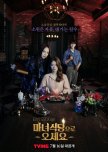
A beautiful hidden gem about wishes, choices, and their price.
The Witch's Diner is one of those dramas that seems deceptively light at first, but gradually reveals much more depth than expected. For me, it is a genuine hidden gem and a drama that deserves far more attention than it has received.
The premise is simple: people come to a mysterious restaurant and are offered the chance to have their wishes granted — but every wish comes with a price. What makes the series work is that these individual stories are not merely isolated episodes. There is a subtle thread connecting them to the main characters, and as the story progresses, the protagonists themselves evolve. This gives the apparently episodic structure a much stronger sense of continuity.
At the center of it all is Hee-ra, a fascinating character who is neither good nor evil. She is not really there to judge people or teach them a moral lesson; she is the medium through which their choices and desires take shape. That moral ambiguity makes her particularly compelling.
The series also has a distinctive atmosphere. It has some similarities with Hotel del Luna in its mysterious, melancholic and slightly fairy-tale-like mood, although Hee-ra is very different from Jang Man-wol. The atmosphere, together with a very fitting soundtrack, gives the drama a unique identity.
Not every story works equally well, and some episodes lean a little too heavily into melodrama. The mother-and-son story in episode 6, for example, felt somewhat excessive to me. But these are relatively minor flaws compared with what the series gets right.
The real theme running through the drama is the price of desire: getting what you want does not necessarily mean getting what you expected, and every choice has consequences. The series explores this idea without becoming overly preachy, allowing the characters and their choices to speak for themselves.
The final episodes were particularly satisfying on a rewatch. I initially worried that the ending might feel rushed, but watching the series again made me appreciate how well the different storylines and character arcs are actually brought together.
The Witch's Diner may not be a perfect drama, but it has atmosphere, imagination, memorable characters and a surprisingly thoughtful core. It is exactly the kind of underappreciated little gem that can easily be overlooked — and one that I enjoyed even more the second time around.
Was this review helpful to you?


