
 Editorials


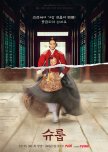
A nearly perfect drama – Outstanding writing and characters
Under the Queen’s Umbrella is one of those rare dramas that reminds me why I love Korean storytelling when it is at its best. For me, it belongs in the same category as Mr. Queen and Mr. Sunshine: three very different dramas, but all exceptional in their writing, character development and ability to create a world that feels alive.
The real strength of this drama is Queen Hwa-ryeong, magnificently portrayed by Kim Hye-soo. She is intelligent, resourceful, fiercely protective of her children and perfectly capable of playing the political game when necessary. But what makes her such a compelling character is that she is not infallible. She has to observe, adapt, make difficult decisions and sometimes change her strategy. She is a queen, but first and foremost she is a woman trying to protect the people she loves in a world where power comes at a price.
The continuous battle of wits between Hwa-ryeong and the Queen Dowager is one of the highlights of the series. Their rivalry is much more than a simple conflict between good and evil: it is a fascinating clash of personalities, ambitions and different ideas about power and motherhood. Every move matters, and the tension comes from the characters themselves rather than from cheap twists.
But the writing does not rely on its leading lady alone. This is where the drama truly excels. The princes, court ladies, concubines and even the rebels are given their own personalities, motivations, weaknesses and ambitions. They are not merely supporting characters whose only purpose is to help or obstruct the protagonist. They have their own stories, and their choices contribute to the development of the plot. Even when I disagree with a character’s actions, I can often understand the reasons behind them. That makes the conflicts much more engaging and believable.
I particularly appreciate how the drama balances political intrigue with family relationships and moments of genuine humour. Despite the number of characters and competing interests, the story remains coherent and emotionally engaging. The palace feels like a living world, not just a backdrop for the main plot.
Of course, the drama is not entirely flawless. There are a few minor narrative weaknesses and some details that could have been handled more explicitly. However, these are small issues in the context of such a well-constructed story, and they never seriously undermine its overall quality.
For me, Under the Queen’s Umbrella is almost a masterpiece. It has a remarkable leading character, an excellent ensemble cast and, above all, writing that understands something fundamental: great supporting characters are not simply there to serve the story. They are part of what makes the story great.
A well-deserved 10/10 from me.
Was this review helpful to you?


