


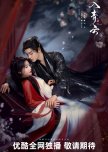
It doesn’t always handle its fantasy well, but it never loses sight of its emotional center
Love in the Clouds may not be the most polished xianxia out there, but it’s a drama that wins you over through sincerity rather than spectacle. It’s messy, heartfelt, and emotionally anchored by leads who carry every beat of the story with quiet conviction.The story begins predictably with realm rivalries and hidden identities. But once Ji Bozai and Mingyi’s relationship takes center stage, the emotional rhythm steadies. Their connection grounds the show even when the lore feels loosely held together.
As the series reaches its final stretch, it favors emotional resolution over spectacle, choosing to settle its characters’ hearts rather than expand its mythology, and that choice ultimately works.
Ji Bozai and Mingyi’s relationship drives the entire series. It’s tender, patient, and sometimes frustrating, but always genuine. Even when the dialogue wobbles, their chemistry gives meaning to the chaos around them.
Supporting characters—especially Tianji and Yan Xiao—bring warmth and balance, while others like Situ Ling and Fuyue linger with shades of tragedy. Not every arc lands cleanly, but every character adds a small emotional note that makes the world feel lived-in.
Production-wise, it’s modest but earnest. You can see the limits of its budget, yet the effort shows—in the colors, in the music, and especially in how the camera stays close to emotion rather than scale.
Love in the Clouds might stumble through its world-building, but it never loses sight of what matters: the sincerity of its characters and the emotions they carry. It’s a show that feels made with heart, and that heart is what stays with you after the last episode.
Final Score: 8 / 10 — emotionally rewarding, imperfectly told, but deeply felt.
Was this review helpful to you?
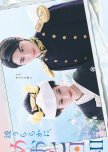
A Calm Sea and Beautiful Days with You
3 people found this review helpful
Two strangers, one photograph standing in for a groom, and the most genuinely earnest romance
A Calm Sea and Beautiful Days with You is a slow-burn arranged marriage drama set in 1930s pre-war Japan. He is a naval officer who expresses himself with the blunt sincerity of a man defusing a bomb. She is an airhead with quiet steel underneath. Together they are an absolute disaster and I mean that as the highest possible compliment.What sets this drama apart is how confidently it sidesteps its own conventions. The jealousy never spirals. The misunderstandings resolve through actual communication. The brooding male lead turns out to be just genuinely, hopelessly clueless. It sets up every familiar romance trope and quietly does something more interesting instead every single time.
The second couple mirrors the leads beautifully without stealing focus, the pre-war backdrop adds weight without overwhelming the warmth, and the writing is disciplined enough to earn every feeling it generates.
Ten episodes felt both too short and exactly right.
9/10 — unhurried, unguarded, and the kind of unforgettable you don’t see coming.
Was this review helpful to you?

A borrowed name, two revenge plots, and a romance that showed up uninvited
The Revenge of the False Bride has a premise worth investing in — a woman who assumes a dead girl’s identity to settle two debts of grief at once, entering an arranged marriage with a military man who has his own agenda entirely. The Republican-era setting does what it always does: makes everything feel like it costs something, and the show wears it well.The emotional highlights belong not to the central romance but to the edges of the story — a graveyard confrontation between two men settling a years-long debt of loyalty, and the surprisingly affecting exit of a side character who schemed her way into a situation far beyond what she deserved. These are the moments that linger to me.
The weaknesses are persistent. The romance accelerates faster than the writing can support it. The flashback structure creates early intrigue but leaves too many gaps unfilled. Scenes drop without transition, the villain is competent but not memorable, and the medical textbook introduced as a final MacGuffin carries weight it was never built up to earn.
It kept me watching all 24 episodes though, and that is not nothing.
7/10 - Engaging enough to finish, frustrating enough to notice — a short drama that promises more than it delivers but earns its runtime anyway.
Was this review helpful to you?
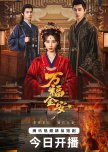
I came for the chaos and stayed for the schemes but the emotional payoff just wasn’t giving
I went into this expecting a typical palace revenge story, but what I got was actually a very plot-driven, tightly written harem drama, and I enjoyed it more than I expected.The strongest part of this drama is really the harem politics. It’s messy, ruthless, and honestly very entertaining. The story takes time to show different consorts across the hierarchy, and each one brings a different kind of danger. Some are outright cruel, some are calculated, and some are just unhinged 😭 but it works because it makes the palace feel alive and constantly shifting.
Feng Qing carries this drama for me. She’s intelligent, strategic, and most importantly, she moves on her own terms. She doesn’t wait to be saved, and she doesn’t rely on the emperor emotionally or politically. Everything she does feels intentional, and that makes her very satisfying to watch.
The writing is also stronger than I expected. The schemes are thought out, and the revenge plot is quite tight.
But where it falls short for me is the emotional execution, especially the romance.
There was so much potential in her relationship with the emperor—their past was built on love, distrust, and power imbalance—but the way they reconnect in the present timeline feels underdeveloped. I never fully bought into their reconciliation. It lacked the emotional weight and buildup that it needed.
I also wish we saw more vulnerability from the emperor. Given everything that happened, there should have been more grief, more conflict, more visible regret. Instead, that emotional layer felt a bit too restrained, which made the romance less impactful than it could have been.
Some side storylines didn’t really add much (the adopted brother arc didn’t work for me), and there are a few moments where the plot leans slightly convenient, but overall the structure remains solid.
At the end of the day, this is a strong, engaging drama carried by its plot and female lead, but it stops short of being truly memorable because it doesn’t fully deliver on the emotional side.
Still, I had a good time watching it—and for this genre, that already says a lot.
8/10 - A solid and enjoyable watch with strong writing in its political and strategic elements, but lacking the emotional depth needed to elevate it further.
Was this review helpful to you?
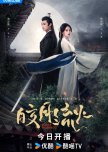
A capable FL, a flustered ML, and a plot that clearly did not get the memo about pacing
A wuxia mini drama that has more going for it than it sometimes deserves credit for and more problems than it sometimes acknowledges.Ling Xuan is the kind of FL this genre needs more of. Capable, sharp, and never once reduced to waiting to be rescued even when the plot tries very hard to arrange it. Her ML is a trained killer who completely falls apart around her, which is both very funny and surprisingly endearing. Their dynamic carries the show through its uneven middle stretch and the middle stretch is genuinely uneven.
The romance moves faster than the writing earns it, the villain gets shortchanged, and the ending wraps things up more than it resolves them.
Secrets of the Shadow Sect has genuine highlights — the leads, the identity thread seeded patiently from episode one. But highlights alone cannot carry a drama with uneven writing and a story that loses the plot in its own middle stretch. Whether the good moments are enough will depend entirely on your tolerance for uneven storytelling.
7/10 - fun when it works, genuinely maddening when it doesn’t.
Was this review helpful to you?
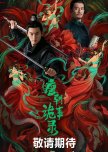
A solid mystery drama carried by consistent writing and earned emotional payoff
I didn’t expect this drama to pull me in the way it did, but by the time I reached the end, I realized how quietly strong its grip had been all along. What stood out most wasn’t the spectacle or the mysteries themselves, but the consistency of its world and the patience of its storytelling. The cases varied in impact, some arcs landed harder than others. And the writing occasionally leaned too much on exposition rather than visual deduction, but the overall structure remained tight and purposeful.More than anything, this series succeeds for me because of Lu Lingfeng’s character journey. Watching him grow from an impulsive, proud imperial guard general into someone who learns to see the people behind the system, the suffering of the people, and eventually stand as an equal beside Su Wuming was deeply satisfying. That growth feels earned and gradual, never rushed or forced. Su Wuming remains steady and principled throughout, while Pei Xijun’s evolution from a doted, desperate daughter into a perceptive and emotionally grounded woman was another highlight.
The drama’s approach to the supernatural — where “ghosts” are almost always human cruelty, fear, or obsession — stays coherent across arcs and reinforces its themes about power, injustice, and manipulation within the court. Romance is understated and restrained, sometimes frustratingly so, but it suits the tone of the story, prioritizing trust and companionship over grand gestures.
By the finale, the story doesn’t just resolve its last case; it brings emotional closure to long-running wounds, particularly those tied to legacy, mentorship, and unfinished justice. It isn’t a flawless drama, but it is a thoughtful and well-constructed one.
Final score 8.5/10 - Not flawless, but consistently engaging and emotionally rewarding.
Was this review helpful to you?
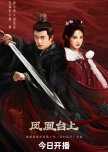
Promising palace drama undone by exhausting, nonstop angst
Love and Crown starts with promising palace intrigue, compelling setups, and moments of emotional weight, but its relentless escalation of angst and makjang-style plotting drained my emotional engagement.I wasn’t frustrated as much as I was exhausted, and eventually lost trust that the story would offer meaningful payoff.
Was this review helpful to you?


