
 K-Drama


This review may contain spoilers
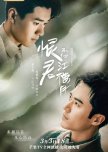
More than BL: rep. of Mental Issues or Well-done show?
Main Cons of the Series:1. Quick Recovery from Injuries: I was surprised by how quickly characters bounce back from serious injuries. It feels like this aspect is simply ignored in the series.
2. Loss of Loved Ones: I believe the series did not sufficiently emphasize the emotional consequences of losing loved ones. Characters grieve for only a few episodes, which feels inadequate.
3. Ambiguous Representation of "BD" in Jiang Yuelou: In this project, I see an incorrect portrayal/representation of Bipolar Disorder in the character Jiang Yuelou. Although it was canonically stated in the series that he has BD (called by an outdated diagnosis), I'm still puzzled by the discrepancy between the symptoms and the actual diagnosis. I believe Jiang Yuelou has Post-Traumatic Stress Disorder (PTSD) or CTSD, which manifests in manic episodes of aggression during flashbacks. (This is discussed in more detail in the Pros, point 4).
4. Jiang Yuelou's Professional Crisis: I'm deeply disappointed by this. I expected Jiang Yuelou to have a professional/career crisis at the end of the series, since his life's goal (the reason he agreed to work for the police since he was 16) had been achieved. Jiang Yuelou himself said: when my goal is reached — "I want to move to a small house and watch sunsets with a loved one." So, at the end, when the goal was achieved with such sacrifice and suffering, Jiang Yuelou had no hesitation or doubt about refusing the reinstated position (although this position is no longer related to investigating opium distribution cases). None of this was shown to us.
5. The Arc with the Director and the Singer: The relationship between Zhan Junbai and the singer feels underdeveloped to me. I didn't see the reason why Zhan Junbai "fell in love" with the singer other than the fact that he sings beautifully. Their relationship seems toxic, though understandable in the context of each character's dynamics and lore. But I must admit, thanks to this relationship, the singer received a whole load of emotions/trauma, but also experience. Through the perspective of such a complex relationship, viewers saw emotional growth and vulnerability in these characters, and that, I think, is the most important thing in this case.
6. Chen Yuzhi's Relationship with His Parents: While watching, I wanted to learn more about Chen Yuzhi's past (I've heard this is well-covered in the novel), especially about his past relationship with his family. I'd like to know: why is he the only family member responsible for caring for his younger sister? Although I read online that the novel reveals Chen Yuzhi himself was an orphan. And apparently, it was on the streets, as a child, that he first encountered Jiang Yuelou. (Correct me if this is misinformation).
7. Lack of Visual Justice: I'm dissatisfied that justice was not shown visually (in flashbacks/flashforwards/bonus scenes) for some characters. This concerns Director Zhan Junbai the most, who faced no punishment in the original ending. However, in the alternative ending, he was supposedly sentenced to execution, but again! Viewers were not shown the trial process, execution, etc.
8. Implausible Moments: I don't understand how there can be moments when the main characters aren't noticed, they aren't hiding, but are actively searched for by the police and citizens. This is extremely silly and unrealistic. Could it be that in a small town, people don't notice criminals from the newspapers?
9. Jiang Yuelou's Triggers: It seems that after the death of all significant people in Jiang Yuelou's life, his triggers just disappeared.
10. The Fate of the Second Gentleman: I lacked closure or certainty regarding the death of the Second Gentleman. They didn't even abstractly show a trial/execution. It left a feeling of a trick/a possible "resurrection from the dead" of the Second Gentleman.
11. The Director's Motivation: I think the motivation behind the Director's sinister power-grab plan was poorly revealed due to the romantic arc with the singer.
Main Pros of the Series:
1. Detective Plotline: Although I prefer an episodic format for detective plots, in this project it was done skillfully and intriguingly. I like it when a detective arc is thoughtfully constructed — without intrusive poetics/excessive abstraction, but with clear logic, unexpected reveals, the gradual introduction of new characters (connected to the detective plot) and twists — this creates a feeling of a cohesive, rich world. The story kept me in suspense for all 36 episodes without becoming too boring. I didn't have time to look back before I was already at the final episodes. The series found the perfect balance between plot dynamics and lore expansion, which is rarely achieved so harmoniously.
2. Humor. I think many don't even consider this aspect when evaluating this series, as it's not a comedy. But you know what? This is what really captivated and pleased me in this project. A huge contribution to the humorous part was made by Jiang Yuelou's assistant — Sun Yongren. He was that funny person who diluted tense or sad situations with humor (sometimes intentionally, sometimes not).
3. Chemistry Between Actors and Acting. You know, I never understood why people rate "chemistry" as a main factor. Now I understand why. It's not even about the acting itself, but about the actors' ability to immerse themselves in their characters' roles so deeply that any of their interactions (which aren't intended to be romantic/flirtatious/angsty for their relationship) look as if they would go to any lengths for each other. And this intention is read in their glances, facial expressions, fleeting phrases, exclamations, words, and in the desire to spend more time/do kind (which can also be read as romantic) things for each other. It's impossible to count how many times Yuzhi was self-sacrificing for Jiang Yuelou, despite unpleasant circumstances. And I'm very taken by this dynamic — when Character A (Chen Yuzhi) falls in love first (almost fleetingly?) with Character B (Jiang Yuelou), and then Character B initially rejects Character A, but later gradually falls in love (tsundere vibes), but very deeply.
🔹️ Important: His behavior is not romanticized tsundere, but a logical psychological defense of a person with CTSD: avoiding intimacy due to fear of repeated trauma and betrayal.
4. Representation of Jiang Yuelou's Mental State. Let me start by saying I decided to watch this series solely because it's a BL where the main character has a mental disorder. This is rarely seen in BL, especially for main characters. I was genuinely interested in seeing the representation of "bipolar" disorder. But as the series progressed, I noticed that, essentially, Jiang Yuelou doesn't have the declared BD (Bipolar Disorder), but rather CTSD. (Initially I thought of simple PTSD, then I read a post www.tumblr.com/killerandhealerqueen/797590436949655552/why-you-should-watch-killer-and-healer and, after checking the differences, understood why CTSD is closer to Jiang Yuelou).
🔹️Let's recall Jiang Yuelou's childhood: At first, everything was fine. But then his father started smoking opium. His father got into debt, and when he didn't have enough money, he beat his wife (in front of Jiang Yuelou) and also sold her body to other men. After some time, the mother couldn't bear it anymore and, after congratulating Jiang Yuelou on his 11th birthday, left the family. One year after the mother's departure, Jiang Yuelou found his father dead from opium. All the debts were placed on the son, but the moneylenders took their house. And Jiang Yuelou became a homeless orphan.
If we consider Jiang Yuelou's character and childhood through the lens of CTSD, then his childhood is the perfect soil for developing this disorder. The combination of severe emotional neglect, betrayal by the closest people, and a long struggle for survival explains his adult symptoms: uncontrollable anger, deep distrust, a sense of isolation, and a distorted self-perception.
5. Editing and Effects. The editing in this project is done very skillfully, to the point where all the endings and plot twists urged you to press "watch next episode." I'd also like to note that the series did a good job setting boundaries based on budget capabilities. That is, if there was some action that would require interaction with VFX, they would show it for 1 second or leave it off-screen entirely. This is much better than trying to do something epic on a small budget (as was the case in "The Guardian") just to match the source material.
6. OST: And what about the musical accompaniment? All these songs in a classical, almost operatic style (serving as openings or endings) — 100/10 — they perfectly convey all the depth of feelings and pain of this story. I listen to the soundtracks from this series 24/7, so I've truly fallen in love with it.
Verdict:
I recommend this series to those for whom it's truly important to see complex and ambiguous characters/pairings in BL. Or I recommend this series to those interested in seeing the representation of a mental state in a canonical manifestation, not just in hints. But when watching, you shouldn't expect super-tactile BL. In this series — the focus is more on the lore of the story, the lore of the main characters, how they cherish each other (so much so that it's clear it's not "bromance"), and how characters are willing to sacrifice themselves and their loved ones to achieve a common goal.
✴️This is a series that charms with the depth of its characters and their connections, but may disappoint those who value meticulous elaboration of plot and psychological details.
Was this review helpful to you?

Chosen family or Detective agency vibes? BOTH!
Loved this mini j-drama. Although the detective lines are simple, but the storyline with Makki and his brother is very strong and heartbreaking. Last ep made me cry, laughed and melted from cuteness 5 times in the row. Makki & Keita complement each other well in investigations and communication with clients.Cons➖: color grade is toned in shadows with hue green and dark blue although its not dat horrible than made in j-drama Gokushufudo.
Pros➕: storyline, chemistry between the male leads, the production, filming, editing [cuts of certain scenes add a lot of humor], the soundtrack and background music - fit the situations perfectly, characters and situations are funny [let’s appreciate role of a brilliant (voice) actor - Kenjiro Tsuda.] The acting is typical for j-dramas.
⚖️So this typical presentation of “overacting” may doesn’t work for some ppl (especially if u k-drama fan/u watch only mainstream netflix dramas).
And for those who, like me, adore such underrated dramas as: Mahoro Ekimae Bangaichi (2013), Ribasu Ejji Ookawabata Tanteisha (2014), Coffee Ikaga Deshou (2021) - i can say with 80% confidence that ull enjoy watching it, and even 4 eps will not be enough for u.
PS: yep, i love j-dramas with the chosen family trope…
Was this review helpful to you?


