

 2
2


This review may contain spoilers
Hong Ye, Moral Economy, and the Squandered Potential of The Unclouded Soul
Hong Ye, the Demon Lord of the recently aired C-drama The Unclouded Soul, is not an inherently unsatisfying character. Rather, he is a case study in how narrative structure and genre conventions can suppress complexity in favor of ideological convenience.
At first glance, Hong Ye appears to conform to a familiar xianxia archetype: the emotionally closed-off, jaded lover whose cruelty masks an essentially gentle soul. For nearly two-thirds of the drama, the series reiterates this characterization without meaningful development, asking the audience to accept repetition in place of evolution. The result is a protagonist who feels static, even as the plot insists on his emotional transformation.
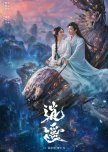
The Unclouded Soul is a 40-episode xianxia idol drama starring Hou Minghao and Tan Songyan, framed as a female-centric narrative centered on Xiao Yao—a heroine defined by her unrestrained sense of joy and justice. The drama employs a time-traveling plot device to gradually unfold the mystery of her connection to Hong Ye across multiple lifetimes, positioning their romance as both fated and cyclical. This structure, in theory, should deepen the emotional stakes by layering past lives onto present consequences.
It is only in the third major arc—revealed to be their very first life—that the series briefly fulfills this promise. In this incarnation, Hong Ye is not a demon but a human burdened with the responsibility of saving humanity from extinction. His love for Xiao Yao motivates him to pursue immortality, not out of ambition or malice, but from a desperate desire to remain by her side forever. He steals demon pearls to gain power, fully aware of the moral cost of his actions. This arc finally grants Hong Ye agency, contradiction, and tragedy.
Hou Minghao delivers the pain and complexity of these decisions with remarkable precision. His portrayal captures a man torn between ethical compromise and emotional devotion, embodying the kind of moral ambiguity that xianxia narratives often gesture toward but rarely sustain. For the first time, Hong Ye feels less like a symbolic figure and more like a human subject navigating impossible choices.
Yet this is also where The Unclouded Soul exposes its most troubling ideological framework. Xiao Yao, who is gradually revealed to possess a savior complex, becomes the moral axis around which judgment is distributed. Her unwavering sense of justice—ostensibly virtuous—ultimately condemns Hong Ye to an endless cycle of atonement for sins rooted in love and desperation rather than cruelty. Meanwhile, other characters who commit far more egregious acts are narratively excused through death, narrative convenience, or symbolic punishment. The drama’s moral economy is uneven: suffering is not proportionate to wrongdoing but rather allocated according to narrative usefulness.
Hong Ye’s punishment is not framed as tragic injustice but as necessary balance, positioning him as a sacrificial figure whose suffering stabilizes the world order. In contrast, Xiao Yao’s moral absolutism remains largely unchallenged, despite the devastating consequences of her judgments. The series thus reinforces a familiar pattern in xianxia storytelling: the male lead’s redemption must be endless, while the heroine’s righteousness is treated as inherently correct, even when it is destructive.
Compounding this issue is the prolonged and narratively redundant storyline of the second leads. Their arc serves little purpose beyond manufacturing villains and crises, conveniently positioning Hong Ye to sacrifice himself repeatedly for the “greater good.” This narrative padding not only drags the pacing but actively undermines Hong Ye’s character by reducing his complexity to a functional role within the plot.
Ultimately, The Unclouded Soul gestures toward a far more compelling story than it allows itself to tell. Hong Ye’s character contains the potential for a rich exploration of moral compromise, love, and unjust punishment. Instead, that potential is curtailed by an overextended runtime, misplaced narrative priorities, and an ideological framework that demands his suffering as proof of cosmic balance. The tragedy of Hong Ye is not merely within the story—it is embedded in the storytelling itself.
At first glance, Hong Ye appears to conform to a familiar xianxia archetype: the emotionally closed-off, jaded lover whose cruelty masks an essentially gentle soul. For nearly two-thirds of the drama, the series reiterates this characterization without meaningful development, asking the audience to accept repetition in place of evolution. The result is a protagonist who feels static, even as the plot insists on his emotional transformation.
The Unclouded Soul is a 40-episode xianxia idol drama starring Hou Minghao and Tan Songyan, framed as a female-centric narrative centered on Xiao Yao—a heroine defined by her unrestrained sense of joy and justice. The drama employs a time-traveling plot device to gradually unfold the mystery of her connection to Hong Ye across multiple lifetimes, positioning their romance as both fated and cyclical. This structure, in theory, should deepen the emotional stakes by layering past lives onto present consequences.
It is only in the third major arc—revealed to be their very first life—that the series briefly fulfills this promise. In this incarnation, Hong Ye is not a demon but a human burdened with the responsibility of saving humanity from extinction. His love for Xiao Yao motivates him to pursue immortality, not out of ambition or malice, but from a desperate desire to remain by her side forever. He steals demon pearls to gain power, fully aware of the moral cost of his actions. This arc finally grants Hong Ye agency, contradiction, and tragedy.
Hou Minghao delivers the pain and complexity of these decisions with remarkable precision. His portrayal captures a man torn between ethical compromise and emotional devotion, embodying the kind of moral ambiguity that xianxia narratives often gesture toward but rarely sustain. For the first time, Hong Ye feels less like a symbolic figure and more like a human subject navigating impossible choices.
Yet this is also where The Unclouded Soul exposes its most troubling ideological framework. Xiao Yao, who is gradually revealed to possess a savior complex, becomes the moral axis around which judgment is distributed. Her unwavering sense of justice—ostensibly virtuous—ultimately condemns Hong Ye to an endless cycle of atonement for sins rooted in love and desperation rather than cruelty. Meanwhile, other characters who commit far more egregious acts are narratively excused through death, narrative convenience, or symbolic punishment. The drama’s moral economy is uneven: suffering is not proportionate to wrongdoing but rather allocated according to narrative usefulness.
Hong Ye’s punishment is not framed as tragic injustice but as necessary balance, positioning him as a sacrificial figure whose suffering stabilizes the world order. In contrast, Xiao Yao’s moral absolutism remains largely unchallenged, despite the devastating consequences of her judgments. The series thus reinforces a familiar pattern in xianxia storytelling: the male lead’s redemption must be endless, while the heroine’s righteousness is treated as inherently correct, even when it is destructive.
Compounding this issue is the prolonged and narratively redundant storyline of the second leads. Their arc serves little purpose beyond manufacturing villains and crises, conveniently positioning Hong Ye to sacrifice himself repeatedly for the “greater good.” This narrative padding not only drags the pacing but actively undermines Hong Ye’s character by reducing his complexity to a functional role within the plot.
Ultimately, The Unclouded Soul gestures toward a far more compelling story than it allows itself to tell. Hong Ye’s character contains the potential for a rich exploration of moral compromise, love, and unjust punishment. Instead, that potential is curtailed by an overextended runtime, misplaced narrative priorities, and an ideological framework that demands his suffering as proof of cosmic balance. The tragedy of Hong Ye is not merely within the story—it is embedded in the storytelling itself.
Was this review helpful to you?


