
 K-Drama




Violent in Japan
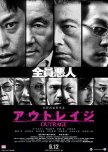
Takeshi Kitano delivers a highly interesting insight into the structures of the Japanese mafia. But what initially engages soon becomes too complicated and violent for the film's good. There are simply too many betrayals, pacts and severed fingers.
Director Takeshi Kitano is actually a completely unlikely person. The Japanese started out as a successful stand-up comedian in the 1970s and then became primarily a director and actor. Today he also frequently appears in entertainment programs and talk shows, he has written over 50 books, he draws comics, he paints and he makes films such as Kikujiro's Summer, the sweet story of a boy who must find his mother. In between, Kitano also makes violent gangster-cop films.
Although the multifaceted Kitano appears as an actor in other films, he does most of the work himself in his own productions, from scriptwriting, to directing and often acting. As an actor, he uses his stage name Beat Takeshi, which is a nod to the comedy duo he was one half of – The Two Beat. So there is a great complexity in the man, one moment he is charming and funny on the studio couch, the next he mercilessly attacks a gangster with a dental drill.
The dental drill is the one that appears in his film Outrage. Here Kitano is back to his flagship genre of the gangster film. Even before the title rolls around, he effectively establishes the Japanese mafia – Yakuza – Hierarchy with a chairman at the top, his closest man, clan bosses, underlings of various ranks. The chairman and bosses have a general meeting, the underlings stand in the parking lot by the obviously black cars. Kitano himself plays the underling Otomo. His boss Ikemoto has a personal pact with the rival clan boss Murase. The chairman – Who actually looks like Chairman Mao, or a well-combed Kim Jung Il – Does not like this and asks him to “sort out” the situation. Ikemoto must therefore break off contact with Murase in order to show loyalty to his chairman, while at the same time respecting his personal pact. He sends in Otomo, who is allowed to start a yakuza branch and who can thus act on his own to create a disturbance in the relationship, without his boss being directly involved. A clever arrangement, but this small disturbance or spark starts a wildfire that spreads out of control and causes things to heat up in all camps.
Kitano is a confident narrator with an occasionally stylish imagery. Not many sentences are said here, but it is really the actions that drive the plot forward. Initially, Outrage is very interesting, how it presents the gangster structure and the fox games between all members. With shocking violent sequences, such as cutting off the little finger with a dull knife in classic yakuza style or using a dentist’s drill in the wrong way, a sense of anxiety and tension is created in the film. We really understand that these men can do anything to anyone. No one is safe and Otomo himself is living proof of that as he alternates between total expressionlessness and exploding outbursts of violence. It contributes to the charged atmosphere.
However, after the nice opening, the film becomes a little too complicated for its own good. There are too many twists, too many showdowns and too many betrayals and stabs in the back – Or rather, shots in the forehead. In the end, it actually becomes a little difficult to keep apart who is betraying whom and who is deceiving someone else. This also means that it becomes difficult to sympathize with our protagonist Otomo, who makes too many shifts between camps for us to know where he stands. Despite the high pace, the interest level drops a few notches during the second half of the film.
It also becomes a little tiring that the film only deals with men, the only times a woman appears is in the role of a whore/escort, a scorned wife, a mistress on the prowl or in the form of a corpse. The pure macho culture within the mafia would certainly be more dynamic and exciting with a female presence in addition to the above-mentioned examples. Despite this, Takeshi Kitano is too skilled and experienced to just let a story descend into an action-packed spiral of violence where men hump men without any real meaning, and he gets up at ten towards the end and ties Outrage together in an unexpected way. As I said, Kitano is a bit unlikely.
Director Takeshi Kitano is actually a completely unlikely person. The Japanese started out as a successful stand-up comedian in the 1970s and then became primarily a director and actor. Today he also frequently appears in entertainment programs and talk shows, he has written over 50 books, he draws comics, he paints and he makes films such as Kikujiro's Summer, the sweet story of a boy who must find his mother. In between, Kitano also makes violent gangster-cop films.
Although the multifaceted Kitano appears as an actor in other films, he does most of the work himself in his own productions, from scriptwriting, to directing and often acting. As an actor, he uses his stage name Beat Takeshi, which is a nod to the comedy duo he was one half of – The Two Beat. So there is a great complexity in the man, one moment he is charming and funny on the studio couch, the next he mercilessly attacks a gangster with a dental drill.
The dental drill is the one that appears in his film Outrage. Here Kitano is back to his flagship genre of the gangster film. Even before the title rolls around, he effectively establishes the Japanese mafia – Yakuza – Hierarchy with a chairman at the top, his closest man, clan bosses, underlings of various ranks. The chairman and bosses have a general meeting, the underlings stand in the parking lot by the obviously black cars. Kitano himself plays the underling Otomo. His boss Ikemoto has a personal pact with the rival clan boss Murase. The chairman – Who actually looks like Chairman Mao, or a well-combed Kim Jung Il – Does not like this and asks him to “sort out” the situation. Ikemoto must therefore break off contact with Murase in order to show loyalty to his chairman, while at the same time respecting his personal pact. He sends in Otomo, who is allowed to start a yakuza branch and who can thus act on his own to create a disturbance in the relationship, without his boss being directly involved. A clever arrangement, but this small disturbance or spark starts a wildfire that spreads out of control and causes things to heat up in all camps.
Kitano is a confident narrator with an occasionally stylish imagery. Not many sentences are said here, but it is really the actions that drive the plot forward. Initially, Outrage is very interesting, how it presents the gangster structure and the fox games between all members. With shocking violent sequences, such as cutting off the little finger with a dull knife in classic yakuza style or using a dentist’s drill in the wrong way, a sense of anxiety and tension is created in the film. We really understand that these men can do anything to anyone. No one is safe and Otomo himself is living proof of that as he alternates between total expressionlessness and exploding outbursts of violence. It contributes to the charged atmosphere.
However, after the nice opening, the film becomes a little too complicated for its own good. There are too many twists, too many showdowns and too many betrayals and stabs in the back – Or rather, shots in the forehead. In the end, it actually becomes a little difficult to keep apart who is betraying whom and who is deceiving someone else. This also means that it becomes difficult to sympathize with our protagonist Otomo, who makes too many shifts between camps for us to know where he stands. Despite the high pace, the interest level drops a few notches during the second half of the film.
It also becomes a little tiring that the film only deals with men, the only times a woman appears is in the role of a whore/escort, a scorned wife, a mistress on the prowl or in the form of a corpse. The pure macho culture within the mafia would certainly be more dynamic and exciting with a female presence in addition to the above-mentioned examples. Despite this, Takeshi Kitano is too skilled and experienced to just let a story descend into an action-packed spiral of violence where men hump men without any real meaning, and he gets up at ten towards the end and ties Outrage together in an unexpected way. As I said, Kitano is a bit unlikely.
Was this review helpful to you?


