




This review may contain spoilers
Atmospheric Japanese drama.
If for some reason you were to make a dish out of Still Walking, it would undoubtedly be sushi. It is served in a very stylish way. The strong contrast of easily digestible salmon pieces and strong wasabi-dipped shrimp pieces makes for an excellent overall experience and a plate model in its most beautiful form.
Now Still Walking, despite the similarities, is not a dish but a feature film by Japanese filmmaker Hirokazu Koreeda.
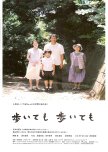
Ryota Yokoyama (Hiroshi Abe) is on his way home to his childhood home where both of his parents still live. All family members are there to enjoy dinner together. This is something unusual as the occasions when they actually sit down and eat dinner together are becoming increasingly rare. This is mainly because all the children are adults and have their own families, but perhaps it is also because they are now a smaller family member at the table. Ryota's older brother lost his life saving another boy. The same boy who has now done nothing sensible with his life.
It is noticeable that frustration is the common thread as it is there all the time, both from the parents and from the children. The mother is worried that Ryota will not give her any "real" grandchildren, as he married a woman who had a child from a previous relationship. The father of the family carries so much frustration that his favorite son sacrificed his life for someone who did not deserve it and that his last living son does not want to become a doctor and take over his practice.
All family members carry their worries and secrets towards each other. One by one, the audience gets to look into them without them really being investigated between the characters. It is a cat-and-mouse game in body language and a balancing act between love and disappointment which is fascinating and exciting to watch.
I am struck by how similar families can be. Regardless of origin or background, the same common concerns still exist. The parallels between my own family and the Yokoyama family become increasingly apparent when you look through the cultural differences. Because Still Walking actually gives an excellent insight into what it can really be like to come home to your parents and once again end up in the old roles that you have had since you were little. Ending up in this old “role” and then having in mind that one day your parents will no longer be there to answer for the things you have wondered about scares me.
With a beautiful soundtrack and nice photography, it adds spice to the nice, easy-to-digest story that Hirokazu Koreeda tells. So whether you like sushi or not, I think the film will offer some new emotions. Because the recognition factor made me decide to show my parents a little more love more often.
Now Still Walking, despite the similarities, is not a dish but a feature film by Japanese filmmaker Hirokazu Koreeda.
Ryota Yokoyama (Hiroshi Abe) is on his way home to his childhood home where both of his parents still live. All family members are there to enjoy dinner together. This is something unusual as the occasions when they actually sit down and eat dinner together are becoming increasingly rare. This is mainly because all the children are adults and have their own families, but perhaps it is also because they are now a smaller family member at the table. Ryota's older brother lost his life saving another boy. The same boy who has now done nothing sensible with his life.
It is noticeable that frustration is the common thread as it is there all the time, both from the parents and from the children. The mother is worried that Ryota will not give her any "real" grandchildren, as he married a woman who had a child from a previous relationship. The father of the family carries so much frustration that his favorite son sacrificed his life for someone who did not deserve it and that his last living son does not want to become a doctor and take over his practice.
All family members carry their worries and secrets towards each other. One by one, the audience gets to look into them without them really being investigated between the characters. It is a cat-and-mouse game in body language and a balancing act between love and disappointment which is fascinating and exciting to watch.
I am struck by how similar families can be. Regardless of origin or background, the same common concerns still exist. The parallels between my own family and the Yokoyama family become increasingly apparent when you look through the cultural differences. Because Still Walking actually gives an excellent insight into what it can really be like to come home to your parents and once again end up in the old roles that you have had since you were little. Ending up in this old “role” and then having in mind that one day your parents will no longer be there to answer for the things you have wondered about scares me.
With a beautiful soundtrack and nice photography, it adds spice to the nice, easy-to-digest story that Hirokazu Koreeda tells. So whether you like sushi or not, I think the film will offer some new emotions. Because the recognition factor made me decide to show my parents a little more love more often.
Was this review helpful to you?


