




Samurai drama with little action.
Anyone who thought there would be a big slaughter when Takashi Miike makes a samurai film will unfortunately have to continue wishing. Ichimei is a low-key, subtle and melancholic drama about revenge and honor in the 17th century. Why they insisted on making the film in 3D is incomprehensible, however.
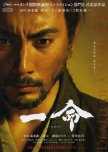
The film begins with the samurai Hanshiro (Ebizo Ichikawa) applying to commit ritual suicide in the courtyard of the clan leaders of the House of Li in order to restore his honor. The clan suspects that Hanshiro is bluffing, a well-used trick to get money or employment through sympathy. The story of a former samurai who tried the same idea and his tragic fate is revealed. Eventually, we also get to know Hanshiro’s background story and his real purpose for his request.
Miike has made a name for himself with uber-violent cult films such as Audition and Ichi the Killer. However, he has also made other types of films and proves here that – Obviously – He has more strings to his lyre. It is easy to believe that he has seized the opportunity when he makes a samurai film – In 3D too – And let the blood flow and heads roll. But he has somewhat unexpectedly gone in a different direction and focused on the human drama in the story.
It is beautiful and atmospheric, and the not entirely unpredictable story nevertheless engages with its loving, sympathetic characters and their gripping fates. It is easy, as a fan of Quentin Tarantino's genre-honoring Kill Bill films, to miss the pumped-up pace and violent fight scenes, but there is nevertheless something liberating and uplifting about a samurai film that actually focuses on the dramatic story.
Then it is possible to think that Miike, who has made sadistic ultra-violence his specialty, has not taken advantage of the genre and offered more sword fighters even though a typically sadistic suicide scene for him is performed in the first story. The 3D format (the first film at Cannes ever to be shown in it) is hardly used at all and the only proper fight scene, which comes only at the end, has a dose of dry humor that quickly ebbs away and leaves behind a spectacle that is somewhat transcendental to realism and is rounded off with a rather vague message.
It is a stylish, entertaining and powerful film that is unfortunately way too long and uneven. Miike is a master at delivering stylish and atmospheric films but when it comes to samurai he seems to be actively looking to find his own nuance instead of using a working concept. And that is perhaps where Tarantino got it when he paid tribute to the genre by returning to classic clichés and adding fuel to the violence scenes. Because no matter how good the direction, actors and story are, you still always see samurai fighting more than anything else.
The film begins with the samurai Hanshiro (Ebizo Ichikawa) applying to commit ritual suicide in the courtyard of the clan leaders of the House of Li in order to restore his honor. The clan suspects that Hanshiro is bluffing, a well-used trick to get money or employment through sympathy. The story of a former samurai who tried the same idea and his tragic fate is revealed. Eventually, we also get to know Hanshiro’s background story and his real purpose for his request.
Miike has made a name for himself with uber-violent cult films such as Audition and Ichi the Killer. However, he has also made other types of films and proves here that – Obviously – He has more strings to his lyre. It is easy to believe that he has seized the opportunity when he makes a samurai film – In 3D too – And let the blood flow and heads roll. But he has somewhat unexpectedly gone in a different direction and focused on the human drama in the story.
It is beautiful and atmospheric, and the not entirely unpredictable story nevertheless engages with its loving, sympathetic characters and their gripping fates. It is easy, as a fan of Quentin Tarantino's genre-honoring Kill Bill films, to miss the pumped-up pace and violent fight scenes, but there is nevertheless something liberating and uplifting about a samurai film that actually focuses on the dramatic story.
Then it is possible to think that Miike, who has made sadistic ultra-violence his specialty, has not taken advantage of the genre and offered more sword fighters even though a typically sadistic suicide scene for him is performed in the first story. The 3D format (the first film at Cannes ever to be shown in it) is hardly used at all and the only proper fight scene, which comes only at the end, has a dose of dry humor that quickly ebbs away and leaves behind a spectacle that is somewhat transcendental to realism and is rounded off with a rather vague message.
It is a stylish, entertaining and powerful film that is unfortunately way too long and uneven. Miike is a master at delivering stylish and atmospheric films but when it comes to samurai he seems to be actively looking to find his own nuance instead of using a working concept. And that is perhaps where Tarantino got it when he paid tribute to the genre by returning to classic clichés and adding fuel to the violence scenes. Because no matter how good the direction, actors and story are, you still always see samurai fighting more than anything else.
Was this review helpful to you?


