
 K-Drama


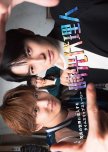
This Link did not Click with me...
Oof, this turned out to be a long one. Let me start this review by saying: I'm a huge fan of the original Link Click donghua, but I am by no means a purist when it comes to adaptations of even my favourite works (watching enough Chinese adaptations that completely change the source material while still managing to be excellent in their own merit will do that to you...). In fact, the Chinese live-action adaptation of Link Click falls in this precise category: it changed most of the plot of the source material, to the point where it can only be considered an alternate universe reinterpretation, and yet for me it worked perfectly within the new self-contained world it created, and I consider it to be nearly as good as the original.
All of that to say: I was prepared for this Japanese live-action adaptation to also be its own thing and was expecting to enjoy it for what it was no matter how much of the source material was changed. Unfortunately for me, this series suffered from the exact opposite problem, namely that it relied too heavily on the original story to construct its plotline while at the same time refusing to commit to it fully. The result is that it ended up not having enough identity of its own to stand out as a separate thing.
This can be seen throughout the whole series. There is only ever a suggestion of an overarching storyline (related to Toki's mother), which is introduced in the first couple of episodes only to be quickly abandoned and to forever remain as an afterthought that gets obliquely hinted at by Hikaru vaguely staring into her picture every other episode and sometimes muttering cryptic things to himself until the bitter end. Speaking of, the main characters Toki (Cheng Xiaoshi) and Hikaru (Lu Guang) were mere shadows of their original selves—they were either stripped of their original personality (Lu Guang/Hikaru) or had it dialed up to 1000 to the detriment of the character depth (Xiaoshi/Toki). And because there's no cohesive story linking the episodes together, the characters themselves evolve very little outside of the immediate consequences they experience in response to each case they investigate, and they end up almost unchanged from who they were at the start.
Another issue is that, since the series doesn't seem to have a clear endpoint and therefore any logical progression to follow in order to reach it, the cases Toki and Hikaru investigate start out by copying the ones from the donghua with little variation (except when they conveniently decided to turn the noodle lesbians into brothers, I wonder why that was) and go back and forth between that and convoluted original stories that mostly fall flat as they take place over a single episode, making it hard to care or root for any of the newly introduced characters that will never show up again. This scriptwriting choice made the series feel meandering and lacking in emotional depth, with some misplaced virtue signaling at the end of each case that was supposed to pass off as a "conclusion" but instead just felt heavy handed and poorly written.
There are some positives to this adaptation, though. Firstly, two particular cases were standouts for me: the amnesiac lady with a mysterious past from episode 6 (which introduced a more complex plot and emotionally driven plotline), and the one with the cute teenage romance problems in episode 7. This one was especially interesting because it focused on Rin (Qiao Ling), who was for me the highlight of the series. While her characterization is very different from the donghua, I found it to be well utilized within the story. She often breathed some fresh air into the otherwise clumsy storylines, and in fact far outshined the protagonists with her sweet charm and charisma. The production quality also deserves a shout-out: the set design, styling, wardrobe, and photography were all on point, making the series look polished and avoiding the dated look which I often find issue with when watching Japanese TV shows.
Things did, in fact, start looking up in the second half of the series—mainly due to the two episodes mentioned above—, but by then it was already too late to make a comeback, let alone try to introduce the most important case from the donghua at the eleventh hour (I still get war flashbacks every time I hear her name). By this point the nachos had been reheated so many times that they became a bland, soggy mess, and not even the cute interactions between the main trio could salvage it from being relegated to its final destination: the trashcan.
In the end, what disappointed me most about this series was the writing choices made, as it seems the writers either didn't fully know in which direction they wanted to go or simply couldn't commit to one over the other, which caused the series to lack focus and just never quite manage to stick the landing. And while I was willing to overlook the over-reliance on the original source material for the first couple of episodes (after all, the Chinese live-action also reused a couple of cases), I just don't think an adaptation of a series that already has a (very good) live-action adaptation deserves to take so many episodes to find its footing. After all, if they didn't have a strong enough story to tell, whether it be a faithful adaptation or a fresh retelling, why remake the same story yet again? (The answer is money and a previously established fanbase, obviously).
Honestly, my suggestion is to just skip this one and watch the Chinese live-action adaptation instead. While it mostly reworked the original story from the donghua, I find that this decision actually worked in its favor and the writers were able to utilise the characters and the mostly original script to keep the spirit of the original series alive, something that I personally think this Japanese adaptation thoroughly failed to do. You're not going to find anything other than a lackluster story here, so unless you like the actors or are craving more Link Click in your life, stick to the Chinese versions and spare yourself the disappointment.
All of that to say: I was prepared for this Japanese live-action adaptation to also be its own thing and was expecting to enjoy it for what it was no matter how much of the source material was changed. Unfortunately for me, this series suffered from the exact opposite problem, namely that it relied too heavily on the original story to construct its plotline while at the same time refusing to commit to it fully. The result is that it ended up not having enough identity of its own to stand out as a separate thing.
This can be seen throughout the whole series. There is only ever a suggestion of an overarching storyline (related to Toki's mother), which is introduced in the first couple of episodes only to be quickly abandoned and to forever remain as an afterthought that gets obliquely hinted at by Hikaru vaguely staring into her picture every other episode and sometimes muttering cryptic things to himself until the bitter end. Speaking of, the main characters Toki (Cheng Xiaoshi) and Hikaru (Lu Guang) were mere shadows of their original selves—they were either stripped of their original personality (Lu Guang/Hikaru) or had it dialed up to 1000 to the detriment of the character depth (Xiaoshi/Toki). And because there's no cohesive story linking the episodes together, the characters themselves evolve very little outside of the immediate consequences they experience in response to each case they investigate, and they end up almost unchanged from who they were at the start.
Another issue is that, since the series doesn't seem to have a clear endpoint and therefore any logical progression to follow in order to reach it, the cases Toki and Hikaru investigate start out by copying the ones from the donghua with little variation (except when they conveniently decided to turn the noodle lesbians into brothers, I wonder why that was) and go back and forth between that and convoluted original stories that mostly fall flat as they take place over a single episode, making it hard to care or root for any of the newly introduced characters that will never show up again. This scriptwriting choice made the series feel meandering and lacking in emotional depth, with some misplaced virtue signaling at the end of each case that was supposed to pass off as a "conclusion" but instead just felt heavy handed and poorly written.
There are some positives to this adaptation, though. Firstly, two particular cases were standouts for me: the amnesiac lady with a mysterious past from episode 6 (which introduced a more complex plot and emotionally driven plotline), and the one with the cute teenage romance problems in episode 7. This one was especially interesting because it focused on Rin (Qiao Ling), who was for me the highlight of the series. While her characterization is very different from the donghua, I found it to be well utilized within the story. She often breathed some fresh air into the otherwise clumsy storylines, and in fact far outshined the protagonists with her sweet charm and charisma. The production quality also deserves a shout-out: the set design, styling, wardrobe, and photography were all on point, making the series look polished and avoiding the dated look which I often find issue with when watching Japanese TV shows.
Things did, in fact, start looking up in the second half of the series—mainly due to the two episodes mentioned above—, but by then it was already too late to make a comeback, let alone try to introduce the most important case from the donghua at the eleventh hour (I still get war flashbacks every time I hear her name). By this point the nachos had been reheated so many times that they became a bland, soggy mess, and not even the cute interactions between the main trio could salvage it from being relegated to its final destination: the trashcan.
In the end, what disappointed me most about this series was the writing choices made, as it seems the writers either didn't fully know in which direction they wanted to go or simply couldn't commit to one over the other, which caused the series to lack focus and just never quite manage to stick the landing. And while I was willing to overlook the over-reliance on the original source material for the first couple of episodes (after all, the Chinese live-action also reused a couple of cases), I just don't think an adaptation of a series that already has a (very good) live-action adaptation deserves to take so many episodes to find its footing. After all, if they didn't have a strong enough story to tell, whether it be a faithful adaptation or a fresh retelling, why remake the same story yet again? (The answer is money and a previously established fanbase, obviously).
Honestly, my suggestion is to just skip this one and watch the Chinese live-action adaptation instead. While it mostly reworked the original story from the donghua, I find that this decision actually worked in its favor and the writers were able to utilise the characters and the mostly original script to keep the spirit of the original series alive, something that I personally think this Japanese adaptation thoroughly failed to do. You're not going to find anything other than a lackluster story here, so unless you like the actors or are craving more Link Click in your life, stick to the Chinese versions and spare yourself the disappointment.
Was this review helpful to you?


