
 K-Drama


This review may contain spoilers
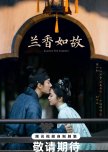
A story about women, survival, choice and what makes life worth living
Against the Current is one of those dramas that reminded me why I love women-centered stories when they are written with care. At its heart, this is a story about survival, but more importantly, it asks what comes after survival. What makes a life worth living once you are no longer simply fighting to stay alive?Lanxiang was an incredible female lead because her intelligence never felt like a superpower conveniently given to her by the writers. She observes, learns, adapts, asks questions, makes mistakes and works with the information available to her. She is intelligent because she has learned how to survive. Yet the drama never allows survival to become her entire identity.
I especially loved the women. They were not written as perfect examples of “strong women.” They could be intelligent, selfish, loving, classist, ambitious, frightened, cruel, funny, practical and contradictory. They felt like people first and female characters second.
One of my favorite aspects was watching Lanxiang’s influence slowly spread through the Lin household. The younger women begin speaking for themselves, making choices, thinking about their futures and protecting their children differently. The drama’s metaphor of one lamp lighting another until an entire space becomes illuminated perfectly captures her journey. Lanxiang did not simply change her own circumstances; she showed other women that another way of living was possible.
Jinqi was equally compelling. He frustrated me, impressed me, made me angry and eventually became one of my favorite historical drama male leads. His flaws were never magically erased to make his romance work. Instead, he had to learn. Watching his understanding of love, choice and power evolve was one of the most satisfying parts of the drama.
And I genuinely loved Lanxiang and Jinqi together. Their romance may be too understated for some viewers, but that quietness is precisely why it worked for me. Their world is constantly chaotic, yet together they find peace. Their love is expressed through actions, trust, protection and understanding rather than endless declarations. I only wish we had been given far more of their domestic life.
That leads to my biggest criticism: 47 episodes were simply not enough.
The later time skips could be frustrating, and new children, grandchildren and characters sometimes appeared before we had enough time to become attached to them. I desperately wanted more ordinary moments: Lanxiang and Jinqi raising their family, the younger Lin women living the lives they fought for, marriages developing, children growing up and everyone simply existing without another crisis waiting around the corner.
I didn’t need more plot. I needed more life.
Still, the writers accomplished an incredible amount within those limitations. The directing was beautiful, the fight choreography deserves its own praise, the OST elevated so many emotional scenes, and the cast delivered across generations. Tan Songyun and Liu Xueyi especially gave performances that made these characters feel fully lived-in.
And Lanxiang’s ending brought the entire story together for me.
She began as a young woman whose primary goal was simply to stay alive. She eventually became a mother, grandmother and great-grandmother. She preserved the memory of the Shen family through her writing, and those stories eventually became something larger—a way of reaching and helping other women.
She started writing so the past would not be forgotten and ultimately used those stories to help shape someone else’s future.
There is something incredibly beautiful about a character whose story begins with “How do I survive?” being allowed to grow old enough for the question to become “What makes life worth living?”
Lanxiang survived.
But more importantly, she lived.
She loved, learned, taught, influenced generations and left something behind.
Despite wishing desperately for another 20 episodes, I finished Against the Current feeling grateful that I got to spend 47 episodes with these characters.
Was this review helpful to you?
A clever, layered ride where trusting anyone is your first mistake
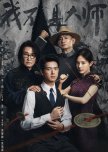
PlotA Prophet starts as revenge but quickly becomes a maze of cons, mind games & hidden motives. I loved how every scheme exposed greed, fear & human nature while constantly making me question who was playing who.
Characters
Chengming & Feiyan were the heart of it for me. Both layered, morally grey & clever, with such a messy history. Their chemistry was sooo good. The supporting cast also DELIVERED, esp Jin Buhuan, the Sect Master & Sha Liang.
Overall — 9/10
Smart writing, sharp direction, great performances & twists that kept me guessing. Some schemes were fun while others, like the soul-trapping arc, got DARK. One of my fave C-dramas this year. #AProphet
Was this review helpful to you?

This review may contain spoilers
The ROM romanced, the COM comedied & I had FUN!
I genuinely had such a good time with this drama. It wasn’t perfect or groundbreaking, but it gave me exactly what I wanted from a romcom: chemistry, comedy, warmth and characters I actually cared about.Hagi was one of my fave MLs. I loved that he was an ACTUAL working CEO lol, but also such a loser at home. His growth from someone who processes everything alone to slowly learning to let Dareum in was beautifully done. And Kang Hoon, pls do more romcoms!
I also loved Dareum and how the drama portrayed fangirling. It showed the softer side of being a fan—loving your bias from afar, wanting them to be happy and finding joy/community through them. Her friendship with her girls was especially sweet. Just fangirls supporting and loving eo without unnecessary competition.
HagiDareum’s chemistry was everything. The slow burn, yearning, little details he remembered about her and their cute moments had me SAT. I just wish we got more of them actually dating after all that buildup!
My biggest issue was DNX. Since their disbandment is such an important part of Dareum’s journey as a fangirl, I wish the reasons behind it had been explained more clearly. I didn’t need a whole subplot—just enough that I wasn’t still connecting dots at the end.
Honestly, 14 eps would’ve been perfect. Two extra eps could’ve fleshed out DNX, allowed the emotional arcs to breathe and given us more HagiDareum dating era.
Still, 8.5/10. This drama made my Mondays and Tuesdays so much fun, and sometimes that matters more than having a perfect plot. I’m really going to miss this era. 🥹🫶🏾
Was this review helpful to you?
A warm, messy & painfully human slice-of-life
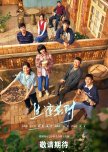
Such an underrated gem. I loved how #InMyPrime showed that sometimes there isn’t one big villain, it’s just life, family, old mindsets, pride & misunderstandings.Shi’s growth was one of my fav parts, especially watching her become more confident in herself and find her own path. I also loved her relationship with Xin, their friendship, banter & the way caring for her became 2nd nature to him.
The family dynamics were messy but felt very real. Qing Lian frustrated me A LOT, but I appreciated that her growth wasn’t sudden or unrealistic. My biggest issue was how passive the fathers were. So many situations wouldn’t have snowballed if they had just stood their ground, communicated properly & spoken up when it mattered.
I also loved the friendship grp and watching everyone grow from school into adulthood. It made me laugh, frustrated me, broke my heart and still left me feeling warm by the end.
Not perfect, but definitely one of my fav slice-of-life dramas this year. 8/10. 🥺🤍
Was this review helpful to you?


