K-Drama


Definitely worthy to watch
A TAXI DRIVER, without a second thought, is the best South Korean film We've seen till date. From narration to execution to performances to presentation: it's perfect in each and every aspect. The change in the tone of the film has been brought up extremely well, thanks to its director Jang Hoon. The screenplay is never disappointing throughout, and the film comes out as both a refreshing as well as a memorable experience.The film's editing is top notch as it doesn't take much of time to introduce and set up the characters as well as the storyline. As the film progresses, you find yourself connected to the characters, especially the ones of Song Kang-ho and Thomas Kretschmann. Both actors have delivered extremely excellent performances, and rather so excellent that I ended up rooting for them completely. When they smiled, we smiled. When they cried, we cried too. Rest of the supporting cast, especially Ryu Jun-yeol and Yu Hae-jin deserve a lot of praise.
There are plenty of emotional sequences which make the film a totally unforgettable experience. Watch the film and you won't find it difficult to guess which scenes we're talking about. Various emotional, thrilling as well as action packed sequences have been elevated by the brilliant music.
A TAXI DRIVER is a hard-hitting film which must be seen not just for its overall excellence but also for the message it delivers to its viewers. It's hard and almost impossible to forget the film, as you're left highly emotional & impressed by the time the credits start to roll. In short, a perfect masterpiece from South Korea
Was this review helpful to you?

Very Moving Emotional Drama
I wasn’t planning on watching this drama, because I don’t like the “based on a true story” kind of thing. I’m so glad I gave it a chance! Because it is based on real events, the core of the story is true, but other things with the actors were enhanced and changed for drama. This is a time in Korean history a lot of people don’t even realize happened. In fact, after it was over, the Korean government tried to cover it up, and citizens were either unaware it happened, or didn’t talk about it. In real life, what the taxi driver and the German reporter witnessed, affected them for the rest of their lives. After you watch it, it’s the kind of drama that stays with you long after, because you can’t believe something like the events that occurred actually took place, and not really that long ago. I highly recommend this drama, but not if you aren’t ready to shed some tears. The real life taxi driver died a few years after he witnessed this tragedy, and the German reporter died, I believe in 2016. He searched for the taxi driver right up to his death, not knowing he died years prior. He really wanted to meet up with him again.Was this review helpful to you?

I should say I start watching without reading any reviews and I thought it's about a father whos working as a taxi driver to pay for her daughter hospital bills and boy I was wrong
at first, it was very light and soft story that even makes you laugh in some ways
but as the movie went further it became more serious and heartbreaking witch was a very well drift.
I just loved the acting of the characters and the story was very well written.
"A taxi driver" made me laugh, cry, angry so it was a movie that went for all of my feelings
until the very last second, I didn't know that it was based on a true story and I have to tell you after I got that I love it even more so if you're looking for a great movie that is not all sad and dark you should totally watch this
although the movie is carrying some serious and sad facts at the end it won't leave you feeling all empty and sad
so go ahead and watch "A taxi driver" is going to be an awesome 2 hours.
Was this review helpful to you?
This review may contain spoilers
A Taxi Driver
If you've watched this movie you would hate the taxi driver in the first half of the movie. I hated his cowardice seriously. How could someone not feel angry about an issue pertaining to the society where injustice dominates. But later on, you'll realize that Kim Man Sup, the taxi driver embodies us, individuals. Whatever race we're from, we have an innate characteristic such as consciousness. Unless we have the consciousness of the person's situation, we cannot relate to them. We may lack empathy at first but that's because we're clueless about the feeling. The only way to understand is to listen to them and be with them. This also applies in personal situations.I thought I wouldn't feel the satisfaction in this movie, and I thought wrongly. I was utterly satisfied by it. The storyline was on point. The sequencing of events was chef's kiss. And the acting of the taxi driver was great. My only concern was the one who played Peter.
Before I come to conclusion, I've got to say the nerve Man Sup had to pull away from his comfortable life was sympathetic. He had the choice to stay there and not come back. He had the choice to live a comfortable life but he chose compassion over comfort. Man Sup was disturbed by living with ease while the others were fighting for their life. Goo Jae Shik's death, on the other hand, was the turning point for Man Sup. He was already having second thoughts at that time, and when he finally saw the body, he felt more secured to go full-on in this war against those in authority.
The reporter in the film was risking everything he has, for the news to be delivered to the international media, despite it not being his own country. I don't despise the local reporters though, they did their best but it was meant for Peter and Man Sup to finish the mission. Their strong friendship made it easier for them to trust each other.
Another part I've noticed was when the soldier saw the plate number but still let them pass. That soldier knew his service, for the people not against them.
Was this review helpful to you?

The journey
A great story with a real great message about humanity as it shows how can a normal guy who has basic needs such as money turn into a hero and how much people can do for each other even if they have never meet before as all that doesn't matter when it comes to save others people life and their freedomAnd i have to say big up to the acting cast that helped delivering the message with a great emotionally acting.
Was this review helpful to you?

Taxi Driver
This movie is based on real events that happened during the Gwangju Uprising (if you watched Youth Of May you'll understand this). A German reporter and a taxi driver from Seoul was able to sneak into Gwangju, film what is really happening on the ground (vs being reported on news and tv) and broadcast it to the whole world.I loved the transformation of the taxi driver from just in it for the money to helping the residents from the cruel shooting. The shooting scenes were horrifying, the residents and fellow taxi drivers were courageous. The taxi car chase scenes were exaggerated but was good climax. Too bad the real reporter and taxi driver never met again after this event as I read the taxi driver died 4 years later.
Rating: 8.5/10
Was this review helpful to you?
événements Gwangju 18 mai 1980
film remarquable, historique, sur la répression violente du régime dictatorial de l’époque à Gwangju contre les manifestations pacifiques des étudiants qui réclament plus de liberté. le mouvement gagnera bientôt toute la Corée du Sud et aboutira à des élections instaurant le début d’une jeune démocratie qui perdure encore aujourd’hui.Nous vivrons plus tard, la répression à Tian'anmen en Chine….
A voir ++++ avec d’autres film : May 18, 1987…. Pour ne pas oublier.
Was this review helpful to you?

✒ ⚙ (Not) Commie Taxi Uprising ⚙ °8.4° °excellent°
It was wonderful to watch something that I was thrilled to have watched. It had been too long. I'd just worked through a string of shows and movies that let me down more than picked me up. They seem to come in clusters.This movie is based on true events. At the film's opening is inscribed: “October 1979. With the shooting of President Park Chun- hee, South Korea's 18 year long era of dictatorship ends. But in contrast to the people's hope for democracy. General Chun Doo-hwan heads a military coup and seizes power. 1980: Outraged citizens protest in the streets and their yearning for democracy intensifies.”
News traveled slower in those days. This is before cable news. TV news was available at 6&11 pm. And there was the radio, newspaper & print media. That's it, and it wasn't too difficult for those in power to choke out truth. Peter, the western journalist who was hanging out in Japan (who's official paperwork pegs him as a missionary), only heard about tensions in Korea because he happened to have drinks with someone who had just been there - someone who couldn't reach his friends there. So on a plane Peter goes.
Song Kang Ho is the ML and titular character, Kim Man “Seob”. I had only seen him in the movie Parasite-9, so it was nice to see him playing someone energetic. I've since seen him playing Uncle Samsik-8.4, who is downright manic, so Mr. Song has quite the range. This film showcases his ability. He has to play many different emotions and his work is brilliant. Seob's a widower. He has a daughter. He's late on his rent - 4 months. His daughter and the landlady's chubby son fight. They both have scrapes on their foreheads. Each parent blamed the /other/ kid. She demands the back-rent NOW! Or move out. The only fare we see Seob blow off is for a couple about to give birth. The man forgot his wallet. “I'll pay you double tomorrow.” Seob holds out no hopes of that: “Do you know how many times I've heard that? I could buy a house on that fare.” Basically, money is tight.
Peter's contact in K-country shows him a paper with an empty page - censorship is in high gear. The city of Gwang-ju is the nerve center of the current tensions. All reporters are being closely watched - but - hey! He's a /missionary/❕😇. Gwang-ju needs a man on a mission. Peter will take a 🚖 there, and foreigners overpay. Driver Kim Man “Seob” overhears Peter's chosen driver bragging about that BIG fare and manages to swoop in and swipe the ride (and the 💰) like it was just a beer run. It turns out to be a dangerous run.
Seob has no idea what's going on. The situation is dangerously intense. Yet he, in a state of complete disconnect, is beaming during the whole drive down. The music is inappropriately upbeat and rousing to reflect his mood.
Even the back roads are guarded, but they manage to lie their way in. The streets of Gwang-ju are eerily quiet with tumble-trash rolling around. When they meet protesters, Peter whips out his camera and starts interviewing them as their cheers break the stillness. This is how Seob learns that Peter is /not/ a missionary. Nor is he a businessman. This is WHEN he learns - after he's already in the middle of it. Taxi drivers are being arrested for merely taking the wounded to the hospital!
At first, Seob doesn't believe the soldiers would do anything wrong. After all, HE used to be a soldier. There's no way they're acting like thugs and smashing people's heads in! Then he takes a woman to the hospital. He sees that other taxi drivers won't take the reporters anywhere because they're not reporting the truth. He marvels that they can turn down fairs! He still needs to acclimate to the situation on the ground: He's watching it unfold, yet it is still hard to accept. We all shut out the ugliness because it will take effort to deal with it. Once a decent person can no longer look away, action is required.
They go on top of the building for an aerial view. Soldiers are shooting at and storming the crowd. A local reporter warns Peter that if the government knows he's there, they will hunt him down, along with all the people helping him. Even at this point, Seob is blissfully ignorant of nearly everything going on. When Seob sees soldiers kicking and beating an old lady with sticks, he realizes how wrong this is. Action is required. To the shock everybody else in the group, Seob decides to go down and get involved.
That night, they turn on the newscast and it's all lies. Brave reporters, in turn, try to print the truth, but their manager stops them saying they'll all just get thrown in jail. At night, the gunfire starts. Fires rage in the distance.
TD is a 2017, 137-minute release that is rated 68 on AWiki. Director, Jang Hoon, did a brilliant job, and he doesn't have a lot on his director resume yet. Taxis were golf-green in the 80's, and a lurid green coats the film's opening. Even though I know nothing of 1980 Korea, I could feel the retro vibe. A quick web search reveals that green is for growth, beginnings, youth, and new energy. When they arrive in Gwang-ju, green banners have been hung by the protesters.
The director evokes raw emotion with skill. The hospital scene is bloody, and it hurts. With the flurry of car chases, stunts, shooting battles, and close ups of gunshots with blood splattering, this is not a small budget production. As they head back to Seoul with the goods, the military is on to them. (It doesn't make sense that the secret police dude would have been at that particular checkpoint. He had other things to do in the city). They get through a checkpoint, but at some point the taxis have to band together and run an interference operation. It's awesome, but it's fiction.
Per WIKI, “The assassination of President Park Chung Hee on 26 October 1979 triggered a number of democracy movements {which led to later protests} that had previously been suppressed under Park's tenure. The abrupt end of Park's 18-year authoritarian rule left a power vacuum that created political and social instability.
General Chun Doo-hwan heavily suppressed these protests. On 18 February 1980, the army issued orders to a number of units to undergo severe riot control training, called "Loyalty Training" This training was harsh and unconscionable, and was criticized as a factor behind the paratroopers' indiscriminate use of violence against the uprising.
There is no universally accepted death toll for the Gwangju Massacre. Records of death for the city in May 1980 were an estimated 2,300 above the historical averages and the death toll has been estimated to be anywhere between 1,000 and 2,000 people. Estimates for the number of civilians wounded also vary heavily, including figures anywhere from 1,800 to 3,500 people…
The movement preceded other democratic movements during the late 1980s that pressured the regime into democratic reforms and paved the way for the election of President Kim Dae-jung in 1997, the first opposition candidate to win the office… The 1980s marked a surge in Anti-American sentiment in Korea, widely traced to the United States' support for Chun's government and its involvement in the suppression of the Gwangju Uprising. According to Bruce Cumings…
The real Kim Sa-bok had a long term working relationship as a driver for Jurgen Hinzpeter, since at least 1975, and had died of liver cancer on December 19, 1984 at the age of 54. According to his son, Kim Sa-bok was traumatized by the terrible events at Gwangju and became a heavy drinker afterwards.”
QUOTES📢
We would rather die standing than live on our knees.
There aren't enough coffins in Gwang-ju.
〰🖍 IMHO
📣8.4 📝7.8 🎭8.5 🌞4 🎨8.5 ⚡7 🎵/🔊7 😅3 😭7 😱5.7 😯5 😖6.8 🤔7 💤0 🔚8
Age 14+ for TV-14 language, violence and blood. This movie is historically significant, so additional leeway is to be expected.
Re-📺?
In order of ~lite&trite~ to ~heavy&serious~ you may also like:
Flex X Cop-8.5,
The Bros-7.4,
The First 1st Responders-7.8,
Tunnel 8.5,
Vagabond-8,
Inspector Koo-8.4,
Iris-8,
D.P.-8.4,
Flower of Evil-8.9,
Awaken-8.7,
The Man from Nowhere 8.9, Mr. Sunshine 9
The Wailing-8.8,
Oldboy-9,
〰 Prime Catalog 〰
A Taxi Driver-8.4,
A Witch's Love-7.9,
Along with the Gods: The Two Worlds-7.2,
Along with the Gods: The Last 49 Days-6.7,
Boys Over Flowers-8.3,
Death's Game-7.8,
Heartbeat-4.8,
The K2-8
The Man from Nowhere-8.9,
Marry My Husband-7.5,
May I Help You-6.3,
Mother-8.8,
My Man Is Cupid-5.9,
My Mister-9.5,
Private Lives-8.1,
Saimdang-8.5,
She Would Never Know-7.3
So I Married the anti fan-6.8,
The Wailing-8.8,
The Witch: Part 1. The Subversion-7.6,
Was this review helpful to you?

"I am taxi driver, you are taxi 손님."
There are at least two countries that I have learned a lot about and admire: the United States and South Korea. The book Human Acts by Han Kang accidentally came into my posession two years ago, and it's extremely vivid and graphic depiction of Gwangju Uprising made me want to learn more and more about Korean history to find out what have this nation come through to become a leading democratic country that the world looks up to nowadays.🔸️There were only several foreigners in Gwangju on the first days of the massacre, including 5 Peace Corps volunteers, and all of them chose not to abandon their Korean colleagues and friends despite the direct warnings from the American Ambassador. Later, when a few foreign reporters, including this movie's main character Jürgen Hinzpeter, arrived, they helped them by being their interpreters. If you have seen the movie you already know what happened to the fictional character Jae Shik. A few Koreans who did speak English would not desire that attention from the ubiquitous KCIA.
🔸️I love A Taxi Driver for its amazing execution, production design, and a pretty much historically accurate timeline. It succeeds in capturing the sense of confusion and danger coming from all the sides and making spectacular and tragic scenes like the taxi cars battle and the arrogant German reporter coping with shock and guilt by filming his dead companion and the bloody havoc around. No one in Gwangju knew what was going on, later hearing the infuriating official news that the upheaval was incited by "bandits" and "impure elements from outside the city".
From "Witnessing Gwangju" by Paul Courtright: "The [elderly Korean] halmeoni's grip tightened on my arm and she turned to face me. 'We have no voice. You have to be our voice. You have to tell people outside our country what they're doing to us'. She glanced around the street, then returned her fearless gaze to me. I was rooted to the spot. I was to be the "witness" and she had given me a clear task."
🔸️No country exists in a vacuum, and I find it fascinating how people from different provinces, from different nations can work together, bond, and help each other, i.e. Seoul and Gwangju taxi drivers, Gwangju people and foreign reporters, volunteers. Man Seop didn't choose between his daughter and a grown-ass foreigner reporter. He was choosing between what's best for his family and what's best for his country. Along with self-sacrifice this makes it a clear patriotic idea for the movie.
I've been learning about the Gwangju Uprising from the article of the witness Peace Corps volunteer Tim Warnberg "The Kwangju Uprising: An Inside View", 1987, and the memoir "Witnessing Gwangju", 2020, by Paul Courtright. I highly recommend to read them if you're interested, as the writing is highly detailed, captivating and visual.
Was this review helpful to you?

Heartbreaking and Inspiring
I missed watching "A Taxi Driver" when it initially became popular but wanting to learn more about the Gwangju Uprising (thanks to currently watching "Youth of May") lead me back. I'm glad I learned a little more of the history before watching it blindly. If you don't know much about Korean history, like me, prepare yourself for a story that's inspiring but brutal and heartbreaking. I love when movies show history from a personal perspective, making it relatable and making me curious to learn more. That's what this movie does so well.This movie stars Song Kang Ho as Kim Man Sup, a struggling single father and taxi driver, and his performance is brilliant. I've never seen a bad performance from him and this is no exception. It's a character similar to the one he would later play so well in "Parasite", basically a man who uses clever instincts to take advantage of an opportunity that leads him to more trouble than he bargained for. I loved seeing the change and internal struggle within his character. It also stars Thomas Kretschmann as Peter (irl Jürgen Hinzpeter) a determined reporter eager to do anything in his power to film what was really happening in Korea even if that puts him in serious danger. His performance is probably my least favorite of the cast but he still does a good job. I just think Song Kang Ho carried many of their scenes together. It's their relationship that is meant to drive the story, and it does, but I was moved even more by the rest of the cast.
This is the part of the review where I once again confess my love for Ryu Joon Yeol, and admit to being biased, but I loved him so much as Goo Jae Shik. He is so a-dork-able and his smile always automatically puts me in a good mood. Still, under all of that quirkiness is an actor with true depth and he really got me in the feels with this role. Yoo Hae Jin as Hwang Tae Sool is another everyday superhero in this movie, and I love how both actors honor the true heroism of everyday citizens.
What I liked about this movie the most is that it's story is told in a simple enough way that you can understand it all even knowing nothing previously about the real history. I also loved the idea of discovering what was happening through the main characters' eyes. I'm not sure how much of what was in this movie is based on real events or not but it immediately made me want to learn even more about real stories of Gwangju out of respect (thank you youtube lol).
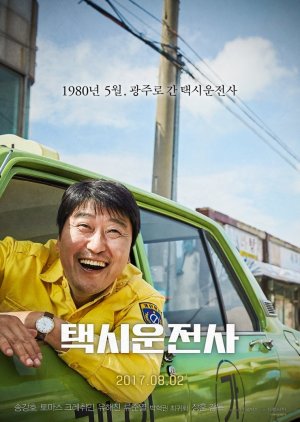
Overall, this is a great film but it can be a little tough emotionally so prepare yourself for some tears to fall. Don't let the cute promotional pic fool you. I also loved the ending, and the idea of how strangers can meet briefly and not only change each others lives but the world around them.
Was this review helpful to you?

Based on true events
*A Taxi Driver* was such a powerful watch, and knowing that it’s based on real events makes it even more meaningful. There’s something about films rooted in true history that hits differently, you’re not just watching a story unfold, you’re witnessing something that actually shaped lives.Before this movie, I had never really heard about the Gwangju Uprising (also known as the Gwangju Student Independence Movement). After watching it, I found myself reading more about it, wanting to understand the real history behind what I had just seen. That’s one of the reasons I love movies based on true events they don’t just entertain you, they educate you. They open a door to history in a way textbooks sometimes don’t.
Be prepared to cry. This film is emotional. While parts of the taxi driver’s personal storyline were fruits of fantasy, since the real-life driver was never formally identified and didn’t actually meet the journalist again, the core political events and historical context remain true.
Song Kang-ho is, as always, absolutely phenomenal. I’ve loved him ever since Memories of Murder, and he was perfectly cast here. He brings warmth, humor, fear, and transformation to the role in a way that feels so natural.
I don’t want to give away too much of the story even though it’s based on real history, I think it’s best experienced firsthand.
Was this review helpful to you?

Was this review helpful to you?