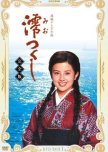
☆ Natsuzora is a nice watch ☆
If you like a heartwarming family drama with some butter curry, laughs and tears, animation and farms, love and a bit of war, set in the mid 1900s then this is the drama for you!But If you prefer fast paced romance with swoon worthy kisses, or hardcore action with thrilling fight scenes, or maybe even episodes that aren't named confusingly then this isn't the drama for you.
Pros:
1. It's a very lighthearted series that's funny without being weird and tearjerking without being depressing.
2. The characters are loveable yet realistic. Unlike a lot of other Japanese dramas I've watched where I would get kinda annoyed beacuse they're behavior.
3. It's was fun (but nostalgic) to see the character's aging through time and see them grow into being adults and having families of their own.
Cons:
1. I enjoyed the very beginning of the series more than the rest. I missed the charm of the past and the people in it, making me wish they made her time at Hokkaido longer.
2. The chemistry between the two main leads... isn't really there. I mean they're a cute couple and it's not like I hate them together. It's just that something feels bland about them.
3. At times people get annoyingly depressed.
So all together Natsuzora is a sweet and wholesome series that some would find boring but others would enjoy.
Was this review helpful to you?

The development of the main character had a smooth pace and the story involved many genres like slice of life, business, family, agriculture life and love. The part, especially, about the animation production and the way Natsu, the leading lady, became a professional modern woman, working and hadling her family. They also concluded the rest of the stories as well, which was a pro for the drama. Finally, the performances were really good.
However, one of my main concerns was the main characte being, most of the times, too perfect. Also, some episodes lacked intensity and entertainment.
So, overall, seven out of ten.
Was this review helpful to you?

This review may contain spoilers
Pioneering Spirit
"Natsuzora" is the 11th asadora that I have watched. It is the culmination of last five asadoras that I have watched. To explain: "Natsuzora" is the landmark 100th asadora to air. As such, NHK invited a bunch of past asadora heroines to make appearances from supporting to minor cameos. I watched "Oshin," "Dondo Hare," "Dandan," "Manpuku," and "Chiritotechin" specifically for this reason while I had already watched "Jun-chan no Ouenka." [I would've watched more but these are the only ones with English subs currently.] Watching these aren't really a prerequisite to watching "Natsuzora," especially since some of the actresses have a blink and you'll miss it cameos. Personally, I think fully immersing myself in the asadora format for the pass few months helped me really enjoy "Natsuzora" to the fullest.Now that being said, I think "Natsuzora" is actually potentially the perfect first asadora for someone just beginning to watch. It has all of the elements that people like particularly in an asadora with great writing, characters, the lovely scenery of Hokkaido, and wonderful animation segments to boot. Just watching "Natsuzora" would give someone the perfect impression of what an asadora is supposed to be.
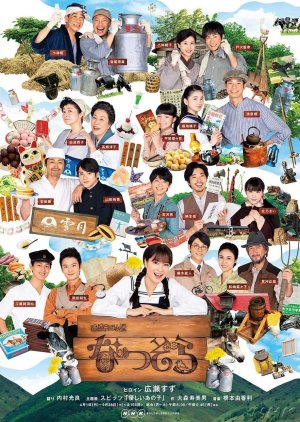
Hirose Suzu as Natsu is a great heroine and wonderfully nuanced. Natsu, I believe, is one of the few asadora heroines to be an orphan. This creates some great drama with her finding her birth siblings, which runs throughout the drama. "Natsuzora" also boasts a great supporting cast with Kusakari Masao as "Jii-chan," Natsu's adoptive grandfather, being the standout. I particularly loved seeing the former heroines Yamaguchi Tomoko (from "Jun-chan no Ouenka"), Higa Manami (from "Dondo Hare"), and Kanjiya Shihori (from "Chiritotechin") now in supporting roles. Then there were the actors I recognized from "Hana Yori Dango" productions, Nakagawa Taishi, Matsushima Nanako (also an asadora heroine from "Himawari"), and Fujiki Naohito. A quick glance at the cast list and I see a lot of people from previous asadoras. Honestly, NHK went all out with the casting.
Natsu has two love interests. Yoshizawa Ryo plays Tenyo, Natsu's childhood friend. Though neither expresses their feelings, I think it's clear how they feel for each other. However, since Natsu has to leave Hokkaido to pursue her dreams, their relationship never goes beyond friendship. Nakagawa Taishi plays her real love interest Kazuhisa, whom also works in animation. Their relationship is a very understated, simple kind of love. It's lovely to watch it develop.
"Natsuzora" carries the theme of the "pioneering spirit" shown with the dairy farmers of Hokkaido and later with Natsu entering into the new animation industry. Eventually both intersect when Natsu has the opportunity to work on an animated series reminiscent of the "World Masterpiece Theater" anime series (and specifically referencing "Heidi, Girl of the Alps"). Interestingly, Natsu is based on the animator Okuyama Reiko but I would say very loosely, particularly in regards to her early life. Taishi's character is based on Studio Ghibli director Takahata Isao and there's even a reference to his masterpiece "Grave of the Fireflies." There's a handful of others also based on real-life people, such Sometani Shota's character being analogous to Miyazaki Hayao.
Watching "Natsuzora" felt like receiving a warm hug. In many ways, it reminded me of my first asadora "Hanako to Anne." Both asadoras gave me the feeling of wanting to stay in that world full of characters that I love dearly. Somehow, it's harder to say things about a drama I really liked, so this review will be a little shorter than usual. I just really hope that more and more people watch this asadora as it's very close to being perfect.
My Asadora Ranking: https://kisskh.at/list/LAlqpp21
Was this review helpful to you?

This review may contain spoilers
Heartwarming drama that keeps getting better
I'm going to divide my review into two parts - one a non-spoiler general thoughts and another thoughts as an Asadora, with spoilers.In general, this is a very heartwarming drama. The story is well-written and well-paced with good transitions between arcs and good connecting themes that brings things full circle. Natsu, our main female lead, is a really likable character and it it really is a joy watching Natsu experience new things and working on her dream. I really, really like that fact that Natsu has to put in hard work and practice and not some special genius.
There is a huge cast of endearing characters that influence and get influenced by Natsu as well. I'm sure the one most viewers will like the most is Jiichan (the grandfather), there is enough characters for everyone to have their own personal favorites. The acting is also top-notch. I appreciate how the background, i.e. life on a diary farm, is properly shown and not just there for show. I also appreciate how much anime design technique is explained and expanded upon. It's really neat seeing how a story comes together from a storyboard to the moving picture. Almost makes me want to become an anime creator myself.
There production is very good too and there is good attention given to detail. I love seeing random posters of Natsu's work in her families' homes. The shots from Hokkaido (if that's where it was really filmed) are gorgeous. It makes it all the most easier to immerse myself into the drama-world. Overall, this a great drama, especially if you are in the mood for something laid-back with focus on family, friends, achieving your dreams and anime creation. Spoilers below:
***SPOILERS***
Now, as an Asadora, I thought this was good but not great. I felt like this drama could have been the GOAT but felt more like lost potential. I've watched a couple of asadoras at this point and maybe I might be viewing the others through nostalgic, rose-tinted lens but I could not help but compare them to Natsuzora.
1. The pacing: as I said above, the pacing is good throughout the drama is pretty good. But it felt a little slow and somewhat limited as an Asadora, which is generally supposed to be about the main lead's life. I was having doubts when Natsu was still a child at close to the end of the second week. The pace does pick up but she does not start animation until almost 1/3 to 1/2 into the drama and the drama ends when she in her mid-to-late thirties. Women's lives don't end at age 36; in fact, some women start their lives at that age. You can still grow and experience change - I think of how Asa ga Kita was planning on opening a university at that time and Beppin-san was expanding her financial pursuits. The real-life animator Natsu's character was based on, Reiko Okuyama, had some great works later in life. She lived until 2007 and was working as an animator until she passed away.
2. Animation: Especially in light of this focusing on Natsu's journey through Japanese animation, which hits it really big globally 20 years later, ending the drama so early seems like wasted potential. The drama ends with hints of the team going on to achieve even better things and ending themes of 'a new future' or 'beginning again' or 'going on to achieve our dreams.' But really, why? If you're going to make a drama about someone working on achieving their dreams, why not actually show them achieving it? As I stated above, the drama stops around the mid-1970s, when Natsu is in her mid-to-late 30s. She would have been around to see the birth and success of the infamous Studio Ghibli and shows like Sailor Moon, Dragon Ball Z or Pokémon become household names across the world. I think those scenes would have really added depth to her life as an animator and be really moving to watch as a viewer.
3. The cast of characters: this one is kind of minor tbh. Having a huge cast of characters seems to be an Asadora hallmark. However, it felt like with the other few Asadoras I've watched, despite the huge list of characters, there were no "wasted" characters. Whether they had a major or minor role, almost all of the characters had a good amount of development and/or important roles that influenced the plot. This did not seem to be the case here and some characters felt more like props. Akemi is a good example - she is there but we never get to know her. Of course, some characters (like Yumiko) got better development later as well.
So overall, it's still a good drama I would recommend hands-down but just with a lot of wasted potential.
Was this review helpful to you?

My Favorite Asadora to date.
This Asadora has an adorable, moving, and heartwarming story that made me cry a lot. I really enjoyed the story; it is a very good and wholesome slice of life that has everything I wanted in Asadora. It's simple, but to me, it's a perfect asadora. The bond between natsuchan and jiichan was absolutely perfect, and Natsu's relationship with others was amazing. Overall, the drama has lots of life lessons to offer, and it's my favorite Asadora and a total gem; I recommend 100% to others to watch this one.Was this review helpful to you?

This review may contain spoilers
From Hokkaido’s Pastures to Hand-Drawn Dreams: A Spirited Story That Feels Ghibli-Inspired
Natsuzora is a cheerful and quietly heroic story — bright, resilient, and filled with that particular warmth Japanese asadoras do so well. It has the wholesome, hearth-and-home feeling of Little House on the Prairie, but with a distinctly Ghibli-esque heart: the devotion to craft, the reverence for nature, the blend of innocence and ambition, and the way small moments shimmer with meaning.At its center is Natsu, a war orphan who begins life abandoned, displaced, and carrying far more loneliness than any child should. When she is taken in by her late father’s comrade and his wife, she enters a new world — a sprawling farm in Hokkaido, brimming with life, livestock, and hard work. She is technically an outsider, a guest who doesn’t quite belong, but the series makes her journey toward belonging one of its most endearing threads.
The brusque, no-nonsense grandfather becomes the unlikely anchor of her childhood. He understands her in a way no one else does — her pride, her hidden ache, her eagerness to pull her weight. He gives her exactly what she needs: a place to put her hands to work, a role that empowers her instead of pitying her, a chance to build strength rather than feel like a burden. He is a pioneer at heart, and he recognizes the same grit in Natsu. Watching the two of them work side by side — taciturn guardian and scrappy little orphan — is unexpectedly moving.
The entire family that adopts her is endearing: the affectionate mother, the steady father, the schoolmates who shift from teasing to friendship, even the snotty sister who, in her own prickly way, grows on you. The early episodes on the farm are some of the warmest and most comforting, filled with blue skies, barn chores, and the slow weaving of a chosen family.
But Natsu’s life is not meant to remain on the farm. As she grows older, she discovers a deep, breathtaking passion for drawing and animation — a spark lit by the childhood friend who becomes her first love, an artist with a soul as wide as the Hokkaido fields. Their bond is one of the loveliest threads in the series, a gentle, long-rooted affection shaped by shared loss and shared dreams. Yet they are fated for different paths. He chooses to remain on the land, determined to protect the farm built through hardship and love. She chooses to pursue her craft in the city, pulled by a calling she cannot ignore. They wait for each other for a while, but their lives move in opposite directions. It is tender, bittersweet, and all too human — one of the quiet heartbreaks of the show.
Once Natsu leaves for the city, the story unfolds into something entirely new. She enters the world of animation — a male-dominated industry — and must claw her way forward, frame by frame. She finds lodging with an eccentric former actress who gives her not just a place to sleep, but clothes, guidance, and connection. In the process, Natsu also discovers pieces of her long-lost family, most notably her brother, who had lived with this same actress before her. The city brings new colleagues, mentors, challenges, and friendships. The series does a wonderful job immersing the audience in the painstaking labor behind animation — the exhaustion, the joy, the collaboration, the heartbreak when projects fall apart, and the triumph when they succeed. There are moments that genuinely feel like watching the birth of a Ghibli-like world.
She eventually marries a clumsy, gentle, idealistic director — a sweet man, though undeniably less magnetic than her first love. Their marriage is tender in its own right, but it’s impossible not to feel a pang for the path not taken, the boy who inspired her art and shaped her very first dreams.
There is indeed a lot happening in Natsuzora, because it traces not just a romance or a career arc, but a full life — its losses, its reinventions, its chosen families, and the courage it takes to follow a calling even when it breaks your heart a little.
My heart still cracks for the love she didn’t choose, and for the one who didn’t get to grow old.
Yet Natsuzora remains something gentle and uplifting, a tale of resilience painted in soft colors. It’s long, and you have to be in the right mood for its steady rhythm, but it is filled with sweetness, endurance, and the kind of spirit that reminds you how many ways there are to build a life worth living. 🩵
Was this review helpful to you?

This review may contain spoilers
i think Natsuzora gonna be my favorite asadora!
The way Natsu is accepted and accepts the Shibata family as part of her life is really well written ♡I really like the story because it starts from little Natsu, then as a teenager, to adulthood and having her own family.
Here we can see how children who were victims of war lived to recover and become adult pioneers, how they could be a family even without blood relations, how anime was made at that time, and the beautiful scenery of Tokachi Hokkaido!
What I like most here:
1. Heroin's relationship with Shibata fam (her foster family), my favorite is granddaughter-grandfather relationship here.
2. Realistic! especially when the heroine (Natsu) and her husband have a child, the struggles of new parents are seen in detail.
3. The theme is that the heroine becomes an animator, because I like paintings, that makes it even more exciting!
There's only one thing I don't like:
1. families who used to be together, but had to be separated because they started their own families. For some reason, that makes me sad.
Overall I really like Natsuzora, after watching this asadora, my heart felt warm.
156 episodes worth watching, I highly recommend this asadora!
Was this review helpful to you?

One of dramas I finished a day
This drama might seem like a lot of episodes but it is so good that I have enjoy it a lot. I worth to rewatch one of my favorite Japanese series. Someone who enjoys art a lot and music this would be fit for those who is looking for something peaceful. Set against the backdrop of Hokkaido's beautiful landscapes and the burgeoning world of animation, the series is a gentle masterpiece. It is precisely the kind of long, hopeful story that will resonate with anyone who appreciates music, art, and the peaceful pursuit of a dream.Was this review helpful to you?

THIS DRAMA IS GOLDEN
The first few episodes already got me ugly crying. To be honest I was only watching this because of Suzu Hirose but I loved all the characters and casts! The little Natsu made cried real hard damn that kid's acting is superb I love it so much. That time when grandpa started warming her heart towards Natsu made me feel kinda emotional. It is heartwarming and has lots of life lessons to offer. It's still a long way before I finish watching it but I know already from the first episode that it's gonna be worth it. A total gem.Was this review helpful to you?

Natsu, petite fille des montagnes ...
Les Asadoras de la NHK ont un format très particulier 15min/jour, pendant 6 mois. Il faut pouvoir trouver son compte pour accrocher aussi longtemps à une histoire, qui soyons honnête tirent parfois en longueur. Pour ma part j'adore ce format qui permet de lancer des épisodes en rafale. De plus, ses dernières années, les thèmes abordés, la qualité d'écriture et la pléthore de stars en premiers rôles ou en guest arrivent à vous tenir en haleine malgré les moments un peu plan plan. C'est presque le cas de Natsuzora qui offre à Suzu Hirose un premier rôle à la hauteur de son talent et qui justifie à elle seule le visionnage. Comme cela semble devenir la norme avec ce format on découvre son personnage enfant et on suit sa vie sur plusieurs décennies. Bien moins palpitante, à mon avis que celle de Suzume dans Hanbun Aoi (mon Asadora préféré) on trouvera quand même son compte d'émotions dans la première partie de l'histoire et quelques rebondissements, certes attendus redonneront un regain d'intérêt. Découvrir la vie difficile des japonais du siècle dernier, partis coloniser Hokkaido et des orphelins d'après-guerre ma fait verser ma petite larme.Dans cette version japonaise d'Heidi (les similitudes sont quand même très fortes même si on essaye de nous vendre 'la petite maison dans la prairie') l'histoire nous touche par les liens créés par Natsu et son grand-père adoptif. Personnellement si je trouve que les rôles secondaires manquent de profondeur dans cette partie (et trop caricaturaux plus tard, pour les collègues de Natsu adulte), Awano Sari qui joue Natsu enfant et Kusakari Masao le grand-père vont vous faire fondre. Plus tard, la recherche désespérée de son frère et de sa soeur réussiront aussi à vous tirer une larme supplémentaire.
Mais soyons honnête, si je me suis plongé dans cette histoire ce n'est évidement pas pour les paysages bucoliques et les vaches d'Hokkaido ni pour suivre le combat difficile de l'émancipation des femmes japonaise, fil rouge de beaucoup d'Asadoras, mais pour le thème principal : la genèse de l'animation japonaise. Car comme beaucoup, avant de m'intéresser aux dramas, je suis un fan d'animation et de mangas. Et on suis bien les pionniers de l'animation dans cette histoire. Le terme 'Pionnier' semble être le fil conducteur de la série tout au long des 156 épisodes. On découvre les premiers films d'animations, le métier d'animateur de coloriste, de doubleur, les premiers studios d'animations, etc ... Cerise sur le gâteau des séquences d'animation ont été spécialement créés pour l'occasion, avec vers la fin de la série des un épisode quasi entier animé (d'une qualité un peu décevante par rapport au générique d'ailleurs). Car si on reconnait facilement la Toei dans le studio où Natsu travaille il était hors de question d'utiliser des séquences de film réels. Et on s'amusera donc à chercher à quel film fait référence cette séquence. Jusque dans le générique, créer par une jeune animatrice, chanté par le groupe Spitz et qui nous rappellera tellement le Heidi de Miyazaki. L'ombre du maitre plane sur les épisodes et certains des personnages ont du hérité de traits de caractère. Tezuka et Go Nagai ne sont pas très loin non plus. Voilà pourquoi je conseille cette série, qui ravira tous les fans d'animations d'après-guerre jusqu'au années 80, les vieux comme moi, quoi. La musique colle parfaitement à la série et vous vous surprendrez à fredonner les thèmes principaux. Un de mes Asadoras préféré.
Was this review helpful to you?