K-Drama

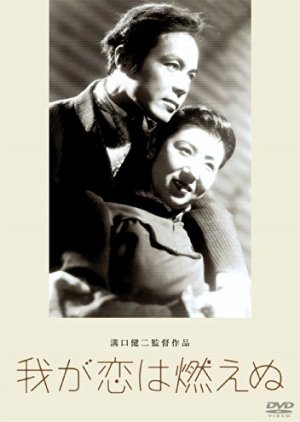
A woman's struggle for equality in Japan in the 1880s. Eiko Hirayama leaves Okayama for Tokyo, where she helps the fledgling Liberal Party and falls in love with its leader Kentaro Omoi, just as the party is being disbanded by the government. Eiko and Omoi are jailed because of a fire at a factory instigated by Chiyo, a servant girl from Eiko's home in Okayama, who was sold to slavery. A few years later the 1889 constitution is proclaimed, Eiko, Omoi, and Chiyo are pardoned, and the Liberal Party is reinaugurated. However, Omoi does not campaign for women's rights. (Source: IMDb) Edit Translation
- English
- magyar / magyar nyelv
- dansk
- Norsk
- Native Title: 我が恋は燃えぬ
- Also Known As: My Love Has Been Burning , My Love is Burning , Waga Koi wa Moenu
- Director: Mizoguchi Kenji
- Screenwriter: Shindo Kaneto, Yoda Yoshitaka
- Genres: Historical, Drama, Melodrama
Cast & Credits
-
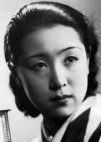
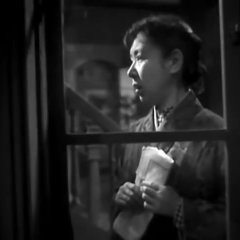
 Tanaka KinuyoHirayama EikoMain Role
 -
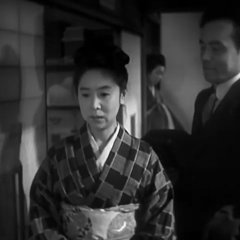
 Mito MitsukoIshikawa ChiyoMain Role
 -
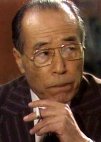
 Sugai IchiroOmoi KentaroMain Role
 -
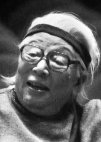
 Ozawa EitaroHayase RyuzoSupport Role
 -
 Miyake KunikoKishida ToshikoSupport Role
 -
 Senda KorenariInagaki DaisukeSupport Role



Reviews

"If men are human, then women are, too!"
The last place I was expecting to find such a delightfully feminist film was a 1949 Mizoguchi film titled Flame of My Love. Set during the late 1800s as the Liberal Party sought to expand human rights, our heroine Hirayama Eiko fought for women to be included in those equal rights. The patriarchy doesn’t fold that easy, even with “progressive” males supposedly working for those rights.Hirayama Eiko is sad to see her boyfriend, Hayase Ryuzo, leave for Tokyo to more fully immerse himself in the Liberal Party. Eiko desperately wants to join him but he dissuades her. The maid she grew up with, Chiyo, is also leaving for Tokyo, having sold herself to help her family financially. After fighting with her father and her school being closed down, Eiko packs her bags and lands on Hayase’s doorstep, something he is not too happy about. Fortunately, his boss, Omoi Kentaro, finds her a place to live and a job at their newspaper. Betrayal, good times, hard times, and more betrayals await Eiko as she fights the good fight for women’s rights.
(I won’t be going into the historical setting much because all I know of this time period and the people involved are what I gleaned from a cursory glance at Wikipedia. Several characters represented real people from the Meiji government and Liberal Party though their names were changed.)
Tanaka Kinuyo seemed a little long in the tooth at 40 to be playing Eiko, but if there’s one thing I’ve learned it’s to either mentally age or de-age actresses. Eiko was a female character to be proud of. She worked tirelessly and fearlessly for the party’s cause and for women. Along the way she learned that subjugation and exploitation ran deeper than she’d thought. She also discovered that women were brainwashed from birth to accept their secondary role and to believe that they absolutely needed a man in their life. Attempting to change the status quo would be daunting. She, however, had the heroic Omoi on her side and by her side. Together they would set the world aright. ***(spoilery comment below)
Eiko was one of the strongest, most committed female characters from this time period that I’ve seen. She didn’t let men completely limit her, despite society’s cage around women. And for sure she didn’t let anyone tell her that she or other women were less than, regardless of economic class. No one could convince her that her self worth was tied to being a wife and mother. She refused to capitulate no matter the dire circumstances. I seriously loved this character. She may not have been able to conquer the world, but she worked to improve the lives and minds of women around her. While women have made great strides in the last nearly 80 years, there are always those people who want to revert to the “good old days” and strip women of the rights and progress we’ve made. While I can never forgive Mizoguchi for betraying Tanaka in real life, I can grudgingly respect this film he created.
“It will be a hard journey and we may not reach our goal. But if no one makes the first step, women will never know freedom!”
23 February 2026
Trigger Warnings: Rape and attempted rape-several times. The film didn’t shy away from women’s vulnerability at work, in prison, in private situations with men they should have been able to trust, or being “filial” by selling themselves into prostitution. Infidelity: “Whether I have one woman or two doesn’t change anything.” That’s what you think buddy. Does it work both ways?
Spoilery comment below:
***Omoi was all about women’s equal rights and using Eiko’s gifts. That is, until he Stepford Wifed her in a moment of utter betrayal. To her credit, Eiko refused to be cowed or gaslighted. Good woman. If everyone isn’t free and equal, no one is. You preach, girl!
Was this review helpful to you?