




 Breaking Stereotypes: Older Folks in Dramaland
 - Español
- Arabic
- Українська
- Čeština
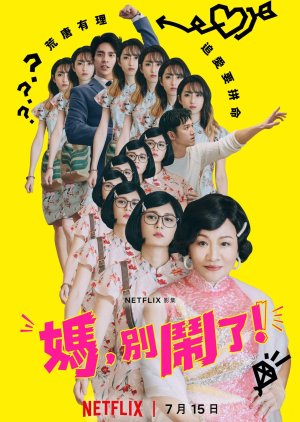
- Título original: 媽,別鬧了!
- También conocida como: Ma, Bie Nao Le! , Mãe, não faça isso! , Mami, nedělej to! , Мамо, не роби цього! (2022) , أمّي، لا تفعلي ذلك! , 妈,别闹了!
- Director: Chen Wei Ling, Lee Chun Hong
- Géneros: Comedia, Romance, Drama
Dónde ver Mom, Don't Do That!

Subscription (sub)
Reparto y créditos
-
") Alyssa ChiaChen Ru RongPapel principal
Alyssa ChiaChen Ru RongPapel principal -
") Alice KeChen Ruo MinPapel principal
Alice KeChen Ruo MinPapel principal -
") BillieWang Mei MeiPapel principal
BillieWang Mei MeiPapel principal -
") Kang Ren WuLo Hsiang Yv | Hsv Chia HaoPapel principal
Kang Ren WuLo Hsiang Yv | Hsv Chia HaoPapel principal -
") Austin LinXiao ChaPapel principal
Austin LinXiao ChaPapel principal -
") Vicky TsengCeng Kai TePapel principal
Vicky TsengCeng Kai TePapel principal
Reseñas

This review may contain spoilers
La fantasía, el duelo y la edad: un triángulo perfectamente imperfecto
“Mom! Don’t Do That!” es la típica serie que parece una cosa y acaba siendo otra muy distinta. Se presenta como dramedy ligera, colorida y doméstica, pero bajo ese barniz amable late una historia mucho más seria sobre el duelo, el paso del tiempo, el miedo a envejecer, las expectativas sociales que pesan sobre las mujeres y ese modo tan taiwanés de quererse a través de regaños, ironías y reproches que a veces lastiman más que ayudan. No es una comedia cómoda, sino una obra híbrida que se mueve entre géneros con la misma inestabilidad emocional que viven sus protagonistas.La serie adapta las memorias de Chen Ming-Min, lo cual explica su estructura fragmentaria, su ritmo irregular y esa sensación de que cada episodio pertenece a un capítulo distinto de una vida real, no a un guion cuidadosamente pulido. A veces el tono cambia de forma abrupta, pero esa imperfección es coherente con el material de origen: la vida no se organiza en actos dramáticos, y la serie renuncia a disfrazarlo.
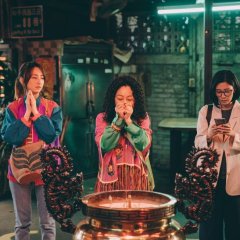
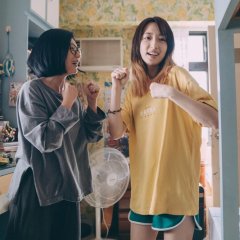
El corazón de la historia son las tres mujeres de la familia Chen:
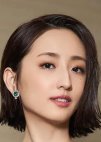
• Chen Ru Rong (Alyssa Chia), profesora de chino, escritora de novela romántica y absolutamente desinteresada en el romance real. Es una mujer que ha decidido vivir sola sin convertirlo en una tragedia, aunque arrastre un bloqueo emocional que nunca menciona.
• Chen Ruo Min (Alice Ko), la hermana menor, atrapada en una relación tóxica y en una dependencia emocional que intenta ahogar en alcohol.
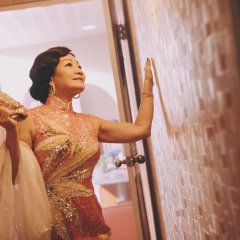
• Wang Mei Mei (Billie, magnífica), una viuda de sesenta años que decide volver a amar a pesar del juicio ajeno, la sombra idealizada de su marido muerto y el tabú cultural que envuelve el deseo femenino en la madurez.
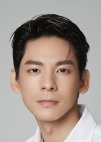
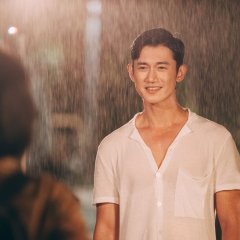
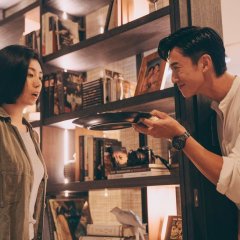
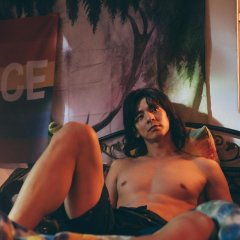
Uno de los aspectos más brillantes de la serie —y el que más merece destacarse— es el uso que se hace de la imagen de Wu Kang Ren. No aparece como personaje real, sino como fantasía, proyección, espejo del deseo idealizado de Ru Rong. La serie convierte a Wu Kang Ren en el “hombre perfecto” de las portadas de sus novelas románticas. Es una figura que solo existe dentro del imaginario de una mujer que escribe sobre el amor pero no confía en él.
Este recurso funciona en tres niveles:
Nivel meta:
El espectador taiwanés conoce bien a Wu Kang Ren; es un rostro emblemático del drama local. Verlo convertido en modelo estándar de fantasía romántica es un guiño divertidísimo (y bastante ácido) al mercado editorial del romance y a la forma en que la industria fabrica “hombres perfectos” a golpe de Photoshop y tópicos.
Nivel narrativo:
Cada vez que Ru Rong se refugia en su imaginación, Wu Kang Ren aparece como símbolo de lo que ella desea sin admitirlo. No es solo un hombre guapo: es la forma que adopta su necesidad afectiva cuando se niega a reconocerla. Sus gestos exagerados tienen intención, no son parodia gratuita; son indicadores narrativos de que ese “amor perfecto” no existe fuera de su cabeza.
Nivel emocional:
Mientras Ru Rong escribe romances que nadie compra porque se niega a vender sexo fácil y clichés, su mente crea un hombre imposible que no puede decepcionarla. La serie sugiere, con bastante sutileza, que idealizar es más seguro que arriesgarse a sentir por alguien real. En cierto modo, Wu Kang Ren encarna ese miedo: es tan perfecto que es inalcanzable, y por eso es cómodo.
El resultado es un comentario muy lúcido sobre el escapismo emocional, la autoexigencia afectiva y el cansancio que provoca sobrevivir tantos años sin permitirte ser vulnerable. No es casualidad que las escenas en las que aparece Wu Kang Ren tengan un tono distinto, casi onírico; funcionan como una cápsula estética dentro de la serie, un espacio donde Ru Rong puede respirar lo que no dice.
En contraste, la trama de Mei Mei funciona como espejo inverso. A sus sesenta años decide lanzarse a la piscina del romance real, no el imaginado, aunque eso implique pasar por una sucesión de citas absurdas que mezclan humor, vergüenza ajena y crítica social. La serie no la ridiculiza, la acompaña. Y también muestra, con una honestidad inesperada, que a su edad las amigas empiezan a desaparecer porque la muerte las visita de forma más frecuente. Esa conciencia de finitud convierte su búsqueda de amor en un acto profundamente vitalista.
La relación entre las tres mujeres es un retrato muy auténtico de la familia taiwanesa contemporánea: afecto expresado como regaños, preocupación disfrazada de crítica, cercanía que casi siempre se manifiesta a través de la exasperación. Son tres mujeres que se irritan, se hieren, se juzgan y aun así se sostienen sin pensarlo.
No es una serie perfecta. El ritmo fluctúa, algunas subtramas se sienten breves o poco profundas y la transición entre tonos puede desconcertar. Pero incluso sus fallos son parte de su atractivo: es una serie que se atreve a hablar del deseo femenino maduro, de la soledad, de la familia como espacio imperfecto y de la dificultad real de empezar de nuevo. Y lo hace sin moralinas, sin victimismos y sin reducir a sus personajes a caricaturas.
¿La recomiendo?
Sí, especialmente para quienes quieran ver un retrato honesto y poco habitual de mujeres que viven, desean, se equivocan y vuelven a empezar sin pedir permiso. No es la comedia ligera que parece; es mucho más. Y la figura constante de Wu Kang Ren, ese ideal imposible (y al final imperfecto) creado por Ru Rong, convierte a la serie en algo mucho más inteligente de lo que aparenta.
¿Te ha parecido útil esta reseña?

This review may contain spoilers
Not entirely a sexy romantic romp
WARNING: If you are looking for a light and fluffy sex-romp. THIS IS NOT IT.I admit, I can be shallow. I came here at the prospect of seeing "more" of Chris Wu (Wu Kang Ren). Also, because I love Alice Ko (Ko Chia Yen). I must admit I do like the prospect of finding love later in life. And sure, this is a show about sex, and it IS hilarious, all the way through. BUT don't be taken in by the trailers: the very clear themes of this show, are loss, abandonment, grief and trauma, and as the episodes progress, if you invest, you will find yourself crying as much as laughing.
The story centres around Mei-Mei and her two adult daughters, Ruo-Rong and Ruo-Min. Both daughters are seemingly failing in their lives, because they are unmarried. And as the trailer will tell you, Mei-Mei believes marriage is a woman's purpose.
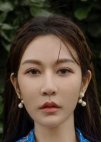
Mei-Mei decides to find a man to try to fill the gap left by the sudden passing of her husband Guang Hui Chen (played by Johnny Kou/Kou Hsi Shun). Ruo-Rong is a cheap romance novelist, working as a high school teacher, to pay the bills, whilst collecting stories from her uninhibited best friend, Kate (played by Vicky Tseng). Ruo-Min is a chicken shop manager, who is unable to let go of anything from the past, including an unapologetically cheating ex-boyfriend, whose smell reminds her of her father. Circumstances bring the three women together in the one house. Chaos ensues as they try to find a balance between their differing values, and their individual traumas.
The editing of the show is very sharp and sudden, and at first can be off-putting and confusing; however it becomes evident in later episodes that it was done this way for a reason. It also contributes to the sense of confusion and bewilderment the characters are experiencing, after the sudden loss of their husband/father.
Mei-Mei swings from spoiled teenage princess (quite a feat for an older woman to pull off - props to Billie who plays it with conviction), to desperately grieving widow. But as the show progresses, it shows us who she truly is - loving, supportive and desperately optimistic in her pursuit of LIFE! And with her progression, we also witness the subtle growth of both of her daughters.
Alyssa Chia plays a compellingly complex Ru Rong but I can't say I was satisfied with her conclusion, even if I'm meant to believe that she was, and even if the whole "telling" of the story is essentially hers. And whilst we do see substantial growth from Ruo Min, played with beautiful subtlety by Alice Ko, I still felt like I had to fill in the majority of the story with my own imagination. Admittedly, I usually like shows like this - that assume you are smart and can figure the story out for yourself. But this time, for me, the characters were not explored enough. I was left wanting more, hence my lower "story' rating. The show admits to its limitations in telling the stories of the support roles - especially Xioa Cha , Ruo-Min's cheating boyfriend, played with gleeful charm, by Austin Lin. We get almost nothing about the true character played by Chris Wu. The lack of character name in the MDL page is a giveaway, but he is only ever referred to as '"Senior". I could have watched a whole drama about Jin (Shen Hairong) and Lu Yi (Wasir Chou). And don't get me started about the side characters like "The Live Streamer" (played with an endlessly photo ready smile, by Chole Xiang) and "The Pokemon Grandpa". All of this makes the "re-watch" value high for me, as I feel like there is so much subtlety I have missed.
The acting was fantastic. Even when there was potential for it to become pantomimic and melodramatic, it continued to be very realistic. My one area of disconnect was, the scenes in Australia. Robert's (played by John Henry Richardson) accent slips. A LOT. But we (being Australian) have a long and storied history of famous actors, getting the Australian accent WRONG. The supporting cast in Oz, don't even attempt an 'Aussie' accent. But if you accept that Australia is in reality multicultural, varied accents are perfectly ok and quite realistic. The travel scenes however, are HILARIOUSLY unrealistic. I took it as a tribute rather than an attempt at fact.
With all of that, I still rate this a 9 overall. It took me by surprise and probably caught me at a good time, to cry and laugh through the grief and mayhem.
¿Te ha parecido útil esta reseña?