K-Drama


It Continues
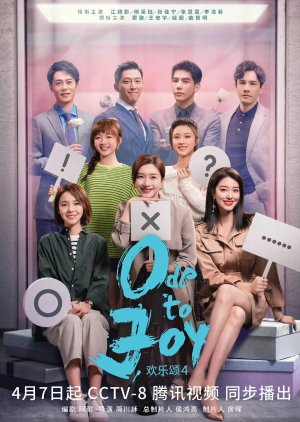
Thank you for continueing where you left off from Season 3. The Females leads are outstanding. They allhave their own problems, yet they has each others back. The sisterhood is strong and they provide a strong positive role models for females. Some may say, they have problems; which is true. Who don't have problems? Strongness comes from how they tackle their problems. They are strong minded, I will not let you get in my face nor will I allow you to yank me around female leads. This is a powerful drama about women and their ups and down, in all it's glory and sadness.I know some people are not use to haveing those type of female leads, especially pertainig to Chinese dramas. Chinese dramas usually havethe Male lead be, rich, arrogant, a CEO, demeans the female lead, gets in their faces with no consequences and no person could beat them. Female leads are usually mumbling, weak minded, yank me around, pet me on the head and get in my fale an I need a man to tell me what to do, type. Well Folks, as they say-This isn't that type of drama.
I still believe that Ye Zhen Zhen and Huang Dai Wei do not have the chemistry for a love relationship. I can see being great friends. There isn't anything I see when they are together that say love, other than freindship. It is sad to see the road that He Min Hong is taking. When you have people who got your back and you don't believe them; then it's time for you to look in the mirror. Qi Mu is not a good person and everyone knows it, but He Min Hong.
Exploring the realm of brainwashing a person is interesting. Freinds and family members are not able to break through the wall that has been implanted in the mind of a person that was brainwashed. Looking at a brain washed person and wondering how can person snap the indvdual back to reality, was explored here. How far should a parent go to help their adult child when they have been brain washed? What should the person's friend go to help them? This drama explores that and more.
I can't wait to watch Season 5. I remmend and will watch this drama again.
Was this review helpful to you?
better than last season, that's for sure
Subs are bugged if you watch the one on yt. The timing is really off so much so that sometimes it skips some lines. It's slow at first but picks up during the last half of the show. This season focuses more on the relationships between the characters, and I'd argue their dynamics are just as good as the original cast. The writing is a definite improvement to last season's. Acting is good as always, music is pretty catchy, and rewatch value is better than last season's fs.Story: There wasn’t much romance to begin with last season, but this time, it focuses more on their love interests and less on HongHong’s shortcomings. Honestly, I quite like the relationships. Each one has different dynamics and have their own charm to it. Some of them try to sort out their problems as adults and misunderstandings aren’t exaggerated. I’d go as far to say that the relationship dynamics are as good as the original’s. The writing is significantly better, as they touch on topics that are a little too real as an adult.
Acting/Cast: Really good, especially the moments where they're supposed to be fuming, they really capture that feeling.
Music: I think they rendition one of the original season’s music, which is nice. The new ones are still pretty catchy.
Rewatch value: personally I think this is a one-and-done, but fs better than last season.
Was this review helpful to you?

Rewriting the 22nd Floor with New Wounds and Familiar Hands
Season 4 of Ode to Joy feels like an intimate reset: the same building, new faces, familiar longings. It doesn’t aim to replicate what came before; it asks again what it means to be a woman in a city that demands effort, ambition, and the capacity to reinvent oneself. And it asks quietly: not through grand lessons, but through the small frictions of everyday life that force growth.The heart of the show remains coexistence—five women sharing a living space and, with it, the tensions of adult life in motion. Ye Zhenzhen embodies vocational drive. A scientist devoted to her research, her conflict lives where it so often does: between her passion for her work and the expectations of her family. Her bond with Dai Wei becomes a kind of crucible—not a fairytale romance, but a relationship that pushes her to define boundaries, negotiate priorities, and remember that the most important sense of belonging is the one she grants herself.
Fang Zhiheng enters the story with wounds that have yet to close. Her arc is less about a romantic interest and more about rebuilding trust. She is the rare protagonist whose most profound relationship is not with a partner but with herself—and with the women who stand beside her. Her healing process is slow, dignified, and honest; when the season diverts from love stories to focus on identity, it is Fang who shines the brightest.
Zhu Zhe brings the labor narrative into focus: her ambition is forged by scarcity rather than vanity. Her workplace struggles—precarity, competition, the tough climb toward upward mobility—remind us of the social fabric woven through the season: the fight to be seen, valued, and taken seriously. Her story honors those who build their lives through disciplined effort, and highlights that professional self-worth is its own form of love.
He Minhong’s arc is more turbulent. Her romantic entanglement—misunderstandings, emotional aftermath, and the impact it has on her choices—stretches the dynamics within the group and forces everyone to reckon with boundaries and accountability. Her storyline is a reminder that personal decisions ripple outward, and that growing up means balancing personal desire with consideration for others.
Yu Chuhui represents a quieter transition toward stability—learning to prioritize, to articulate dreams, and to form a steady professional identity. Her development is subtle but firm, one of the clearest signs of maturity in the ensemble.
Romantic partners and potential love interests—like Dai Wei or others who enter briefly—are not treated as endpoints but as catalysts. They act as emotional laboratories where the women test boundaries, learn to voice needs, and discover that love is not about self-erasure but about shared presence.
Secondary characters enrich the world around them: families who pressure, bosses who protect or belittle, coworkers who compete, and friends who quietly hold them up. These are not decorative figures—they push the protagonists toward decisive moments. And the friendship at the heart of the 22nd floor remains undeniable: five women who offer advice, honest corrections, and small acts of care that feel like communal therapy.
Critically, the season faces the inevitable challenge of all reboots: nostalgia for the original cast lingers. At times, the pacing fragments; subplots compete for narrative gravity and can dilute emotional focus. Yet the show gains strength in its realism: workplace precarity, young adult anxiety, and the ambiguity of modern relationships are portrayed with an admirable restraint, free from melodrama.
As a whole, this season commits to emotional authenticity. It would rather show unresolved doubts than promise neat conclusions; it chooses characters who falter and try again over those who exist only to satisfy narrative expectations. That honesty, even when imperfect, is powerful.
In the end, the season feels like attending a shared workshop on adulthood—where the lessons are about negotiating dreams and relationships, maintaining boundaries without sacrificing tenderness, and understanding that sisterhood, that chosen family, may be the most reliable compass in urban chaos.
And so, gratitude to everyone who brought this reimagined 22nd floor to life: for treating contemporary womanhood with sensitivity, for proving that new faces can still hold the soul of the series, and for reminding us that growth is, above all, a collective act.
Was this review helpful to you?