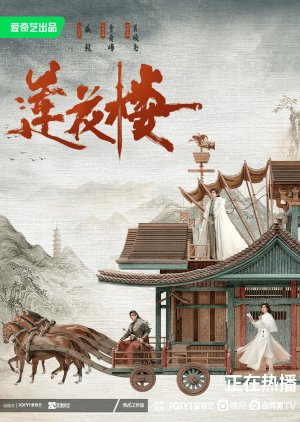



Both have a likeable gang of characters solving cases.
Young blood's cases are more engaging and consequential whereas MLC's feel more like props. MLC is a higher budget production, though YB is arguably better in most areas such as plot, characterization, and acting.
For non-native speakers, MLC may be more accessible and an easier breezier watch.
Young blood's cases are more engaging and consequential whereas MLC's feel more like props. MLC is a higher budget production, though YB is arguably better in most areas such as plot, characterization, and acting.
For non-native speakers, MLC may be more accessible and an easier breezier watch.

Both contain case-solving, humor, and heartfelt moments, and a grand arc that spans the entire season.
BoT is a modern, supernatural investigative procedural that pushes along the main character arc at a brisk pace. It matches the quality and style of some of the best Hollywood procedural shows in mixing side-splitting absurdist humor, astute social commentary, and heartfelt moments. The show replaces bromance with a more team camaraderie and realistic romance between ML and FL. The engaging and consequential cases and grand story arc culminates in an exciting finale.
The biggest issue is the poor subtitle quality limits the accessibility as much of the hilarity and context of the show may be bungled by subpar translation. Though fluent Chinese speakers will likely enjoy this quirky hidden gem.
BoT is a modern, supernatural investigative procedural that pushes along the main character arc at a brisk pace. It matches the quality and style of some of the best Hollywood procedural shows in mixing side-splitting absurdist humor, astute social commentary, and heartfelt moments. The show replaces bromance with a more team camaraderie and realistic romance between ML and FL. The engaging and consequential cases and grand story arc culminates in an exciting finale.
The biggest issue is the poor subtitle quality limits the accessibility as much of the hilarity and context of the show may be bungled by subpar translation. Though fluent Chinese speakers will likely enjoy this quirky hidden gem.
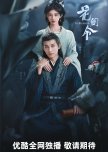

Both share a compelling blend of mystery, action, and a protagonist whose unique skills draw them into dangerous, intricate situations. In Treasure at Dawn, Hua Fu Sheng, an inexperienced yet brilliant doctor, becomes entangled in a series of mysterious deaths while pursuing medical knowledge and truth, often aided by clever allies like Wen Jue and Gu Tian. Similarly, in Mysterious Lotus Casebook, Li Lian Hua, a former martial arts master turned wandering doctor, is pulled back into the martial world and drawn into solving complex mysteries alongside former rivals and allies.
Both dramas feature protagonists whose professions medicine and martial arts position them uniquely to navigate threats, secrets, and conspiracies. They also emphasize teamwork and trust, as the leads rely on their companions’ intelligence and skills to uncover hidden truths. Additionally, each story blends suspense with personal growth, friendship, and moments of light humor, making the narratives engaging beyond the central mysteries.
The settings further enhance the similarity: in both, a city or region becomes a stage for layered conspiracies, unusual events, and societal tension. Both deliver thrilling investigations, eccentric yet skilled leads, intricate plots, and a satisfying mix of action, mystery, and emotional depth.
Both dramas feature protagonists whose professions medicine and martial arts position them uniquely to navigate threats, secrets, and conspiracies. They also emphasize teamwork and trust, as the leads rely on their companions’ intelligence and skills to uncover hidden truths. Additionally, each story blends suspense with personal growth, friendship, and moments of light humor, making the narratives engaging beyond the central mysteries.
The settings further enhance the similarity: in both, a city or region becomes a stage for layered conspiracies, unusual events, and societal tension. Both deliver thrilling investigations, eccentric yet skilled leads, intricate plots, and a satisfying mix of action, mystery, and emotional depth.



Just like Mysterious Lotus Casebook, The Imperial Coroner blends clever investigations, a touch of politics, and deep character bonds that grow with every case. While Lotus gave us the mysterious Li Lianhua, charming Fang Duobing, and formidable Di Feisheng working together to uncover the truth, The Imperial Coroner introduces the bright and determined Chu Chu, who teams up with the sharp-minded Prince Xiao Jin Yu to solve murders wrapped in royal conspiracies.
Both dramas are set in rich historical settings where the tension between justice and power runs deep. Courtrooms, corruption, false decrees, and secrets buried under political layers — all of it feels familiar and just as thrilling. Though The Imperial Coroner leans more toward forensic mystery than martial arts, the intellectual satisfaction of unraveling each case is equally rewarding.
If you liked how Mysterious Lotus Casebook showed characters healing from the past and forming powerful bonds, you’ll enjoy how Chu Chu and Xiao Jin Yu’s partnership slowly develops — filled with trust, unspoken care, and sharp-witted banter. And yes, The Imperial Coroner has romance too — subtle, sweet, and earned.
Both series also use side characters meaningfully, adding warmth and humor without breaking the serious tone. And like how Lotus kept us hooked with emotionally loaded cases and brilliant reveals, Imperial Coroner delivers satisfying resolutions without rushing the details.
With engaging leads, strong storytelling, and a focus on justice over status, The Imperial Coroner is the perfect follow-up for anyone who admired the mind games, teamwork, and heartfelt moments in Mysterious Lotus Casebook.
Both dramas are set in rich historical settings where the tension between justice and power runs deep. Courtrooms, corruption, false decrees, and secrets buried under political layers — all of it feels familiar and just as thrilling. Though The Imperial Coroner leans more toward forensic mystery than martial arts, the intellectual satisfaction of unraveling each case is equally rewarding.
If you liked how Mysterious Lotus Casebook showed characters healing from the past and forming powerful bonds, you’ll enjoy how Chu Chu and Xiao Jin Yu’s partnership slowly develops — filled with trust, unspoken care, and sharp-witted banter. And yes, The Imperial Coroner has romance too — subtle, sweet, and earned.
Both series also use side characters meaningfully, adding warmth and humor without breaking the serious tone. And like how Lotus kept us hooked with emotionally loaded cases and brilliant reveals, Imperial Coroner delivers satisfying resolutions without rushing the details.
With engaging leads, strong storytelling, and a focus on justice over status, The Imperial Coroner is the perfect follow-up for anyone who admired the mind games, teamwork, and heartfelt moments in Mysterious Lotus Casebook.
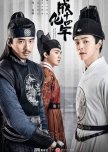
Both shows have a trio untangling a complex mystery over several smaller cases. The Sleuth of Ming Dynasty focuses more on a specific pair, and the dynamics are very different from Mysterious Lotus Casebook, but you'll still find relationships that evolve into unshakable devotion, moral ambiguity, and characters willing to put themselves in great peril for the truth (and each other). You may also appreciate that the main characters are competent adults* with significant skills.
The two main characters are Sui Zhou and Tang Fan. Sui Zhou is an excellent fighter with a traumatic past. He's laconic and mostly no-nonsense and frequently exasperated. His love language is cooking and he'd tolerate Li Lianhua in a kitchen for less than half a second. Tang Fan can't fight at all but has a brilliant mind, and unfortunately makes Fang Duobing at his poutiest/silliest look like an ascetic monk. The third major character, Wang Zhi, is a schemer with Imperial resources (he would absolutely eat Shan Gudao and Jiao Liqiao for lunch).
Important note: None of these people start off the show already 90% dead. So if you're looking for that specific vibe, it's not here.
The fighting scenes in Sleuth are very well choreographed, though they're pretty well-grounded and not as fanciful as typical wuxia combat. Even qinggong/lightness skills are limited to a couple of blink-and-you'll-miss-it moments. This could be disappointing coming off of MLC, but if you pay attention the fighting is really very well done, just not flashy. Despite the style differences, I found both shows' fight scenes to be worth watching and focused on what the characters/actors are doing. This is in contrast to many other shows where it's more about explosions, poses, CGI, and camera cuts.
Differences: Sleuth has a more consistent cast of side characters who are allowed to develop more than MLC's side characters. Although it's far from anything that actually happened, it's set in a specific year of China's history, in real places, and many characters share names and titles with real people (including the third person in the trio). So it doesn't have that timeless wuxia feeling that MLC does. And Sleuth really is a dangai (based on a danmei novel in which the two main characters are genuinely a couple, but rewritten to be acceptable under current rules) whereas MLC is not.
I followed up MLC with The Blood of Youth which I liked, but it was such a jarring contrast. Despite having some characters and arcs that on paper seemed very MLC-like, the show's mood and storytelling are just in a different realm from MLC. Sleuth was the next show I watched, and despite its obvious differences, for me there's just something similar about the vibes. So I recommend giving it a try.
*Let's not get into their supposed ages; they make even less sense than MLC's ages and timelines do
The two main characters are Sui Zhou and Tang Fan. Sui Zhou is an excellent fighter with a traumatic past. He's laconic and mostly no-nonsense and frequently exasperated. His love language is cooking and he'd tolerate Li Lianhua in a kitchen for less than half a second. Tang Fan can't fight at all but has a brilliant mind, and unfortunately makes Fang Duobing at his poutiest/silliest look like an ascetic monk. The third major character, Wang Zhi, is a schemer with Imperial resources (he would absolutely eat Shan Gudao and Jiao Liqiao for lunch).
Important note: None of these people start off the show already 90% dead. So if you're looking for that specific vibe, it's not here.
The fighting scenes in Sleuth are very well choreographed, though they're pretty well-grounded and not as fanciful as typical wuxia combat. Even qinggong/lightness skills are limited to a couple of blink-and-you'll-miss-it moments. This could be disappointing coming off of MLC, but if you pay attention the fighting is really very well done, just not flashy. Despite the style differences, I found both shows' fight scenes to be worth watching and focused on what the characters/actors are doing. This is in contrast to many other shows where it's more about explosions, poses, CGI, and camera cuts.
Differences: Sleuth has a more consistent cast of side characters who are allowed to develop more than MLC's side characters. Although it's far from anything that actually happened, it's set in a specific year of China's history, in real places, and many characters share names and titles with real people (including the third person in the trio). So it doesn't have that timeless wuxia feeling that MLC does. And Sleuth really is a dangai (based on a danmei novel in which the two main characters are genuinely a couple, but rewritten to be acceptable under current rules) whereas MLC is not.
I followed up MLC with The Blood of Youth which I liked, but it was such a jarring contrast. Despite having some characters and arcs that on paper seemed very MLC-like, the show's mood and storytelling are just in a different realm from MLC. Sleuth was the next show I watched, and despite its obvious differences, for me there's just something similar about the vibes. So I recommend giving it a try.
*Let's not get into their supposed ages; they make even less sense than MLC's ages and timelines do