Bad casting
Worst female lead… she made it everything 1000x boring. Just couldn’t bear to watch her face. Even her smile or little gestures r so f bland. She even looks too mid n old. She ruined everything fr me.Worst female lead… she made it everything 1000x boring. Just couldn’t bear to watch her face. Even her smile or little gestures r so f bland. She even looks too mid n old. She ruined everything fr me.
Was this review helpful to you?
ONE OF THE BEST CDRAMAS IN A WHILE!
The drama makes you feel like you're reading a book. You're completely immersed in the story. The acting and chemistry between the leads is what lifts this story. There are a lot of dramas where the acting is just meh but this one. . .the acting has been amazing, especially for the main leads. The ML always has a smile on his face but behind that smile is sadness, and despair and the actor delivers it so beautifully. The same with the actress, her eye acting conveys so much that it feels like I'm in the story.The plot hasn't been completely established yet but it's a 38-episode drama and we're only on episode 8 now. I don't expect it to pick up immediately so I don't mind the slow pace of things. If it's too fast pace, it doesn't feel authentic to me.
I can't wait for the following episodes to see where Li Zan and Song Ran takes us.
Was this review helpful to you?
Love this drama
First i watch Hidden love and looking for Yuan’s another drama.. when i found it, then i read the novel, i understand why Yuan and Liang jie very suitable for this role..I loooovee them so much!!
Liang jie’s cry scene is another level, i really love her eyes when her cry and i love Azan eyes when he look at Ranran..
I hope this drama can air on Netflix so that it becomes more global.. fighting!!
Was this review helpful to you?
Lack of action and lack of chemistry
The main couple are… boring. There’s no personality, just shyness and sweet glances. The rest of the side characters are more interesting than the main couple!Also, this is so dragged out. The slow motion, the standing around, the unnecessary close ups. You did not need 38 episodes for this. You could’ve cut out all the almost-tension between the main couple who obviously both like each other and take way too long to get together, and this could’ve been maybe 16 or 18 episodes at the most.
For a show that takes place in a warzone, the action was barely there. Apart from a few scenes that show some actual fighting, the geographical area was quite calm. The most work the soldiers had to do was planting vegetables and ferrying the reporter protagonist around.
And they never did explain why the country was at war and who they were at war with which only goes to show how weak the writing was.
Was this review helpful to you?
Script is the weakest link
This drama was so anticipated and so the letdown was major for me.Chen Zhe Yuan and Liang Jie’s acting was good. Their chemistry was on point. They carried and are still carrying the show as best as they can.
The cinematography is awesome, the stills for this drama are so great and they capture so much emotion.
The direction is ok. Nothing much to complain there. They did make the sets look as real as it possibly could. Making sets look like war torn areas definitely must not have been easy. Maybe they spent too much on sets and side roles because the script is so so bad.
Honestly I wanted so much to like it. I can tolerate a lot of lame dramas, but this one takes the cake. So why is it lame? Every role that is not the FL and the ML are simply tools existing to put the FL and ML together. Take for instance the 2FL, who is the team lead of the FL. her sole purpose in the drama is to one up the FL, she exists solely to take the ML away from the FL. She goes to a war torn country as a journalist to take the ML away from the FL. Let’s not talk about being unprofessional as a journalist or going to a war torn country as a journalist with personal reasons, she goes up to the FL in the first instance she gets and tell the FL that she is going to make sure she wins the ML over. Another instance is when they use some extras to push the FL to the ML for a critical moment for the ML to reach out and hold the FL closely. The moment seems so staged and so unnatural that if it wasn’t for CZY and LJ, it wouldn’t have been pulled off. Last instance is that being in a war torn country, CZY’s team mates are only concerned about the female journalists. It’s all they talk about. I mean the story and the script is so incredibly incredulously weak. Here they have a entire set of a war torn country and they have such a sad script to back it up. It’s honestly rubbish.
Another honorable mention -rant is the speed of their speech. It’s as if the director made them deliberately talk 0.5x the normal speed because all their dialog is so so so slow you really ought to watch the show in 1.5x speed.
Last honorable mention is the music. Granted there are a lot of songs, but please please please get the English right or at least make it sound normal. Most of the songs feature strange English lyrics. Yes, they are English words but the words don’t make sense. It takes you right out of the drama.
I guess I’m writing this because I really need to drop it but I needed some closure because I looked forward to this drama for a long time and I wanted so so much to love it.
Was this review helpful to you?
Amazing
The most depressing show I’ve ever watched, but 100% worth it. The OST was so beautiful I love listening to it. Everything about this show was so devastatingly beautiful. The actors did an amazing job portraying their characters, and showing the depth of ptsd and depression. Definitely recommend although you must be prepared to cry.Was this review helpful to you?

This review may contain spoilers
Amazing Story
I loved this story. It's an amazing story and gut-wrenching at the same time. The portrayal of war and it's affects afterwards is on point. PTSD is a very sad disease that I have personally went through and am still recovering from. This drama was on point in regards to how this disease affects people. The acting was superb by all the cast. Be prepared with lots of tissue when watching this. Not only did this drama portray PTSD, but also major depressive disorder. When going through these issues, the people around you don't know how to help you. As for strangers, they see these outbursts and assume the person is just crazy and have no idea what they are going through. This story made me laugh and cry all at the same time.Was this review helpful to you?
This review may contain spoilers
Love Amidst the Ruins: A Haunting Romance in a War-Torn Land
WARNING:DON'T WATCH IF YOU ARE EASILY TRIGGEREDDRAMA CONTENT WARNING:Dark themes present like PTSD,******,etc.
NOTE:This is a chatgpt generated review after distilling the bests and the negatives.
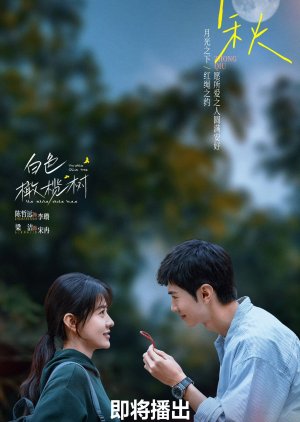
"White Olive Tree" is a beautifully crafted Chinese drama that invites its audience to experience a slow-burning, introspective journey. The series uses the metaphor of the white olive tree—symbolizing resilience and quiet strength—to explore themes of tradition, identity, and personal growth.
Positives
• Stunning Cinematography: The visual presentation is one of the drama’s standout features. Each frame is meticulously composed, with natural landscapes and intimate close-ups that capture both the grandeur of nature and the subtleties of human emotion.
• Compelling Performances: The lead actor delivers a nuanced performance that anchors the narrative, bringing depth and authenticity to a character caught between modern dilemmas and traditional expectations. The supporting cast, though uneven at times, contributes memorable moments that enrich the overall story.The compelling performances in White Olive Tree are one of its strongest assets, bringing depth and authenticity to a story that relies heavily on emotional nuance. The lead actor delivers a powerful portrayal of a character torn between love, duty, and the scars of war, capturing the internal struggles with subtle facial expressions and restrained yet impactful delivery. Their chemistry with the female lead is palpable, making their moments of tenderness and conflict feel raw and deeply moving.
The supporting cast also contributes significantly to the emotional weight of the drama. From hardened soldiers grappling with loss to civilians clinging to hope in a shattered world, each performance adds layers to the story. While some side characters could have been developed further, their portrayals still succeed in enriching the atmosphere of the drama. The actors’ ability to convey complex emotions—sometimes without words—ensures that even the quietest moments carry weight, making White Olive Tree a drama that lingers in the mind long after the final scene.
• Atmospheric Score: The musical score complements the visual storytelling perfectly. Its gentle, evocative tunes enhance the drama’s reflective tone, drawing viewers deeper into the world the characters inhabit.The melodies subtly shift with the emotional currents of the story, intensifying moments of longing, sorrow, and quiet resilience. Rather than overwhelming the narrative, the music acts as an invisible thread that binds the scenes together, allowing emotions to linger long after the dialogue fades. This immersive quality makes the viewing experience not just engaging but profoundly affecting, as if the audience is not merely watching the story unfold but feeling it resonate on a deeper, almost subconscious level.
• Thoughtful Storytelling: The drama excels in its understated narrative style. It invites viewers to engage with its symbolism and themes, offering a contemplative exploration of life’s complexities without relying on overt exposition.The thoughtful storytelling in White Olive Tree is one of its most defining features, elevating it beyond a conventional war-time romance into a deeply introspective journey. The drama unfolds with a poetic sensibility, relying on quiet moments, unspoken words, and symbolic imagery to convey its themes of love, loss, and resilience. Rather than spelling everything out for the audience, it trusts viewers to engage with the material on a deeper level, making each revelation feel earned and impactful.
One of the drama’s strengths lies in its ability to balance personal struggles with the larger backdrop of war and destruction. The narrative doesn’t merely use the war as a setting but intertwines it with the characters' emotional battles, showing how external chaos mirrors their internal turmoil. Flashbacks, fragmented memories, and parallel storytelling techniques are used effectively to build tension and emotional weight, ensuring that even the smallest details carry significance.
Additionally, White Olive Tree excels in exploring moral dilemmas, forcing its characters to navigate between duty and personal desire, past and present, survival and sacrifice. By focusing on these intricate conflicts rather than relying on melodramatic twists, the drama maintains a mature, thought-provoking tone. The pacing, though slow at times, allows for deep character development, making the emotional payoffs all the more satisfying. This deliberate and reflective approach ensures that White Olive Tree is not just a love story but a meditation on the fragility and strength of the human spirit in times of crisis.
Negatives
• Pacing Issues: While the deliberate pace allows for a deep immersion into the story, some viewers might find the initial episodes overly slow. The measured unfolding of events could be challenging for those accustomed to a more dynamic storytelling style.
• Underdeveloped Subplots: Some secondary characters and subplots do not receive the same level of attention as the main narrative, which can make parts of the story feel underdeveloped. This occasionally detracts from the overall richness of the drama.
• Heavy Symbolism: The extensive use of symbolism, while artistically ambitious, can sometimes feel forced. At moments, the narrative leans so heavily on metaphor that it may obscure rather than clarify the characters’ motivations and the story’s direction.
Final Thoughts
"White Olive Tree" is a drama that will appeal most to viewers who appreciate artful, meditative storytelling. Its strong visual aesthetic and emotional depth make it a rewarding experience, though the slow pace and occasional narrative gaps may not suit everyone’s tastes. Overall, it stands as a testament to the beauty of subtle, character-driven drama in modern Chinese television.
Was this review helpful to you?

should I cry or should I feel happy for this ending?
I'll never gonna heal from this. For me it was a masterpiece. I didn't wanted to cry this much, I prefer the beginning of it. It was not so sad then. I really loved the lead actor and actress chemistry. They acted like they really belong to each other. I felt true how they felt for each other on the screen. They knew what they doing. We saw a lot of thing what we must. There are really bad people all over the world, but that is not the only problem.. Starvation, no home, being an orphan. There are a lot of bad thing that can hurt people..It is true the the story is not the best, the acting and every other stuff was perfect.
I really don't know how to handle the ending. It was bittersweet. But I feel like this was more bitter than sweet. Life is trutly difficult and this drama shows to us in the best way.
Was this review helpful to you?

This review may contain spoilers
This is great artwork.
It changed me, impacted me so much. There will never be another show as good and powerful as this one. The actors and actresses had strenth of character. They had to not care about ego public scritiny to be willing to play these roles because they were not "pretty" roles. They remind us what is going on innthe world and that the world needs kindness. It shows us the bonds of human love thru Ben, SaXin, Dr Pei,Jiang Li, and Shen Bai...Oh! how she changed...what do we value in this world and sometimes doing the right thing matters most, even if you are the only one doing it. It asks so many questions, like when does our duty to care like keeping others from hurting themselves outweigh self-determination and the human right to DIGNITY? I dont think the writers were going for that, but good art can bring up questions. When he finally stands in front of the circle of wooden plaques with dirt, where he planted olive seeds (i think thats what he did), he finally had his resolve, that silent moment of awarenes. On his right is that pile of dirt and the stone ..like an ancient Chinese grave to bury his past..? and from that point on we are just helpless to do anything and the final song plays, the words hits us so hard ??... maybe the writers, directors, storytellers want us to feel that helplessness and the moral injury...maybe that is what SongRan felt for so long. That conflict we feel, the story wants us to feel a little unsettled and moral injury. It asks that we resolve it for ourselves, come to terms with certain things. There are ethical delimnas. It shows how society misjudges and stigmatizes mental illness and how systems fails not only the one diagnosed, but also how the wife, girlfriend or maybe the one parent has to support that person alone. They are just as effected and isolated. But remember, there are also glimmers of hope when he did get better by his own version of "exposure therapy" when he was determined to heal, but no one supported that. He was silent. We want him to tell someone, we want him to let someone in. It also shows how peers, people that also suffer and recover can help other sufferers..he says "I am like you" when the guy had a melt down holding Dr Pei hostage. A person can only get the help if they want to get better and if there is are good systems and supports are available. The White Olive Tree is a mirage and our hope for justice in the world, is it realistic or a mirage? But the hope we do have is in ourselves through compassion, kindness, support and love..... I work with veteran soldiers with PTSD. Every once in a while, I believe God gives me a shot in the arm, a reminder, something that reignites passion , that heals me from burnout in my work. This time, it was the gift of this story.I did want to address some criticisms I read related to language and accents. I believe the production staff wanted a more realistic environment. Us Americans can feel central to many things sometimes : ) We want top notch English speakers, but this was a Chineses drama so the cast really needed to be fluent in Chinese. Then they cast people to represent an area of the world that was not America, so they are going to have accents. In real war-torn zones, relief workers and refugees , soldiers, survivors are going to be multinational. At the start, they kept asking "what nationality are you," in English to show this norm in communication.....They will speak a core language, which happens to be English. It will most likely be their second, third, fourth language. They did not cast or write in a single American character. The show's cast members were all multilingual, but needed to be fluent in Chinese most importantly, not English..lol....
Was this review helpful to you?
Am still trying to figure out which country is Eastern country exactly? There were ppl who spoke bad Eng, some Arabian language and even grandma who spoke Serbian (who sold olive seeds- "dete sve zelje ce da ti se ispune") and some ppl who obviously looked Russian.Is it Albania or Ukraine? Or some screen mix of existing countries?? Both story and plot would feel less forced and more realistic if this was clear, and this makes big impact with war related topics.
In general i like actors and that kept me passing through some weak plot parts.
Was this review helpful to you?
This review may contain spoilers
**The White Olive Tree: A Heart-Wrenching Tale of Love, War, and Trauma**
*The White Olive Tree* is a drama that leaves a lasting emotional impact, blending military themes with a deeply personal love story. While the series has its strengths and weaknesses, one undeniable highlight is the outstanding performance of Chen Zhe Yuan as Li Zan.
Chen Zhe Yuan’s acting truly set him apart from the rest of the cast. His ability to embody Li Zan’s trauma, particularly his PTSD, was remarkable—not just through dialogue but through his expressions and body language. His performance conveyed the weight of his character’s suffering in a way that felt incredibly raw and real. The fact that the actor himself admitted to getting emotional and even crying over Li Zan shows how much he cared for and fully became the character. Every smile, every tear, and every moment of silent anguish felt authentic, making his portrayal one of the drama’s strongest aspects.
Liang Jie, who played Song Ran, also delivered a strong performance, but her character was at times frustratingly written. In the earlier episodes, she often came across as too dependent on Li Zan, almost like a lapdog, which made her character feel weaker than she should have been. However, towards the later episodes, she grew into her own pain and developed more depth, which made her character arc more compelling.
The plot itself had both high and low points. The first half of the drama was gripping—it kept me on the edge of my seat, bringing intense emotions and making me eager to watch the next episode. However, after the accident that caused Li Zan’s PTSD, Song Ran’s eye issues, and Li Zan’s hearing problems, the pacing took a hit. The episodes started feeling unnecessarily long, with not enough plot progression, making the 38-episode count seem excessive.
A major issue in the storyline was the unrealistic depiction of psychological recovery. Both Li Zan and Song Ran were diagnosed with severe PTSD and other mental health conditions, yet they were somehow allowed to return to the field. While it made sense for Song Ran as a journalist, it was completely unrealistic for Li Zan as an explosive engineer. Realistically, someone with his condition would have undergone extensive psychological evaluations over months, if not years, before being cleared to return. The way the drama glossed over this crucial aspect of military protocol was frustrating and made certain plot points feel forced.
However, the story picked up again after they returned, bringing some of the best acting moments from Chen Zhe Yuan. His portrayal of Li Zan’s internal struggle—the pain of witnessing destruction, loss, and death—was gut-wrenching. The depth of his suffering was palpable, especially in scenes like the hospital breakdown and the kitchen moment where he hesitated to kiss Song Ran due to his missing fingers. These moments were incredibly powerful, telling a thousand unspoken words through his expressions alone.
One of the most touching scenes was when Song Ran read Li Zan’s thoughts and words about her—his love, his pain, and his desire to be with her. When she assured him that they would always be together, no matter what, it became clear that the drama would diverge from the novel’s original ending. This change felt fitting, as it gave them a moment of happiness before their final decision to leave behind their pain and suffering together. Their love story was tender, sweet, and heartbreaking—Li Zan truly loved Song Ran, and despite her at times needy nature, she deeply loved him in return, ultimately following him when she knew his pain was too much to bear alone.
Ben’s character was another standout, and his tragic fate was heartbreaking. His death, and the sight of his headstone, reinforced one of the drama’s most poignant messages: in war, no one truly wins. Some die on the battlefield, some succumb to their injuries, others survive but carry wounds that never heal, and some—like Li Zan and Song Ran—are ultimately unable to escape the weight of their experiences. War leaves no one untouched, and even those who live through it are changed forever, haunted by memories they wish they could forget.
Li Zan as a character left a deep impact on me, and I know I will always remember him. Even days after finishing the drama, I still feel pain for him and his suffering. His struggles, his sorrow, and the weight he carried continue to linger in my heart. More than anything, I wish him true happiness, even if only in another life. Whenever I see a beautiful olive tree, I will think of him—of his smile when he was truly happy, playing in the water with his friends and being with Song Ran. That moment of joy, fleeting as it was, is how I want to remember him.
Overall, *The White Olive Tree* was a beautifully tragic drama with powerful performances, particularly from Chen Zhe Yuan. While the pacing and certain plot points could have been handled better, the raw emotion, stunning acting, and deep themes made it an unforgettable watch. The romance was delicate yet devastating, and the show’s ultimate message about the scars of war was profound. If you’re looking for a drama that will move you to tears and leave you reflecting long after it ends, *The White Olive Tree* is worth watching.
Was this review helpful to you?