K-Drama



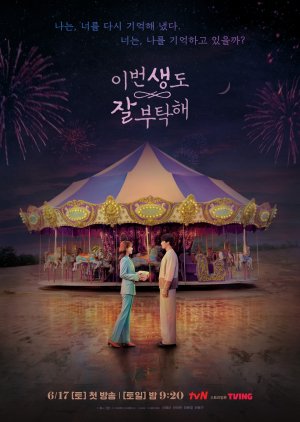
Both have elements of love intertwined with past trauma. Both female leads are quirky and strange, and have a unique mystical talent (different ones in each drama). Both dramas are a mixture of a sinister past returning to the present yet they maintain a bubbly charming vibe. The male characters are emotionally cautious and closed off due to previous trauma. While both female characters also carry their traumas, they maintain a much more open and positive personality.

Parallel Themes & Story Elements
• Enduring Love Across Time: Both shows explore a central romance that spans decades or lifetimes. While See You in My 19th Life deals with literal reincarnation, When Life Gives You Tangerines acts as a sweeping romance saga covering over six decades of the main characters' lives from youth to old age.
• Childhood Connections & Destiny: In both narratives, the deep connection forged between the leads during their childhood or youth sets the foundational path for their entire life journey and ultimate fate.
• Highly Emotional and Nostalgic Tones: Both series are celebrated by viewers for being emotional "tear-jerkers" that beautifully capture bittersweet moments, grief, personal growth, and a profound appreciation for life and relationships.
• Shared Cast Members: The late veteran actress Kang Myung-joo delivered memorable performances in both series. She played Cho Yu-seon in See You in My 19th Life on Netflix and portrayed Yoon Bu-yong (Yeong-beom's mother) in When Life Gives You Tangerines on Netflix.
• Streaming Platform: Both K-dramas are high-profile, globally acclaimed Netflix originals that found massive international popularity.

The Heavenly Idol and See You in My 19th Life share key similarities as 2023 fantasy-romance K-dramas that focus on unusual souls adapting to new identities in modern South Korea.
• The Isolated Partner: Both stories center on a modern-day lead who is completely cut off from genuine human connection. In See You in My 19th Life, Moon Seo-ha is locked away in his own grief and PTSD following a childhood tragedy. In The Heavenly Idol, the idol manager Kim Dal is drowning in severe guilt and depression from a past failure in the entertainment industry.
• The Unusual Savior: Into their lives steps a supernatural anomaly, a woman who remembers her 19 past lives (Ban Ji-eum) and a High Priest from another world with actual holy powers (Pontifex Rembrary).
• The Unconditional Safe Haven: The ultimate bond forms because these supernatural leads offer an absolute, unwavering emotional safety net. Ji-eum uses her centuries of wisdom to gently pull Seo-ha out of his traumatic past, while Rembrary uses his pure, untainted divinity to physically and emotionally wash away Kim Dal's psychological distress.

• The Shared Element of Hearing Impairment: Both series uniquely feature a central plot point involving sudden auditory trauma. Eun-gyeol fights to prevent the accident that causes his father's deafness, while Seo-ha navigates partial hearing damage caused by a tragic car crash.
• Supernatural Manipulation of Time: Both shows feature protagonists who transcend natural timelines to reach someone they love. Eun-gyeol time-travels to 1995, while Ban Ji-eum uses her 19th reincarnation cycle to change the future.
• Healing Trauma and Guilt: Both plots focus on rescuing a loved one from profound emotional or physical suffering. Characters struggle heavily with grief, family burdens, and tragic accidents.
• Reconnecting with Younger Versions of Loved Ones: Both leads actively track down people they know from a completely different context. Eun-gyeol befriends his teenage father, and Ji-eum pursues her childhood friend as an adult.