
 News
News 



-- Table of contents --2 Production, shooting location, reception 3. OST Music and BGM music heard in the series, or related music 5.Maps to travel, Silk Road and miscellaneous information 6.Kashgar 7. Muztagh Ata and the Karakoram highway 8.Reception (AvenueX reaction, viewership, Douban 6.1 rating) (Click on links above to access the sections) Note: Pictures link to their origin, Gifs by me, Information from Baidu, Weibo, Wikipedia and various articles |
Warning : Due to MDL settings, columns are difficult to read on a mobile device such as a phone : prefer to read them on a computer.
Completed May 13-19, 2026. (some music links may still be added; at time of provisional end of this piece: still in wait for Douban rating)
edited
The Trailer on YouTube (1'42)
🚞 Dear passengers! The train has arrived at Kashgar Station. 📍
Please take all your “luggage,” leave behind the noise and forget about work. Follow in the footsteps of Xiazi and Zhou Hengzhi – stop by the Camel Bell Posthouse and watch how they move forward side by side and reshape themselves on this land filled with soaring pigeons and genuine smiles!
The next stop is a better version of ourselves. ⛰️
1-GENERAL INFORMATION
|
CREW :
Director and Screeenwriter | Other Screenwriters | ||||
|---|---|---|---|---|---|
|

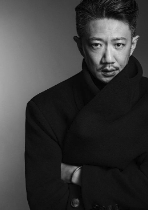
LEAD CAST :
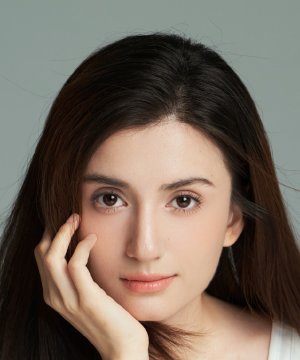
Actress and singer, she debuted in a drama in 2009, and has played in about 6 movies, 25 dramas incl. 15 as FL such as in 2017 All About Secrets,2023 The Starry Love, 2024 Angels Fall Sometimes, 2025 Filter, Coroners Diary, The Miracles |
|

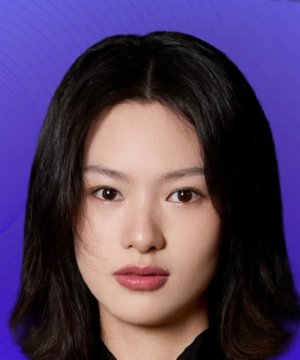
|
|


|

 My GIF from the pictures in the theme song
edited
2. Story development(April 2024 filing, July 18-September 25 shooting in Kashgar) |
The official TV series shooting and production filing announcement form dated April 2024 mentioned a go-ahead from August 2024 for up to 24 episodes over a period of 12 months. The filing entity was Beijing iQiyi Technology Co. Ltd. The title/theme was "Kashgar Ancient City" (contemporary other) and the series category was "general" (miscellaneous fiction). |
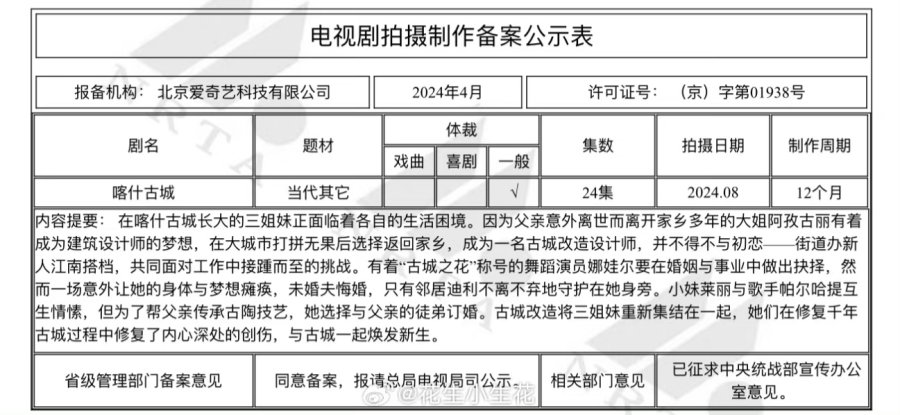
The description, at the time of filing, went as follows : "Three sisters who grew up in Kashgar's Old City are facing their own life challenges. The eldest sister, Arzugul, who left her hometown years ago after her father's unexpected death, dreams of becoming an architect. After failing to achieve success in the big city, she returns to her hometown to become a renovation designer for the Old City. She needs to partner with her first love, Jiang Nan, a newcomer to the neighborhood committee, and to face the challenges that come with her job. Navar, become a dancer known as the "Flower of the Old City" must choose between marriage and career. However, an accident leaves her paralyzed, and her fiancé breaks off their engagement. nbly her neighbor, Dili, remains by her side, offering unwavering support. The youngest sister, Laili, develops feelings for the singer Parhat, but to help her father preserve his ancient pottery skills, she chooses to get engaged to his apprentice. The Old City renovations brings the three sisters back together. In the process of restoring the thousand-year-old city, they heal their inner wounds and, together with the Old City, experience a rebirth." The mentions below the description refer to the Provincial management department, the State Administration for Radio, Film and Television, and the publicity Office for the United Front Work Department of the CPC Central Committee for obtaining opinions and approval. Given the go-ahead through approval of filing, the shoot proceeded from booting on July 18, 2025 in Kashgar City to filming wrap in September. The number of episodes had been reduced to 8, conforming with the intention to provide a new dramatized introduction to the people and stories of the Xinjiang Autonomous Region, which had started with the widely acclaimed May 2024 drama "To The Wonder". The success of that previous mini drama sparked a project for iQiyi to launch special interest "Microcosm Theater", 8 episodes "healing" dramas, with next May 2025 "What A Wonderful World" (starring Zhào Lìyǐng). On September 25, 2025, the drama was renamed from "Kashgar Ancient City" to 喀什恋歌 Kāshén liàngē (Kashgar Love Song) and was officially announced together with a "Meet the Brilliant Edition" poster release. The iQiyi and Weibo Dual-platform reservation started with notices published on China Media Group TV drama list, iQiyi IP recommended list and Beijing Audiovisual 2026 drama list on October 31, 2025. On November 14, 2025, there was a preview event; the "hot song" (theme song, sung by Li Landi) was released on April 20 shortly before the May 5 release on CCTV Comprehensive Channel and iQiyi streaming platform. |
SYNOPSIS
(golden sunrise "Rizhao Jinshan" over the snow covered mountain, Muztagh Ata, as viewed from the Karakoram Highway, ep.3) |
The real synopsis veered somewhat away from what was initially announced in first description above : The "sisters" were not blood-related, but childhood friends, and the names changed marginally. Arzugül did leave her birth town to study and build a career away from it, first attending high school in Ürumqi, the capital of Xinjiang Autonomous Region, hundreds of miles from Kashgar, but returned to attend the funeral of her father Xia Hui, whose ashes were brought back by her mother, Chang Yue, a Han doctor who had settled in Kashgar in 1998 and developed close and almost found-family ties with the hosts of their first long-time apartment in the Camel Bell Inn (Tuólíng yìzhàn驼铃驿站). Thus, Xia Zi called Arzugül (*) by the local Uighurs became the almost sister of Minawar, with supportive siblings behavior against bullies and jealousy from the younger towards the elder's admirers, and a deep affection for their "grandmother" Ayikhan who had wisdom words and good food for them all to grow from. Their close friend Laili was the sixth generation daughter of Batur, from a family of earthenware masters. Batur was a close friend of the elders running the Inn. Laili dreamed of learning the craft but was torn between an early "betrothal" to Mu Ladin, her father's apprentice and her attraction to another young man, Parhati, who was the seventh generation heir to music instrument makers. This young man's name can also be translated as Firhad / Firhat (فرهاد) with meanings such as "joy," "happiness," or "victory," though it can also refer to Farhad, the lover from Persian mythology. Minawar too was balancing between choosing as official fiancé Shadik, a wealthy young man, or another flame, Adili. She was bitter that her efforts in dancing had not taken her beyond the locality, or allowed her to study at the more prestigious regional Dance Academy. The three girls had heartaches to heal, and differences to overcome. A newcomer, Zhou Hengzhi, who had come to Kashgar in the hope of developing a business there, witnessed their bittersweet reunion . He too had a scar to heal as he immediately got scammed out of his investment by a greedy "friend" and a miserly landlord. Zhou was curious about the relationship between Xia Zi and her first crush, Fang Nan, who had also returned to Kashgar and pretended to sell sheep at the bazar but was in fact an expert hired by the community. The episodes develop a story of growth and inner healing in the melting pot city of diverse ethnic groups. Kashgar was the historically the gateway to Central Asia on the ancient Silk Road. The series brings beautiful views of the Old City and surrounding areas, and we can hear the original language spoken by the ethnic groups, notably the Uighurs, in their daily life and work. (*) Arzugûl, the name bestowed on Xia Zi by the Camel Bell Inn grandma, is a female compound name, primarily found in Turkish and Central Asian cultures, combining Arzu (meaning "wish" or "desire") with Gül (meaning "flower"). |
.png)
edited
3- OST MUSIC and other melodies,introduction to some of the Uighur music instruments |
Baidu posted the list of songs and tunes, albeit with some delay, so here's the list (click on titles to listen, if the link is found : [?] in first column means no recording was found at time of writing) More details about or lyrics of the songs to be found further down the column. |
A/ | Yùjiàn nǐ | Lǐ Lándíi 李兰迪 theme song | |
|---|---|---|---|
Yùjiàn nǐ Versions on YouTube (8'35) | (instrumental version) | ||
B/ | ensemble cast singers | ||
(instrumental version) | |||
C/ | 《别走太快》 | "Don't Walk Too Fast" | Xiè Xīnhuá 谢欣华, theme song, |
[?] | 《别走太快》 Bié zǒu tài kuài | Don't Walk Too Fast | Xiè Xīnhuá 谢欣华 (improvised) |
[?] | 《别走太快》 Bié zǒu tài kuài | Don't Walk Too Fast | Xiè Xīnhuá 谢欣华 interlude |
D/ [?] | 《一个人的聚会》 Yīgè rén de jùhuì | "A Gathering for One" | Xiè Xīnhuá 谢欣华 |
E/ | Erken 艾尔肯 the chosen recording link w. Tong Liya, dancing | ||
F/ | Wáng Luòbīn 王洛宾 | ||
G/ | Xiè Xīnhuá 谢欣华 interlude song | ||
H/ | 《雪花》 Xuěhuā | (The 2022 Olympics song?) | Alfa Arslan / Āěrfǎ·Āěrsīlán 阿尔法·阿尔斯兰 |
I/ | 《承诺》 | Promise | Andy Lau rewrite for Wenchuan earthquake in 2008 of the 《海阔天空》song by Beyond |
J/ [?] | 《解放时代》 | Era of Liberation | Mai Remu. Yunusi 买热木·玉努司 |
K/ [?] | 新疆民歌《适舞之曲》《USULLUK NAHXILAR》 | Xinjiang Folk Song "Dancing Song" ("USULLUK NAHXILAR") | Mai Remu. Yunusi 买热木·玉努司 |
L/[?] | 新疆民歌《园中美花》(《QIMANDAGUL》) | Xinjiang folk song Beautiful Flowers in the Garden | Aishajiang Aili 艾沙江·艾力 |
M/[?] | 新疆民歌 《喀什赛乃姆》 | Xinjiang folk song "Kashgar Sainaim" | Aishajiang Aili 艾沙江·艾力 |
N/[?] | 新疆民歌 《乌孜哈勒木卡姆》 | Xinjiang folk song "Uzhale Muqam" alternate spelling of Özhal Muqam perhaps? | Kashgar song and dance troupe |
O/ [?] | 《石头城》 配乐 Shítou chéng | Stone Fortress (old name of Tashkurgan, on the Karakoram highway) | Composer Kadir Mirza 卡迪尔·米日扎 作曲 |
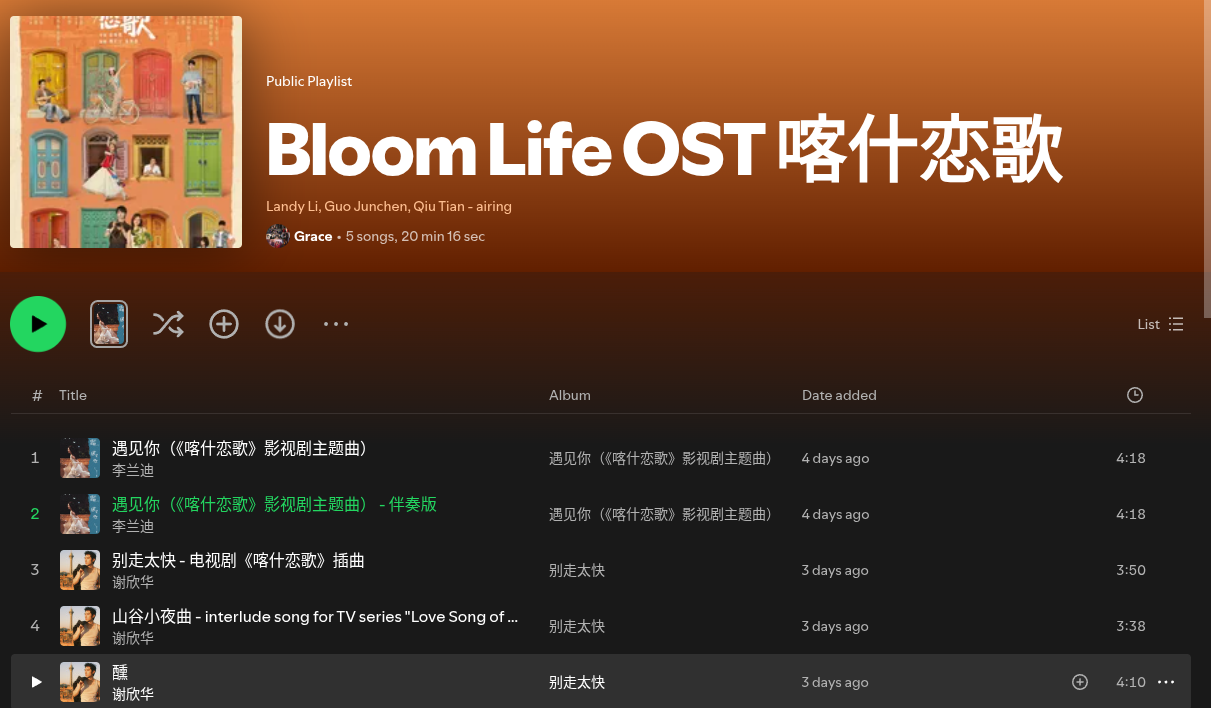
SPOTIFY playlist of the two OST main tunes and interlude songs:
THEME SONGS |
A/ 遇見你 Yùjiàn nǐ / Meeting You (theme song, sung by Li Landi)released April 20, 2026, Composer : Xiang Meng Crystal (项梦Crystal) & Hua Xiyue (花僖悦) ; Lyricists : Xiang Meng Crystal & Hua Xiyue & Xu Chonglai (徐重来) |
Lyrics in Hanzi | Pinyin and English translation | |
|---|---|---|
慢慢收起 破碎的心 | Màn man shōu qǐ pòsuì de xīn Slowly put away the broken heart | |
學會 安靜呼吸 | Xuéhuì ānjìng hūxī Learn to breathe quietly | |
匆忙的人 埋頭前行 | Cōngmáng de rén máitóu qián xíng People in a hurry keep their heads down and move forward | |
不問目的 卻從未清醒 | Bùwèn mùdì què cóng wèi qīngxǐng No matter the purpose, I never wake up | |
不能自已 | Bùnéng zìyǐ Can't help myself | |
會有一份 勇氣 | Huì yǒuyī fèn yǒngqì There will be courage | |
逆光之中 甦醒 | Nìguāng zhī zhōng sūxǐng Awakening in the backlight | |
迷失前 找回 我自己 | Míshī qián zhǎo huí wǒ zìjǐ Finding myself before getting lost | |
遇見你 是天台迴響的笑語 | Yùjiàn nǐ shì tiāntái huíxiǎng de xiào yǔ Meeting you is the laughter echoing from the rooftop | |
是並肩許下過願景 | Shì bìngjiān xǔ xiàguò yuànjǐng We made a promise together | |
始終如一 | Shǐzhōng rúyī consistent | |
遇見你 擁有最堅定關係 | Yùjiàn nǐ yǒngyǒu zuì jiāndìng guānxì Meeting you has given me the strongest bond | |
三顆星照亮了天際 和我的心 | Sān kē xīng zhào liàngle tiānjì hé wǒ de xīn Three stars light up the sky and my heart | |
會有一份 勇氣 | Huì yǒuyī fèn yǒngqì There will be courage | |
逆光之中 甦醒 | Nìguāng zhī zhōng sūxǐng Awakening in the backlight | |
迷失前 找回 我自己 | Míshī qián zhǎo huí wǒ zìjǐ Finding myself before getting lost | |
遇見你 像漫天風沙和繁星 | Yùjiàn nǐ xiàng màntiān fēngshā hé fánxīng Meeting you is like a sky full of wind and sand and stars | |
擁抱著我的孤寂 | Yǒngbàozhe wǒ de gūjì Embracing my loneliness | |
彼此交集的定義 | Bǐcǐ jiāojí de dìngyì definition of intersection | |
遇見你 像擁有浩瀚無垠 | Yùjiàn nǐ xiàng yǒngyǒu hàohàn wúyí Meeting you is like possessing a vast and boundless world, | |
像一陣風去撫平 我的心 | Xiàng yīzhènfēng qù fǔ píng wǒ de xīn Like a gust of wind to soothe my heart |
B/ Don't walk too fast 别走太快 Bié zǒu tài kuàiis the second theme song, by songwriter and singer Xiè Xīnhuá 谢欣华 Released on: 2026-05-05 Producer: Huoxing Diantai . Parhati plays it to Laili in ep.6, (timestamp 38:05), and at the renovated Soaring Dove Homestay in ep.8 (timestamp 23:25)
|
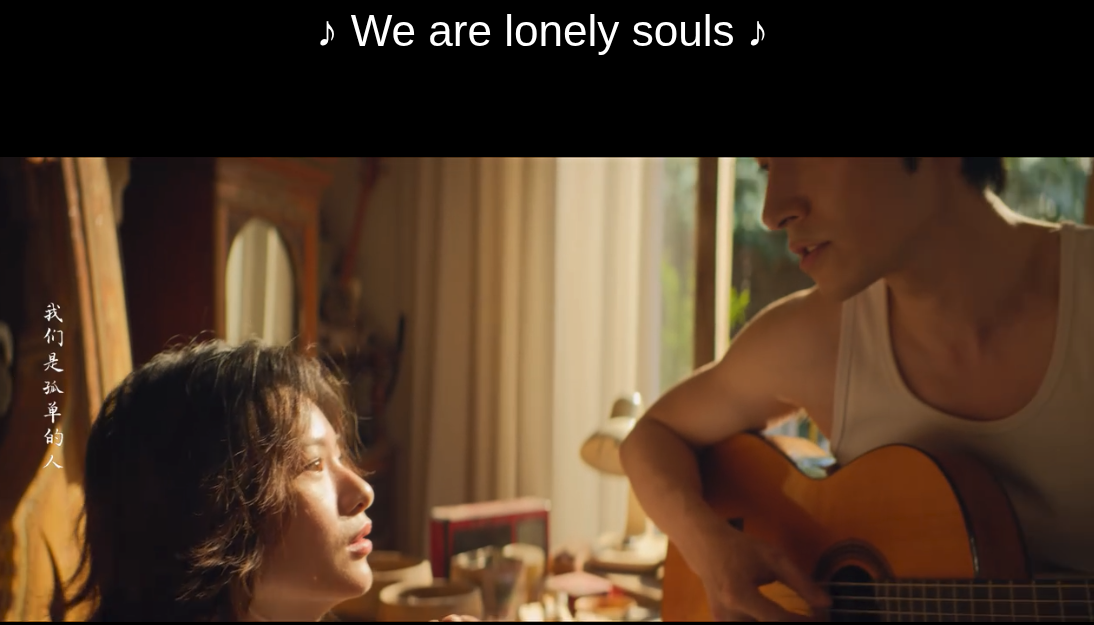
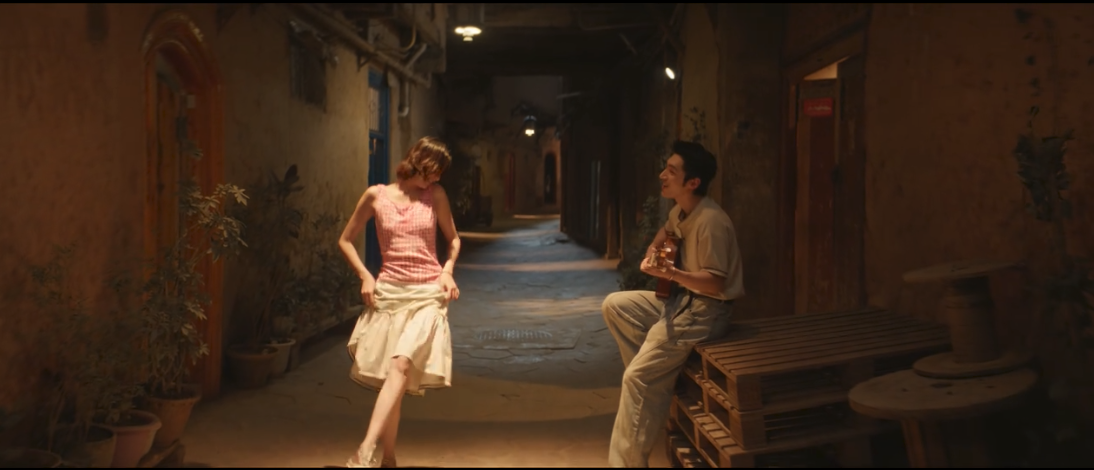
Two other songs by Xiè Xīnhuá 谢欣华 were posted for Bloom Life : G/ 山谷小夜曲 Shāngǔ xiǎoyèqǔ (Valley Serenade), interlude song, and unmentioned in the Baidu OST list/ 醺 xūn (Intoxicated). All available to listen to on YouTube or Spotify. |
OTHER SONGS
 My Gif from the MV of the theme song "Yujian Ni 遇见你" sung and acted by Li Landi
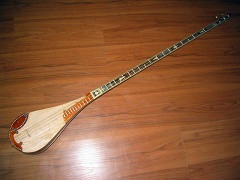
The mini drama presented Kashgar, Xinjiang, unique regional culture through the fusion of music, song and dance and dramatic narrative. It incorporated a mix of traditional Muqam folk songs and modern pop hip-hop music. The mini drama presented local festival music such as the songs at Mǐnàwá' ěr 's wedding , but also her deep motivation for dance, and her eagerness to dance on Sänäm (suites of between six and thirteen folk songs played usually for dancing.: The dance originated in southern Xinjiang and is considered older than the centuries-old Uyghur classic music known as the Twelve Muqam, having been incorporated into it. It is traditionally performed during weddings, festive occasions, and parties, often involving the entire community in a communal celebration.). Deeper in her mind was the urge to perform as lead dancer in a play she repeatedly mentioned as "Alip and Sänäm" (we did not see the performance, but that play most certainly is a version of "Gherip Sanam", an old story going back to Persia, which has the Uighur title Ailifu yu Sanamu (see some versions in this post.) There were also scenes of street improvisational song and dance culture, such as in ancient city alleys and teahouses, showing the picture of urban life with multi-ethnic integration, but also nearby nomad groups of Tajiks with another wedding dance (episode 4) ; it presented Bazaar lively sounds and the Dutar music instrument making and playing. The vitality of regional culture intertwined with music throughout the series. Although not featured in the series, it is interesting to listen to some dutar tunes like the ones in the below video, performed from a renowned Uighur musician YouTube video 1h36'04: Dance is a the heart of Xinjiang, such as in this video of a couple of other dance and drama artists : Hanikezi aka Hankiz Omar (Uighur) and Tong Liya (Xibe ethnic group) both from Xinjiang although this is a video not from the drama, but related in theme : |
The Uighur repertoire is not familiar to me, so I could not find some songs in the Baidu list, which I earmarked with [?] _ in case someone find them, I'd be interested! O/ [?] The last song on that list seems to be a Sarikoli Tajik song since 石头城 is the old name for the "stone fortress" of Tashkurgan, near the border to Pakistan on the Karakoram highway (see part.7 of these Notes). Could it be the tune in the video below, which celebrates the Tajik culture of the eagle hunters ? |
Not included in the OST list, but easily recognizable in episode 3, (timestamp 32:56) at the wedding, we can hear a version of the song "Gulayim". It is a well-known Uyghur folk melody that expresses intense romantic longing and devotion. It has been performed by artists like Murat Nasyrov and Möminjan Ablikim, and is cherished across Uyghur communities for its emotional depth and cultural resonance. "Gül" means "flower" and "Ayim" means "my moon", so Gulayim poetically translates to "my flower, my moon"—a term of endearment denoting beauty, purity, and deep affection. In this context, Gulayim represents an idealized lover, often associated with memories of love, separation, and the hardships of life, in references to the market of Atush and the thorny road in the lyrics : "Along the way to Atushi, the garden of Boshkeranmu is filled with the sweet fragrance of flowers. I can smell the fragrance of the flowers . The pain of a burning passion is so torturing. Gulayim, my pain, Gulayim. What should I do, my lover ? My pain, Gulayim, my heart burns for you always. I belong to you, my lover, Who else will I belong to, if not you? You are the one I met at the bazaar in Kashgar, you are who I fell in love with at first sight. Hey, you are who I fell in love with at first sight! I came to your alley from my alley, ..." (from the episode subtitles) The song blends in with the first words of another song (no recording found) : "The snowflakes are falling, in this last December. The wind plays with the snowflake on either side of the streetlight...."
|
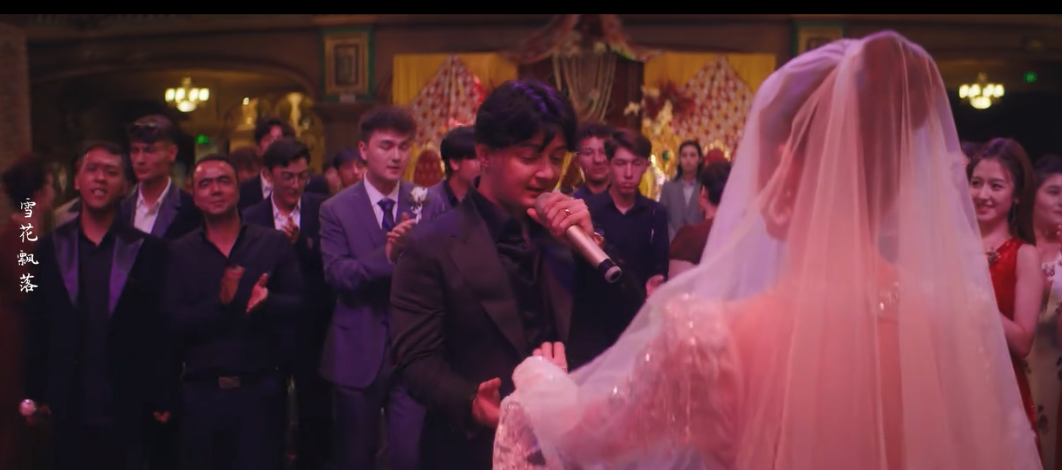
E/ 《巴郎仔》 [Bā láng zǐ] BalangzaiPerformed above by the Erken band 艾尔肯乐队 and danced by Naz Dilmurati 娜孜·地里木拉提 Nàzī·Dìlimùlātí (no relation to Dilraba found)。The Uighur singer Erkin Abdulla ( 艾尔肯·阿布拉ئەركىن ئابدۇ للا Ài'ěrkěn·ābùlā) recorded it in 2004 and his version of the song goes : "Girl, girl 姑娘啊 姑娘啊 Gūniáng a gūniáng a Listen to me for a few words 听我说几句话 Tīng wǒ shuō jǐ jù huà Could you leave to me 可不可以留给我 Kěbù kěyǐ liú gěi wǒ Your QQ number 你QQ的号码 Nǐ QQ de hàomǎ If you were a big dinosaur 如果你是大恐龙 Rúguǒ nǐ shì dà kǒnglóng I'm a little frog too 我也是个小青蛙 Wǒ yěshì gè xiǎo qīngwā No one should look down on anyone 谁都不要嫌弃谁 Shéi dōu bùyào xiánqì shéi Let's be friends 做个朋友吧 zuò gè péngyǒu ba / Beloved come come come.... 亲爱的来吧来吧来吧 Qīn'ài de lái ba lái ba lái ba " (note : in Xinjiang dialect, Bālángzǐ is used to address younger teenagers and is also used by elders to address younger generations. QQ used to be a popular paging system in the end 1990s and early 2000s before Wechat took over in China.) This is a traditional Xinjiang folk song and dance (新彊民族歌舞 Xīnjiàng mínzú gēwǔ ) typically performed as a lively group dance song where participants repeat the phrase "Lai ba, lai ba" 《 来吧来吧 》(Come on, come on) to invite others to join the dance. We hear it as BGM song in episode 6 (timestamp about 21:47) i and there are several recordings on YouTube, including the last among the versions above, which sounds just like the one used in the drama. Adding for the fun of it this version in the Jiang Chao and his wife Madina's stage of November 2025, recorded below : |
F/ YOUTH DANCE 青春舞曲 Qīngchūn wǔqǔ
The video above has pinyin and Hanzi subtitles "The lyric "My youth, like a little bird, will never return"—may sound like a sigh of regret, but the arrangement illustrates that even though the bird may have flown away, as long as you are still willing to dance under the stars, your passion never truly fades. Life itself is the greatest magic." This is a very famous Xinjiang folk song which had already been adapted with Chinese lyrics by folk musician Wáng Luòbīn 王洛宾 in 1939 ! It has been covered by many artists and even chosen to be performed by the famous Jiangsu Han actress Bai Lu for the 100th anniversary of the CPC in 2021 ! The recording below acknowledges the Xinjiang music origin of the song, and has Hanzi subtitles, as it is now widely known throughout China. | |||
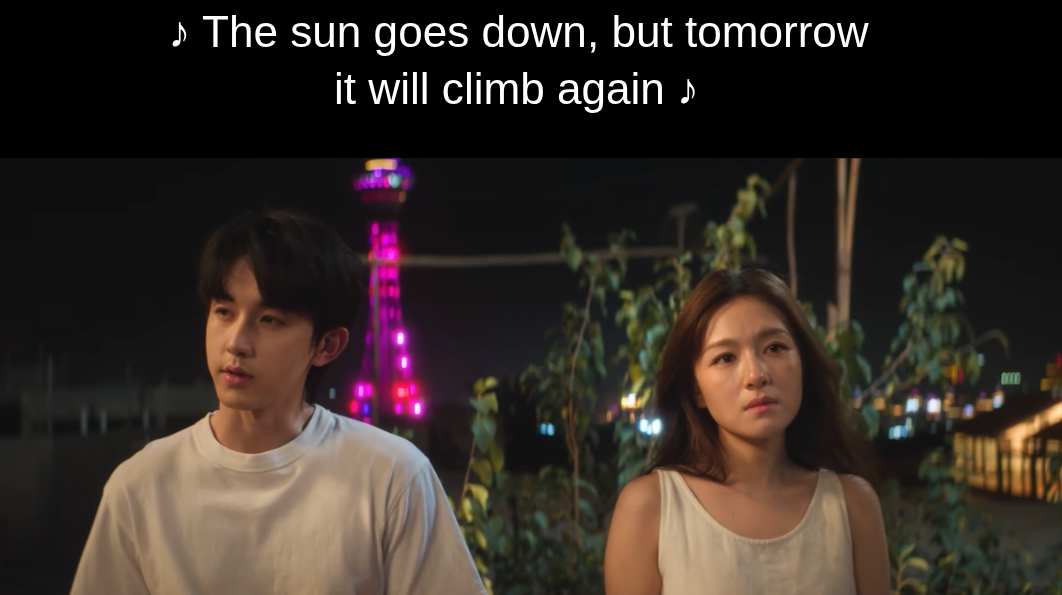
LYRICS : 太阳下去明早依旧爬上来, Tàiyáng xiàqù míngzǎo yījiù pá shànglái, The sun sets but rises again tomorrow, 花儿谢了明年还是一样的开, huā er xièle míngnián háishì yīyàng de kāi, The flowers wither but bloom again next year, 美丽小鸟一去无踪影, měilì xiǎoniǎo yī qù wú zōngyǐng The beautiful little bird is gone without a trace, 我的青春小鸟一样不回来, wǒ de qīngchūn xiǎo niǎo yīyàng bù huílái, The bird of my youth will never return, (x2) 别的那依呦, 别的那依呦, bié dì nà yī yōu, bié dì nà yī yōu, Oh dear, Oh dear, 我的青春小鸟一样不回来 wǒ de qīngchūn xiǎo niǎo yīyàng bù huílái The bird of my youth will never return, (x2) | |||
|
Some songs in episode 8 are only given short samples, so I just made a short GIF of some scenes below, in case someone has more to add about them :
| |||||||
|



edited
4. Comparison with Tajik and Uighur real life weddingsThis part is still in the works |
It is a while since I visited Xinjiang, So, I prefer to add here more recent videos by two vloggers who document their life and explorations in China, with interesting footage about the real Kashgar and people who live there, particularly about the weddings there. |
Yan (Little Chinese everywhere, "Unseen China")Yan has been exploring many parts of China and beyonf, with her drones, gopro camera, on her motorcycle, for several years now, alone or together with her German husband Flo, also a vlogger and motorcyclist, whom she met when she studied in Europe. She recently had started an overland journey through Eurasia, with planned stops in Ispahan, Iran, and the Middle East, planning to get to Europe through Turkey, but the war's onset forced her to fly first to... Irak! to escape the random launches of missiles on hitherto peaceful towns like the ones where friends of friends of friends made it a point to host her and show her the local bazaars and their way of life, in a doctor family not involved in politics or religious affairs, like the ordinary people she met in Ispahan and its bazaar. She visited Xinjiang in the past a few times, and made interesting videos about the region, in which she showcased the diversity of ethnic groups, such as the Tajik, Kyrgyz, Uighurs in and near Kashgar. In particular, she witnessed a Tajik wedding in Tashkurgan, where she was warmly welcomed in the remote end of the Karakoram highway before the border with Pakistan. She also witnessed the following year an Uighur wedding in Karamay, but was surprised that this wedding was split in two age groups: the elders and more distant friends gathered in one venue while the younger and the newlyweds were in another venue. The feel of these tw weddings were different : the Tajik one was more open to visitors from afar, the Uighurs used introductions and were more formal. It is interesting to compare these two experiences with the Tajik wedding in the mini drama and with Minawaer's stressful wedding celebration in episode 3. April 2025 overview from high Pamir to Turpan and to the Ili north-west, with excerpts from the Tajik wedding and from the visit to Kashgar (55'25) September 2024 - Chance documenting a Tajik wedding in Tashkurgan county (26'32) September 2025 - An Uighur wedding in Karamay Yan was somewhat disappointed that she and Flo had been sent to the elder party, which was mostly about showing dresses, giving money, dancing, eating and drinking alcohol, without seeing the newlyweds! But since Yan is a foodie, she documented the food and the hard liquors served. This may come as surprising in a Muslim area, where religion considers alcohol as "haram" (forbidden). But Uighurs have long been growing grapes and even making wine, although the traditional "museles" wine is a blend with spices used mostly as a tonic and for medical purposes! Still, the vineyards of Xinjiang have grown in importance for more refined wines that are marketed in and mostly out of Xinjiang, contributing to the regional economy, in addition to the production and marketing of seedless grapes for sun-dried raisins. These raisins are particularly traditional in Turpan, nicknamed "Grape valley". Grapevines are grown everywhere, serving also for shade as a canopy over courtyards in hot summers, and they are being protected and covered in cold winters. |
Katherine(Katherine's Journey to the East / China off the beaten path).Katherine has been living, in China for seven years after arriving from the USA to enroll in environmental studies in Nanjing. She first fell in love with a Chinese graduate whose family was in Chengdu, and took him along sometimes on her bicycle explorations to far places (including Geoparks, wild Mongolia, deserts and far reaches of the Xinjiang, which she documented using the tools at hand (gopro, phone camera...) on her successful vlogs. But the relationship foundered. After meeting again a young Uighur with whom she had been acquainted in Tashkurgan, she decided to tie the knot with him. Together they built their new home in a rural village in the Kashgar area, with a view on greening prairie-like fields in spring and snow clad Pamir mountains! She continues to vlog, always with a sense of humor in her observations, explaining her choice of filming with a combination of 2 different cameras : the GoPro Hero 11 (selfie/widescreen shots) and the Sony ZV1. She explained that the latter allows stable footage even while biking and walking, is "waterproof, shoots in 4K, and is very tiny and portable as well as extremely easy to use" Like Yan and many other Chinese or foreign vloggers in China, the "Great Internet Wall" is hardly an obstacle for her. Like most foreigners and educated people, she knows how to deal with it, and the country being pragmatic, does not view these videos negatively since she is not engaged in spreading sensationalist anti China propaganda but filming life as it is, as sometimes CGTN also does :) She also has posted interesting videos about Kashgar and vicinity, two (!) Uighur weddings in Turpan and and her preparations for her own Uighur wedding. This one was much more cheerful than Minawaer's wedding in the mini drama, especially the scenes about the veil lifting! Interesting comparisons! May 2024, with her future fiancé. (13'41) March 2025, (10'19) April 2025 (19'31) Farm work and constructing a new home May 2025 (29'44) The wedding and the veil lifting (at time stamp 23:17) |
edited
| ||||||||||||||||||
|
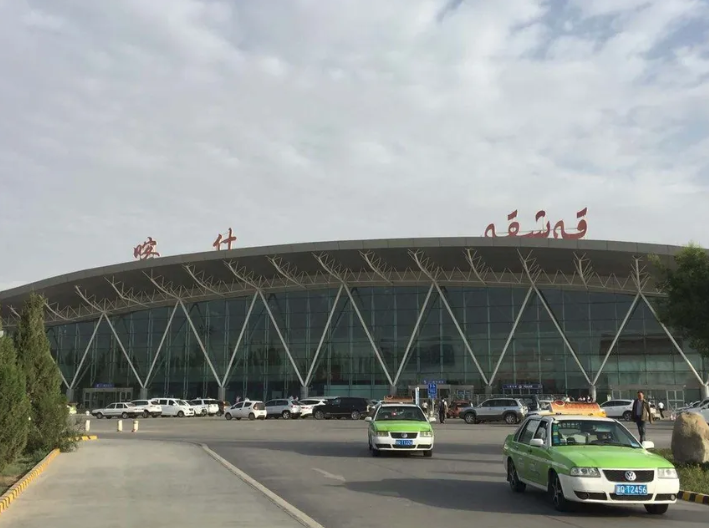
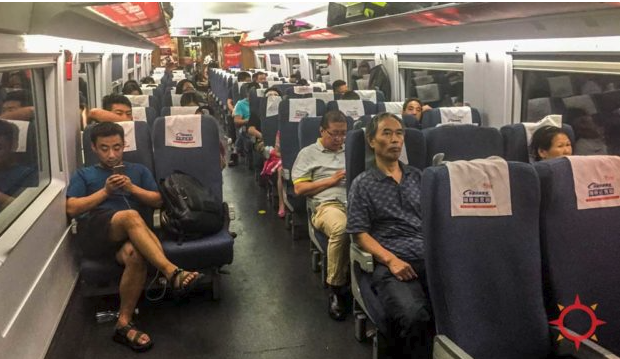


edited
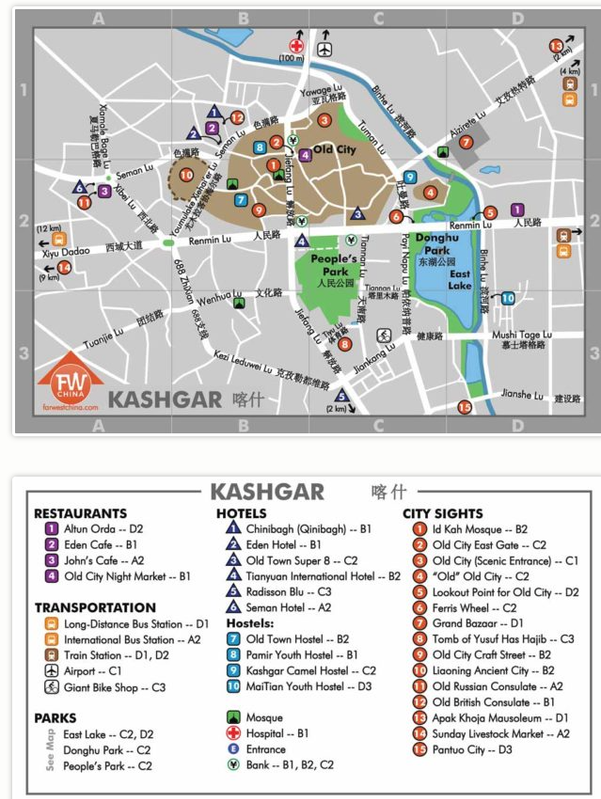
6. KASHGAR / Kāshí 喀什 (Uyghur قەشقەر,) | ||||||||||||
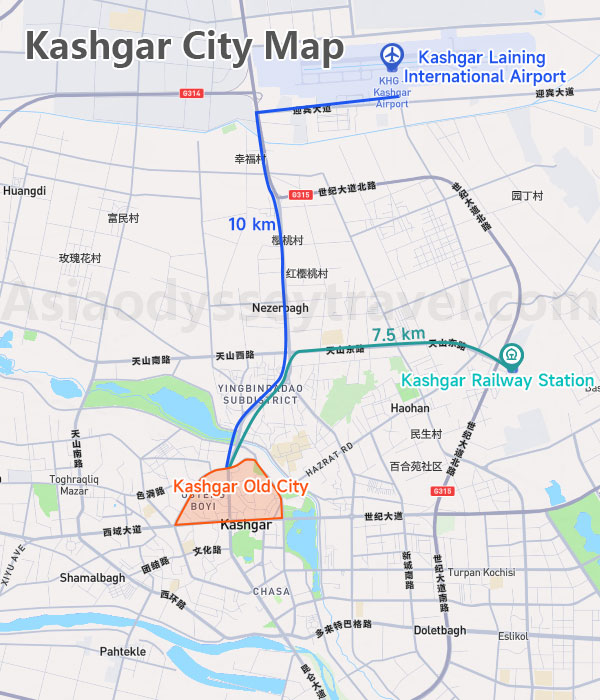
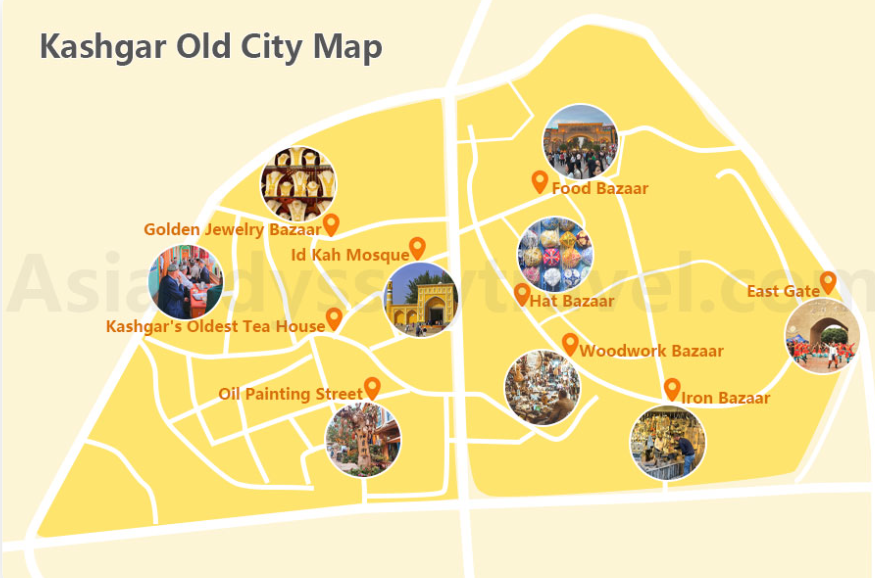
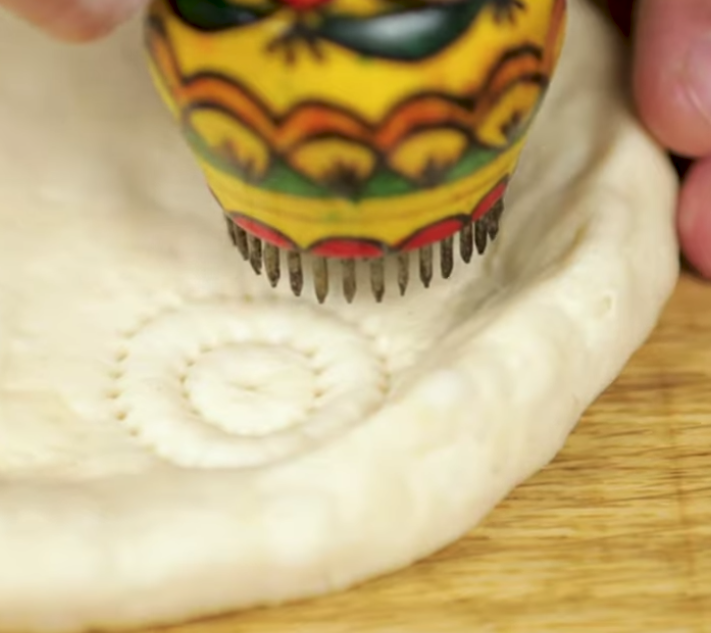
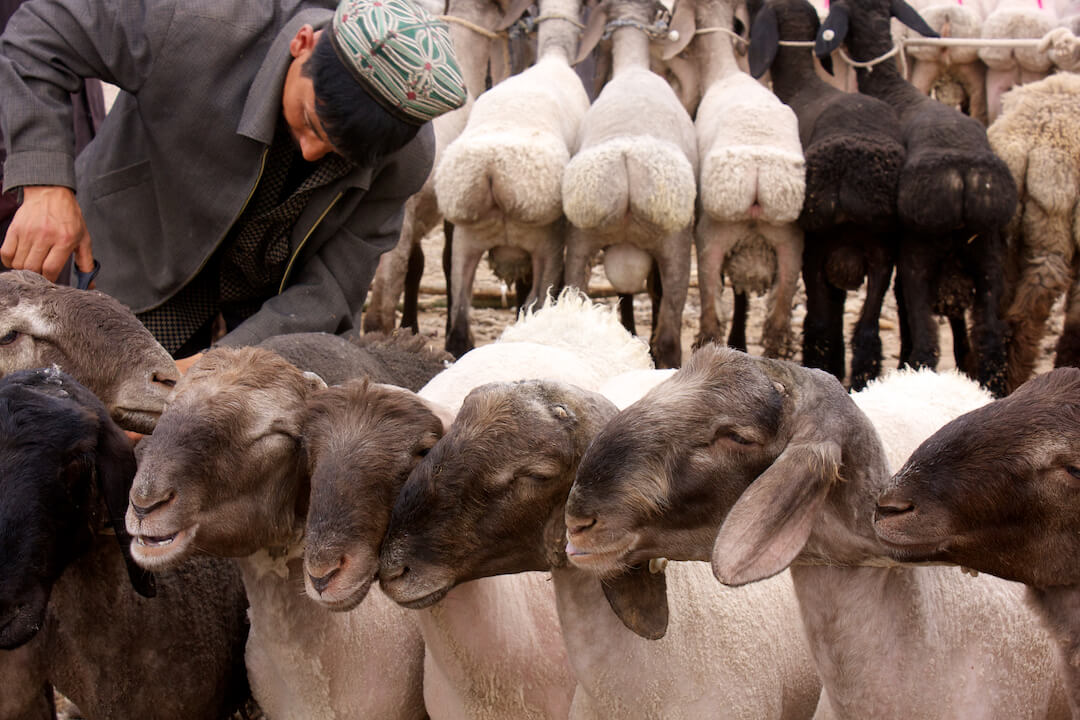
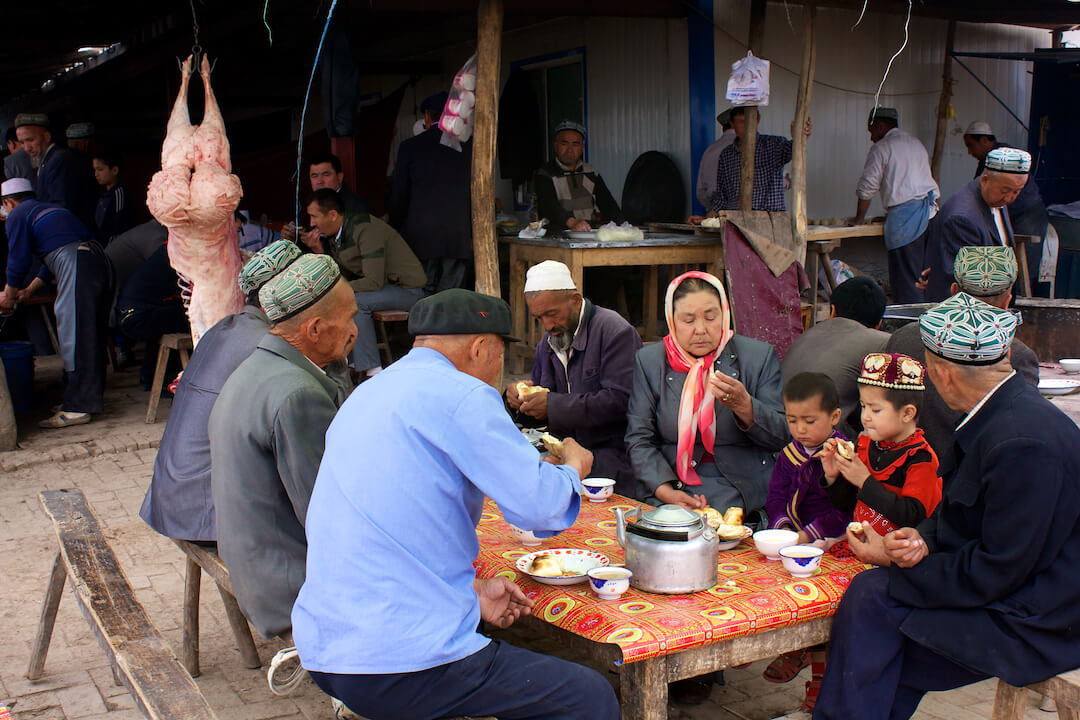
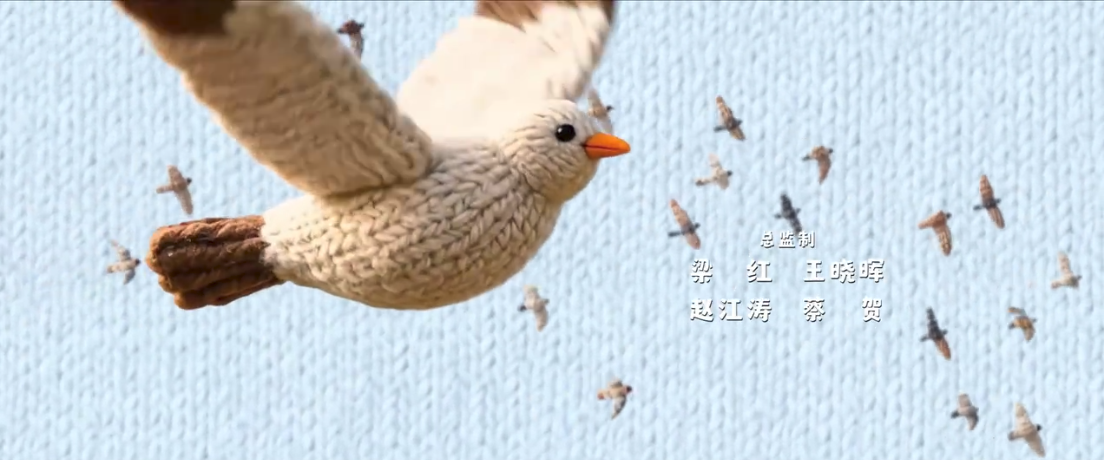
In the 2000s, the city boomed with constructions outside its walls, such as the Kunlun tower, which has become a landmark with its changing colors and observation deck. It was decided that the Old City would be renovated to respect modern norms of sanitation (the old houses had no running water, no bathrooms, often no electricity or connection to telephone or the internet. The narrow maze of lanes made it impossible for fire trucks and other vehicle to access. To the chagrin of those who wanted it preserved, renovation started in 2009 with destruction and relocation of many families in modern high rises around the city. Old alleys and lanes were enlarged while reconstruction used concrete and transformed the inner courtyards, where trees often stood: fig trees, pomegranates, both for shade and for the fruit. The reddish brown color scheme was kept though, while the maze of old alleys, even enlarged, still were kept pedestrian and allowed the children of the Old City remaining families to run around, carefree, as in the past. The Old City had become mostly a tourist attraction, with renovated buildings serving as guesthouses and hotels. The n°1 attraction is the Ibn Kah Mosque with its yellow walls and minaret, close to the Old City Night Market restaurants. The most unwelcome addition has been the very fake new East Gate, built like a TV series Chinese fortress gateway, where tourists are greeted daily with a performance to introduce "old Kashgar". Close by, there is even a Ferris wheel, from which the view can fly over the new and "old" buildings where many rooftop terraces have not been forgotten in the reconstruction, and have more authenticity. There are also preserved or renovated cafés where old-time residents still gather to gossip and play mostly in male company, The smells of manure and roast meat have been sanitized. Nowadays, to find the animals, you need to go west to the famous livestock market, where all sorts of animals are traded: sheep and lamb in majority, both for wool and for meat. The drama opening and end credits feature knitware in the form of Kashgar "treasures". In real life, the visitors will also taste the juicy lamb dishes (in particular skewers called "kawap", featuring fat cubes cut from the tail which melts on the coal grill, to keep the meat juicy) and large size rice dishes called "polo" or "pulao", or the large round breads printed with traditional designs, called "naan", which like the lamb skewers, have already conquered all the cities in China.
|


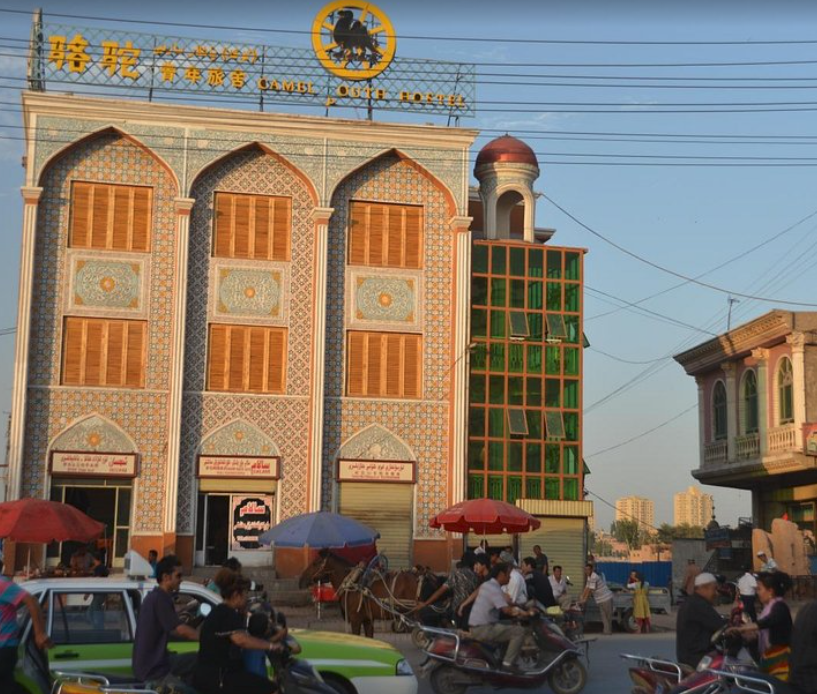
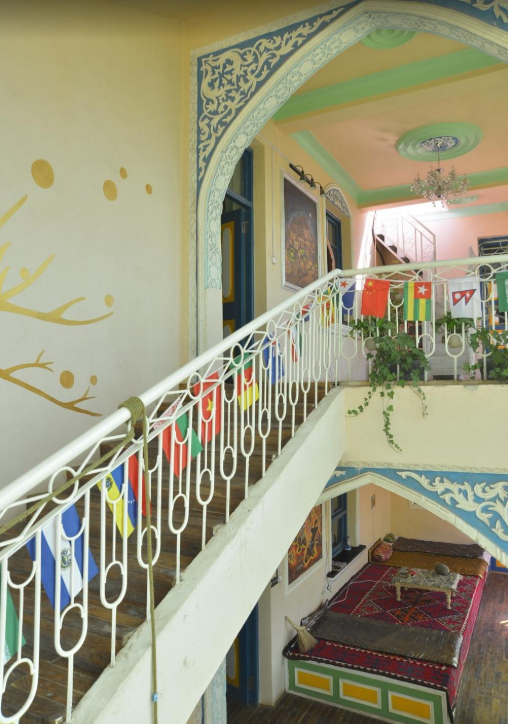

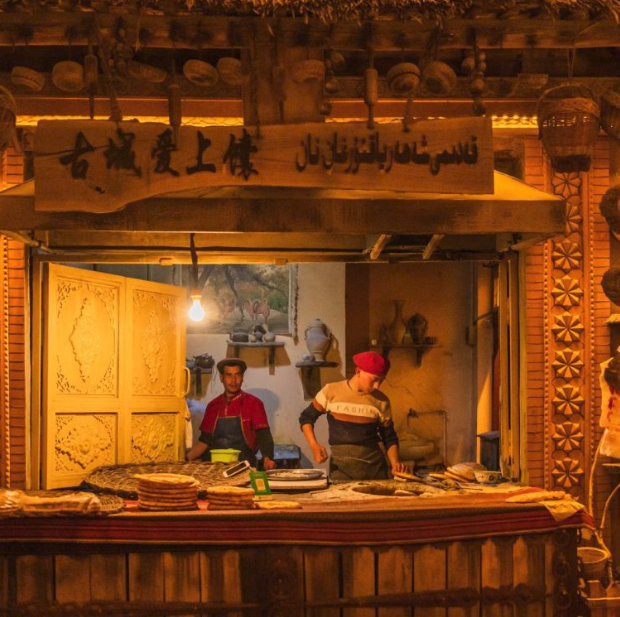




 Episode 8, end "dream" scene with the color palette evoking earthenware and Morandi paintings (briefly mentioned once in the series), where the Kunlun observation tower lit up in the night blends in with the dusty air, rising like brush strokes, before the protagonists set off to their respective futures: "Dedicated to us, as we set out once more."
Although this series was not exactly a "musical", song and dance played such an important part. To stay in the mood, here are, in the video link in right column, a few simple moves from a "Uighur Dance tutorial"16'43 on YouTube explained in the original language, but rather easy to follow, thanks to the examples! More videos are on the Net for the self-learners with a good mirror and a sense of where their feet and arms are :) ENJOY! But this is not the end of these Notes: next chapter below the comment focuses on Muztagh Ata where Miniwa'er wanted to dance her part in the "Alip and Sanam" play for which she had been chosen as lead (GIF below from ep.8), and the people who live near the important Karakoram highway. |

edited

Thank you for this excellent write-up. Its been helpful since looking for songs myself had no results. I have two questions though, if you can help😅.
Do you know what song played in episode 06, after Minawar gave birth? It was a lullaby but I cant find one that sounds the same.
And do you know anything about the Alip and Sänäm play?
7. MUZTAGH ATA and the KARAKORAM HIGHWAY | |||||||


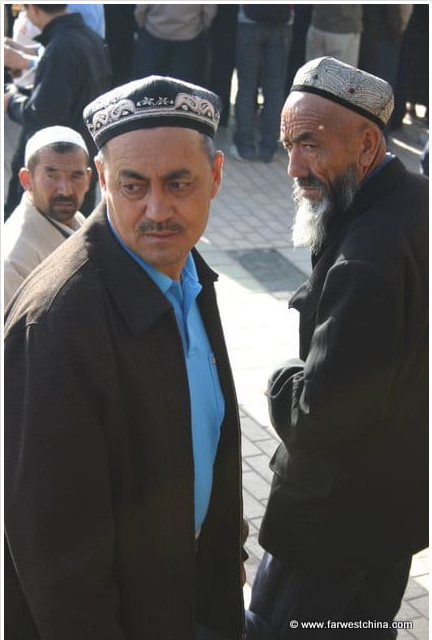
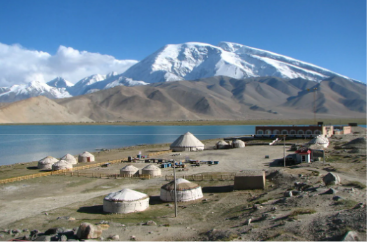
One interesting thing, when stopping there at the Kyrgyz settlement, is noticing that boiling water takes longer and a pressure cooker is needed to make rice edible : boiling point is at 91°C at this elevation. The Kyrgyz who live there stand out by their traditional white, tall ornamented hats, called “ak-kalpak” (white kalpak) made of wool; they are a small group, different from the Kyrgyz of Kyrgyzstan, and they raise cattle and camels. (A bigger group of Chinese Kyrgyz are to be found along the border with Kyrgyztan in north western Xinjiang.) The Kyrgyz (also spelled Kirghiz) are one of the 56 officially recognized ethnic groups in China, known in Mandarin as Kē'ěrkèzī zú (柯尔克孜族)
|
(open link in new window for a better view, YouTube 10' video from 2022)
|


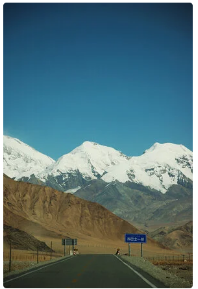

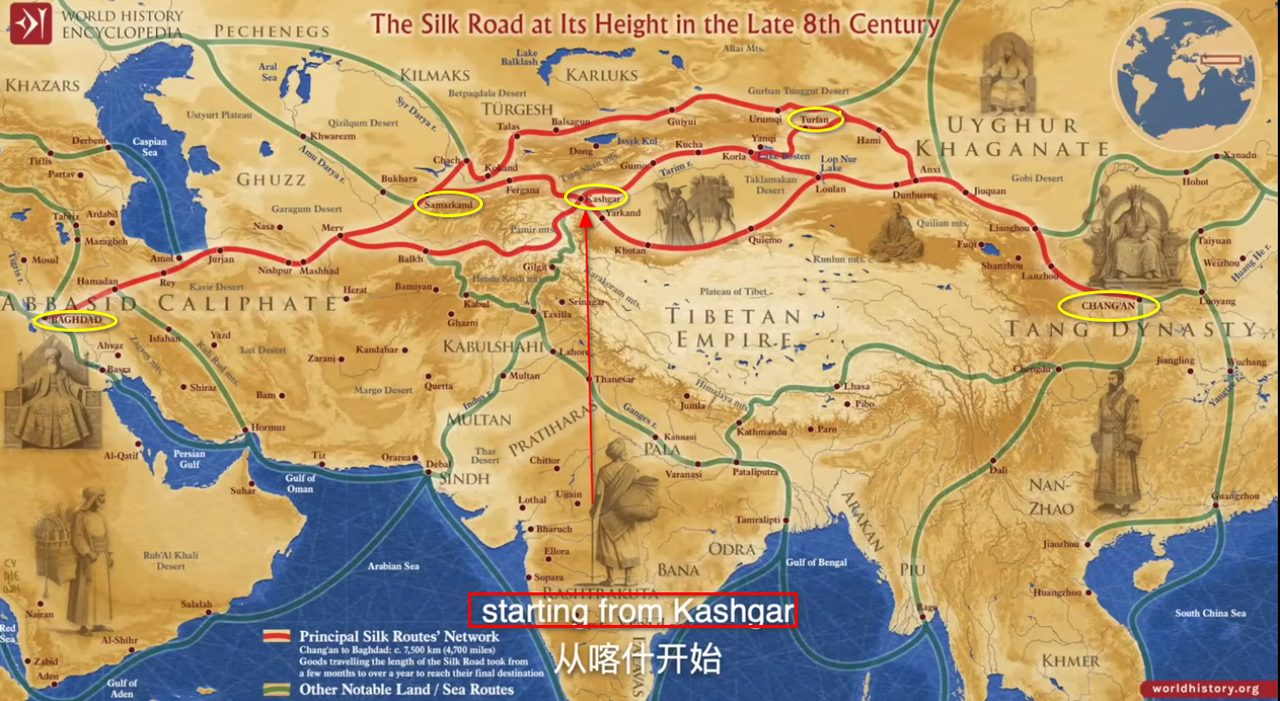
Further up ihe road, the last small town before the border to Pakistan is Tashkurgan (Tǎshíkù'ěrgān 塔什库尔干 ), historically known as Sarikol and Shítóuchéng 石頭城, a name meaning "stone fortress" from the fort that used to protect this part of the Silk road.
It is the center of a Tajik autonomous prefecture. These Pamir Tajik (Tǎjíkèzú塔吉克族) belong to a small ethnic subgroup of 44,000 people related but different from those in neighboring country Tajikistan. They are of mixed origins, some with blue or green eyes, speak a language related to Iranian called Sarikoli. It is described as "a language so different from the majority language spoken in Tajikistan and other Tajik areas that they need to communicate in Uighur or putonghua! They.are Shia Muslims, who keep their traditions and culture, but, being often involved in tourism, they are very hospitable. The women wear typical clothes, and hats with flat surface above, covered by a soft veil, but with uncovered face.
Nowruz celebration in Tashkurgan, March 2026 (YouTube video, 3'25) |
|
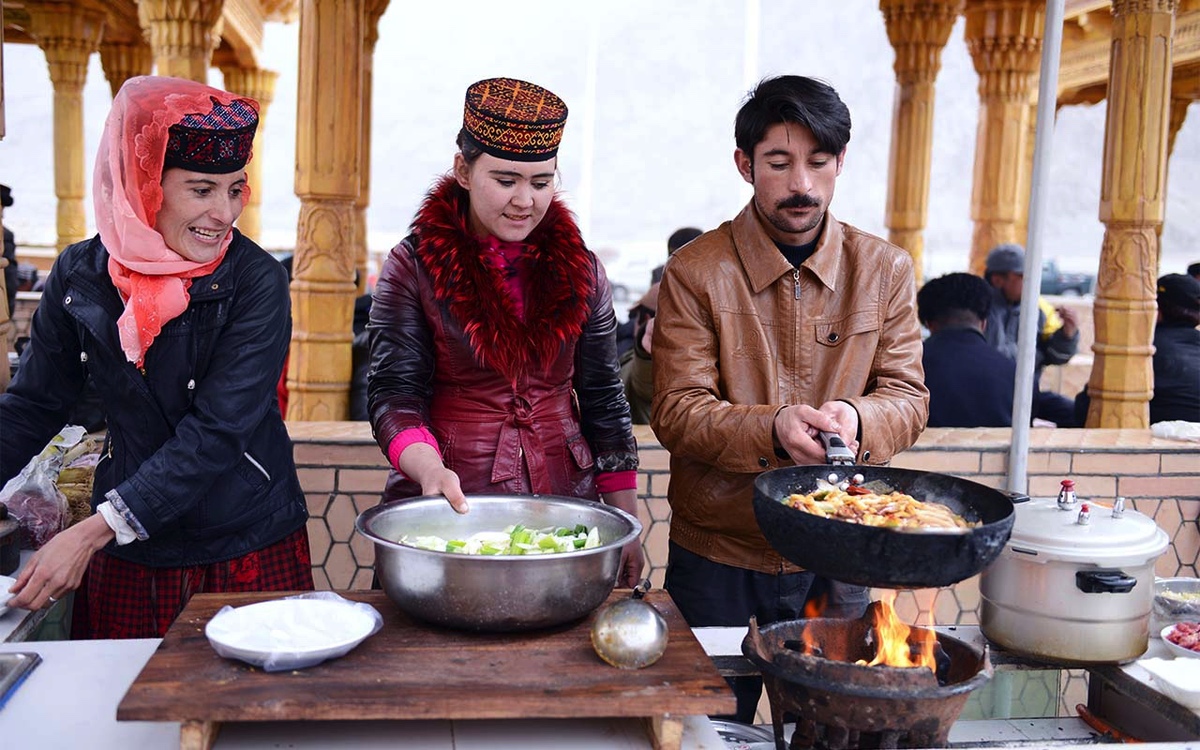
For the Sarikoli Tajiks in Tashkurgan, Nowruz : the "Persian new year" which falls on spring equinox, with a date between 19 March and 22 March., is known locally as ched chader, meaning "cleaning the house". It is one of their two main traditional celebrations, in addition to their Pilik festival. The observance involves rigorous pre-holiday home cleaning and sprinkling inner walls with putuk (wheat flour) to wish for a successful year.
In China, Nowruz although of Persian pre islamic origin, is celebrated by Salar, Kyrgyz, Tajik and Kazakh ethnicities, and also by the Uyghur, with traditional foods, such as fried dumplings and meat skewers, and the exchange of gifts and sweets.
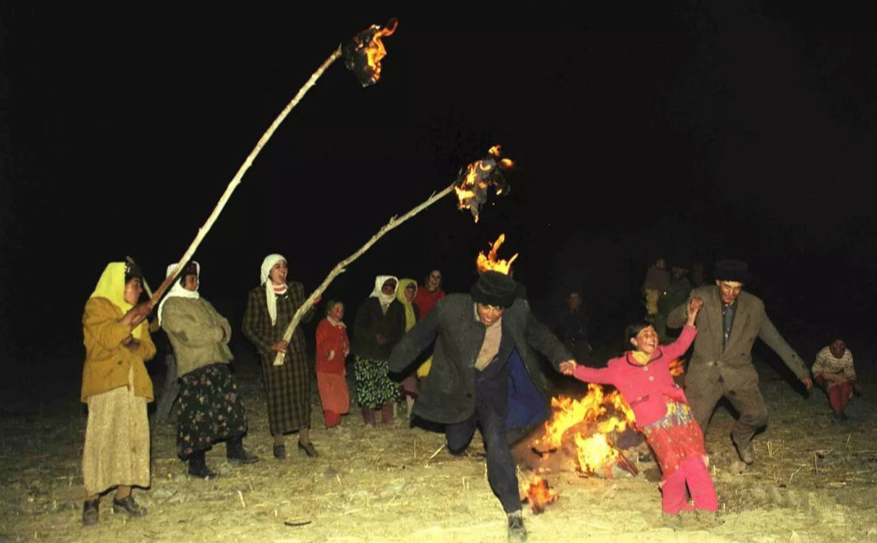 The Pilik Festival is a traditional two-day summer celebration of the Tajik ethnic group in China, held in mid-August according to the Islamic lunar calendar. It is also known as the "Lamp Festival" or Balati Festival and is closely associated with honoring ancestors and fire rituals of mazdaist (zoroastrian) origins.
Geopolitical concerns and maneuvers : China is worried by the incursion of agitators or illegal trafficking from abroad and wants to tighten security along its border, part of which has been disputed for decades with India, which claims that the "Pakistan occupied territory" (PoK) and parts in Kashmir fall under their sovereignty. Although exchanges of gunshots have given way mostly to exchange of stone throws, to avoid casualties that might serve as a new pretext for war, the border area remains dangerous.
On the Chinese side, three border counties have been created to enhance grassroots governance.. India claims that Hean and Hekang counties fall partly under jurisdiction of the Indian Union Territory of Ladakh. The latest new county, named Cenling (Cénlǐng Xiàn 岑岭县; Uighur سېنلىڭ ناھىيىسى), established in March 2026, is located near the Karakoram mountain range and close to areas claimed by India, underlining its geopolitical sensitivity. (News from the "National Herald" India, 12 Apr 2026)
edited
Thank you for this excellent write-up. Its been helpful since looking for songs myself had no results. I have two questions though, if you can help😅.
Do you know what song played in episode 06, after Minawar gave birth? It was a lullaby but I cant find one that sounds the same.
And do you know anything about the Alip and Sänäm play?
These are two tunes that I also have been looking for, but unfortunately have not been able to find explanations or recordings for 😅. The lullaby is not one I ever heard before so unless someone posts a recording from the series, I am not sure we could hear it independently. . I thought Alip and Sänäm might be a play using Sänäm music (which is "a suite of six to thirteen folksongs typically performed for dancing at weddings, festivals, and parties.") But that's as far as I got. If someone has found it, I'd like to hear it. . This new "Companion Piece" is still in the works, although I hope to finish in a few hours or tomorrow . For technical reasons, my first draft got lost so I had to rewrite, looking at my sprawling "history" with dozens of old tabs to find the links I planned to include! Lots of musical recordings, but not exactly what I was looking for. almost gave up... Left for the weekend for a change of mind. . (There is perhaps of interest, somewhat related to the music chapter, if I can find it again, a tutorial for Uighur dance, but I may include it at "coda" after the GIF I'll try to add for Miniwaer's dance on the rooftop and in the mountains: also have to re-do that one) I |
|---|
edited
Although we hear it repeatedly as "Alip and Sänëm", I wonder if it was Gherip Senem (also spelled Gherip and Senem) which Minawaer was referring to. Information gave that this is an epic Uyghur love story that has been adapted into various forms of media, most notably a 1981 Chinese film produced by the Tengritagh Film Studio. (but I have not seen it and have no clue where it could be watched on or offline -- edit: see below at the end of this post, it can be found online both in Uighur and Chinese versions! )
"The narrative centers on the tragic romance between Gherip, the son of a trusted vizier, and Senem, the daughter of King Abbas. Their love is obstructed by political intrigue orchestrated by the military chief Shawazi and his son Abdullah, who plot to eliminate Gherip’s family and seize Senem for their own son. This results in Gherip being wrongfully accused and sent into exile, while Senem is forced to grieve, though the story typically concludes with a happy ending involving their return and reunion." "The story is a cornerstone of Uyghur folklore and literature, often described as the Uyghur equivalent of Romeo and Juliet. It explores themes of loyalty, political betrayal, and enduring love, with Senem representing the princess female lead and Gherip the exiled male lead. The 1981 film adaptation is also known by alternate titles such as Ài lǐ fǔ yǔ Sài nǎi mǔ 艾里甫与赛乃姆 and Ghérip - Senem, غېرىپ سەنەم r eflecting its production within China’s Xinjiang region. While "Sanam" generally means "beloved" or "idol" in Persian, Urdu, and Hindi, in this specific context, it is the proper name of the female protagonist in the Uyghur epic." |
There is on YouTube, a recording of a song and dance performance titled Gherip Sanam :
Perhaps the dance play adaptation could be also be similar to this :
and kookiejamz posted on the relevant movie MDL page the YouTube link to an Uighur version of (1h38) with subtitles :
The native title of the movie "AI li fu yu Sai nai mu" sounds very close to "Alip and Sänâm" ("Ai li fu" is a name + "yu" means "and/with" in context)
edited
8. RECEPTION |
t AvenueX's reaction to watching Bloom Life.
Xinjiang News review of the mini drama
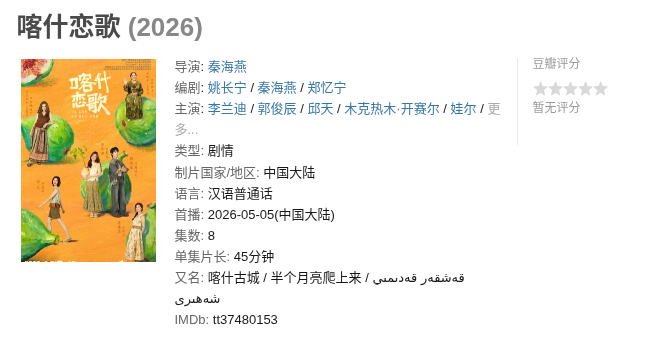
Douban rating
1. Avenue X video (YouTube 15'12) BEAUTY OF A TOURIST DESTINATION : In her walk and talk reaction (posted May 14, 2026) to what she recently watched, vlogger AvenueX included "Bloom Life" first for this video, and she stated she had watched the 8 episodes. She was rather objective about the goals of the mini series : this was indeed rather explicitly a "tourism promotion" series before a plot-driven one. She compared it, as many commentators did, to 2024 "My Aletai/To The Wonder" and to "Meet Yourself", the 2023 "healing drama" led by LiuYiifei/Crystal Liu and Li Xian. Both the latter had promotion of a region as part of their scope of work although they are not the only c-dramas to have such a purpose. I wonder why
"Bloom Life" has indeed many pretty shots of Kashgar, which is well worth a visit, and of the vicinity with the adventurous trek to the Pamir peaks on the Karakoram highway, complete with sandstorm shots to underline that this is not altogether a journey with no risk involved. The colors may seem "too bright" but are indeed true to my memories of traveling there and to the more recent travelogues which can be found online. The skies and the ochre of the Old City walls, the colored doors, are indeed a signature of the city. But only of the now touristy part. Kashgar is of course not limited to that island-like part. There are also rural areas (and there, the bright fields and the orchards were well woven into the series) and unfortunately also drab modern architecture parts, for housing projects as the city expands. The majority of residents are not so much back to Silk Road arts and crafts and caravan (now of tourists) times, but by new ways to adjust to the 21st century than mere renovation of guesthouses: there is a push to new technologies, even an embryo of high tech, as a regional hub. Not everybody in Kashgar is aiming at tourism or agriculture: this is partly why the drama was criticized for some misrepresentations both of people and of culture! |
CRITICISM ABOUT CHARACTERS OR CULTURE REPRESENTATION Together with AvenueX, I agree that the characters pale in comparison to the setting, or the music that seems to be the main focus at times (leading some who were interested in the "exotic" tunes to go chasing for the lesser known ones mentioned in the Baidu OST list, or the "Sanam" repeatedly mentioned by Minawaer). There are clearly layers there that did not get very explicitly stated, keeping the story somewhat mysterious, or less kindly put it has "a choppy feel" as if parts were cut out, dropped for some unclear reason. Those mysteries also contributed to making the characters getting more blurry in retrospect, even with re-watches, compared to the well defined ones in the other dramas mentioned. Li Landi as FL still did her part well and was recognized as Xia Zi . The beginning of AvX's review could be misinterpreted that Li Landi is "from Xinjiang, went to Shanghai like many Hu Piao floating people trying to get a career but was not too successful" : that is not Li Landi, but the character Xia Zi, who is a Han born in Kashgar, while the actress is from the Hui ethnic group, but born in Beijing, and not at all unsuccessful (she starred in the very successful comedic "Filter" together with Tan Jianci in February-March 2025.) Some commentators reported that the director had stubborn ideas about plot, cuts and actors, so some characters were changed and actors were squeezed in, resulting in the three women with 3-4 suitors. But the series did not deliver much in the romance angle, which was left hanging for Xia Zi in the end, and the only weddings we saw were the rather painful one of Miniwaer and a random Tajik one which Xia Zi and her friend "crashed" in the mountains. Sweetness seemed to be kept bittersweet or sour like the taste of unripe pomegranates, a fruit which is less featured in the series than the figs, which both are quite symbolic of Kashgar region. It has been noted that some iconic features got clumsily mixed in, such as the "meshrep" (*), (a traditional cultural gathering of the Uyghur people, where participants engage in music, dance, poetry, games, and moral adjudication. That it seemed to appear in the homecoming of Xia Zi who had traveled from Shanghai to comfort her mother and friends after being informed of her fathers death was bizarre. Even with the explanation that Xia Zi's mother wanted a less gloomy note, and music, for her bringing the box of memories left by her husband, this part still did not really vibe right. Eating and remembering uplifting stories about a deceased don't seem to belong to Uighur culture, but to a more foreign one... The sudden short scene of the concert meshrep in the end episode may reflect the ambiguity of the government about it : "China successfully petitioned to list meshrep on the List of Intangible Cultural Heritage in Need of Urgent Safeguarding due to threats from urbanization and social", but because "such groups had evolved into political and religious activism hubs", they are now "often state-organized for tourism or cultural preservation purposes"... Other post-card like glimpses that occur felt pasted-on with no real connection to story, so they drew deserved criticism. Others, like the bazaar visits could have been better woven in if the drama had been longer with better focus on a couple and had not been so short and disconnected : it was not clear to audiences unfamiliar with the culture of the region why the pigeon seller rebuked Zhou Hengzhi that his homing pigeons were not eagles that could spot someone lost in the crowd... That was a reference to the eagle hunter Tajiks, but we did not even get a glimpse of the eagle hunter statue in Tashkurgan, or a folk story to explain. [*Note : While "Meshrep" can also refer to a general communal musical gathering or festival in Uyghur culture, in the context of the classical music canon, it is strictly a segment of the larger Muqam suite which contains 12 distinct suites amounting to over 300 melodies. The Meshrep is one of the three main sections within each of the Twelve Muqam compositions.and specifically the final section characterized by lively, upbeat dance songs and communal participation, originally connected with Sufi traditions."] |
2. Xinjiang Daily review of the mini series Xinjiang Daily's review of the drama (included in the drama Baidu page), did hail the cinematography : "Each frame has its own atmosphere, showing the unique vastness and romance of Xinjiang.". It also noted the delicate way it wove in "the folk intangible cultural heritage is hidden in daily life and integrated into life," But it also noted that the audience, especially the young, did not feel involved in same way as they had been with "My Alteai/To The Wonder", perhaps feeling a lack of freshness in the "healing" device, compared with the previous Xinjiang drama : "the narrative framework and literary tone of the two works are highly similar, (Although where My Aletai acknowledged its literary roots, "Bloom Life" did not... ) The review was quite blunt in its assessment of "the work still has unavoidable shortcomings and can only be considered standard in storytelling.." |
3. Place in TV series watched during the period it aired ; Douban rating "Bloom Life " still did catch attention and was placed in the "top ten" watched after airing (6th in the TV drama category for the week ending May 10, 2026, and 9th for the week ending May 17th) according to vlogger Marcus' weekly tally) . Despite it was too short and too niche to hope for #1, it achieves success measuring p to blockbusters still airing. The drama is still too recent perhaps, so audiences seem to take more time to give it a rating : the drama Douban page is still in wait of their verdict. Of course, Douban is not the not the sole metric to look at, although it is the one that more audiences are familiar with,, in addition to the MDL rating (for foreign audiences).
|
edited
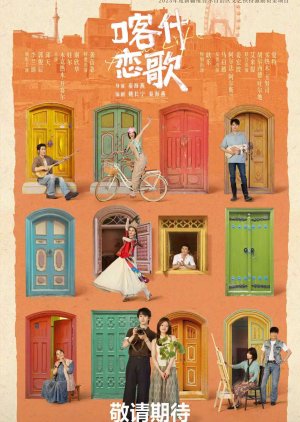
Details
- Title: Bloom Life
- Type: Drama
- Format: Standard Series
- Country: China
- Episodes: 8
- Aired: May 5, 2026 - May 7, 2026
- Aired On: Tuesday, Wednesday, Thursday
- Original Network: CCTV, iQiyi
- Duration: 45 min.
- Genres: Romance, Life, Youth, Family
- Tags: Architectural Designer Female Lead, Chinese History, Ethnic Minority, Sisters' Relationship, Return To Hometown, Family Relationship, Miniseries, First Love, Friendship
- Content Rating: Not Yet Rated
Statistics
- Score: 8.2 (scored by 1,459 users)
- Ranked: #1576
- Popularity: #4589
- Watchers: 4,459
- Favorites: 0


Popular Lists
Related lists from users




Which C-Drama Are We Watching Next?
747 titles 315 loves 37


Minority Ethnic Groups (Modern) | 少数民族
222 titles 34 loves 4



Chinse Drama
936 titles 3 loves
Recently Watched By


