Celebrity


Amazing Realistic historical drama
I am glad that I stopped making decisions based on ratings or comments, as this drama is great! I watched *Before Sunrise* first, and I think it helped me understand the characters better.I was hooked from the first episode, and it maintained the same pace until the end. I was also on the edge of my seat the whole time.
It starts as a beautiful story of a couple in love and their journey to create a Joseon and a monarch who would serve the people, not power. I wish they had made the drama longer so we could see the full story of their journey. Sometimes I did not realize there was a time jump and got confused.
It was heartbreaking to see how he treated her, despite still loving her. She helped him become king so he could fulfill his dream of a Joseon. Also, because of his actions and queen's support, he could prepare the foundation for a greater king. The last episode made me tearful. Towards the end, you understand why he eliminated so many people, as it is hard to start anew if there is still corruption and others desire power. It shows the true life behind the golden gate. Once you are in, you cannot get out alive. Despite all the killing he is famous for, he was a good king who did so much for the people; shame they could not include it all in the drama.
The acting was amazing, especially Joo Young and Hyun Woon; they slayed their roles. Also the production is great.
Overall, it is a great realistic historical drama that will not disappoint you. I could not give it high rating as it did not leave the same impact as My Dearest, Under the Queens umbrella, The tale of lady Ok.
Was this review helpful to you?

This review may contain spoilers
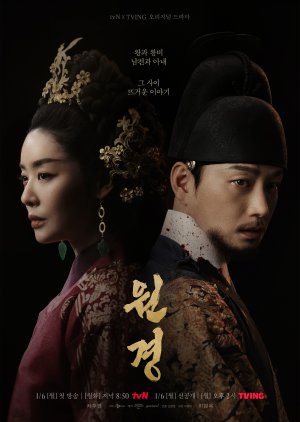
"The Queen Who Crowns" is a version of Lee Bang Won's story in which Won Kyung is the protagonist, showing how she was essential in making him king.Lady Min, later Queen Won Kyung is a strong, independent and inspiring woman, she could have been anything she wanted in this life, but her biggest problem was falling in love with Lee Bang Won and being used by him, since that's what happened after all. Without the power of her family and all of Won Kyung's support and strategies, Bang Won would never have succeeded, she was the one who basically gave him the throne and when they finally are in power, Bang Won realizes how inferior he is compared to her and begins to do everything he can to destroy Won Kyung's family and take away the power they had.
Since the drama is inspired by a true story, I think that in this version they could have changed what happens, followed a bolder development and there were some moments I even thought they would do that, with Won Kyung deciding to take power and remove her husband from the throne like in "Queen Woo" or even something similar to "Ruyi's Royal Love In The Palace", where she decided to leave and no longer endure all this humiliation and torture. How much can someone endure? Just because she wanted to help her husband become king, Won Kyung basically lost her entire family... This was all because she failed to understand Bang Won's intentions from the beginning, he would never share power with her. Everything he managed to achieve was with her help, so I would have liked to have seen how he reigned alone, without anyone by his side, which was exactly what he wanted so much.
Lee Hyun Wook's acting is very good, mainly because he managed to show us a side of Lee Bang Won that I hadn't seen before: being a coward, someone who is afraid of his own wife and what she can achieve without him. Everything Bang Won did was out of fear, instead of trusting his wife, he preferred to destroy her. Instead of ruling with her, Bang Won turns her into a subordinate.
But I have to say that the last scene is breathtaking, it's hard to find words to describe it. Won Kyung's expression as she watches her son dance for her, completely at peace, and Bang Won's sad look in the palace, as if he had understood that she would not return. The drama had its mistakes, yes, but with this scene alone, it managed to win me over again at the last second, simply spectacular.
This is a crueler version of the story and perhaps more realistic than the others, but I still like "The King of Tears, Lee Bang Won" better.
Was this review helpful to you?

Threads of Power: Symbolism, Strategy, and the Rise of Sejong
“The Queen Who Crowns reframes early Joseon history through the fierce, often unseen labour of a queen — Lady Min, Queen Wongyeong — whose influence created the political soil for the age of Sejong. It’s a viscera-rich portrait of ambition, ritual, and the private cost of public power.”⚜️ Historical Context
Set at the violent pivot between the fall of late Goryeo and the rise of early Joseon, The Queen Who Crowns unfolds during one of the most turbulent transitions in Korean history ⚔️. At its heart stands Queen Wongyeong (Lady Min, born 1365) — wife to Yi Bang-won, who would later become King Taejong, and mother to the legendary King Sejong the Great 👑.
The series situates her amid the storm of shifting loyalties, bloodline rivalries, and political purges that marked Joseon’s founding. Her family, the Yeoheung Min clan, once among the most powerful noble houses, climbed swiftly with her marriage, but later faced brutal downfall as Taejong consolidated power 💔.
Through this lens, the drama transforms dry chronicle into emotional storytelling — showing how behind every throne stood a woman balancing love, ambition, and survival 🌿. The court isn’t just a battlefield of men; it’s a stage where one queen’s silence, strategy, and sorrow quietly shape the dawn of a new dynasty.
🔮👘 Symbolism, Clothing & Setting
The Queen Who Crowns is a visual feast, speaking through fabric, color, and iconography 🏯✨. Recurring motifs — phoenix embroidery, willow-leaf fans, and seasonal palettes 🍂❄️🌸☀️ — convey emotional and political meaning without dialogue. The phoenix on Wongyeong’s robes signals maternal authority and legitimacy 👑, while its appearance without the dragon subtly marks her power outside official sanction. Dragons on Yi royal garments assert state authority and public legitimacy 🐉.
Color communicates mood. Early earthy tones 🟤 evoke warmth but instability, a lingering Goryeo influence; as Joseon rituals take hold, cold blues and formal reds 🔵🔴 signal Confucian order and institutional authority. Costume degradation — tattered embroidery or dulled threads — reflects political setbacks and clan decline ✨. Objects like fans, seals, and hidden jewels act as narrative shorthand: a pawned heirloom signals defeat, a concealed seal hints at secret influence 📜💼.
The drama also balances historical accuracy with stylistic flourish. Ritual headdresses (혼례복·관모) and layered collars show Ming influence 🇨🇳➡️🇰🇷 while retaining Joseon silhouettes 👘. Dense gold-thread embroidery and vertical Min family patterns signify wealth and political networks, contrasting with circular Yi motifs emphasizing centralized authority 🧵👑.
Palaces follow Confucian austerity, with minimalistic halls, clean lines, and ritual-focused courtyards 🌿🏯. Occasional ornamental flourishes or stylized crowns are deliberate artistic choices rather than historical errors. Together, costumes, props, and architecture create a living palace — a world where status, power, and emotion are legible to any attentive viewer 🔍💛.
❤️ Relationship Dynamics & Emotion
At the heart of The Queen Who Crowns lies the Queen–King axis 👑💫 — a relationship that is as political as it is personal. Queen Wongyeong is not merely a supportive consort; she is a partner, strategist, and power broker 🌿🕊️. Every glance, every carefully folded sleeve, communicates her influence behind the throne. Her intelligence and foresight shape court politics as much as her husband’s decrees, yet she must constantly navigate the dangerous line between support and overreach ⚖️.
Taejong, on the other hand, is a man of contradictions: gratitude toward his queen, paranoia about rivals, and ruthless pragmatism when consolidating power ⚔️🖤. The drama captures these fluctuations beautifully — moments of tenderness and vulnerability are juxtaposed with sudden political calculation, making their interactions feel alive, tense, and unpredictable.
The series excels in portraying emotional rupture 🌸💔. When the Min clan faces setbacks or family members are sacrificed for political stability, Wongyeong’s grief is never melodramatic — it is quiet, ceremonial, and deeply human. This restraint underscores the harsh reality of queenship in a Confucian court: emotional expression must coexist with political necessity.
Their marriage reads simultaneously as a political alliance and an intimate tragedy 💑🕯️. Even in the most private moments — a shared cup of tea, a fleeting touch, a whispered command — the audience senses layers of loyalty, love, and fear. Secondary characters, from ambitious princes to loyal ministers, mirror and magnify these dynamics, showing how every relationship in the palace is a balance of strategy and sentiment ⚖️🌿.
Ultimately, the drama frames love and power as inseparable: to survive, Wongyeong must be shrewd; to rule, Taejong must be ruthless. Their interactions are not just romantic; they are microcosms of the dynasty’s birth, each emotional choice echoing in the corridors of history 🏯✨.
⚔️ Power Struggles, Statecraft & the Road to Sejong
The Queen Who Crowns doesn’t shy away from the bloody calculus of early Joseon politics 🩸🏯. The Strifes of the Princes, executions, exiles, and factional betrayals are shown as personal tragedies, not just historical events 💔, emphasizing the human cost of consolidating power.
Taejong’s rise is ruthless: he abolished private armies, restructured bureaucracy, and removed rival factions, laying the groundwork for a centralized state ⚖️🔥. The series captures this harsh prelude to Sejong’s golden age, showing that political stability demanded blood, strategy, and moral compromise.
The drama balances intrigue and emotion ⏳. Purges are most effective when the motives — institutional threat versus personal vengeance — are clear. Courtroom battles and council meetings illustrate bureaucratic mechanics, though the show sometimes favors personal drama over policy detail 🌿📜.
Historically, Taejo founded Joseon, but it was Taejong’s consolidation — centralizing military and fiscal control — that enabled Sejong the Great to rule effectively 👑✨. Sejong’s focus on scholarship, culture, and institutional reform was only possible because the dynasty was stabilized through these earlier, often brutal, measures 🌸🕊️.
By blending political strategy, human cost, and historical consequence, the drama reminds viewers that every throne was won through both violence and vision, and every dynasty’s golden age was born from calculated sacrifice ⚔️💛.
🎭 Character Development & Acting
The Queen Who Crowns excels at layered character portrayals, making each figure more than a historical silhouette 👑✨.
Queen Wongyeong is portrayed not as a one-dimensional schemer but as a complex, conflicted figure 🌿💔. Her intelligence, political savvy, and strategic brilliance are constantly tempered by maternal vulnerability and personal grief. Moments of quiet reflection — a folded sleeve, a lingering gaze, a whispered command — reveal the emotional weight she carries behind the throne 🕊️🧵.
Taejong is equally nuanced. The series balances his state-building brilliance — centralizing power, reforming bureaucracy, and consolidating military authority ⚖️⚔️ — with the moral and emotional cost of his rule: paranoia, fratricide, and personal sacrifice 💀💛. His private anguish is often as compelling as his public triumphs, making him both fearsome and tragically human.
Supporting princes, ministers, and court officials are more than background props 🌸. They reveal institutional tensions, political scheming, and factional rivalry. Figures reminiscent of Jeong Do-jeon are given depth and motivation, while palace eunuchs, elders, and minor nobles enrich the political texture, showing that every player has a stake in the dynasty’s survival ⚖️🏯.
🎬 Production Quality & Technical Brilliance
The production values are consistently high 🌟. Set design, matte paintings, and palace layouts convincingly evoke a Ming-informed early Joseon world 🏯🇨🇳. Costume work is meticulous: textures, embroidery density, and color hierarchies convey status, power, and lineage 🧵👑.
Cinematography uses candlelight, narrow corridors, and shadowed hallways to create claustrophobia and tension 🌒🕯️, immersing viewers in the stakes of palace intrigue. The soundtrack is carefully crafted, with leitmotifs differentiating the Min clan from the Yi dynasty 🎶🌸, adding another layer to character and political identity.
Even the smallest roles shine: minor ministers, concubines, or palace servants bring texture and realism to a world otherwise dominated by kings and queens ✨🌿.
However, there are occasional weaknesses. Some anachronistic ornaments or language registers appear, and certain scenes favor melodrama and romance over the substance of political maneuvering 💔⚖️. Still, these are minor quibbles in an otherwise immersive and polished production.
Ultimately, acting and production work hand in hand to bring historical tension and personal emotion to life. Cha Joo-young’s Wongyeong is sharp, wounded, and endlessly compelling 🌿💫, while Lee Hyun-wook’s Taejong combines charisma with menace ⚔️👑. The supporting cast and visual design ensure that the palace feels alive, dangerous, and politically charged, making the audience feel the weight of every choice and every betrayal 🏯🕊️.
“Ultimately, The Queen Who Crowns is less a documentary than a palace elegy — a vivid, sometimes fictionalized portrait of a queen who both made and suffered the making of a dynasty. It’s strongest when it reads ritual and fabric as political language; weaker when it reduces national reform to interpersonal melodrama. For readers who care about costume, symbolism, and the emotional architecture of power, it’s essential viewing.”
Was this review helpful to you?

Good story
"The Queen Who Crowns" is a story about a girl who is kind and benevolent. A boy falls in love with her and pursues her. She agrees to be with him because she thinks he is a kind person and, above all, loves her. Her family and she help him become king, but slowly, he begins to think that she has her own greed in making him king. Her family members also hold powerful positions in his reign, and he needs them to secure the throne.To become king, he kills his stepbrother, which makes his father angry and turns them into enemies—something he never wanted. He also starts believing that the girl is the reason for their feud. The girl, now his wife and crown queen, becomes the target of his resentment. These thoughts make him bitter, and he starts taking many concubines, forming relationships with them to disgrace the queen and make her realize that he has changed.
His changing attitude begins to disturb her. However, there is still something that continues to bind them together.
Was this review helpful to you?
This review may contain spoilers
The Loneliness of the Queen Behind the Crown
The Queen Who Crowns was one of the most emotionally powerful historical dramas I have watched in a long time.What makes this story so compelling is that Queen Wongyeong is not portrayed as a passive figure standing behind the throne. She actively helps her husband rise to become the third King of Joseon, sacrificing, enduring, and fighting beside him through political struggles and dangerous court dynamics. Watching her intelligence, ambition, and emotional strength throughout the drama was genuinely captivating.
The series does an excellent job portraying the tension surrounding the concubines, the ministers, and the gradual emotional distance that develops within the royal family despite everything the Queen sacrificed to build. The political atmosphere constantly feels heavy, layered, and emotionally charged.
What stayed with me most, however, was the sadness running underneath the entire story. Even moments of victory often carried pain with them, and the ending felt deeply tragic and emotional. Knowing how much she gave, only to face loneliness and heartbreak in the end, made the final episodes incredibly impactful.
The acting, cinematography, costumes, and emotional intensity were all exceptional. This is not a light watch, but for viewers who enjoy emotionally rich historical dramas with strong political and personal storytelling, this drama delivers beautifully.
10/10
Was this review helpful to you?

A Lion Out of Chains: A Review of The Queen Who Crown
1.OThe Queen Who Crown is an ambitious drama that dives deep into themes of power, freedom, and the complex dynamics between a King and Queen. While it aims to showcase strong characters, particularly the Queen, its portrayal raises questions about how strength and power are depicted, especially in women.
The Queen is undeniably a force to be reckoned with, but her strength is portrayed through a lens of relentless control and ruthless ambition. Having tasted power, she clings to it with an almost manic determination, willing to go to any lengths to retain it—even if it means betrayal, manipulation, or worse. While this makes for a dramatic and compelling narrative, it risks perpetuating a troubling message: that power corrupts women more destructively than men.
The King, on the other hand, is shown as a character rediscovering his agency. Once a passive, seemingly submissive figure overshadowed by his controlling wife, he emerges as a lion unchained when he ascends the throne. His transformation feels empowering, a reclamation of identity and freedom. However, his rise contrasts sharply with the Queen’s descent, which leans heavily into the trope of a “power-hungry woman.”
The drama’s intention to showcase a strong woman is clear, but its execution falters. A truly strong woman doesn’t have to be depicted as heartless or consumed by power at the expense of others. The Queen’s actions, from betrayal to outright scheming against her King, paint a picture of a character more concerned with domination than leadership. While this may serve the narrative tension, it inadvertently suggests that women in power are inherently prone to corruption and cruelty—a troubling implication.
In contrast, the King’s character arc suggests that freedom and strength are inherently virtuous when reclaimed by a man. This dichotomy may leave viewers questioning the fairness of the drama’s messaging. Does it challenge the status quo, or does it reinforce outdated stereotypes?
Ultimately, The Queen Who Crown is a captivating tale of power and transformation, but it walks a fine line. While its portrayal of the Queen adds layers of intrigue, it risks overshadowing the nuance of what a strong, empowered woman can truly be. Strength doesn’t have to equate to ruthlessness, and power doesn’t have to corrupt. The drama might have done well to balance its depiction of ambition and morality, especially in its female lead.
2.O
The Queen Who Crown offers a gripping exploration of power dynamics, desires, and the shifting sands of authority within a royal marriage. The character development of the King is particularly striking, as his transformation is nothing short of a revelation.
Before ascending to the throne, the King was portrayed as a subdued, almost docile partner—more his wife's pet than her equal. The Queen, accustomed to control, treated him as a submissive weakling, and he played the part well. But as the crown settled on his head, so did a newfound freedom and ferocity, one that reveals the depth of what he had repressed.
His evolution is both exhilarating and unsettling. The King’s untamed side begins to surface, a lion unshackled from chains, roaring with the power he now wields. The narrative brilliantly peels back the layers of his character, showing the desires and ambitions he had hidden beneath a quiet exterior. It’s fascinating to see how much he had bottled up, waiting for the right moment to emerge.
Meanwhile, the Queen’s journey takes a different turn. She is left grappling with the loss of control she once took for granted. Her attempts to reclaim power are as desperate as they are calculated, painting a vivid picture of a ruler who underestimated her counterpart. Her habits of domination, once effortless, now seem futile against the King’s burgeoning autonomy.
The dynamic between the two is electrifying—a dance of dominance and defiance, love and resentment. The storytelling captures the raw emotion and tension that come with shifting power. The King’s transformation feels liberating, while the Queen’s struggle to adapt to her diminishing influence makes for compelling drama.
The Queen Who Crown is an enthralling tale of identity, freedom, and the complexities of power. The King’s journey from submissive to sovereign is as captivating as the Queen’s realization that the reins are slipping from her grasp. It’s a must-read for anyone who enjoys stories of transformation and the unpredictable nature of relationships at the highest stakes.
Was this review helpful to you?

This review may contain spoilers
I kept wondering how a woman could unwaveringly support a man who continuously kept demeaning her and ruthlessly massacred her siblings?“The Queen Who Crowns” depicts the delicate balance between a husband and wife who are at the pinnacle of success. Historically, the show doesn’t offer much information about Yi Bang Won’s (Prince Jeong An) rebellion with him usurping the throne and becoming King Tae Jong, the founder of the Joseon dynasty. The show starts with discord, goes through major turbulence and ends in upheaval. The show focuses on Queen Won Gyeong (born Min Je), a brave, smart and sharp tongued noblewoman born in a prestigious family of high-ranking officials. Her intellect is incomparable, and she proves her worth when she is married to Yi Bang Won, the fourth son of King Tae Jo. Things get sour when King Tae Jo names his second son, Yi Bang Gwa, as crown prince instead of Yi Bang Won. Min Je and Yi Bang Won lead a rebellion which ends in the Crown Prince’s death and Yi Bang Won ascends the throne. What follows is a series of ego clashes between the once peaceful couple, as they grapple between court politics and family dynamics. Because of his rampant insecurities, King Tae Jong spends a lot of time outmaneuvering his brilliant wife who would definitely make a better monarch than him, if she was born a man. To consolidate his power and hurt her, he forms alliances and randomly takes concubines, forces her brothers into exile followed by ordering their execution. Throughout his angry tirades and outbursts, Queen Won Gyeong maintains her demeanor as an outright monarch who cares more about her people than anything else.
Read the complete article here-
https://kcdramamusings.wordpress.com/2025/02/12/the-queen-who-crowns-series-review/#more-1556
Was this review helpful to you?

This review may contain spoilers
Drama político da melhor qualidade
Uma obra-prima em estado bruto, sem polimento para agradar românticos de plantão – aqui o que impera é política, estratégia e poder, e o drama foi impecável nesse aspecto. A ambientação, o texto afiado, a direção precisa e o roteiro coeso se alinharam de forma rara, criando uma narrativa que honra a história sem abrir concessões. Um mérito inegável é a fidelidade aos acontecimentos reais: a Rainha Wongyeong faleceu em 1420, seu marido seguiu em 1422, e ambos deixaram o trono para Sejong – interpretado de forma magnânima e emocional por Lee Jun Young no episódio final. E que decisão acertada da rainha, porque Sejong não foi apenas um bom rei, mas um dos maiores monarcas da história coreana. No fim das contas, ela sabia exatamente o que estava fazendo.Was this review helpful to you?

Quando il pensiero diventa un crimine di corte.
C’è chi guarda i drama per rilassarsi, e poi c’è chi guarda The Queen Who Crowns per farsi scuotere fino all’anima, stirarla e appenderla come arazzo nella sala del trono.Benvenuti nella Corea della nascita della dinastia Joseon: dove gli imperatori si credono semidei, le regine dovrebbero essere gioielli ambulanti e il patriarcato non solo comanda, ma pretende pure di essere ringraziato.
Questo drama è un capolavoro d’equilibrio fra tragedia, estetica e crudeltà di corte. Tutto è talmente perfetto che sospetti l’intervento di qualche divinità del montaggio. È una di quelle rare serie che vorresti non finissero mai, ma forse è meglio così: troppa bellezza tutta insieme rischia di destabilizzare l’ordine cosmico.
La storia non è una favola e lo zucchero, qui, è bandito per decreto imperiale. Gli uomini di potere sono feroci e vulnerabili come tigri ferite, e le donne, pur essendo il cervello del regno, vengono trattate come ornamenti politici da schiacciare.
L’imperatrice è la mente lucida e la spina dorsale del nuovo impero: intelligente, stratega, visionaria. Ed è proprio questa intelligenza a condannarla.
Il marito, l’imperatore, è un caso di scuola di gelosia intellettuale: incapace di sopportare che la moglie veda più lontano di lui, si dibatte in un mare di sospetto, vanità e crudele vendetta. La sua insicurezza si trasforma in ferocia, la sua passione in persecuzione. È un uomo che ama e odia nello stesso gesto, che teme ciò che ammira, e che distrugge ciò che non riesce a possedere.
Applausi infiniti al regista, che rispetto ai suoi primi lavori compie un salto quantico: inquadrature moderne, potenti, quasi sacrali, dove ogni taglio sembra un atto di fede nel linguaggio visivo.
Il direttore della fotografia è un alchimista della luce che fonde realtà e mistica bellezza fino a far sembrare ogni scena una visione sospesa tra sogno e realtà.
E l’art director, be’, ha trovato la chiave per far respirare la Storia stessa: montagne, corti, ombre e riflessi che sembrano scritti con l’inchiostro del tempo.
Gli attori? Da manuale. Ogni sguardo è un duello, ogni parola una lama avvolta nella seta.
Perfetti nell’incarnare il dramma umano dietro il potere: l’amore come guerra, l’intelligenza come peccato, la regalità come condanna.
Un avvertimento: lasciate perdere se cercate il solito drama “dolcificante per lo spirito” non è il drama per diabetici romantici
Qui l’amore brucia, il potere corrompe, e la dolcezza in un atto egoista.
Un’opera sontuosa, crudele, poetica.
Un racconto che incorona l’intelligenza femminile proprio mentre mostra il prezzo da pagare per possederla.
Un trono d’oro che taglia come una lama.
Se vi interessa questo periodo di Storia Della Korea potete approfondire guardando Taejong Yi Bang Won che ripropone la stessa parte di storia ma spostando il focus sull’imperatore. Una regia meno innovativa ma comunque molto interessante perché indugia sulle dinamiche a volte in maniera più approfondita.
Was this review helpful to you?

Un piccolo capolavoro
La serie, prende ispirazione dalle vicende di Re Taejong e della Regina Wongyeong, ma va oltre la cronaca storica: ne fa un dramma epico e intimo insieme, in cui il potere, l’amore e la lealtà si intrecciano in un equilibrio quasi impossibile.Il personaggio della regina — una donna di grande lucidità politica e forza morale — è tratteggiato con una profondità rara per i sageuk (drama storici coreani): non una figura decorativa né una consorte ribelle, ma una sovrana consapevole, pronta a sostenere e sfidare il marito in egual misura.
E il re, pur nella sua durezza, emerge come un uomo combattuto tra dovere e sentimento, autorità e vulnerabilità.
La regia, la fotografia e la colonna sonora sono di livello cinematografico — quelle tonalità calde e solenni, la musica che accompagna i silenzi della corte, e i dialoghi ricchi di sottotesti fanno davvero di questa serie un piccolo capolavoro.
È un ottimo esempio di come la Corea sappia reinterpretare la storia in chiave moderna, restando fedele allo spirito dei personaggi.
Una serie che parla sì di un’epoca lontana, ma anche del potere, dell’amore e della dignità femminile in ogni tempo.
Was this review helpful to you?