News
News 

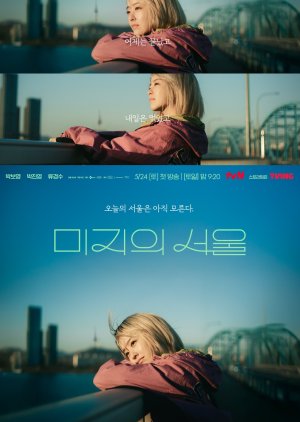
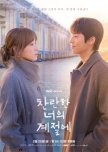
Twin sisters Yoo Mi Ji and Yoo Mi Rae differ in everything except their faces. Yoo Mi Ji, the younger of the twins, has ended her short heyday as a promising track and field athlete and is currently living a free-spirited life. On the other hand, the older sister of the twins, Yoo Mi Rae, who has been walking the path of the elite since her school days, is a perfectionist working at a public corporation. The twins, physically identical but leading starkly different lives, embark on a bold charade, switching lives for some undisclosed reason. Lee Ho Su is a lawyer at a large law firm with a tall appearance and a seemingly carefree attitude. He may look like a noble swan with no external flaws, but he works harder than others to live an ordinary life, and this is because he has been living a different life than before after experiencing something in the past. As a result, he lives a calm life without showing his true feelings, but one day, an unexpected encounter occurs that sends waves through Ho Su's heart. (Source: Korean = Naver || Translation = kisskh) Edit Translation
- English
- 한국어
- ภาษาไทย
- Arabic
- Native Title: 미지의 서울
- Also Known As: Mijiui Seoul , Seoul, the Unknown , Unknown Seoul
- Director: Park Shin Woo
- Screenwriter: Lee Kang
- Genres: Romance, Life
Cast & Credits
-
 Park Bo YoungYoo Mi Ji | Yoo Mi RaeMain Role
 -
 Park Jin YoungLee Ho SuMain Role
 -
 Ryu Kyung SooHan Se JinMain Role
 -
 Lee Jae InYoo Mi Ji | Yoo Mi Rae [Teen]Support Role
 -
 Im Chul SooLee Chung Gu [Ho Su’s senior]Support Role
 -
 Jang Young NamKim Ok Hui [Mi Ji and Mi Rae’s mother]Support Role

Reviews

This review may contain spoilers
One of those series whose true beauty unfolds only gradually
Happily, another jewel in the KDrama sky of 2025. Our Unwritten Seoul is one of those series whose true beauty unfolds only gradually—like the secret bloom of an evening primrose, opening quietly under the cover of dusk, revealing its radiance only to those who wait with patience.Many voices have called the series emotionally profound, poetic, introspective, healing… It spent weeks in the global Netflix charts and entered the Top 10 in more than 28 countries. At its heart, it is a drama about identity, self‑perception, and familial wounds. And within it, Park Bo‑young surpasses herself in a dual role as Mi‑ji and Mi‑rae.
What first appears to be a quiet drama reveals itself as a finely woven net of fate, self‑deception, transformation, and quiet hope. It does not show a world that is better, but one that is honest. A world where dreams fail, families grow weary, people live side by side without listening to each other. And yet: there are strawberries. There are warm embraces. There is the possibility of beginning again.
The story of twin sisters who exchange roles may sound familiar, but here it becomes a meditation on identity, self‑worth, and the longing to be someone else.
Park Bo‑young does not merely carry the series—she shapes it. As Mi‑ji and Mi‑rae—and, in truth, as four substantial versions of them: each as herself, and each as the other in disguise. She grows through the subtle distinctions of expression, the quiet shifts in tone and posture, the evolving body language. Rarely has a double role been so convincingly embodied.
Lee Ho‑su (Park Jin‑young) is not the typical love interest. He is a man marked by scars, visible and invisible. Half deaf, half estranged from his own body, he becomes a mirror of imperfection—the very quality that makes the series so valuable. His relationships with mentor, mother, past, and with Mi‑rae and Mi‑ji are told without pathos.
The cafeteria jobs, the small‑town life, the broken dreams—these make Our Unwritten Seoul a counterpoint to dramas suffocated by glamour. Even though its stars come from the KPop orbit, their performances reach a new level: restrained, reflective, human. Even the supporting characters carry their own stories, which gradually draw us in. This makes the world believable and layered. The supporting actresses Cha Mi‑kyung, Kim Sun‑young, and Jang Young‑nam add depth without overshadowing.
And then the deliberate contrasts: city and countryside, high‑rise and strawberry farm. The farm scenes are almost meditative—a place of healing. Han Se‑jin’s departure from the hedge‑fund world is more than symbolic: it is about rediscovering a way of life that does not need to be efficient.
The theme of self‑compassion also finds its place here: the series asks not only how we see others, but how we treat ourselves when no one is watching.
The OST serves as an emotional companion. The visual design is carefully attuned to the story. The series employs a chiastic structure, working with opposites and reflections so that the characters’ development and healing become visible. Even the colors shift gradually, reflecting the inner states of the protagonists.
In the end, the story closes a circle. The characters return to places where they began—changed, grown, carrying their old wounds, which now can begin to heal. Subtle, beautiful. And, indeed: valuable.
Was this review helpful to you?

Very Healing, Great Parental Figures
My 4 categories are Acting/Cast, Writing, Direction/SFX/Music, Entertainment Value.I love The Parent Trap. Let’s do this!
Acting/Cast: I’ve found that Park Bo Young (박보영) is really good playing depressing roles, such as seen in Daily Dose of Sunshine. She also did a great job playing two different people. I could always tell who was who. The parents were great and the 할머니들 (halmeonis/grandmas)! This drama has some awesome grandmother-type characters. In this category, I really only had a problem with Park Jin Young (박진영 ), the male lead. I just don’t think he’s a good actor. He seems kind of ‘blank’ to me; no emotion in the eyes. His character, though, was fine. I would have cast him differently...maybe with an actor that looks more like his younger self actor. I was thinking Cha Hak Yeon (차학연 ) from Castaway Diva may be a good fit visually. I’ve only seen him in 2 dramas though. 8/10
Writing: Even though the plot seems a little crazy, it’s actually not. They take a pretty realistic approach to this drama. The focus is on characters suffering from depression and other issues and how they learn to heal through their connections with family and friends. The problems the characters face are common and relatable to many people (with me being one of them). This drama is very sad, but it is as equally inspiring with many powerful quotes. As for what I didn’t like about the writing...there is Noble Idiocy and it is dumb as per usual. The female lead rationalizes it because she had done something similar as a teenager. However, this Noble Idiocy is now occurring in adulthood, when this character should be more mature by now. It’s aggravating because of its predictability and because it doesn’t really make sense. The ending is also a bit lackluster. I didn’t have a problem with how it ended, it just wasn’t very interesting. It would have been nice if it had a powerful ending that left us with a lasting impact. So, I can say that it does get a bit boring toward the end or the wrap-up phase of the drama. 8.5/10
Direction/SFX/Music: The production value feels high (although not as high as Daily Dose of Sunshine). They did a great job with the emotional scenes. I liked the flow of the drama. The music was okay, but it didn’t really stand out too much to me. 6/10
Entertainment Value: I came for The Parent Trap, I stayed for the feels. I watched this drama as it aired, which is something I usually don’t do. However, I couldn’t help it...I was really into the story and its characters and the other dramas that I was watching at the time weren’t doing it for me. It’s not like Our Unwritten Seoul is an exciting drama...its more like...a comfort. Anyways, it kept my attention consistently until the last couple episodes. 6.5/10
Overall, I gave this drama a 7.5/10. I prefer this a bit more to Daily Dose of Sunshine (which I had given a 7/10). However, I think that’s only because I relate to Our Unwritten Seoul immensely. It reminded me of how I related to My Liberation Notes and even a bit like Summer Strike. Surprisingly, I’ve scored Our Unwritten Seoul higher than all of these dramas. It just flows well and doesn’t have many issues when it comes to the writing. If you don’t like slice-of-life healing dramas or stories about depression or if you don’t like Park Bo Young (박보영), you probably will not like this drama. But for me, this drama really worked.
Was this review helpful to you?
Recent Discussions
| Title | Replies | Views | Latest Post | |
|---|---|---|---|---|
 | Our Unwritten Seoul - Quotes by Choppy | 11 | 0 | JashiaIslam Jun 28, 2025 |
 | Our unwritten seoul twins promise by prospy | 0 | 0 | No discussions yet |
 | OUS - OSTs by chase_kayden | 1 | 0 |  liv_d Jun 15, 2025 |