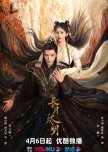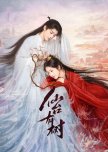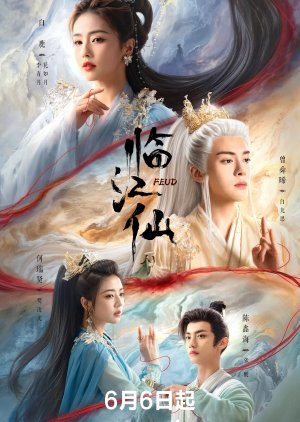
La discepola di basso rango Li Qing Yue non ha mai sperato di ottenere molto a causa del suo basso livello di potere spirituale. Tuttavia, la sua vita cambia radicalmente quando Bai Jiu Si, il potente Signore Supremo di Da Cheng, scende dal regno celeste e dichiara che sarà la sua compagna e moglie. Nonostante questa fortuna, un tragico malinteso mette Qing Yue e suo marito l'uno contro l'altra, portandola alla morte. Alla sua rinascita, Qing Yue riacquista i ricordi del passato e decide di vendicarsi di Jiu Si, ritenendo che sia lui il responsabile della sua morte. Adotta il nuovo nome di Hua Ru Yue e inizia a tramare la sua caduta... ma sarà davvero lui il colpevole? (Fonte: Viki) Modifica la Traduzione
- Italiano
- 中文(简体)
- Русский
- English
Dove Guardare Heng Men You Hu




Cast & Ringraziamenti
-
") Bai LuLi Qing Yue | Hua Ru YueRuolo Principale
Bai LuLi Qing Yue | Hua Ru YueRuolo Principale -
") Joseph ZengBai Jiu SiRuolo Principale
Joseph ZengBai Jiu SiRuolo Principale -
") He Rui XianFan Ling ErRuolo Principale
He Rui XianFan Ling ErRuolo Principale -
") Chen Xin HaiZhang SuanRuolo Principale
Chen Xin HaiZhang SuanRuolo Principale -
") Liang Qi ShunLi MoRuolo di Supporto
Liang Qi ShunLi MoRuolo di Supporto -
") Zheng KaiMeng ChuRuolo di Supporto
Zheng KaiMeng ChuRuolo di Supporto






Recensioni

Non una semplice storia d’amore
Quando ho iniziato Lin Jiang Xian, mi aspettavo un fantasy romantico con reincarnazioni, conflitti e un pizzico di tragedia. Quello che non mi aspettavo era di trovarmi davanti a una storia che parla così profondamente di identità, equilibrio e relazioni, usando il fantasy come linguaggio e non come fine.Questo drama non racconta semplicemente se due persone riusciranno a stare insieme.
Racconta cosa succede quando due forze opposte esistono separate, si attraggono inevitabilmente, ma non sanno ancora coesistere.
Fuoco e ghiaccio, Yin e Yang
Lei è fuoco.
Lui è ghiaccio / acqua.
Non solo a livello caratteriale, ma a livello ontologico: sono nati come manifestazioni separate di Yin e Yang. Per questo si cercano, per questo si scontrano, per questo si feriscono. Il loro legame non è una scelta romantica, è una necessità cosmica, e proprio per questo è così doloroso.
Il drama è molto chiaro su un punto:
gli opposti non si distruggono perché sono diversi, ma perché cercano di esistere senza equilibrio, tentando di prevalere l’uno sull’altro.
Ogni reincarnazione, ogni linea temporale, ogni possibilità mostra una variazione dello stesso errore.
Da spettatrice occidentale, mi aspettavo che il “ritorno indietro nel tempo” servisse a cambiare il destino di tutti, a correggere il mondo. Invece FEUD sceglie una strada completamente diversa.
Qui il tempo non è lineare e non è un meccanismo da manipolare.
È memoria karmica.
Quando lei torna indietro:
non cancella ciò che è accaduto
non annulla le vite precedenti
non crea un’unica timeline corretta
Crea una nuova possibilità, che si somma alle vite già vissute senza sostituirle. Il passato continua a esistere. Il dolore continua a esistere. Ma cambia la consapevolezza con cui si sceglie.
Ogni personaggio e la propria traiettoria
Un altro aspetto che ho apprezzato moltissimo è che il cambiamento non è collettivo. Ogni personaggio riceve un’occasione diversa, non una salvezza automatica.
Chi riesce a scegliere in modo diverso evolve.
Chi persiste nelle stesse scelte resta intrappolato nel ciclo.
Il drama è molto netto su questo punto:
non è l’errore a condannare, ma l’attaccamento all’errore.
Nemmeno un immortale è al sicuro se rifiuta l’evoluzione: l’immortalità è solo tempo in più per comprendere, non una garanzia.
Uno degli aspetti più forti e attuali del drama è il modo in cui affronta il tema della relazione.
Il fatto che, quando uno dei due si indebolisce, la forza dell’altro aumenti, mostra chiaramente come la perdita di equilibrio tra Yin e Yang generi solo caos e sofferenza. L’armonia non nasce quando uno dei due prende tutto il peso o tutto il potere, ma quando nessuno sovrasta l’altro.
Il gesto di lui che la sigilla sulla Terra per dieci anni, decidendo da solo “per proteggerla”, è emblematico. Anche un amore assoluto, se accompagnato dal controllo e dalla negazione della libertà dell’altro, diventa distruttivo. Il drama è lucidissimo nel mostrare che nemmeno il sacrificio e la punizione cancellano la responsabilità delle scelte.
Ed è per questo che lei non lo perdona, anche quando lui subisce una punizione persino più dura della sua. Il dolore non rende giuste le decisioni prese. Il perdono non è dovuto.
In questo senso Lin Jiang Xian diventa quasi un prontuario sulle relazioni, sorprendentemente in linea con il tema dell’amore malato che vediamo spesso anche nella nostra società: protezione che diventa controllo, sacrificio che diventa annullamento.
Il finale: nuova vita o liberazione?
Il finale è uno dei punti più delicati del drama.
Lei torna all’inizio del loro tempo, ma non si tratta di un reset ingenuo. Lui non è una versione vuota o inconsapevole. Non ricordano tutto come memoria umana, ma ricordano come anime.
Le ultime scene non rappresentano una timeline alternativa o una correzione del destino. Rappresentano la fine della tribolazione. Il tempo non viene riavviato: viene trasceso.
Non devono più distruggersi per esistere.
Non devono più soffrire per amarsi.
Colonna sonora
La OST è una delle più belle e coerenti che abbia mai ascoltato in un drama fantasy. Non è mai invasiva, ma accompagna ogni scena con una delicatezza incredibile, amplificando silenzi, attese e dolore. Riascoltarla significa tornare immediatamente alle emozioni del drama.
FEUD non è semplicemente una storia d’amore.
È la storia di due forze che imparano a smettere di combattersi.
E forse ci tocca così profondamente perché fuoco e ghiaccio vivono anche dentro di noi.
un appunto che mi sento di fare in generale sulla "lunghezza dei drama" riferito non a questo drama in particolare ma a tutto il genere.
Spesso si sente dire che i drama sono lunghi e quindi noiosi, ma credo sia un luogo comune fuorviante. In realtà, per trasmettere concetti così profondi e complessi — soprattutto per uno spettatore occidentale — una narrazione lunga non è un difetto, ma una necessità. Temi come il karma, l’equilibrio tra Yin e Yang, la responsabilità delle scelte e l’evoluzione dell’anima non possono essere compressi senza perdere significato. Anzi, a volte questi drama risultano persino troppo brevi rispetto a ciò che vogliono raccontare. Quando si smette di guardarli come semplice intrattenimento e si inizia davvero a comprenderne il linguaggio, diventano estremamente affascinanti e capaci di far riflettere in profondità — qualcosa che, purtroppo, le serie occidentali contemporanee riescono a fare sempre più raramente.

 27
27 11
11 23
23 2
2A Love Forged On The Edge Of Hatred, Tempered By Silence And Pain
"Feud", also known as "Lin Jiang Xian" (Lament of the River Immortal), presents itself as a xianxia drama rooted in misunderstanding, but beneath its surface lies a haunting, layered tale of how grief can blur the line between love and hatred.At the heart of the story is the tragic bond between Hua Ruyue and Bai Jiusi: two souls once intertwined by fate, only to be torn apart by pain and betrayal. Their relationship, rich with longing and unresolved devotion, forms the emotional backbone of the drama. Their journey was never about romance, but of healing — a reflection of how love, when wounded deeply, can either wither into ruin or be transformed into redemption.
STORYLINE ₊ ⊹❀
The drama opens with a deceptively lighthearted tone, focusing on the fairytale-like romance between Li Qingyue and Bai Jiusi. Their sweet, almost innocent dynamic hints at a familiar setup. At first glance, it feels like a typical love story within a xianxia setting, and yet, something about it feels quietly off. There were no backstories offered, no clear exposition given, especially regarding the main leads. This deliberate withholding of context created a sense of mystery which piqued at my interest. I thought this choice of narrative is one of the drama's strength because as the story progresses, it unravels into something far more tragic and complex.
After the illusion of simplicity fades with the revelation of Li Qingyue's true identity as Hua Ruyue, the tone of the drama takes a dramatic and somber turn. Her reemergence is not merely just a shocking twist, but a pivotal moment that reframes everything that came before. What once appeared to be the beginning of their love is actually just a continuation of a deeply fractured bond. For me, this arc marks the start of their true story, it is what made the drama more emotionally engaging and narratively unique. Each revelation drew me deeper into their twisted entanglement.
The transition from the first half to the second half of the story was seamless —it felt organic rather than jarring. The pacing struck the right balance, and the nonlinear structure of storytelling, through the use of flashbacks, added richness and layers to the characters and their relationship. What stood out most during this part was how the drama avoided a simplistic narrative of right and wrong. Instead, it carved out a space for both Hua Ruyue and Bia Jiusi to exist as flawed, grieving individuals — not heroes or villains, but as two souls shaped by their heartbreak and longing. The moral ambiguity embedded in their contrasting ideologies became the lens through which their pain and conflict were explored. I appreciated how the drama didn't ask to choose sides, it rather asked to understand.
Furthermore, the side characters weren't merely added as background figures, each of them carried enough weight and nuance to feel real rather than one-dimensional. Fan Linger wasn't confined to the typical trope of an annoying second female lead ; her arc became one of self-love and growth. The Jingyuan Sect deviated from the usual portrayal of a hypocritical or power-hungry factions in xianxia dramas. Even Xiao Jingshan, who walked the darker path wasn't portrayed as inherently evil but as someone affected by the weight of his pain. While the romance wasn't the central focus of the drama, the chemistry between the main leads was palpable, and the few moments of affection and tenderness they shared felt both authentic and heart fluttering.
The drama's conclusion wasn't a conventional happy ending, but one far more meaningful and symbolic. It didn't erase the suffering and tragedy Bai Jiusi and Hua Ruyue endured, instead it illuminated their long emotional journey towards healing. It was deeply moving to witness each character learn to let go of their hatred, resentment, attachments, and obsession. In the end, it wasn't about neat resolutions, but about choosing peace after pain, and choosing love even in the aftermath of loss.
The CGI in the drama wasn't anything groundbreaking, it was more in line with what you'd expect from older xianxia productions but it did serve its purpose. The cinematography, on the other hand, was visually pleasing and managed to capture the tone of the story well. As for the costume designs, what particularly stood out for me was for the main leads. I especially adored the intricate details in Hua Ruyue's hair pieces, and the soft, elegant color tones of Bai Jiusi's hanfu which suited him perfectly. I only found one aspect lacking, it was the sound effects. At times, they were overpowering the dialogue in certain scenes. Also, the comedic sound cues felt misplaced and distracting, like the glass shattering sounds.
CHARACTERS & ACTING ₊ ⊹❀
Bai Lu as Hua Ruyue | Li Qingyue
Hua Ru Yue is the most compassionate immortal god to exist. From the moment she first opened her eyes to the world, her heart was already soft. Despite her divine status, she never turned a blind eye to mortals suffering. She saw their pain, recognized their worth, and treated them not as lesser beings, but as lives equally deserving of dignity and care. Beneath her gentle spirit, lies an unshakable will. Hua Ruyue doesn't confine herself to the rigid laws of heaven, nor does she flinch at the face of fate. She is strong minded and unyielding, she follows her own truth even when the cost is great.
Meeting Meng Chi, a mortal whom she saved, marked the beginning of Hua Ruyue’s fated entanglement with cause and effect. His life was like a mirror — one that reflected the eternal divide between immortals and mortals. Birth, aging, sickness, death… the joys and sorrows of mortal life pass like fleeting shadows in the eyes of gods. But in an instant, Hua Ruyue came to understand the weight of those fleeting moments. She saw how "love" — that fragile, flickering flame, is what mortals cling to even when knowing they are destined to fade. And in that, she realized how divine power means nothing if it’s only used to look down with pity. Its true meaning lies in the courage to share in the pain of all living beings.
Though Meng Chi's life was brief, his impact on Hua Ruyue was profound. She came to see that if immortals are eternal but unfeeling, then they are no different from stone. Mortals may be fragile, but their suffering, born of love and foolish hope, weighs heavier than the sky. Hua Ruyue’s sword did not only slay the drought dragon — it shattered the cold, unyielding rules of the heavenly realm. For only by loving the fleeting can one become unafraid of the impermanence of life.
But even the kindest hearts can break. Hua Ruyue’s descent into hatred was never born of malice, but from heartbreak. A grief so vast, it devoured her light and twisted her love into vengeance. Losing her child, Shi An, was a wound deeper than any suffering she endured afterward. Her hatred towards Bai Jiusi blinded her to the truth, but before she was an immortal god Siling, she was a grieving mother. Hua Ruyue was trapped between the thin line of love and hatred, and though her anger burned fiercely, it was clear she still only loved Bai Jiusi. Each time she tried to kill him, she wasn't afraid to die along with him, because deep down, that love never left. And if proof was ever needed, it lies in Li Qingyue. Although she wasn't real, she was still Hua Ruyue, a part of her untouched by time, pain, and betrayal. How can someone who has endured so much still carry a version of herself so loving, so pure, so tender? That alone speaks of a heart that never fully closed — of a love that, no matter how scarred, still quietly endured.
Hua Ruyue was able to let go of her hatred through the quiet acceptance. It was the time artifact which Xiao Jingshan gave her that allowed her this final journey. She wasn't returning to the past to alter the future or reverse her pain. Instead, she was rewriting it as an act of healing, a way of finding peace within herself. This time, she chose to reunite with Bai Jiusi once more, not as someone who is broken by grief, but as someone who had lived through it, carried its weight, and slowly learned to lay it down. She approached him no longer as a mother ravaged by loss, but as Hua Ruyue, a woman who had loved deeply, suffered greatly, and finally made peace with both.
Hua Ruyue is now undoubtedly one of my most favorite character that Bai Lu had portrayed. She didn't disappoint. She delivered a performance that was both powerful and deeply moving. I have always admired her talent, especially in angsty and emotionally charged scenes, yet she still managed to surprise me with her stellar performance here, particularly during the revelation of Hua Ruyue's suffering in the mortal realm. Those scenes were gut-wrenching, it reminded me of the same emotional devastation I felt when watching her in One and Only. This truly stands out as one of her finest performances to have ever come around. Although, it is a pity that she didn't dub the character herself, her raw acting carried every scene with grace and intensity.
Zeng Shunxi as Bai Jiusi
Bai Jiusi is the opposite of Hua Ruyue. He is bound by the laws of heaven and carried the immense burden of guarding the infinite steel. He had a great sense of responsibility and never wavered from his duty, he was someone more restrained. Unlike Hua Ruyue, he doesn't resist the wheel of fate but accepts it. This wasn’t because he lacked the courage to fight, but because he believes in a natural cycle governed by karma and heaven's order. But that acceptance came at a cost.
Beneath his composed exterior lies a soul full of ache. He loved Hua Ruyue deeply, yet he never once voiced it aloud. Instead, his love was reflected in the way he remained steady, like still water, quietly enduring the storm of her resentment. Every part of him belonged to her. That love never wavered— not even when he lost his memories, not even when his soul was shattered. Even his sword remembered only the love he bore for Hua Ruyue.
Bai Jiusi's tragedy is that of a man who loved too deeply but spoke too little. He often chose restraint over expression as a way to protect others. But in doing so, he unknowingly built a wall between himself and Hua Ruyue. His passivity, though rooted in care, became the very force that allowed distance and misunderstanding to take root. He was not without flaws. Every time he withheld his truth, every time he let the moment pass without reaching for her, the space between them grew. His understanding became a substitute for confrontation, and in trying not to hurt her, he ended up letting her hurt alone. The weight of things unsaid, pain endured quietly and love never spoken became the very ache that defined their bond. In the end, his greatest flaw wasn’t a lack of love, but the silence that cloaked it.
After he learned the truth of Hua Ruyue's suffering and his unintentional role in Shi An's death, he became consumed by overwhelming guilt. That realization shattered what little composure he had left, however, he didn't try to justify himself. His redemption came in the form of self-erasure — allowing Hua Ruyue to strike him down if it could ease even a fraction of her grief. And even in death or near-death, his love remained resolute, never tainted by bitterness or resentment. He let himself become the villain in her story because he believed her pain mattered more than clearing his name.
Yet, his ultimate redemption was not in dying, but in surviving long enough to be there when Hua Ruyue finally let go of her hatred. He was still there, quietly enduring, when she returned from the past having found her peace. And that quiet reunion, free of drama or grand declarations, was his final offering. His love was the kind that asked for nothing in return, a love that didn't seek to be seen, but only to remain.
Zeng Shunxi's performance is remarkable considering this is his first time starring in a xianxia genre drama. His portrayal of Bai Jiusi's inner turmoil and quiet devotion with subtlety spoke volumes of his emotions even in silence. The expression in his eyes which often held more sorrow than words could express added depth to his character. He absolutely also gave an impactful and memorable performance with his heavier scenes. I am looking forward to see him act in this genre again.
OSTs ₊ ⊹❀
The drama didn't have any powerhouse OSTs and the rest of the songs used were not that memorable. The only two songs which I really ended up loving were the ones sang by Bai Lu and Joseph, both these songs had lyrics that matched with the story and characters too.
OVERALL IMPRESSION ₊ ⊹❀
Feud is a compelling tale that goes beyond romance and traditional xianxia. It explores the fragility of love, the devastation of grief, and the moral ambiguity of choice. With its rich character depth, emotional storytelling, and quiet reflections on healing and forgiveness, it's a drama that lingers, not because of how dramatic it is, but because of how deeply it makes you feel. This drama was worth every emotion it pulled from me. I genuinely hope to see Bai Lu and Zeng Shunxi reunite in another project, as their chemistry and performances left a lasting impression.
FAVE SCENES ₊ ⊹❀
- Li Qingyue proposal to Bai Jiusi
- Fan Linger using her shadow to kill Li Qingyue
- Revelation of Li Qingyue being Hua Ruyue
- Sweet moments of Bai Jiusi and Hua Ruyue during the first time they descended to the mortal realm
- Hua Ruyue seeing Meng Chi's painting of her after he passed away
- Hua Ruyue walking to awaken Bai Jiusi who was frozen
- Bai Jiusi learning how to coax his wife from his friends
- Bai Jiusi's amnesia and search of his wife
- Hua Ruyue and her masters late night drinking talks
- Hua Ruyue time with Shi An
- Bai Jiusi soul guiding Hua Ruyue during the final fight
˖ . ݁❀𝜗𝜚❀. ݁₊
"In the long endless night, only the sun brings light. The warmth of the sun is like hope at the end of darkness. And that radiant warmth is what the color gold is like" — Hua Ruyue