K-Drama


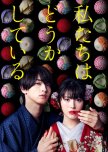
Mugimaki Satoko has an immune system disease. Her doctor recommends that she get married, but Satoko decides to move to a low-rent apartment complex! She gets to know her overly caring landlord, Suzu, and her son, Tsukasa, and the peaceful atmosphere of the apartment complex heals her body and soul... (Source: mangaupdates.com; edited by kisskh) ~~ Adapted from the manga series "Shiawase wa Tabete Nete Mate" (しあわせは食べて寝て待て) by Mizunagi Tori (水凪トリ). Edit Translation
- English
- Русский
- Español
- Português (Brasil)
- Native Title: しあわせは食べて寝て待て
- Also Known As: Happiness Comes from Eating, Sleeping and Waiting , Shiawase wa Tabete Nete Mate , しあわせはたべてねてまて
- Director: Tanaka Kenji, Nakano Ryohei
- Genres: Life, Drama
Where to Watch Eat, Sleep, then Wait for Happiness

Subscription (sub)
Cast & Credits
-
 Sakurai YukiMugimaki SatokoMain Role
-
 Kaga MarikoMiyama SuzuSupport Role
-
 Miyazawa HioHajiro TsukasaSupport Role
-
 Fukushi SeijiTo KeiichiroSupport Role
-
 Tabata TomokoAoba OtomeSupport Role
-
 Kitano KieSorihashi RikuSupport Role





Photos


Reviews

A very chill food show
The story begins in media res: Mugimaki Satoko was diagnosed a couple of years ago with an autoimmune disorder which is not life-threatening but leaves her chronically fatigued. She has quit her previous, high-stress job at a big, successful company, and is now working part-time at a small, supportive design firm doing the accounting and other administrative tasks. Her current issue is that her savings is dwindling, and she must come to terms with the idea that she'll never be able to own her own place and that she needs to find a cheaper place to live.She ultimately settles on an apartment in a danchi (large tower blocks built after WWII) where she finds herself living across the landing from her aging landlady, Suzu, who is currently boarding a young free-spirited guy, Tsukasa, who does odd jobs and helps around the complex and goes on long backpacking excursions. Tsukasa and Suzu introduce Satoko to yakuzen, a Japanese form of traditional Chinese cuisine where there is less of a distinction between food and medicine. Satoko finds that she likes the food and hopes it can help her condition, and when Tsukasa refuses to teach her what he knows about it, she finds some books and starts teaching herself.
Over the course of the series, Satoko meets new people around the danchi and makes some friends along the way. She tries some new things and not everything works out the way she hopes as she tries to figure out what her life can be as she lives with her condition. She's a bit afraid of her future in the long-term, but she finds comfort in this ancient approach to eating. She shares what she learns with her friends, but while yakuzen is a healthy approach to eating with an emphasis on plants, it's adherents do not tend to proselytize about it. It very much falls under Michael Pollan's dicta: "Eat food, not too much, mostly plants".
There are no major dramatic stakes in this series, and it's very much a slice of a year or so of Satoko's life. She naps, cooks and shares meals with her friends as she grows accustomed to her new life with her condition. Her new approach to her diet does give her a bit more energy to consider what she wants for her future and come up with some new goals as she relinquishes her previous aspirations. By the end, Satoko has come up for a vision for her new life. It's weak tea.
Was this review helpful to you?
This review may contain spoilers
A beautiful, healing drama – exactly what I needed
So recently, I came across this genre of J dramas called Iyashikei meaning healing dramas. This is the perfect example. The original Japanese title is Shiawase wa tabete nete matte, which means “ happiness is eating sleeping waiting,” but the English title has translated it into: “Eat, sleep, then wait for happiness.” This changes the entire meaning. It almost sounds like you’re waiting for happiness to happen in the future and you’re eating and sleeping while you wait. But that is not the point of this series. The eating, the sleeping, and the waiting are all part of happiness. There’s nothing complicated about it. You don’t wait for happiness. You don’t have to do anything fancy or complicated. Happiness comes in the simplest of things. And I love that because it’s basically saying take the pressure off.Mugimaki san reminds me of myself, as I am recovering from different bodily issues and injuries, wondering if I will ever be back to normal. She really captures the sense of despair and loneliness, and the sense of waiting that such circumstances created in the mind. When I first saw her, I immediately thought, “this actress has had way too much plastic surgery,” and I wondered how I could relate to the character when her facial appearance doesn’t look very natural, and didn’t seem to the healing nature of the drama. But her way of acting and behaving, won me over, as she is ever very sweet and so polite. At first, she comes from a place of not being able to take care of herself, and feeling overwhelmed. But as she moves into the new apartment where Tsukasa San has inspired her with food therapy, she pursue and studies the topic on her own. I find this to be very refreshing as opposed to being taught by him. In fact, he blatantly refuses to teach her about food therapy because he doesn’t want the liability how people might behave after acquiring such knowledge.
What I love about the series is that if you space for each of the characters to exist on their own, especially Mugimaki San and Tsakasa San, and does not force a romantic angle between the two. This allows both characters to breathe and exist in their own spheres, and just to be themselves, instead of playing out this romance script. It does happen with two side characters who discover that each other likes vegetarian food, and then after meeting once or twice, they decide to move in together. That story seemed a little unrealistic and rushed. But I’m glad they didn’t do it with the two main leads. I really liked how Tsukasa San went off the mountains for a week or two just to reclaim his freedom and clear his mind, while still having a place to come back to- the old lady’s apartment to call Home. All three of these characters have built a unique sense of home for themselves as they also redefine it. I love how each character has the freedom to be themselves, and do what they feel called to, while still maintaining a connection with each other. In this sense, they achieve a rare kind of balance between autonomy and connection. It is truly beautiful.
Silence is used a lot in the series, and music is used sparingly only when needed. It makes you feel like you’re really living there. It gives a really nice feeling of quiet, and relaxation. The food and dishes is a delight to look at an imagine myself tasting, but one thing that annoys me slightly not just in the series, but in J dramas overall is that when a young woman takes a bite into a new food, even before she chews for two seconds, she squeals in delight (maybe this is a social expectation to put on such a Performance), exclaiming “OISHII!!!” and they make such a big deal about it. Well, it just seems unrealistic that someone would get the full taste of something after one second of chewing. It feels fake and exaggerated. This is one thing I didn’t like about Mugimaki San- her exaggerated exclamations of how tasty the food is even before she manages to chew for more than one second. It has become a J drama, pet peeve of mine. But I can forgive that because the rest of the series is so chill, and healing, and exactly what I needed.
Was this review helpful to you?
Recommendations
There have been no recommendations submitted. Be the first and add one.
Recent Discussions
Be the first to create a discussion for Eat, Sleep, then Wait for Happiness