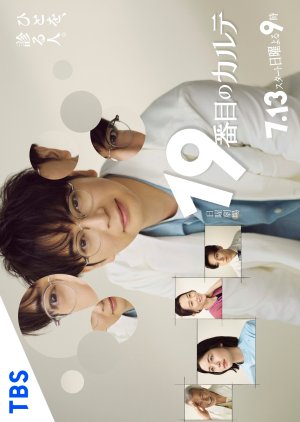
What if doctors treated us like people rather than maladies?
This drama touches the heart in many ways while challenging the medical field to see people as a whole. What if doctors spoke to us rather than at us? What if they took the time to find out about our habits and lifestyles instead of focusing on a single area to treat and dismiss? How would the sharing of ideas and abilities between specialties change things in diagnosing and treating the cause of ailment rather than singling out symptoms to treat and calling it a day? Does the value to society outweigh the cost for healing those who do not fit conveniently in a specialist box? The doctors in this series have their set biases based on their abilities and experience. This drama makes them question how they see patients and to set aside their specialties to see how they can discover the root causes of undiagnosed cases. How much effort to extend to those who fall between the cracks and do not conveniently fit in a specific category with established treatments to prescribe and send home. The entire cast did a wonderful job of making these cases come to life. They gave us slices of life to appreciate the patient and hospital staff. To see their struggles and the need to get passed egos to see to the needs of the patient. It gave hope for a future brand of doctors that wanted to see more than a given specialty, with a desire to get input from other specialists to accurately asses what the real problem is, and provide a course of action that would provide the patient relief if not a cure. I loved this drama showing out of the box thinking in creating better quality of life situations for brushed aside patients. I would love to see this type of medicine in action and not just in a drama. But til that day comes, this drama lets us ponder these questions and gives us hope that it might become reality some day. This drama covers serious issues of healthcare while giving respect and dignity to the patients and families dealing with them. We see the conflicts of specialists vs general practitioners and hints of how that bridge can be gapped if true discussion is on the table. It shows the family like relationships of medical professionals and how this both helps and hinders their dealing with patients. When doctors become patients, does their attitudes and mindsets change about how they practice medicine? It makes us wonder what advances we can make working together rather than focusing on competition to become the top in a specific field with no other goals. This gentle speaking doctor caused a lot of fuss in the hospital, but he calmly and steadfastly believed in the importance of people’s stories, and that unwavering effort was eventually rewarded with growing understanding from his colleagues. This is very well done as you laugh and cry with them through these life experiences.Was this review helpful to you?

This review may contain spoilers
Simple & Sweet
I enjoyed this. Just sweet and simple and no drama. I liked the cast a lot as well. I thought Matsumotu Jun was great as Dr. Tokushige and I found him to be a calming presence. The show it nothing new and the main conflict is hospital buracracy and cutting departments that don't make money. None of which matter to me but is quite sad that hospitals value profits over human lives.I liked that each episode tackled a different ailment and personal circumstance and how the General Medicine Department helped to facilitate a better care routine and choice for patients.
The standout episode for me was episode 6. I bawled my eyes out this ep. End of life care is no doubt tough! The actor playing Tatsu was great and he helped the actress playing Dr. Tokino shine here.
9/28/25
Was this review helpful to you?

Simply Beautiful
Part of the reason why healing medical dramas will always be one of my lowkey favourite genres is because of the way they handle the topic of the "Life and death cycle"..
We are born into this world. We live our youth fiercely. Study, graduation, career, job — we take each step of life without knowing what the future holds. Along the way, we form connections with people and rely on them during hard times. Some call it family, some call it friends, and for some, it’s a complete stranger.
Eventually, we start growing old. By then, some people meet their soulmate and decide to start a family of their own, while others choose to live alone. To each their own, we say. No matter which path we choose, we keep moving forward, hoping for a better future ahead.
And then, one day, we suddenly realize that we are not young anymore. Our bodies have grown weaker, our energy drains faster and our perspective on life changes. In a way, we begin guiding the future generations. One by one, we see our loved ones leave us — family, friends, relatives, you name it. We slowly grow accustomed to saying goodbye. And that’s when it truly hits us that we are no longer young.
And just like that, a time comes when we begin waiting for our own turn to say goodbye. That’s how it is — for me, for us, for everyone.
After death, some people continue to live on in the hearts of their loved ones, some don’t. But that, too, is part of the cycle of life.
.
Medical dramas that portray this side of humanity really move me.
"The 19th Medical Chart" was that kind of drama for me. It felt slow at times, but once you understand the message conveyed in each episode, you can’t help but feel deeply moved by it.
I truly hope there will be a season 2 of this drama. I, for one, would absolutely love to see more stories about humans like this!
A big thank you to the entire team for creating such a meaningful drama — and a very big thank you to my favourites, Matsujun and Koshiba Fuka, for bringing the characters of Dr. Tokushige and Dr. Takino to life!
Was this review helpful to you?
This review may contain spoilers
Major Problem First Episode
I dropped this after one episode because of an unforgivable plot twist in the first episode.The basic story and characters were OK if not spectacular but what killed it for me was how the writer handled the story resolution.
This of course is a medical drama. This episode's sick patient, the puzzle, and the challenge for the main character doctor to solve is a woman with debilitating pain that the medical system is unable to diagnose. Reminds me of a weak version of a typical House MD plot. This is what I found unforgivable. The doctor on cue towards the end figures out her problem i.e. solves the medical puzzle. But totally fails to explain how he arrived at that conclusion or if he was able to cure her of the disease or ease her symptoms. The woman expresses gratitude that she now knows what her malady is but the story doesn't advance to fixing her problem or letting the viewer in on how the puzzle was solved.
Was this review helpful to you?

Quando ouvir vira o verdadeiro tratamento
Assistir Conversas que Curam para mim foi quase como sentar num consultório diferente, daqueles onde a pressa fica do lado de fora e alguém realmente presta atenção no que a pessoa está vivendo.O drama gira em torno da medicina, claro, hospitais, diagnósticos, pacientes chegando com problemas. Mas o que me chamou atenção logo de cara é que ele não foca só na doença. O foco mesmo está nas histórias por trás dela.
Eu gosto muito quando um drama médico lembra que gente não é só exame, número ou prontuário. Cada paciente chega carregando vida, medo, esperança, confusão, às vezes coisas que nem ele mesmo sabe explicar direito. E aí entra aquele tipo de médico raro, o que escuta de verdade.
O clima da série é mais humano do que frenético. Não é aquele hospital correndo a mil por hora o tempo todo. Aqui muitas vezes a virada acontece numa conversa, numa pergunta bem feita, num silêncio que deixa alguém finalmente falar.
Confesso que esse tipo de história sempre me pega, porque lembra uma coisa simples e poderosa, às vezes o que mais cura não é só o remédio, é alguém que olha pra você e realmente entende o que está acontecendo.
É um drama tranquilo de assistir, sensível, daqueles que a gente termina o episódio com uma pequena reflexão martelando na cabeça.
E eu gosto disso.
Impressão final, drama médico mais humano do que técnico, cheio de histórias de gente real, daqueles que lembram uma verdade antiga da vida, escutar bem ainda é uma das formas mais poderosas de cuidar.
Was this review helpful to you?

This review may contain spoilers
Quando il cuore incontra la medicina
Questo drama esplora le sfide quotidiane in un ospedale, seguendo un giovane medico che affronta dilemmi etici e situazioni critiche con i pazienti, fino a quando non soddisfatto del modo di curare e di vivere i pazienti decide di cambiare specializzazione e intraprendere medicina generale ...dove grazie al dottore Akaike che diventa suo mentore, trova il modo di curare i pazienti non solo fisicamente ma anche nel cuore e nell'anima.I personaggi sono tutti molto profondi, con storie personali in cui facilmente ci si rivede. Il protagonista non solo evolve come medico ma attrae a se anche la dottoressa Takino che nel suo approccio alla medicina generale trova anche la sua strada per curare dall'inizio alla fine i pazienti sentendosi completa e soddisfatta del suo lavoro.
La serie affronta temi di sofferenza e resilienza, evidenziando l'importanza del supporto emotivo in momenti difficili.
La regia è fluida, e le performance degli attori sono intense, forse a volte troppo melodrammatiche ma è una caratteristica dei giapponesi che vedono profondità in ogni cosa che fanno e vivono. Un po invidio questo loro modo di vedere e percepire con sentito rispetto tutto ciò che li circonda.
Infine posso dire che è un drama toccante e ben realizzato, che invita a riflettere sulla vita e sulla cura. Da vedere senza pretese..ma ti lascia una piacevole sensazione di serenità.
Was this review helpful to you?

Docteur Knock, ou pas
La bataille pour le meilleur J-Drama médical est à encore rude cette année. Dr Ashura m'a passionné ce printemps et je me demandais quelle valeur accorder à Doctor Price. Mais celui-ci m’a choqué par son approche financière et m’a poussé à consulter un autre spécialiste assez vite. Avec son titre improbable désignant de manière péjorative une des spécialités en médecine moderne, j’ai osé prendre rendez-vous avec ce drama pour continuer à avoir ma dose de Fuka-chan après sa performance dans Married My Husband Japan, mais aussi pour son ending rappelant qu'il n'y a qu'une seule chanteuse qui sache vraiment écrire des folk songs au Japon : c'est bien sûr Aimyon.Mais je m'égare, car vous, c'est le côté « l'amour à l'hôpital » ou « super neketsu doctor » qui vous fait vibrer. Alors, ce énième byouin drama va-t-il répondre à vos attentes ?
Baisse de la natalité ou crise des vocations, la France n'est pas première en la matière. Au Japon, il n’y a plus beaucoup de bébés depuis longtemps et les médecins généralistes sont encore moins nombreux. Moins de 3 % des futurs docteurs choisissent cette spécialité qui n'est même pas considérée comme telle par leurs pairs. D'où ce titre repris du web manga éponyme, la plaçant après les 18 vraies spécialités. Vous imaginez donc un Matsumoto Jun que personne n'attendait dans la vraie vie, se faisant déjà rare dans les séries ces dernières années, et débarquant dans cet hôpital en revendiquant une place de médecin généraliste. Son avis est méprisé lors des réunions, mais sa personnalité va certainement vous séduire comme elle séduit au fil des épisodes ses collègues confondant hôpital et usine.
En effet, il est la grande force de la série, reléguant Fuka-chan à une simple assistante condamnée à lui « servir la soupe » par son admiration. Empathique est un euphémisme tant il sait écouter les patients, les analyser, les comprendre. La gentillesse déborde par tous ses pores. Si bien qu'on rêverait tous de l'avoir comme médecin traitant. Bien sûr, ses consultations ressemblent souvent plus à ce qu'on attend d'un psy, mais les moments passés à écouter ses patients, à leur donner des conseils, sont criants de vérité et on se sent tous prêts à se livrer face à son écran. Une téléconsultation loin du concept des télécabines déshumanisées qui naissent un peu partout dans les pharmacies.
La douceur qui se dégage de la série, sublimée par l'ending d’Aimyon, est si troublante face aux terribles situations et maladies que vivent les patients. Alors bien sûr, le manque de clash, d’humour ou d’amour, le côté pathos accompagné de cascades de larmes et le peu de scènes sensationnelles rebuteront les adorateurs des Grey’s Anatomy-like, mais je suis persuadé qu'elle touchera sa cible et reboostera des vocations chez les 97 % d'apprenti médecins qui hésitent à embrasser la médecine de ville.
Was this review helpful to you?