Editorials


Life was Hard
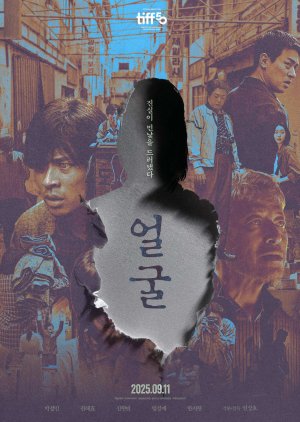
2025 had some fun movies in Korean cinema, but no movie came even close to "No Other Choice"—not until I saw this movie. The Ugly is a simple but impactful drama that looks back on the hardships of a man and a woman, discovered by their son through a series of interviews. The premise may not seem that interesting at first, but it is made in a Korean style that I really like, contrasting the good and the bad in people and offering a deeply human experience without a mainstream happy ending. We often don’t understand the way of life of our grandparents, or even our parents, so this movie gives us a mirror to reflect not only on the story presented, but also on our society in general, and invites us to have more respect for our ancestors (and the cross they carried).The movie has a mystery to uncover, but for me it didn’t offer any real surprises in the development of the story. Where the movie truly shines is in the actors’ performances. They did a great job portraying believable and deeply touching emotions.
The movie also invites us to reflect on what is ugly and what is beautiful. As it is written in the Bible, God does not look at outward appearance but at what is in the heart. So what seems ugly to the world may in fact be beautiful, and what appears beautiful may actually be stained with ugliness.
Was this review helpful to you?
This review may contain spoilers
movie potrays a simple yet deeper message
This movie clearly portrayed how society's standard of the word 'ugly' affects the life of a person. Just how simply Jung hee was killed just because she was not pretty enough. As we already know how Korea is with beauty standards, and this movie shows us the dark side. Jung hee had a bad past, yet she was a kindhearted soul, yet she was killed brutally. It's sad to think of how she had an unfair life. But in the end when we finally see her, we understand she was never ugly, just the society said her that she was, and she just believed and most importantly, she helped her colleague yet was blamed for it.Was this review helpful to you?

Sometimes there is no reason
This movie portrays how people judge by looks.Like how every bullying victim is portrayed or treated.
The only person who didn’t (couldn’t) judge someone by their looks became the source of courage and strength for a victim.
A son who tries to uncover the truth about his mothers passing.
And the Ugly truth at the end.
That, often, there is no real reason.
It’s the personal taste of how society often describes a person “beautiful” or “ugly”.
And the one who couldn’t judge by looks judged by his assumptions.
And this movie proofs only God sees us how we are, from our inside, our hearts. ♥️
This movie has a good plot that hooks you till the very end.
Yeon Sang-ho Did a very good job on that.
The actors did their work so well that you completely empathize with the victim. You also want to know the truth about what really happened.
Park Jeong-min played both parts so well, I was really impressed by his acting.
I hope to see more great work of him.
The other reviewer said that the “why” was misplaced. If you watched till the end you know what happened and WHY.
This movie deserves more recognition.
It really tells a deeper meaning.
Was this review helpful to you?

This review may contain spoilers
A strong premise that forgets what made it interesting.
I went into The Ugly (dir. Yeon Sangho) genuinely curious the premise sounded simple, sharp, and full of potential. And to be fair, the cast holds it down. Park Jeongmin and Kwon Haehyo are reliably solid, Han Jihyun fits perfectly as the TV PD, but the real MVP here is Shin Hyunbeen. Most of her performance lives in her body and voice, and somehow you feel everything Jang Younghee feels without even seeing her face. That’s skill.But somewhere along the way, Yeon Sangho seems to have misplaced the “why.” Why is Younghee hated so much? What’s actually fueling the disgust toward her? Without that context, the whole thing starts to wobble. I kept wondering, were Korea’s beauty standards back then really that brutal? Because honestly, Younghee isn’t ugly give her some powder and she could headline a weekend drama.
If Yeon wanted this film to resonate internationally, he probably should’ve fleshed out that emotional backbone. The movie starts like it has something bold to say, but by the end it just… forgets to say it. Great performances, great setup — but the follow-through? Kinda vanishes into thin air.
Was this review helpful to you?

This review may contain spoilers
The Ugly Truth of Worshiping "Image" in the Eyes of Others
The story follows a man in his forties who lives with his blind father—a legendary craftsman of Korea’s finest traditional seals. He receives a call informing him that the body of his mother, who disappeared 40 years ago, has been found. Alongside a pragmatic, scoop-hungry documentary producer, the "ugly" truth about the mother’s death and her past begins to unfold.This is a movie about ugliness—not just the physical kind the mother was shamed for, but the ugliness of the soul. In the very first scene, the blind father gives a long speech about how people wrongly assume the blind don't appreciate beauty. Hold on to this sentence, because it defines the entire film and its shocking twist.
The movie is built on the idea of "stigma." The mother, whose face remains hidden for most of the film, is branded as "ugly." When she married, people mocked her, thinking that just because someone "noticed" her, she suddenly thought she had a voice and rights. There is also the stigma of bullying, the victim-blaming faced by her coworker, and the blind husband's own feeling of being "cheated" or fooled.
The most "ugly" things in the film are the "walls of trophies." Whether it’s the father’s awards for his beautiful craftsmanship or the old factory owner’s disgusting photos of his "prey" displayed like achievements, both built their glory on spiritual rot. In the end, the only one labeled "ugly" was the only one with a beautiful soul.
Everyone else is ugly in their own way. The producer is a hypocrite seeking only success. As for the son, he deserves an entire series of articles to describe his character. The ending is striking; when we finally see the mother’s face in a photo, she is a carbon copy of her son. If the son were a girl, he would be the "ugly" one.
He inherited his mother’s face (which looks average for a man) but inherited the rotten soul of his father—the man who killed his mother simply because of her looks. The father interpreted every laugh around him as mockery of his wife’s ugliness in a society that worships "image." A society that literally idols how it looks in the eyes of others. The son chose to keep that "idol" standing by burying the truth.
In the final scene, the son breaks down in hysterical tears, signaling his defeat. He surrenders to the social "idol" despite knowing it’s a lie. He chose to protect his father’s reputation as a "beautiful Korean legend." Shattering that image would be a massive slap to the face of society, and his choice was driven by pure selfishness and fear of losing his own status.
The movie is good, but the "reveal" felt a bit weak. Given the build-up and the documentary-style interviews, I expected a much bigger shock.
The first real shock is the mother’s past with her brothers, who only showed up for the inheritance. They described their childhood as a "happy family" right before the truth revealed she was actually a survivor of a very toxic family. She was honest and brave—the exact opposite of everyone else—yet she was betrayed by the person closest to her, all because of her face.
Was this review helpful to you?

A Heartbreaking Reflection on Beauty and Cruelty
Kwon Hae-hyo's performance is astonishing. He portrays Im Yeong-gyu, a blind master seal engraver, with such depth and precision that you forget you're watching an actor at all. It's his first time playing a blind character, and he makes it feel utterly authentic. Park Jung-min is equally compelling as Im Dong-hwan, the son who never knew his mother's face and sets out to uncover the truth of her death forty years later.The film slowly peels back the layers of Dong-hwan's mother, Jeong Yeong-hui. We learn what her life was like, how she and Yeong-gyu came together, and what drove them apart. The final act—especially the last scene—makes you question everything you thought you understood. The revelation of why she died is devastating, and it lingers long after the credits roll.
What makes it even more heartbreaking is Yeong-gyu's story. He was blind from birth, bullied his whole life, and constantly put down for no reason. His life never got better. You begin to understand how society and its standards can push people over the edge. The film forces you to confront the impossible expectations placed on beauty—how people become sheep, following the same cruel opinions without question.
Hearing what happened to Jeong Yeong-hui was terrible. Hearing that people laughed about it was worse. That is the society we live in, and The Ugly holds up a mirror to it without flinching.
Was this review helpful to you?
This review may contain spoilers
What Remains
After hearing that Park Jeong-min won Best Actor for this film, it became hard to pass up. The plot is straightforward yet engaging, following a son uncovering the “ugly” truth behind his mother’s disappearance 40 years ago through a series of interviews.The ending feels unsettling and somewhat disappointing, raising questions about the overall moral of the film. While the protagonist lacks many redeemable qualities, Park Jeong-min’s raw and emotional performance completely captures attention and stands out as the film’s strongest aspect.
Was this review helpful to you?
This review may contain spoilers
‘The Ugly’: A “must see” movie watch, with Baeksang Winner Park Jeong Min.
The body of a young woman thought to have run away four decades ago is discovered. This brings up unpleasantries for her blind husband and her young son now grown. A funeral is held for the woman without a picture. As old neighbors gather to talk about the young woman, it is clear that the one outstanding trait of the young runaway was that she was very Ugly. This peaks strong curiosity in the son, as to the true appearance of his mother. The father, blind from birth, had never seen his wife.The Ugly is a profound movie which says a lot about human nature. The Ugly is a simplistic complicated story. Just like a photo use to be developed from a negative, you have to see how the negative turns into a profound positive image in this movie. Only then is true light revealed. The Ugly actually is two movies running at the same time. The one you believe is the image that is captured for you. However, the truth of the story may only be revealed to you when you replay the movie and capture the other movie playing at the same time.
People say that something is deep. The Ugly is a deep movie.
The movie stars Park Jeong Min. I respect him as an actor. He seem to pick the “I don’t know about this one” type of script, as many said for the K-Drama Utopia. When you look at his choices, however, you see that his brain just operates faster than most people. Park Jeong Min sees it before we do. Park Jeong Min won the Baeksang Arts Award for Best Actor for the Movie Category for his work in The Ugly. Park Jeong Min plays a double role, that of the son in the future and the father in the past. Please put this movie on your list to view and be prepared to see it twice.
Note: Since The Ugly is a rental on Prime Video, to replay just rewind or digest it and replay later. You have 24 hours for each rental.
Was this review helpful to you?

Misogyny and the Korean Society.
This film is about misogyny and how even a blind person being a man still got protected from his crimes by a society that protects men. She was ugly because she was a rebel, not physical ugliness. She dared to tell the truth and confront men and that made her ugly.In the end history is still retold to protect the "man" and misogyny of society. Korea is known to protect men even after they've done terrible things because they're "a treasure or national hero". They're invincible while the women are invisible.
Was this review helpful to you?