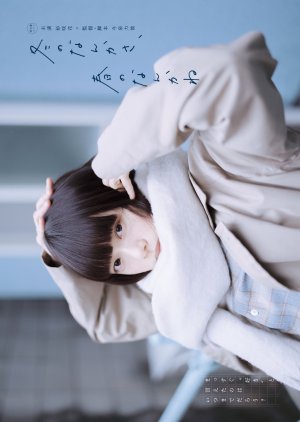
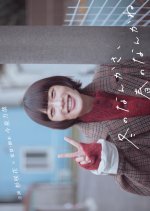
Tsuchida Ayana, a 27-year-old novelist who has published two books to date and is currently writing her third. She usually works part-time at a second-hand clothing store and has a boyfriend, but due to various past romantic experiences, she has avoided "falling in love properly" and "facing someone properly." Suddenly, Ayana begins to wonder, "How long was it last that I was able to honestly say 'I love you'?" and reflects on her past relationships in order to face her current boyfriend seriously. Despite her hesitation, wondering, "Maybe it's better not to date someone important?" and "What is love anyway?", she moves forward. (Source: Japanese = natalie.mu || Translation = kisskh) Edit Translation
- English
- Français
- Português (Brasil)
- Español
- Native Title: 冬のなんかさ、春のなんかね
- Also Known As: Fuyu no Nanka sa, Haru no Nanka ne , ふゆのなんかさ はるのなんかね
- Director: Yamashita Nobuhiro
- Screenwriter & Director: Imaizumi Rikiya
- Genres: Romance, Drama


Cast & Credits
-
") Sugisaki HanaTsuchida AyanaMain Role
Sugisaki HanaTsuchida AyanaMain Role -
") Narita RyoSaiki YukioSupport Role
Narita RyoSaiki YukioSupport Role -
") Okayama AmaneHayase KotaroSupport Role
Okayama AmaneHayase KotaroSupport Role -
") Mizusawa RintaroWachiSupport Role
Mizusawa RintaroWachiSupport Role -
") Nouchi MaruEn-chanSupport Role
Nouchi MaruEn-chanSupport Role -
") Shida SaraMakiSupport Role
Shida SaraMakiSupport Role







Reviews

 1
1The rating is 7.4, the reviews are 9s… Looks good to me!
You will know in the first fifteen minutes if this drama is for you and you will either sink into it or find it unutterably boring. I’m of the first category. I love Japanese art-house style. Restrained, delicate, beautiful and all happening under the surface. The slow unfolding of the conversation, with long pauses into which you fall.Written by a man it explores the territory of intimacy using the relationships of one woman, Ayana, with multiple others, mostly men. But this is about distance between people as much as it is about closeness. What makes us feel comfortable in a relationship. Why seemingly good people are not a compatible match. The reasons why relationships may include or avoid sex. It’s a 360 on relationships.
Each episode examines a separate relationship dynamic that Ayana has had over the past ten or so years. As she tries to work out what it is that she wants, and how the preceding relationships affect the future ones. She is exploring herself through the contact she has with others.
All the men seem to inhabit a similar sphere. None of them are hard core go getters or tsundere they are very unremarkable people, as is she. That is not a criticism or a dismissive comment, rather, a description of the type of people that are explored in the drama.
Having muted characters gave a sameness to the interactions. The conversations were all at the same pace and in many ways delivered in the same way. But there were different undercurrents that caught you up in them. The script stays very close to life, with long pauses and at times has the feel of a structured improvisation. The slowly unfolding conversations allow space to reflect on yourself as well as understand the characters. The difficulties/tensions hang in the air and are not rushed. There is very little visible emotion, no wailing, just internalised feelings.
Don’t expect a lot of plot and the order of the episodes is non-chronological. Although it adds a little mystery, as in wanting to understand why she is as she is, I did find it a little confusing. Mainly because you are following an emotional development and the backstory often meant that you were unsure where on her journey Amala was at that particular moment. I can understand perhaps why they did it this way, as we do not reflect on our life sequentially, fragments mean different things at different times.
Amala is a novelist. As a writer I found it interesting that all of her stories were very directly based on herself and her relationships Almost retelling reality. This is not the case for most writers, who deliberately and proudly create their own characters, even if they may have some traits of a real person. But here, in the drama, it seemed as though it was being used deliberately to blur the lines between reality and fiction, truth and imagination, desire and fact.
In true art-house style, the drama uses mood as the narrative device. Emotions are hinted at rather than revealed. There is a scene at an onsen where Amala both smiles and cries in a long direct stare into the camera, allowing the audience to participate in the incompatible blend of emotions that she is experiencing.
These long-held camera shots are the signature of the drama. Filmed by a largely static camera which often concentrates on faces and expressions. The lack of camera movement adds to the almost profound stillness of the narrative. Music is used sparsely if at all, and long silences hang in the air. The only thing that I found annoying, was the abrupt cut to black between scenes. Somehow the black emphasised the change and left me feeling even more hung out to dry. Especially if it was an intense scene in which I had become immersed. Like most of them…
I liked the performances and felt that the director and the cast managed to create a cohesive feel for the drama as a whole. This was not necessarily easy in a drama where most scenes have just two people in them and the cast does very little ensemble acting.
Overall I really liked this drama, and found it immersive and thought provoking.

The slow, unique kind of introspection that will intrigue some and bore others.
This drama encompasses exactly what I wrote in the title. It develops slowly, but the type of stillness that makes you feel as though you yourself are present in the scene, watching it unfold and sharing the main character's experiences and emotions with her. Involved in her quiet turmoil, her numbness, confusion, and twisting love and silent regret as it shows her past failed relationships. The naturalistic acting and quiet music do an exceptional job at creating the immersion.A noteworthy point is the exemplary cinematography. Especially the long shots done in just one take, at one camera angle. One angle could be nearly three minutes. The lack of music overlaying created a silent ambience that made you have to sit in the emotions, no matter how uncomfortable, instead of forcing you to feel them. Almost as if you are taking a pause, like a breath of fresh air. The scenes feel so real and give the actors space to flourish, making the characters feel like real human beings.
The story is one that slowly follows the life of Ayana, a novelist, who falls in love too easily, and so she tries to be with people who she will not fall too hard for. She meets her current boyfriend Yukio in a laundromat and they bond over an awkward yet sweet exchange. As the story develops, the drama delves into Ayana's past and her failed relationships, and her development and progression to becoming a better person.
Some may write this drama off simply because it contains unconventional themes, such as cheating. Please, don't be that person and reduce this show to a single moral transgression. The drama does not glorify the infidelity. It explores the reasoning behind Ayana's actions, her emotional complexity, the unmet needs of the characters, and the fragile dynamics of the relationships they are in.
A unique, introspective, and slow Japanese drama. It's becoming one of my favourites.